
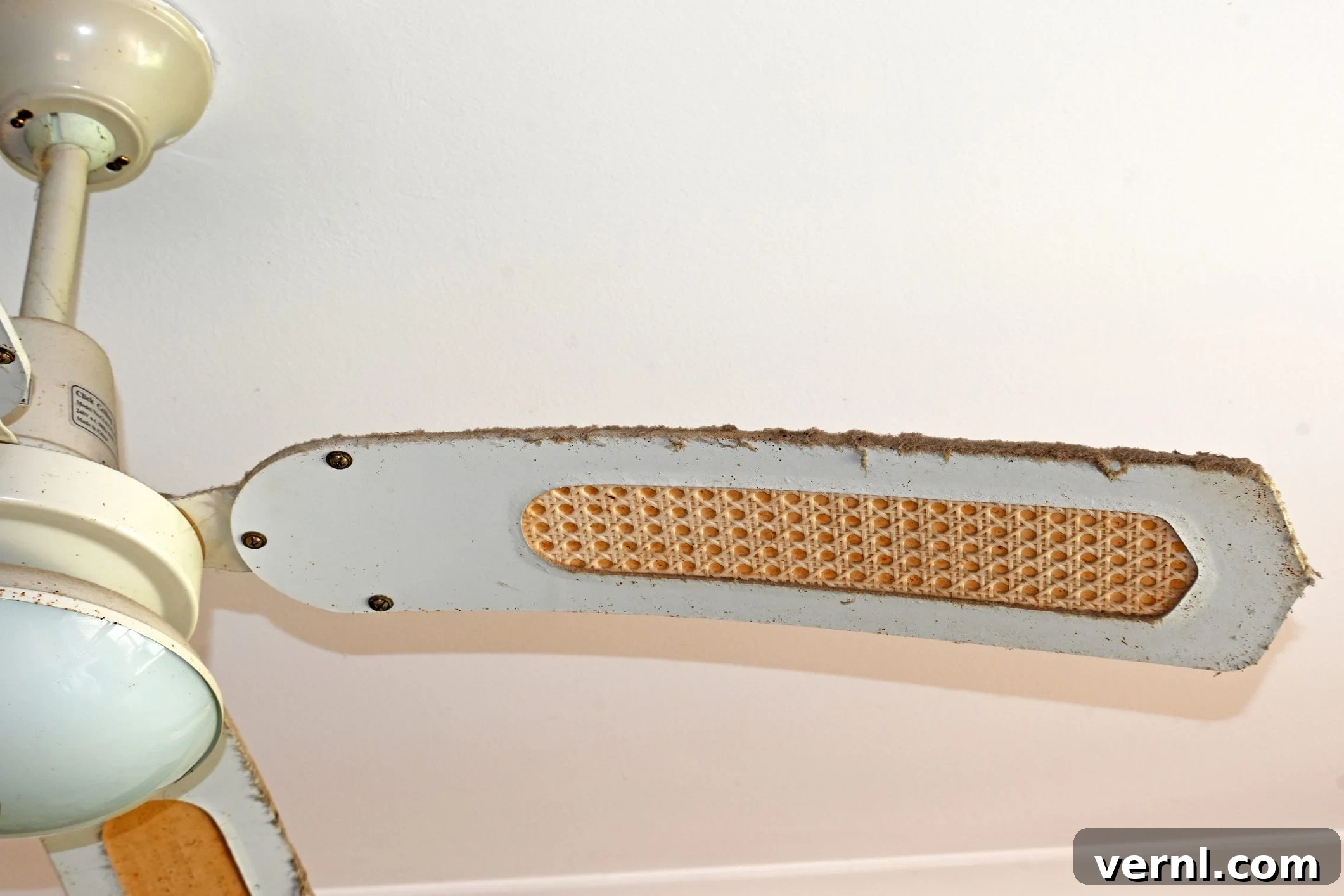
Returning to a home after a significant event like a hurricane can reveal unexpected damage. We experienced this firsthand when, after two weeks without power and air conditioning, every ceiling fan blade in our house was noticeably drooping. The intense humidity had thoroughly saturated the blades, causing them to sag. While extreme weather certainly exacerbates the issue, even under normal circumstances, ceiling fan blades are prone to drooping and warping, impacting both aesthetics and functionality.
“Drooping fan blades are more than just an eyesore; they can indicate underlying issues that might pose a safety hazard if a blade detaches,” warns Jordan Benjamin of Done Rite Services. “Ignoring this problem can also lead to increased wear and tear on the entire fan mechanism, potentially shortening its lifespan.”
Fortunately, many instances of sagging fan blades have straightforward solutions, ranging from simple tightening of screws to a full blade replacement. This comprehensive guide will help you diagnose the root cause of your ceiling fan’s drooping blades, understand whether a quick fix is possible, or if it’s time to invest in new blades or even a completely new ceiling fan for optimal performance and safety.
What Causes Ceiling Fan Blades to Droop or Sag?
Understanding the reasons behind drooping ceiling fan blades is the first step toward finding an effective solution. Several factors can contribute to this common household problem, each with its unique implications.
1. Humidity: The Primary Culprit
Humidity stands out as one of the most frequent causes of ceiling fan blades drooping or warping. This is particularly true for blades made from porous materials like particleboard, MDF (medium-density fiberboard), or even some types of wood. These materials readily absorb moisture from the air, causing them to swell, lose their rigidity, and eventually sag under their own weight. Homes in humid climates, as well as rooms like kitchens, bathrooms, or basements where moisture levels are naturally higher, are especially susceptible to this issue. Over time, constant exposure to moisture can irreversibly deform the blades.
2. Loose Screws and Fasteners
Simple mechanical issues are often overlooked. The screws that secure the fan blades to the blade irons (the brackets connecting the blades to the motor housing) can gradually loosen over time due to the fan’s continuous rotation and vibrations. When these screws become loose, the blades lose their firm attachment, leading to a noticeable sag or wobble. This is a common occurrence, especially if the fan has been in use for many years or if it wasn’t installed with sufficient torque initially.
3. Physical Damage and Wear
Ceiling fans, like any other household fixture, are subject to physical wear and tear. Accidental impacts, such as children pulling on the blades, moving furniture that bumps into them, or even improper cleaning techniques, can cause the blades to bend, crack, or become otherwise damaged. This physical stress can compromise the structural integrity of the blade, leading to drooping or an unbalanced fan.
4. Old Age and Material Degradation
Over an extended period, the constant rotational force and the natural aging process can take their toll on fan blades, regardless of material. Materials can degrade, becoming brittle, less rigid, or losing their original shape. The stresses of continuous operation, especially in challenging environments, accelerate this process. Cheaper materials are naturally more prone to degrading faster than high-quality, durable alternatives. It’s a common misconception that drooping blades signify a dying motor; as Scott Kegerreis of Kura Home Services notes, “A common misconception is that the blades are drooping due to the motor dying, but this isn’t true.” The motor is typically responsible for rotation, while blade issues are usually material or attachment related.
5. Excessive Dust Accumulation
While seemingly minor, a significant buildup of dust and grime on fan blades can actually add enough weight to contribute to drooping, especially if the blades are already weakened or made of lighter materials. This is particularly true for older fans where dust might have accumulated over years without thorough cleaning.
Can I Fix Drooping Ceiling Fan Blades? Troubleshooting and Solutions
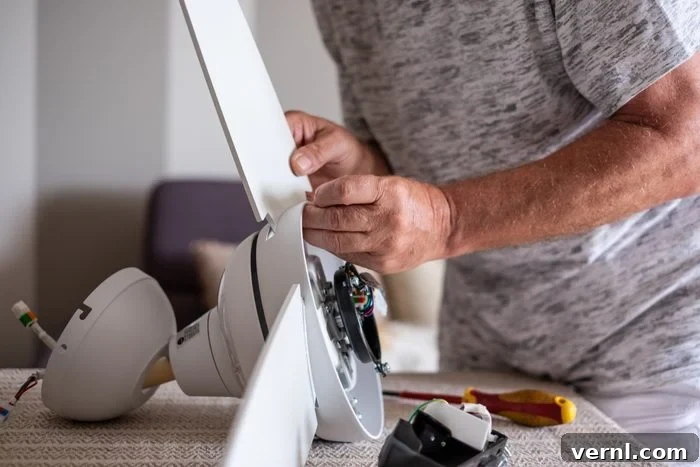
The good news is that many instances of drooping fan blades are indeed fixable. The key is to accurately diagnose the problem before attempting a repair. Always ensure the power to the fan is turned off at the circuit breaker before performing any inspection or repair to prevent electrical shock.
Simple Troubleshooting Steps
- Tighten Loose Screws: This is often the easiest and most effective fix. Carefully inspect all screws that attach the fan blades to their mounting brackets, and the screws that secure the brackets to the motor housing. Using a screwdriver, gently tighten any screws that appear loose. Be careful not to overtighten, as this can strip the screws or crack the blade material. This simple step can often restore stability and eliminate minor sagging.
- Clean Off Dust Buildup: A surprisingly common contributor to blade imbalance and minor drooping is accumulated dust. Over time, dust can add significant weight, especially if it’s unevenly distributed. Use a microfiber cloth, a duster with an extendable handle, or even a vacuum cleaner with a brush attachment to thoroughly clean both the top and bottom surfaces of each blade. Regular cleaning not only helps with droop but also improves air quality and fan efficiency.
- Check for Blade Balance: If tightening screws and cleaning don’t resolve the issue, one or more blades might be out of balance. You can purchase an inexpensive fan blade balancing kit, which typically includes small weights and clips. Follow the kit’s instructions to identify the unbalanced blade and apply weights until the fan runs smoothly without wobbling or vibrating, which can also contribute to the appearance of drooping.
If these initial steps don’t resolve the drooping, the issue might be more extensive, requiring blade replacement or addressing environmental factors.
When To Replace Fan Blades
If simple fixes don’t work, replacement blades are a viable option. However, before purchasing new blades, it’s wise to consider the cost. “Check prices, though. Depending on the blades you’re purchasing, it may be more economical to just replace the whole fan,” advises Tim Alagushov of IRBIS Air, Plumbing & Electrical.
You should consider replacing fan blades when:
- They are visibly warped: If blades have absorbed too much moisture and permanently changed shape, they cannot be corrected. Warped blades create uneven air circulation and can put significant strain on the fan motor, leading to premature failure.
- They are cracked, peeling, or extensively damaged: Physical damage like cracks, splinters, or peeling paint not only looks unsightly but can also compromise the blade’s integrity and balance. Peeling paint or cracking material can also shed debris, impacting indoor air quality and creating a mess.
- They are causing vibration or wobbling: Even if not visibly drooping, severely unbalanced or damaged blades will cause the entire fan to wobble excessively. This vibration is a clear sign of stress on the motor and mounting hardware, increasing the risk of the fan eventually detaching.
- They pose a safety risk: As Alagushov warns, “If a blade is falling apart, it may unexpectedly fly off the fan when it’s in motion, potentially hurting someone or damaging your home.” Any blade that shows signs of imminent failure should be replaced immediately.
When replacing blades, it’s also crucial to address the root cause of their damage. “For example, if you’ve got excess humidity in your home to the degree that it’s impacting your appliances, you would be well-served to speak with an HVAC tech to see what options you have,” suggests Alagushov. This could involve installing a dehumidifier, improving ventilation, or checking your HVAC system for proper moisture control.
When To Replace the Whole Ceiling Fan
There comes a point when repairing individual components is no longer practical or cost-effective, and replacing the entire ceiling fan becomes the best solution. Consider replacing your ceiling fan if you observe any of the following:
- Persistent Noise: If your fan is constantly making grinding, humming, clicking, or rattling noises that cannot be resolved with simple tightening or lubrication, it often indicates a worn-out motor or bearings.
- Excessive Wobbling or Shaking: Beyond simple blade imbalance, if the entire fan assembly shakes violently even after balancing the blades, it could point to issues with the mounting bracket, motor housing, or internal components.
- Struggling to Maintain Speed: A fan that struggles to reach or maintain its set speed, or spins noticeably slower than it used to, likely has a motor that is wearing down. As Alagushov explains, “If your blades were warped for a long time, they likely put excess stress on the fan, causing the motor to wear down faster.”
- Lack of Airflow: If the fan is running but you feel significantly less airflow than before, even on higher settings, its efficiency may have diminished due to motor degradation or subtle blade deformities.
- Outdated or Inefficient Model: Older fans are often less energy-efficient and lack modern features like remote controls, dimmable lights, or smart home integration. Replacing an old fan with a new, ENERGY STAR-rated model can lead to significant energy savings.
- Cost-Benefit Analysis: If the cost of new blades, a balancing kit, or potential motor repairs approaches or exceeds the cost of a new, entry-level fan, then replacement is the more economical choice. “But compare prices and really get to the root cause of the issue before spending money on a solution,” Alagushov advises.
Essential Ceiling Fan Maintenance for Longevity
Proper maintenance is crucial for extending the life of your ceiling fan, preventing issues like drooping blades, and ensuring efficient operation. Regular care can save you money and hassle in the long run.
1. Consistent Cleaning
Dust is the enemy of efficient and balanced fan operation. “Dust the blades monthly, at a minimum, to prevent debris buildup,” advises Scott Kegerreis. He recommends using a microfiber cloth, which effectively traps dust rather than just scattering it. Clean both the top and bottom surfaces of each blade, as well as the motor housing. Accumulated dust can add weight, throw blades off balance, and even strain the motor.
2. Regular Screw Inspection
While dusting, take a moment to inspect all screws on the blade irons and where the blade irons attach to the fan’s motor. Over time, vibrations can loosen these fasteners. Gently tighten any screws that feel loose. This simple check can prevent blades from drooping or wobbling before they become a significant problem.
3. Check Mounting Box Security
The stability of your ceiling fan starts at its mounting point. Periodically check that the mounting box and hanger bracket in the ceiling are secure and tight. A loose mounting can lead to excessive wobbling, which in turn puts stress on the fan’s components, including the blades and motor.
4. Reverse Fan Direction Seasonally
This is a “pro tip” from Kegerreis: “Reverse the fan direction twice a year.” This isn’t just a gimmick; it leverages the fan’s airflow to optimize comfort and energy efficiency throughout the year:
- Winter (Clockwise Rotation): In cooler months, set your fan to rotate clockwise at a low speed. This creates an updraft, pushing warm air (which naturally rises) down along the walls and into the living space. This recirculation helps to distribute heat more evenly, allowing you to potentially lower your thermostat setting by a few degrees without sacrificing comfort, saving on heating costs.
- Summer (Counter-Clockwise Rotation): During warmer months, switch the fan to rotate counter-clockwise at a higher speed. This creates a downdraft, producing a direct breeze that creates a wind-chill effect on your skin. While it doesn’t actually lower the room temperature, it makes you *feel* cooler, allowing you to raise your thermostat setting slightly and reduce air conditioning usage, leading to energy savings.
5. Address Environmental Factors
If humidity is a recurring problem causing blade damage, consider solutions like investing in a dehumidifier for your home or consulting with an HVAC technician to explore ventilation and moisture control options. Proactive humidity management can protect not only your fan but other household items and even your home’s structure.
Frequently Asked Questions (FAQ) About Ceiling Fans
Is replacing a ceiling fan difficult?
The difficulty of replacing a ceiling fan varies significantly based on what you’re replacing. Replacing just the blades is generally a straightforward task that most DIY enthusiasts can handle with basic tools. However, replacing the entire ceiling fan unit involves electrical work and dealing with ceiling mounts. While a handy individual might attempt it, “Since you are dealing with live voltage, I recommend leaving it to a licensed contractor or electrician,” states Jordan Benjamin. If you decide to tackle it yourself, always, always turn off the power at the circuit breaker for the relevant circuit to prevent electrical shock.
How much should I expect to spend on a ceiling fan?
The cost of a new ceiling fan can vary widely. Basic, functional fans typically range from around $75 to $250. Prices increase from there based on numerous factors: style (modern, rustic, traditional), size (blade span suitable for room size), quality of materials, energy efficiency ratings (e.g., ENERGY STAR certified), and included features such as integrated lighting, remote controls, smart home connectivity, and specialized finishes. “Some high-end, designer ceiling fans can cost thousands, but the average quality fan shouldn’t run you more than $500,” explains Tim Alagushov.
What is the typical cost for professional ceiling fan installation?
If you opt not to DIY the installation, professional services typically range between $200 to $300 for a standard replacement. However, this cost can vary based on several factors: your geographical location (labor rates differ), ceiling height (higher ceilings may require specialized ladders or lifts), existing electrical access (if new wiring or a junction box is needed), and the complexity of the fan model you choose (e.g., heavier fans, multiple light kits, or complex control systems may take longer). Always get multiple quotes from licensed electricians.
How long do ceiling fans typically last?
A well-maintained ceiling fan from a reputable brand can last anywhere from 10 to 15 years, or even longer. Factors influencing longevity include the quality of its components, frequency of use, environmental conditions (like humidity), and how regularly it receives maintenance. Lower-quality or inexpensive fans might only last 5-7 years before showing signs of wear or failure.
Can drooping blades affect energy efficiency?
Yes, significantly. Drooping or warped blades cannot move air as efficiently as properly aligned ones. This means the fan has to work harder (consume more energy) to produce the same amount of airflow, or it simply won’t circulate air effectively, diminishing its intended cooling or warming effect. An unbalanced fan also forces the motor to expend more energy to overcome vibrations, leading to increased power consumption and accelerated wear.
What are the best materials for fan blades to prevent sagging?
For optimal durability and resistance to sagging, especially in humid environments, consider blades made from:
- ABS Plastic or Composite Materials: These are excellent choices for outdoor or high-humidity areas as they are resistant to moisture, warping, and corrosion. They are often lightweight and very durable.
- Aluminum or Steel: Metal blades are extremely durable and rigid, making them highly resistant to drooping. They are commonly found in industrial or modern-style fans.
- Sealed Solid Wood: While solid wood blades can be beautiful, they must be properly sealed and treated to resist moisture absorption. High-quality, sealed wood blades from reputable manufacturers are less prone to warping than cheaper particleboard or MDF options.
About the Experts
- Jordan Benjamin is owner of Done Rite Services, an HVAC, plumbing and electrical company in Tucson, Arizona, which routinely handles fan replacements and installations.
- Tim Alagushov is COO of IRBIS Air, Plumbing & Electrical, a San Jose-based HVAC company.
- Scott Kegerreis is owner of Kura Home Services, a company specializing in home maintenance, based along Colorado’s Front Range.