
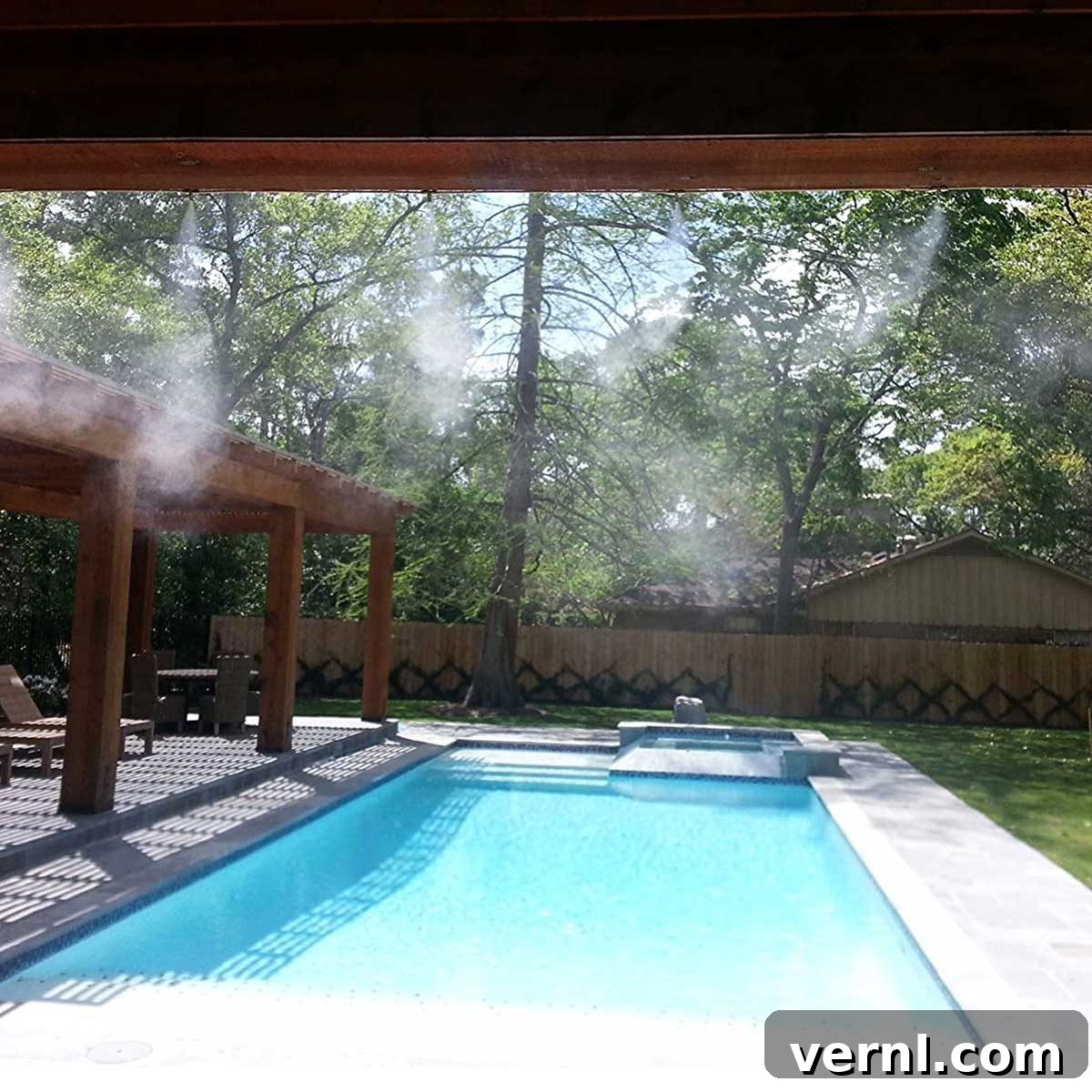
With so many regions regularly experiencing record-breaking heat, homeowners and businesses alike are seeking innovative and efficient solutions to combat rising temperatures. The demand for effective outdoor cooling has surged, especially as outdoor living spaces become increasingly central to our daily lives and social gatherings. Enter outdoor mist cooling systems, often referred to as patio misting systems, which present an incredibly effective, energy-efficient, and affordable outdoor cooling solution. This is particularly relevant in an era where outdoor socialization has gained prominence, providing a comfortable environment for friends and family to gather while maintaining a refreshing atmosphere. These advanced systems offer a tangible way to create a more enjoyable and habitable outdoor environment, even on the hottest days.
If you’re looking to transform your patio, deck, or backyard into a cool oasis, understanding how these systems work and what benefits they offer is essential. This comprehensive guide will explore the intricacies of outdoor mist cooling systems, detailing their functionality, the various types available, their numerous advantages, and the cost considerations involved in bringing this refreshing technology to your home.
What Exactly Is an Outdoor Mist Cooling System?
An outdoor mist cooling system is an innovative setup designed to reduce ambient temperatures in open-air spaces by emitting a superfine mist of water. Imagine microscopic water droplets released into the air, which then rapidly evaporate, creating a cooling sensation. These systems are typically installed around the perimeter of the area you wish to cool, such as a backyard patio, a cozy gazebo, an outdoor kitchen, or under a patio overhang. The key is to secure the system overhead, allowing the mist to descend and spread evenly across the designated space.
The core components of a misting system include specialized water supply tubing—which can be rigid pipe or a flexible hose—and strategically spaced spray nozzles along its length. This tubing connects seamlessly to an outdoor water source, commonly a garden hose spigot or an existing outdoor faucet. While simpler systems can operate using the standard water pressure from your home’s main supply, more advanced models incorporate powerful misting pumps. These pumps significantly boost water pressure, leading to a much finer, more effective mist. It’s important to note that systems relying solely on your home’s existing water pressure typically do not require electricity. However, models that utilize a dedicated misting pump will need an electrical connection, usually plugging into a convenient outdoor electrical outlet. This distinction often plays a role in installation complexity and energy consumption.
The Science Behind Outdoor Mist Cooling: How Do They Work?
The efficacy of outdoor misting systems is rooted in a fundamental principle of physics: evaporative cooling. This natural process occurs when water transforms from a liquid to a gaseous state, absorbing a significant amount of heat from its surroundings during this phase change. As the finely atomized water droplets produced by the misting nozzles hit the warmer ambient air, they rapidly evaporate. This evaporation process draws thermal energy from the air, effectively lowering the surrounding temperature. Under optimal conditions, a well-designed misting system can reduce the localized temperature by as much as 30 degrees Fahrenheit, creating a surprisingly cool and comfortable microclimate.
The effectiveness of evaporative cooling is directly proportional to the fineness of the mist. Generally, systems that produce a finer mist with smaller water droplets achieve quicker and more efficient cooling. Smaller droplets evaporate almost instantaneously upon contact with the air, maximizing heat absorption and minimizing residual moisture. Conversely, a coarser mist with larger droplets takes longer to evaporate, resulting in less efficient cooling and a higher likelihood of leaving surfaces damp. The ambient relative humidity also plays a crucial role in this process. Higher humidity levels, as detailed in articles like how heat and humidity impact outdoor plants, can impede the mist’s evaporation, making the system less effective. Therefore, outdoor misting systems perform best in climates where relative humidity levels range between 40 percent and 80 percent. In extremely humid conditions, the air is already saturated with moisture, leaving less capacity for additional water to evaporate, which diminishes the cooling effect.
Exploring the Different Types of Outdoor Mist Cooling Systems
Outdoor mist cooling systems come in various configurations, primarily distinguished by the water pressure they generate. This pressure dictates the fineness of the mist, the cooling efficiency, and the overall cost. Understanding these differences is key to choosing the right system for your specific needs and environment.
- Low-Pressure Misting Systems: These entry-level systems are the most straightforward and budget-friendly option. They operate solely on the existing water pressure from a home’s main water supply, typically ranging from 40 to 60 pounds per square inch (psi). Low-pressure systems are incredibly easy for most homeowners to install, often requiring nothing more than connecting to a standard garden hose. The primary advantage lies in their low initial purchase price and minimal operating costs, as they generally don’t require electricity. However, the trade-off is a less fine mist compared to their high-pressure counterparts. This means they won’t cool the surrounding area as much or as quickly, and they tend to leave more residual moisture. Consequently, they are less effective in humid climates where rapid evaporation is crucial for optimal cooling. They are best suited for dry, arid regions or for users seeking a light, refreshing spray rather than significant temperature reduction.
- Mid-Pressure Misting Systems: Stepping up in performance, mid-pressure misting systems utilize a dedicated pump to boost the home’s water pressure significantly, typically between 160 psi and 250 psi. This increased pressure allows for the production of a much finer mist. The result is more rapid and effective temperature reduction with considerably less residual moisture, making them a popular choice for residential patios. Installation is generally manageable, similar to low-pressure systems, but requires connecting the pump to an electrical source in addition to the water supply. While more expensive to purchase and operate than low-pressure models due to the pump and its electricity consumption, they offer a superior cooling experience. They strike a good balance between cost, ease of installation, and cooling performance, making them ideal for many homeowners looking for a noticeable difference in comfort without professional-grade complexity.
- High-Pressure Misting Systems: Representing the pinnacle of mist cooling technology, high-pressure systems employ large and robust misting pumps to generate an impressive water pressure ranging from 750 psi to an astounding 1,500 psi. This extreme pressure atomizes water into extraordinarily fine, almost invisible, mist particles (often referred to as ‘flash evaporation’). These microscopic droplets evaporate almost instantly, delivering rapid, powerful cooling with the absolute least amount of residual moisture. This makes them highly effective even in moderately humid environments. However, the advanced performance comes with a significant increase in cost. High-pressure systems are quite expensive to purchase and consume considerably more electricity than mid-pressure pumps. Due to their complexity and specialized components, professional installation is often recommended, if not required. Consequently, these systems are most frequently found in commercial settings such as restaurants, resorts, and large public venues where maximum cooling and minimal dampness are paramount.
Outdoor Misting System Benefits and Features: More Than Just Cooling
Beyond their primary function of cooling, outdoor misting systems offer a suite of additional advantages that enhance outdoor living spaces. These versatile systems contribute to a more comfortable, clean, and enjoyable environment.
- Affordable Outdoor Cooling: When compared to other outdoor climate control solutions, like large industrial fans or even a portable swamp cooler, misting systems can be remarkably affordable to purchase and operate. For DIY enthusiasts, installation costs can be non-existent or minimal. You might even find inspiration in a DIY swamp cooler hack to complement your setup. This cost-effectiveness makes them accessible to a wider range of homeowners looking for an efficient way to beat the heat without breaking the bank.
- Remarkable Energy Efficiency: The energy consumption of misting systems varies by type. Low-pressure systems are champions of energy efficiency, requiring no electricity at all as they operate purely on existing water pressure. Mid-pressure systems, while needing electricity for their pumps, are still quite efficient, with many pumps using as little as 60 watts of electricity – comparable to a standard light bulb. High-pressure systems, due to their powerful pumps, naturally consume more electricity, often several hundred watts, which is an important consideration for commercial applications or those concerned with higher utility bills.
- Dual Functionality: Waters Plants: For those with nearby landscaping or potted plants, a misting system can offer a delightful bonus. The fine mist released into the air can serve as a gentle form of landscape irrigation, providing essential moisture to greenery. This dual functionality is not only convenient but also incredibly water-efficient. Misting systems can use up to 70 percent less water than traditional irrigation methods, making them an environmentally conscious choice for maintaining your garden while staying cool.
- Enhanced Air Quality: Cleans the Air: Beyond just cooling, the misting action actively works to improve the air quality in your outdoor space. As the tiny water droplets are dispersed, they effectively capture and weigh down airborne particles such as dust, pollen, allergens, and other microscopic pollutants. This process results in a noticeably cleaner and fresher breathing environment, a benefit particularly appreciated by individuals with allergies or respiratory sensitivities. Learn more about improving air quality with tips on cleaning indoor air quality, which can also apply to outdoor considerations.
- Natural Insect Repellent: Many users report that the mist helps to deter insects like mosquitoes, flies, bees, and wasps. While there isn’t extensive scientific research definitively proving this claim, it’s a commonly observed phenomenon that winged insects tend to avoid misty environments. The prevailing theory suggests that the mist interferes with their flying ability, makes them uncomfortable, or simply washes them away from the immediate area. This added benefit contributes significantly to a more peaceful and enjoyable outdoor experience, especially during peak insect seasons.
How Much Does an Outdoor Mist Cooling System Cost?
The investment required for an outdoor mist cooling system can vary significantly based on the type of system chosen, its features, and whether professional installation is required. Understanding these cost factors will help you budget effectively.
Low-pressure misting systems are the most economical option, typically costing between $30 and $100 for a basic kit. These systems are designed for DIY installation, which keeps overall costs down. For those seeking more robust cooling, mid-pressure systems generally range from $200 to $1,000. This price includes the specialized pump and higher quality components, but installation can often still be a DIY project for handy homeowners. At the top end, high-pressure systems command prices between $1,500 and $3,500, reflecting their advanced technology, powerful pumps, and superior performance. These systems often feature industrial-grade components and are built for demanding environments.
Professional installation, if required, usually incurs an additional cost ranging from $190 to $675, depending on the complexity of the job, the system type, and local labor rates. You might need to hire an electrician to install a new outdoor outlet to power a misting pump, especially for mid- or high-pressure systems. A plumber might be necessary to install a dedicated water supply line or to securely hang the system’s waterline if specialized plumbing is involved. Alternatively, a professional mist cooling system installer can handle the entire operation, from design and component selection to complete installation, ensuring optimal performance and aesthetics. While adding to the overall cost, professional installation guarantees a seamless setup and can save you time and potential headaches.