Achieving a polished yet natural look in your garden can often be simpler than you think. Landscape edging plays a crucial role in defining spaces, and for those seeking an organic, adaptable solution, trench landscape edging stands out. This method is particularly well-suited for informal garden settings, offering a subtle border around sprawling evergreens, vibrant groundcovers, or any area where more rigid materials like vinyl or treated lumber would appear out of place or excessively formal. Its inherent flexibility allows you to easily adjust your garden beds as plants grow and evolve, making it an ideal choice for dynamic landscapes.
The principle behind trench edging is remarkably straightforward yet effective. An open trench, meticulously dug, serves as a more robust barrier against encroaching grass than a trench simply filled with mulch alone. However, for a more aesthetically finished appearance, many gardeners opt to fill the trench with their preferred organic material. While this approach necessitates periodic re-digging to maintain its neatness and effectiveness in containing the lawn, the process is quick and rewarding. The trimmings removed during maintenance can be readily added to your compost pile, reinforcing the eco-friendly appeal of this edging technique.
Why Choose Trench Landscape Edging?
Trench landscape edging offers a unique blend of practicality and aesthetic charm that makes it a favorite among gardeners seeking a less structured look. Unlike permanent barriers such as stone, brick, or plastic, trench edging integrates seamlessly with the natural environment, creating soft, flowing lines that complement informal garden designs. Its primary appeal lies in its ability to delineate garden beds and pathways without drawing undue attention away from your plants.
- Natural Aesthetic: It provides an understated, organic boundary that enhances the beauty of your garden without artificial intrusion. It’s perfect for wildflower meadows, cottage gardens, or any landscape striving for a wilder, yet contained, feel.
- Unmatched Flexibility: As your garden matures and plants expand, trench edging can be easily reshaped or moved. This adaptability is invaluable for evolving landscapes, allowing you to reconfigure beds without the extensive effort required to remove or modify permanent edging materials.
- Cost-Effective: Compared to installing traditional edging, trench edging often requires minimal material investment—sometimes none at all, relying solely on earth. This makes it an incredibly budget-friendly option for extensive garden projects.
- Effective Grass Barrier: A properly dug trench creates a physical barrier that discourages grass runners from invading your garden beds. This reduces weeding time and helps maintain the integrity of your planting areas.
- Eco-Friendly Maintenance: The material removed during routine re-digging is typically soil and grass, which can be easily composted. This not only diverts waste from landfills but also enriches your garden with homemade compost.
- Improved Drainage: In some cases, a well-placed trench can also help manage surface water runoff, subtly improving drainage around your garden beds.
Digging a Perfect Planter Edging Trench: A Step-by-Step Guide
Creating a functional and attractive trench edge requires a bit of planning and the right technique. Follow these steps to ensure your trench is effective and durable.
Tools You’ll Need:
- Straight Spade or Shovel: Essential for digging and creating clean lines.
- Half-Moon Edger (Optional but Recommended): For very crisp, clean cuts along the edge.
- Garden Hose or String and Stakes: For marking out your desired path.
- Measuring Tape: To ensure consistent depth and width.
- Wheelbarrow or Tarp: For collecting excavated soil and sod.
- Hand Trowel: For fine-tuning and smaller areas.
- Work Gloves: For protection and comfort.
The Digging Process:
- Plan Your Layout: Before you start digging, clearly define the path of your trench. Use a garden hose to lay out curves and gentle arcs, or string and stakes for straight lines. Step back and assess the shape from different angles to ensure it flows harmoniously with your landscape. Mark the line with spray paint or sand for a clear guide.
- Prepare the Area: Clear away any loose debris, rocks, or large weeds from the designated trench area. This will make the digging process smoother and prevent damage to your tools.
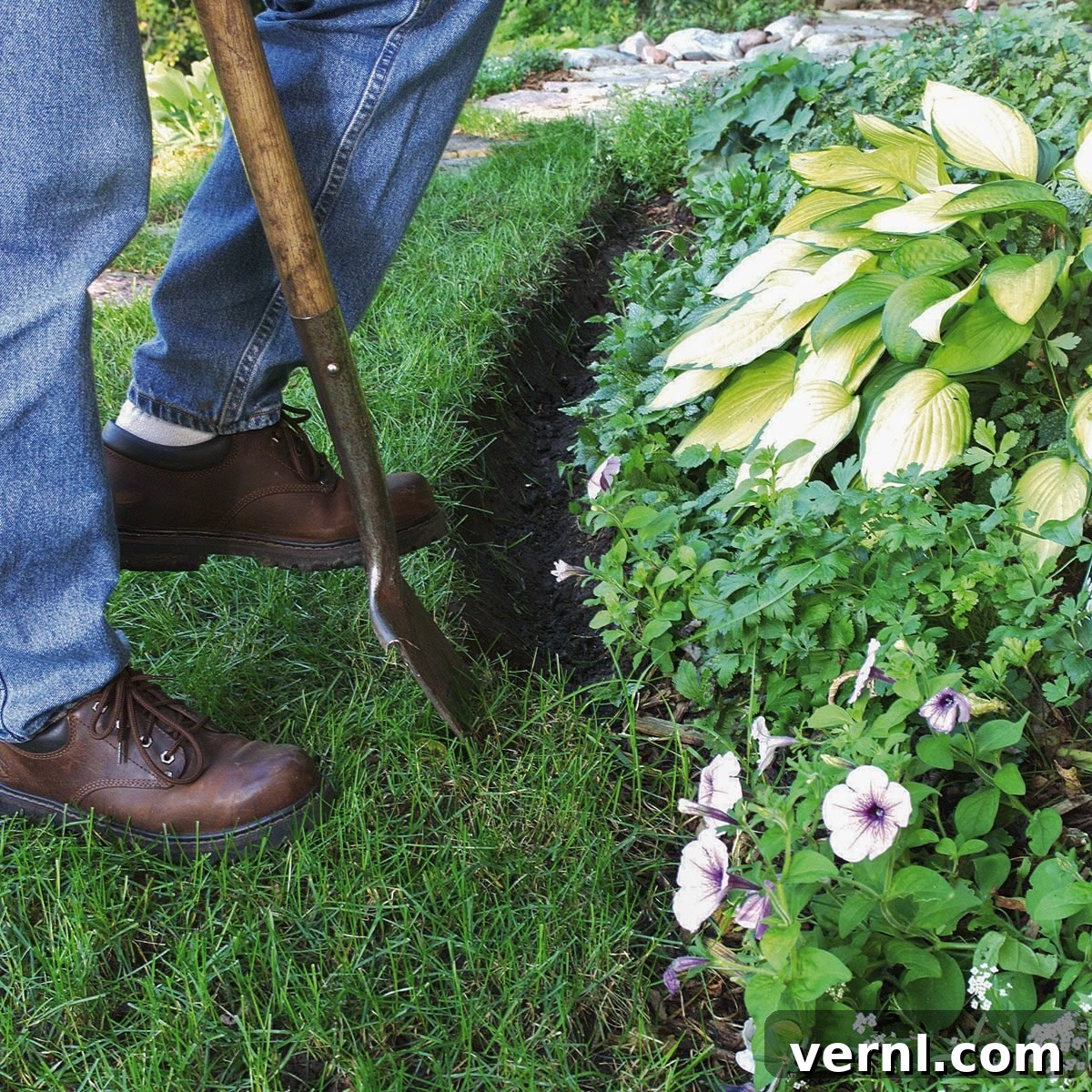
- Make the Initial Cut: Using a sharp, straight spade or a half-moon edger, make a vertical cut along the marked line. Push the blade straight down into the soil to a depth of about 4-6 inches, creating a crisp, clean edge on the garden bed side. This is arguably the most important step for achieving a professional look.
- Dig the Trench: Now, you’ll begin removing the soil to form the trench. Dig a trench 4 to 6 inches deep and approximately 4 inches wide. The key to a stable and effective trench is to angle the sides outward at the top. This creates a V-shape or a slightly wider opening at the surface, which helps prevent grass runners from easily crossing and also provides stability for the trench walls. Use your spade to scoop out the soil, placing it into a wheelbarrow or onto a tarp for easy removal or composting.
- Refine the Edges: Once the main trench is dug, go back and refine the edges. Use the spade or edger to ensure the garden bed side is perfectly vertical and clean. Smooth out any unevenness in the trench bottom and sides. A clean, defined edge is what gives trench edging its aesthetic appeal.
- Manage Excavated Soil: The soil and sod you remove can be used in various ways. If it’s healthy, you can add it to your compost pile. Alternatively, it can be used to fill low spots in other areas of your yard or as a base for new planting beds.
To Mulch or Not to Mulch?
After digging, you have two main options for your trench:
- Open Trench: An open trench, left bare, is highly effective at stopping adjacent grass. The air gap and sharp edge act as a formidable barrier. This option provides a very minimalist, clean look and requires regular re-edging to maintain its sharp lines and depth.
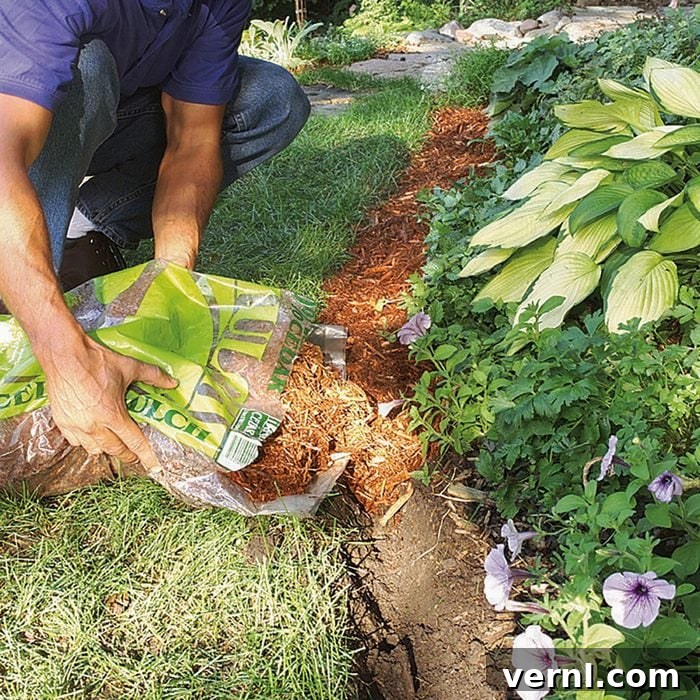
- Mulched Trench: For a more finished, softer look and additional weed deterrence, fill the planter edging trench with wood chips or other organic mulch. This adds a layer of texture and color, blending the trench seamlessly into the garden design. Popular mulch choices include cedar, cypress, pine bark, or even shredded leaves. The mulch also helps retain moisture in the adjacent garden bed and suppresses weeds that might try to sprout within the trench itself.
Maintaining Your Trench Edging
While trench edging is lauded for its natural look and flexibility, it does require periodic maintenance to remain effective and attractive.
- Regular Re-edging: The frequency depends on your grass type and growth rate, but re-defining the trench once or twice a year is typically sufficient. This involves using your spade or edger to clean out any grass that has started to grow into the trench and to redefine the crisp edges. This doesn’t take long and can be quite satisfying.
- Weeding: Even with mulch, some persistent weeds may try to establish themselves in the trench. A quick pass with a hand trowel or regular spot weeding will keep them at bay.
- Replenish Mulch (If Applicable): If you’ve opted for a mulched trench, the mulch will decompose over time. Top it off annually or as needed to maintain its depth and fresh appearance.
- Compost the Trimmings: As mentioned, the grass and soil removed during maintenance are excellent additions to your compost pile, turning yard waste into nutrient-rich soil amendments for your garden.
Benefits of Landscape Edging in General
Beyond the specifics of trench edging, landscape edging in general offers a multitude of benefits that elevate the functionality and aesthetics of any outdoor space. It’s more than just a decorative element; it’s a strategic tool for garden management.
- Enhanced Curb Appeal and Defined Spaces: Landscape edging not only makes your yard look incredibly sharp with neat, crisp lines around garden beds, pathways, and patios, but it also clearly defines the various zones within your landscape. This visual separation creates a sense of order and intentional design, significantly boosting your property’s curb appeal. Whether you prefer the subtle definition of a trench or the bold statement of stone, a well-edged garden instantly appears more deliberate and inviting.
- Containment of Materials: Edging acts as a vital barrier, keeping everything in its rightful place. It prevents precious garden soil from eroding into pathways or lawns, and it stops decorative elements like gravel, wood chips, or other mulch from spilling out of beds. This containment not only maintains neatness but also conserves materials, reducing the need for frequent replenishment.
- Effective Weed and Grass Barrier: One of the most significant practical advantages of edging is its ability to deter pesky plants from taking over where they shouldn’t. A properly installed edge creates a physical barrier that grass runners and invasive weeds find difficult to cross, significantly reducing the amount of time you need to spend weeding and controlling unwanted growth in your flower beds. This proactive approach saves countless hours of tedious work.
- Simplified Yard Maintenance: Edging makes routine yard work, like mowing and trimming, a whole lot easier and more efficient. With a defined edge, you can guide your lawnmower wheels along the border, reducing the need for string trimming. It also creates a clean stopping point, preventing accidental damage to your plants from mowers or trimmers. This streamlining of tasks gives you more time to kick back, relax, and truly enjoy your outdoor space rather than constantly battling its upkeep.
- Protection for Plants: By creating a clear boundary, edging protects your delicate plants from accidental damage caused by foot traffic, lawnmowers, or children’s play. It provides a safe zone where your plants can thrive undisturbed.
- Increased Property Value: A well-maintained and aesthetically pleasing landscape, complete with defined garden beds, contributes positively to your home’s market value. It signals care and attention to detail, making your property more attractive to potential buyers.
Integrating Trench Edging into Your Landscape Design
Trench edging, with its humble yet effective design, can be integrated into various landscape styles beyond just informal gardens.
- Around Trees and Shrubs: Create a neat, circular trench around the base of trees and large shrubs. Fill it with mulch to conserve moisture and suppress weeds, providing a clean look and a clear boundary for mowing.
- Along Driveways and Walkways: While often associated with garden beds, a simple trench can also delineate the edge of a gravel driveway or a flagstone path, preventing material from spreading into the lawn.
- Transitioning Zones: Use trench edging to create smooth transitions between different areas of your yard, such as a lawn transitioning into a naturalized area, a rock garden, or a vegetable patch.
- Sloped Areas: On gentle slopes, a trench can help manage minor erosion by channeling water away or creating a subtle terrace effect, though steeper slopes may require more robust solutions.
Conclusion: Embrace the Simplicity and Beauty of Trench Edging
Trench landscape edging offers an elegant and practical solution for defining garden spaces. Its ability to create a natural, fluid border, combined with its flexibility and cost-effectiveness, makes it an excellent choice for a wide range of garden designs. While it requires minimal, periodic maintenance, the rewards of a beautifully defined, weed-controlled garden that harmonizes with nature are well worth the effort. By understanding the proper techniques for digging and maintaining your trench, you can transform your outdoor areas into vibrant, orderly, and naturally appealing havens. Embrace the simplicity and beauty of trench edging, and enjoy a landscape that truly reflects your style.