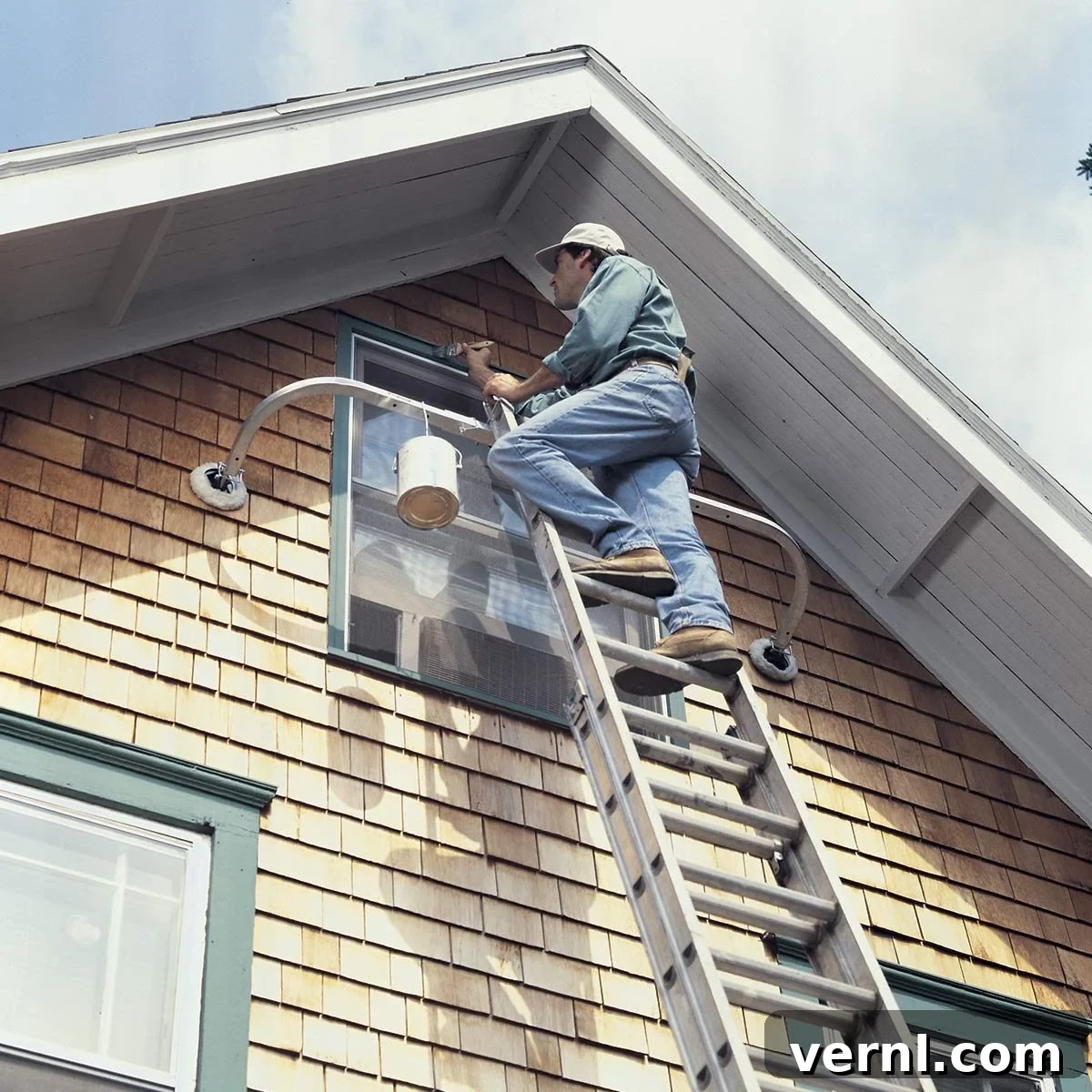
When it comes to home maintenance, certain tasks require careful attention to safety, and washing windows from a height is undoubtedly one of them. While a sparkling view from clean windows is satisfying, the process of achieving it can pose significant risks if proper precautions are ignored. Many homeowners and DIY enthusiasts often underestimate the dangers associated with working on ladders, leading to preventable accidents.
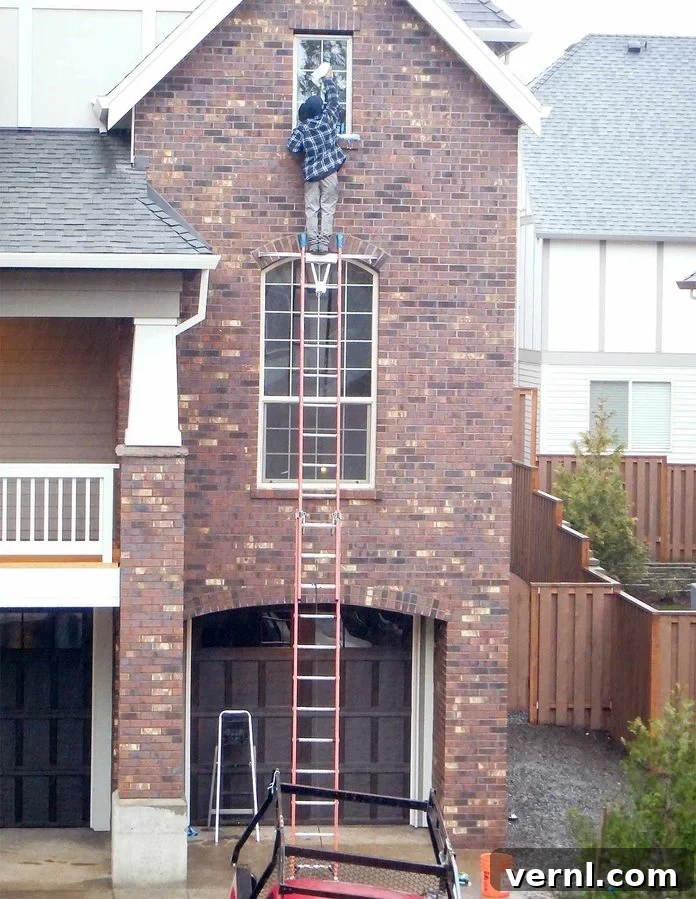
Observe the scene above: a dedicated window washer is attempting to reach his goal, seemingly making the most of a ladder that is conspicuously too short for the job. This image serves as a powerful reminder of how easily basic ladder safety rules can be overlooked in the pursuit of efficiency. While his intent might be good, his method is fraught with peril. He is visibly overreaching, extending his body far beyond the confines of the ladder’s rails, and appears to be standing on one of the uppermost steps. Such actions dramatically increase the risk of losing balance, tipping the ladder, or suffering a severe fall. The consequences of such an oversight can range from minor scrapes and bruises to debilitating injuries, or even worse. This scenario highlights at least two fundamental ladder safety rules that are being flagrantly disregarded. Can you identify them?
The Critical Importance of Ladder Safety in Home Maintenance
Falls from ladders are among the leading causes of injuries in both occupational and residential settings. According to various safety organizations, thousands of emergency room visits each year are attributed to ladder-related incidents. These accidents are often preventable with a basic understanding and consistent application of safety principles. Whether you’re painting, cleaning gutters, trimming trees, or simply washing windows, prioritizing ladder safety isn’t just a recommendation—it’s a necessity for your well-being and the safety of those around you. Understanding and adhering to established safety protocols is the cornerstone of any task performed at height. It minimizes risks, enhances efficiency, and ensures that your home improvement projects remain productive, not perilous.
Mastering Ladder Safety: The Right Way to Work
Thankfully, there’s a correct and safe way to perform tasks that require the use of a ladder, ensuring stability, balance, and minimizing the risk of accidents. Let’s delve into the crucial rules that ensure a safer experience when working at elevated levels, perfectly illustrated by the example below.
The Indispensable Three Points of Contact Rule
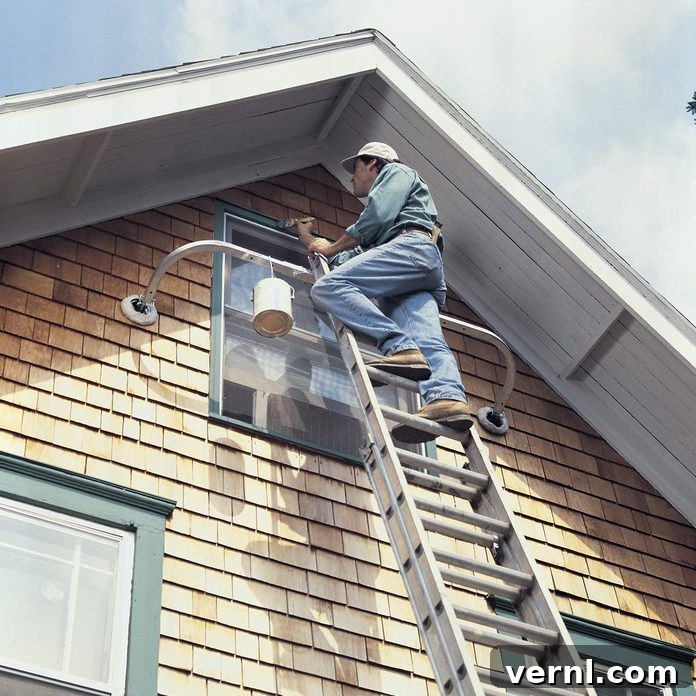
The first foundational rule of ladder safety, and one often overlooked in the rush to complete a task, is to maintain three points of contact with the ladder at all times. This means that while ascending, descending, or working from the ladder, you should always have two feet and one hand, or two hands and one foot, in firm contact with the ladder’s structure. This constant three-point connection provides a stable base, allowing for better balance and control, significantly reducing the likelihood of a slip or fall. When you reach or overextend, as seen in the first image, you inevitably break this crucial contact, leaving you vulnerable to instability. The painter in the second image perfectly exemplifies this principle; even while actively working, his stance is balanced, and he maintains a secure grip or foot placement that adheres to the three points of contact guideline.
Never Work from the Top Three Rungs of an Extension Ladder
The second critical rule, and another often disregarded, especially when a ladder feels “just a little too short,” is to never work from the top three rungs of an extension ladder. These uppermost sections are not designed to support a user’s weight for prolonged work. Standing on them drastically reduces the effective height of the ladder’s side rails, thereby limiting your ability to maintain balance and secure yourself. It also brings your center of gravity too high, making the ladder prone to tipping. The risk of overbalancing or losing your footing increases exponentially when operating from these precarious positions. The skilled painter in the “right way” image demonstrates proper positioning: he is standing on the fourth and fifth rungs down, providing him with a secure platform and allowing the ladder’s side rails to extend sufficiently above his waist, offering a protective barrier and points of contact for his hands.
Enhancing Stability with Ladder Stand-offs
Beyond these two fundamental rules, the second image also showcases an excellent accessory for improved ladder safety: a wide ladder standoff. This device attaches to the top of an extension ladder, allowing it to lean against a wall or surface, effectively increasing the distance between the ladder and the wall. This provides extra stability by widening the ladder’s base of support at the top, and crucially, gives clearance for windows, eaves, or other architectural features. This standoff allows the painter to safely reach the top of the window without leaning the ladder directly against the glass or sill, preventing damage and offering a much more stable working platform. It’s a simple addition that makes a significant difference in both safety and efficiency for tasks like window washing.
Beyond the Basics: Comprehensive Ladder Safety Guidelines
While the “three points of contact” and “no top three rungs” rules are paramount, a holistic approach to ladder safety involves several other crucial considerations. Incorporating these practices into your routine ensures a safer environment for any elevated work.
-
Choose the Right Ladder for the Job
Not all ladders are created equal. Select a ladder that is appropriate for the task’s height, weight requirements, and environment. For window cleaning, an extension ladder is often necessary. Ensure its length allows you to work comfortably without standing on the top three rungs. Consider the ladder’s material (aluminum for lighter weight, fiberglass for electrical work) and its duty rating, which specifies the maximum weight it can safely support, including your body weight plus tools and materials.
-
Inspect Your Ladder Before Each Use
Before you even step on a ladder, conduct a thorough inspection. Check rungs and rails for cracks, dents, or corrosion. Ensure all mechanical parts, such as spreaders, locks, and hinges, are in good working order. Examine the ladder’s feet for wear and tear; they should be non-slip and firmly attached. Never use a damaged ladder—it’s a serious hazard waiting to happen.
-
Proper Ladder Placement and Setup
Always place the ladder on a firm, level, and stable surface. Avoid placing it on uneven ground, loose gravel, or slippery surfaces. If working on soft ground, use a sturdy board under the ladder’s feet to prevent sinking. For extension ladders, maintain the proper 4:1 ratio: for every four feet of height the ladder extends, the base should be one foot away from the wall. This angle provides optimal stability. Secure the top and bottom of the ladder whenever possible to prevent shifting.
-
Always Face the Ladder
Whether ascending, descending, or working, always face the ladder. This allows you to maintain balance and use your hands for stability. When carrying tools, use a tool belt or hoist them up with a rope after you’ve safely ascended, keeping your hands free for climbing.
-
Maintain a Safe Reach
Never overreach or lean too far to one side. Your belly button should always remain within the side rails of the ladder. If you can’t reach something comfortably, climb down and reposition the ladder. Overreaching is a primary cause of ladder tip-overs and falls, as vividly demonstrated by the first image.
-
Clear the Area
Before setting up, ensure the area around the ladder is free of obstructions, both on the ground and overhead. Watch out for power lines, tree branches, and other potential hazards. Also, make sure no one can bump into the ladder while you’re working.
-
Weather Watch
Avoid using ladders in windy conditions, as strong gusts can make the ladder unstable or cause you to lose balance. Similarly, do not use ladders in wet or icy conditions, as surfaces can become dangerously slippery. Wait for clear, calm weather.
-
One Person Per Ladder
Ladders are designed to support one person at a time, within their specified weight limit. Never have two people on a ladder simultaneously, even if it seems strong enough. This can compromise stability and exceed its load capacity.
Safe and Effective Window Washing Techniques from a Ladder
With ladder safety firmly established, let’s turn our attention to the specific task of window washing. Combining best practices for cleaning with meticulous safety measures ensures not only sparkling windows but also a safe experience.
Preparation is Key
Before you even set up your ladder, gather all your cleaning supplies. This includes a bucket of warm water with a squirt of dish soap or specialized window cleaning solution, a good quality squeegee, a scrubber or sponge, a few lint-free cloths or microfibers, and an extension pole if some windows can be reached from the ground. Pre-treat stubborn grime or bird droppings by spraying them with water and letting them soak for a few minutes before scrubbing. Check the weather forecast; a sunny day might seem ideal, but direct sunlight can dry the solution too quickly, leading to streaks. Overcast days are often best for streak-free results.
The Cleaning Process at Height
Once your ladder is safely positioned and secured, and you’re maintaining your three points of contact, you can begin cleaning. Dip your scrubber into the solution and thoroughly wet the windowpane, paying attention to corners and edges. Then, using your squeegee, start at the top corner of the window and pull it in a straight, overlapping stroke down to the bottom. Wipe the squeegee blade with a clean cloth after each pass to prevent streaks. For very wide windows, you might need to make horizontal strokes, overlapping each one by about an inch. Remember to reposition your ladder frequently to avoid overreaching. For even greater reach and safety, consider using an extension pole attachment for your squeegee, which can reduce the number of times you need to move the ladder.
And speaking of tools and techniques, it’s worth questioning some common beliefs. Do you believe these 10 common tool myths? Dispelling misconceptions about your equipment can further enhance your efficiency and safety.
The True Cost of Negligence: Why Safety Matters Most
The difference between the first and second images is not merely one of technique but of a fundamental approach to safety. One depicts a gamble with potentially severe consequences, while the other illustrates responsible and informed action. Neglecting ladder safety can result in costly medical bills, lost wages, prolonged recovery times, and a significant decrease in quality of life. Beyond the personal toll, accidents can also damage property and lead to increased insurance premiums. Investing a little extra time in preparation and adhering to safety guidelines is a small price to pay for the peace of mind and protection it offers. Empower yourself with knowledge and choose safety as your number one priority in all your home maintenance projects. Your well-being depends on it.