

Can a Car Dealership or Lender Remotely Disable Your Vehicle? Unpacking Telematics and Your Rights
The automotive world has undergone a dramatic transformation, evolving from purely mechanical machines to sophisticated, digitally integrated systems. When I first began working on cars in the mid-1960s, the advanced features now standard in every new vehicle were the stuff of science fiction. Today, innovations like telematics offer unprecedented convenience, allowing remote control over various vehicle functions—from unlocking doors when keys are forgotten inside to pre-warming the engine on a chilly morning.
However, this technological leap is a double-edged sword. The very systems that offer convenience also introduce a new dimension of control, raising concerns among drivers. The ability for third parties, including dealerships or lenders, to remotely disable a vehicle is a prime example of this complex dynamic. It transforms the car from an autonomous possession into a connected device, potentially subject to external intervention.
Beyond the immediate act of disabling, the broader issue of who truly owns or has rights to access your vehicle’s telematics and personal data remains a legally ambiguous and hotly debated topic. While that intricate discussion merits its own focus, the core truth for many drivers is stark: if you’re leasing or still paying off a loan, you don’t fully own your car until the title is in your name. This fundamental distinction is key to understanding who ultimately holds the power to intervene with your vehicle.
Join us as we consult legal professionals, law enforcement experts, and seasoned automotive specialists to explore whether a car dealership can, or has the legal right to, remotely turn off your car.
Understanding How Remote Car Disabling Works
At the heart of remote vehicle control lies telematics technology. Telematics providers, such as General Motors’ OnStar, Hyundai Blue Link, or even SpaceX Starlink, utilize sophisticated cellular or satellite networks to transmit signals directly to your vehicle. These signals can execute a range of commands, including remotely disabling the vehicle’s ignition or starter system. This functionality is essentially the reverse of remote starting—instead of firing up the engine, it prevents it from starting or keeps it from restarting once turned off. Beyond engine control, telematics can also remotely lock doors and, critically, use GPS data to pinpoint and track a vehicle’s precise location.
OnStar, for instance, openly states that they “work with law enforcement to block the engine from restarting, pinpoint your car’s location and even bring it to a stop if it’s being driven.” This highlights a powerful, yet potentially contentious, capability. However, the application of this power is not without significant legal and safety considerations. Michael Kruse, a Criminal Defense Lawyer specializing in traffic-related and criminal charges, emphasizes the risks involved: “Doing so (disabling a car while it is moving) would leave them open to liability if it resulted in an accident or injury to an innocent third party.” This inherent liability means that while the technology exists, its deployment, especially when a vehicle is in motion, is handled with extreme caution and typically only under specific, high-stakes scenarios. Once law enforcement becomes actively involved, telematics providers often have the ability to progressively slow the vehicle down to a crawl, rather than an abrupt stop, to enhance safety.
Is Your Car Disabled or Just Experiencing a Common Problem?
Facing a car that refuses to start can be incredibly frustrating and stressful. Before immediately jumping to the conclusion that your dealership or lender has remotely disabled your vehicle, it’s crucial to systematically check for more common electrical and mechanical issues. Many symptoms mimic a remote shutdown, so starting with basic troubleshooting can save time and unnecessary anxiety.
- Anti-Theft System Activation: Modern vehicles are equipped with sophisticated anti-theft systems that can prevent the engine from starting if they detect an unauthorized attempt. Check your owner’s manual for specific instructions on how to disengage your vehicle’s anti-theft system, or use a dedicated app if your car supports one. A common indicator might be a flashing security light on your dashboard.
- Battery and Starter Issues: If you hear a rapid clicking sound when you try to start your car, this typically points to issues with your battery or starter. Common culprits include dirty or corroded battery cables, a weak or dead battery (especially after leaving lights on or during cold weather), or a failing starter motor or starter solenoid. Begin by checking the battery voltage with a multimeter.
- Alternator or Electrical Problems: Dimming headlights, interior lights that flicker, or accessories (like the radio or power windows) that are not working properly often signal a problem with your car’s charging system. This usually involves the battery or a malfunctioning alternator. Inspect your battery connections for looseness or corrosion, and check the condition and tension of your alternator belt.
- Engine Cranks But Won’t Start: If your engine cranks normally, meaning the starter motor is engaging and turning the engine over, but the car still fails to start or immediately shuts off, the issue could be related to fuel delivery, the ignition system, or a faulty engine sensor. If your “Check Engine Light” is illuminated, using an OBD-II scan tool can help retrieve specific trouble codes, guiding you toward the precise problem.
If, after thoroughly checking these common issues, everything appears to be in working order and your car still refuses to start, it is then reasonable to consider the possibility of remote disablement. At this point, contact your lender or dealer to inquire about your account status and vehicle functionality.
Why Would a Dealership or Lender Remotely Disable Your Car?
While the idea of a car being remotely disabled by a third party can feel invasive, there are specific circumstances under which this action might be taken. The most prevalent reason, as highlighted by Greg Eife of Subaru of Cherry Hill, is a series of missed payments on a financing agreement. Beyond financial delinquency, Eife also noted the unusual scenario where “a customer refuses to return a loaner car” as a potential trigger for remote intervention.
It’s important to clarify the operational aspect of such actions. Both Eife and Mike Rocchi from the Faulkner Automotive Organization emphasized that “it’s not something I can do from my desk, it has to be done through the telematics’ provider.” This distinction is crucial: individual dealerships or their staff typically do not have direct, instantaneous control to disable a vehicle from their premises. Instead, they must submit a formal request to the vehicle’s telematics service provider, who then executes the command via their sophisticated network.
Ron Harper of Defenders Legal Service further clarified the lines of authority, stating that “dealers themselves are not usually entitled to disable a car even if they sold it, except where they are the lender.” This highlights that the right to disable a vehicle primarily rests with the entity that holds the financing contract—the lender—rather than necessarily the selling dealership, unless the dealership is also the financier (common in “buy-here-pay-here” models).
Is Remote Car Disablement Legal? Understanding Contractual Obligations
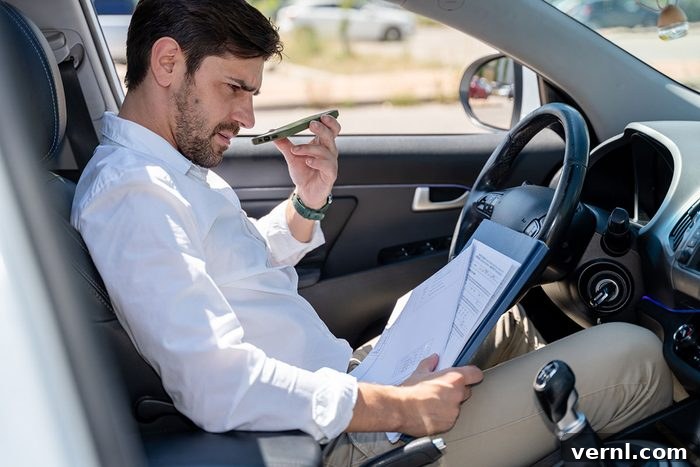
The legality of remote vehicle disablement is a question frequently asked, and the answer, according to legal experts, is a resounding “Yes,” but with critical caveats. Michael Kruse confirms, “The right to disable [a vehicle] is based on contractual law.” This means that the authority to remotely shut down your car stems directly from the financing agreement you sign when purchasing or leasing a vehicle. Therefore, the immediate and most crucial step for any driver concerned about this possibility is to thoroughly examine their financing contract.
Many borrowers, unfortunately, are not fully aware of the intricate “legalese” contained within their extensive loan agreements. Ron Harper of Defenders Legal Service explicitly states that if your “signed [financial] contract states that remote disablement is allowed if you miss payments, they have the legal right to do that.” This underscores the paramount importance of reading and understanding every clause before affixing your signature. If your contract includes provisions for remote disablement in the event of default, the lender is generally within their legal rights to exercise this option.
Beyond contractual agreements, there are rare and exceptional circumstances under which a dealership might intervene. Kruse noted, “Dealerships can do this if telematics identify a hazardous problem in a safety system.” Such cases are typically related to critical safety recalls or severe, unaddressed mechanical issues that pose an immediate risk. However, these are exceptions, not the rule.
It’s also vital to distinguish between the rights of private entities (dealerships/lenders) and law enforcement. As retired Montgomery County, PA law enforcement officer Justin (JD) DiBonaventura explained, “Except under exigent circumstances, even law enforcement cannot just remotely disable a vehicle without a court order or warrant signed by a judge.” This emphasizes that while telematics technology is powerful, its use by authorities is subject to strict legal oversight and due process, far more stringent than for private contractual obligations.
What To Do If Your Car Is Remotely Disabled
Discovering your car has been remotely disabled can be an intensely stressful experience. However, maintaining calm is your first and most important step. Your reaction will depend significantly on whether your car is parked or if the disablement occurs while you’re driving.
If your car is parked and won’t start:
Begin by systematically going through the basic troubleshooting steps outlined earlier. Check your anti-theft system, battery cables, battery voltage, alternator condition, and look for any diagnostic trouble codes if your Check Engine Light is on. Rule out all common mechanical and electrical issues first. If, after these checks, your car still shows no signs of life, then it’s time to contact your lender or dealer. Be prepared to discuss your account status and inquire about any recent actions taken regarding your vehicle’s remote access.
If your car is disabled while driving:
This is a far more critical and dangerous situation. Your immediate priority is safety. If your car suddenly loses power, safely pull over to the side of the road as quickly as possible. It is imperative to remember that once your engine shuts off, you will lose crucial power steering and power-assist braking. This means steering will become significantly heavier and more challenging, requiring greater physical effort. Similarly, the brake pedal will become much harder to depress, and the braking effectiveness will diminish without the power assist. Avoid slamming on the brakes, as this can be dangerous and ineffective. Instead, apply firm, steady pressure to the brake pedal with both hands on the wheel to maintain control and bring your car to a complete and safe stop. Once safely pulled over, immediately call for emergency roadside assistance if needed, and then contact your dealer or lender to understand the situation.
Frequently Asked Questions (FAQ)
Do I have to be notified if a dealership or lender disables my car?
Technically, in many jurisdictions, direct prior notification for remote disablement is not universally mandated by law, making this a significant area of legal and ethical ambiguity. The rapid pace of technological advancement often outstrips the ability of legislation to keep up, creating gaps in consumer protection. While remote disabling a vehicle is legal in many states, the ability to do so must always be explicitly disclosed within your financial contract, typically buried in the fine print.
It is highly advisable to check with your state’s Office of Consumer Protection. These agencies can provide specific information about local regulations regarding pre-repossession notices. Some states may require lenders to provide a reasonable warning—often referred to as a “pre-repossession notice”—before they or anyone acting on their behalf has the right to remotely disable your car. If you were not notified and your state laws require such a warning, or if the disablement created an unsafe condition (especially while driving on a highway), you may have legal recourse.
Can they disable my car while I’m driving?
The ability to disable a car while it’s in motion is technically possible, but its execution is fraught with legal and safety complexities. A car dealer or law enforcement agency can request one of the telematics providers to disable your car, but this is almost exclusively under highly restricted prerequisites, usually involving severe safety risks or law enforcement pursuit scenarios, and often with specific legal authorization. As Michael Kruse pointed out, the liability for accidents or injuries resulting from such an action is extremely high for the party initiating the disablement.
However, a distinct and more concerning scenario involves “kill switches” legally installed by certain lenders, particularly unscrupulous subprime lenders or “buy-here-pay-here” dealerships. These devices can, and sometimes do, legally disable a car while it’s being driven. Depending on your state’s laws, if your financing contract explicitly discloses that a kill switch was installed at the time of financing, a dealership or lender might legally be able to activate it remotely. The legality and permissible circumstances for activating such kill switches vary significantly by state. Again, your state’s Office of Consumer Protection is the best resource to determine if remote disabling kill-switches are legal where you live and under what specific conditions they can be activated.
About The Experts
- Eric Croak is a CFP and accredited wealth management advisor and president at Croak Capital, an Ohio-based fiduciary financial firm with $300 million under management. Eric was recently named to Forbes’ 2025 Top Next-Gen Wealth Advisors.
- Greg Eife was my former apprentice 35 years ago, is an Oldsmobile Master Technician and now serves as Service and Parts Director of Subaru of Cherry Hill.
- Justin (JD) DiBonaventura has over 40 years in law enforcement as a patrol officer, county detective, private investigator and training commander of Montgomery County PA SWAT, as well as being a certified Pennsylvania Department of Education School Resource Officer.
- Michael Kruse graduated from Queen’s University in 1984 with a degree in business. He went on to attend the University of Western Ontario where he received a Bachelor of Law in 1987, Michael has been a criminal lawyer since 1989 and founded Kruse Law Firm in 1993. His firm now has four regional offices specializing in transportation law.
- Mike Rocchi has over 50 years’ experience in every area of the automotive industry. He was former president of Faulkner Mazda (retired), Chairperson of the Mazda National Dealer Advisory Committee, and is now Director of Technical Training for the Faulkner Automotive Organization.
- Ron Harper has been the owner of Defenders Legal Services for over 20 years and has more than 40 years of experience both prosecuting and defending traffic-related charges. Ron holds a bachelor’s degree in psychology, a Certificate in Public Administration, an Honors degree in Political Science, as well as a master’s degree in Judicial Administration from Brock University.
Sources
- Ben Michael, Attorney, Michael and Associates (Electronic communication Sep. 2, 2025)
- On-Star: Plan Details (Sep. 4, 2025)
- VEHQ: “Can a Car Be Stopped Remotely?
Related Articles
- Do You Know What That Little Button on Your Seat Belt Is For?
- What Those Lines on Your Backup Camera Really Tell You
- Here’s What The Small Panel On Your Car’s Front Bumper Is For
The integration of advanced telematics in modern vehicles offers both unparalleled convenience and a new frontier of control. While the ability for a dealership or lender to remotely disable your car might seem alarming, understanding the underlying contractual agreements and the specific circumstances under which these actions can be taken is crucial. Knowledge is your most powerful tool in navigating this evolving landscape. Always read your financing contracts thoroughly, understand the terms related to remote access, and be aware of your rights and local consumer protection laws. By staying informed, you can better protect yourself and ensure a smoother, more predictable ownership experience in the age of connected cars.