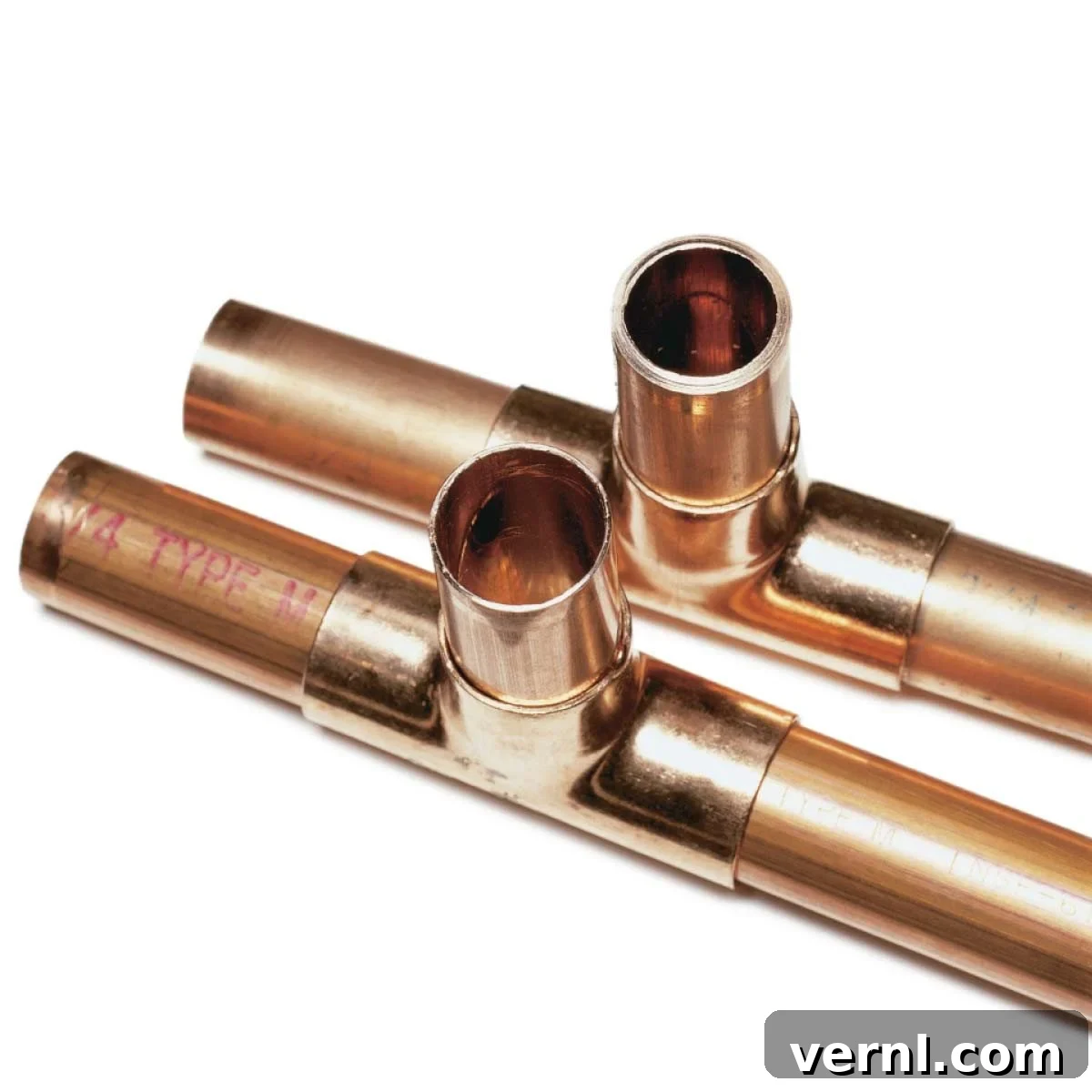
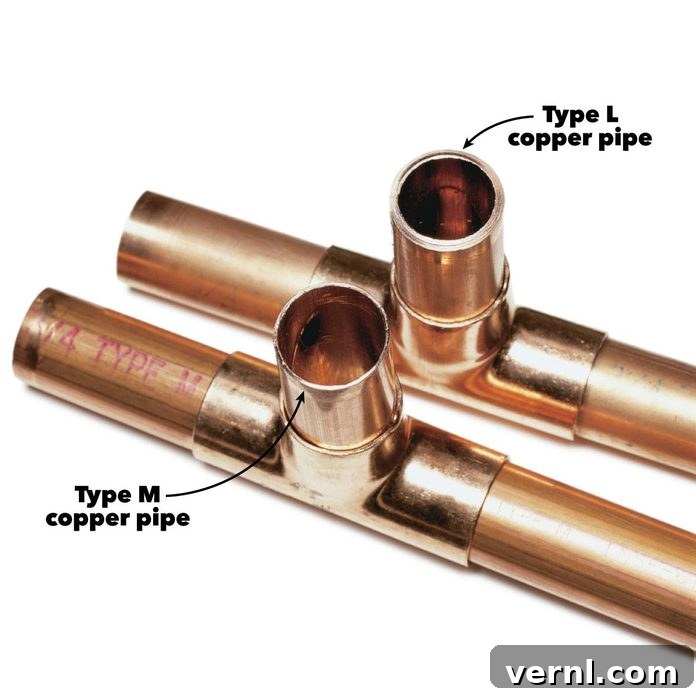
Copper has long been revered as a cornerstone material in plumbing systems worldwide, largely due to its remarkable longevity, superior durability, and inherent resistance to corrosion. Its reliability has made it a preferred choice for countless residential, commercial, and industrial applications. Within the realm of copper plumbing, various types are available, each meticulously graded with specific letters to denote their unique properties and intended uses. The most common grades encountered are K, L, M, and DWV (Drain Waste Vent). Among these, Type L and Type M copper pipes stand out as the most frequently utilized options, particularly for potable water supply and heating systems in both homes and light commercial establishments. Understanding the distinct characteristics of each type is crucial for making an informed decision that ensures the efficiency, safety, and longevity of any plumbing project.
Choosing the Optimal Copper Pipe for Your Plumbing Needs: A Comprehensive Guide
Selecting the ideal copper pipe for a plumbing project involves a careful consideration of several critical factors. Beyond merely picking a pipe, it’s about matching the material to the specific demands of the environment and the system it will serve. Key considerations include the compatibility of the pipe material with local water chemistry, the specific pipe type and its corresponding wall thickness, its inherent resistance to corrosion, and its projected lifespan. Furthermore, health and safety regulations are paramount; for instance, any pipe intended for drinking water must be certified as lead-free to ensure public well-being. Delving into these aspects will illuminate the best choice for your specific application.
Cost-Effectiveness and Long-Term Value
When budget constraints are a primary concern, Type M copper piping often presents itself as the more financially accessible option for initial installation. Its thinner walls contribute to a lower material cost per foot compared to its Type L counterpart. However, this initial saving must be weighed against long-term performance and potential maintenance. While Type M is more affordable upfront, the robust construction of Type L, characterized by its thicker walls, often translates into enhanced durability and a longer service life, potentially reducing future repair or replacement costs. Many experienced plumbers, prioritizing enduring reliability, frequently advocate for Type L, especially for critical applications where maximum resilience is desired. It’s essential to consider not just the purchase price, but the total cost of ownership over the lifespan of the plumbing system, including potential labor for future repairs.
Unrivaled Durability and Structural Integrity
Durability is a cornerstone of effective plumbing, and in this regard, Type L pipes typically excel. Their significantly thicker walls provide superior structural integrity, rendering them more resistant to physical damage, external pressures, and the corrosive effects of aggressive water chemistry over time. This enhanced robustness makes Type L an indispensable choice for demanding applications, such as underground installations where pipes are subjected to soil movement, external loads, and moisture, or in high-pressure systems found in larger commercial buildings. Conversely, Type M pipes, with their comparatively thinner walls, are generally better suited for internal, low-pressure residential plumbing systems. In these environments, pipes are typically protected within walls or ceilings, facing less exposure to heavy wear and tear, and therefore, their lower durability profile is often acceptable.
Mastering Water Pressure Handling Capacities
The ability of a pipe to safely and efficiently handle water pressure is a critical determinant in material selection. Given its more substantial wall thickness, Type L copper piping possesses an inherent advantage in accommodating higher water pressures without compromising its structural integrity. This makes it the preferred and often mandated choice for municipal water main connections, multi-story commercial buildings, and larger residential properties equipped with powerful, high-pressure plumbing systems. Its robust design ensures a consistent and safe water flow, minimizing the risk of leaks or bursts under stress. Type M copper, while perfectly adequate for standard residential water pressure found in most homes, is not designed for the extreme demands of very high-pressure environments. Mismatched pipe types and pressure ratings can lead to premature system failure, expensive repairs, and significant water damage.
“When evaluating pipe selection, it is imperative to consider the specific installation environment,” advises Neighbourhood Plumbing experts. “Type M copper is exceptionally well-suited for typical residential water supply lines where extreme durability is not the paramount concern. However, for more rigorous applications such as commercial settings, underground installations, or areas where plumbing fixtures demand additional reinforcement, Type L is the superior choice. Furthermore, it is crucial to consult local building codes, as specific regulations may mandate the use of Type L for certain applications, ensuring compliance and long-term safety before finalizing any decision.”
Adaptive Versatility Across Diverse Applications
The inherent adaptability of Type L copper pipe makes it a highly versatile material, capable of performing reliably in an extensive range of plumbing scenarios. Its robustness allows it to be effectively utilized in both residential and demanding commercial settings, including healthcare facilities, educational institutions, and industrial environments. This broad applicability often positions Type L as a top choice for professional plumbers who require a single, dependable solution for varied projects. While Type M is also versatile within its own parameters, primarily residential interior use, Type L’s ability to withstand more challenging conditions, including direct burial and high-pressure zones, significantly broadens its functional scope, offering greater peace of mind in complex installations.
Optimizing Copper Pipe Sizes: When to Employ Type L and Type M
The decision between Type L and Type M copper pipes often boils down to the specific demands for strength and protection required by the installation. For instances where superior resilience against external factors or higher internal pressures is paramount, Type L copper pipe is unequivocally recommended. This includes applications such as main water service lines entering a property, underground runs, or any part of the system exposed to potential physical damage or elevated stress. Conversely, for standard in-wall household plumbing, where pipes are generally protected from external forces and operate under typical residential pressures, Type M copper pipe proves to be a perfectly adequate and more cost-effective solution.
A significant consideration when working with copper piping for water lines is the impact of water chemistry. Acidic water, typically characterized by a pH level of seven or less, can accelerate the corrosion process in copper pipes, potentially leading to pinhole leaks and premature system failure. If your water source is a private well, it is highly advisable to conduct thorough water testing to determine its pH level. Should the test reveal acidic conditions, opting for the thicker-walled Type L pipe or considering alternative materials like plastic CPVC (Chlorinated Polyvinyl Chloride) pipe and fittings becomes a prudent decision to enhance longevity. It’s worth noting that most municipal water supplies, even in regions known for naturally acidic groundwater, undergo treatment to balance the pH, thereby mitigating this corrosive effect on copper plumbing.
In the evolving landscape of plumbing materials, alternatives to copper have gained significant traction. Veteran plumber Charlie Avoles highlights PEX (cross-linked polyethylene) as an outstanding modern alternative. “We are consistently observing that PEX exhibits many properties that are tougher and more resilient than copper,” Avoles states. “Unlike CPVC, which can become fragile with age and prolonged exposure to ultraviolet light, PEX demonstrates remarkable stability and durability, maintaining its integrity over time.” PEX offers flexibility, ease of installation, and resistance to scale build-up and freezing, making it a highly competitive option for various plumbing applications.
Frequently Asked Questions About Copper Plumbing Pipes
Which copper pipe is superior for potable (drinking) water systems?
While both Type L and Type M copper pipes are approved for use in drinking water systems, Type L copper pipes are generally considered the superior choice, particularly for critical applications. Their enhanced durability, attributed to thicker walls, provides greater resistance to potential corrosion and physical damage over time. This makes Type L an exceptionally reliable option for main water supply lines, especially those installed underground where they are exposed to varying soil conditions and external pressures, ensuring a consistent and safe supply of potable water for decades.
Can Type M copper pipes be utilized for hot water lines?
Absolutely, Type M copper pipes are very commonly and effectively used for hot water systems within residential buildings. They are robust enough to withstand the typical temperature ranges associated with domestic hot water, which generally falls between 120 degrees Fahrenheit (49 degrees Celsius) and 140 degrees F (60 degrees Celsius). The material properties of Type M copper ensure its resistance to these temperatures without compromising its structural integrity or contributing to premature wear, making it a reliable and cost-effective choice for delivering hot water throughout a home.
Authoritative Sources and Further Reading:
- Neighbourhood Plumbing: Copper Pipe Types: Differences Between Type L and Type M
- Copper Development Association: Standard Tubes
- Research Gate: Households’ Preferences for Plumbing Materials Types of Copper Tube