
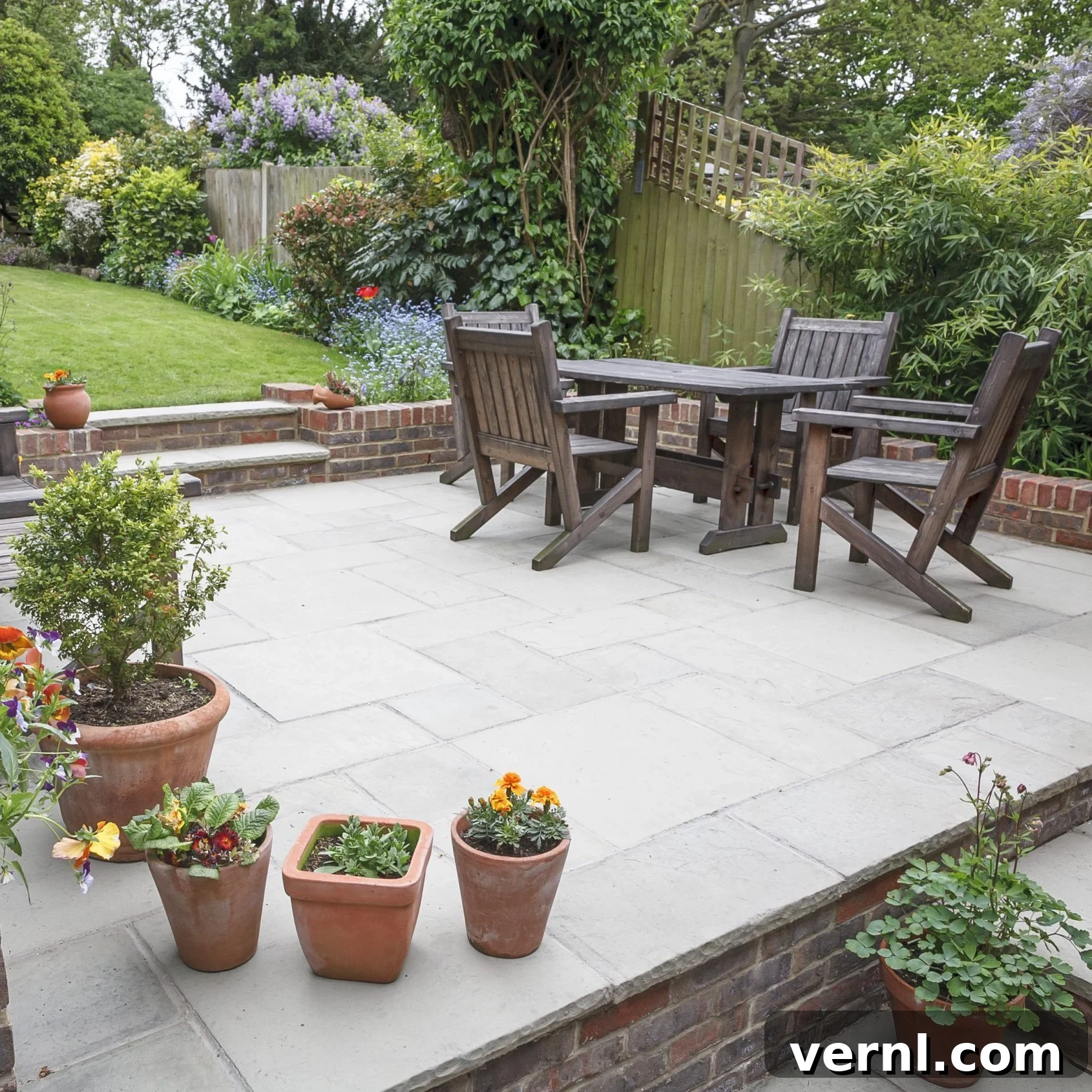
Best Patio Flooring Options: Creating Your Ideal Outdoor Space
With summer just around the corner, many of us are looking forward to spending more time outdoors. Your home patio serves as the central hub of your outdoor living area – a perfect place to socialize, dine, and relax. Whether you’re starting from scratch or refreshing an existing space, choosing the right patio flooring is crucial. This guide explores various popular options, helping you make an informed decision for your perfect outdoor retreat.
This comprehensive guide draws upon both personal experience and expert insights. We consulted with Paul Knapp, founder and Landscape Designer at Landscape Architectural, to provide you with the most up-to-date and helpful information.
Poured Concrete Patio Flooring
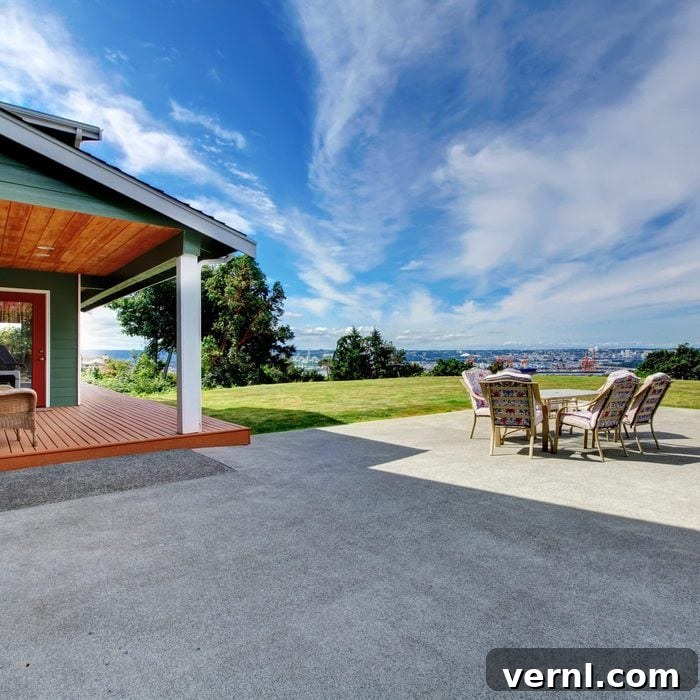
If you’re seeking a straightforward, budget-friendly option, a poured concrete patio is a solid choice. According to Knapp, “Concrete is relatively affordable, and the labor for installation is also reasonable.” The installation cost typically ranges from $10 to $15 per square foot.
Poured concrete offers a flat, level surface, ideal for easily moving around grills and patio furniture. However, its aesthetic may not be as visually appealing as other, more creative designs. While it is possible to install this type of patio yourself, it’s generally recommended to hire professionals, especially if you’re not comfortable with building concrete forms.
Longevity is another factor to consider. As Knapp points out, “It’s not a matter of if it will crack, but when it will crack.” While concrete is durable, weather conditions and seasonal changes can eventually lead to cracking.
Pros:
- More affordable than many alternatives.
- Provides a smooth, flat surface ideal for furniture and grills.
- Easy to maintain.
Cons:
- Can be less visually appealing compared to other options.
- Prone to cracking over time.
- Installation is generally best left to professionals.
Stamped Concrete Patio Flooring
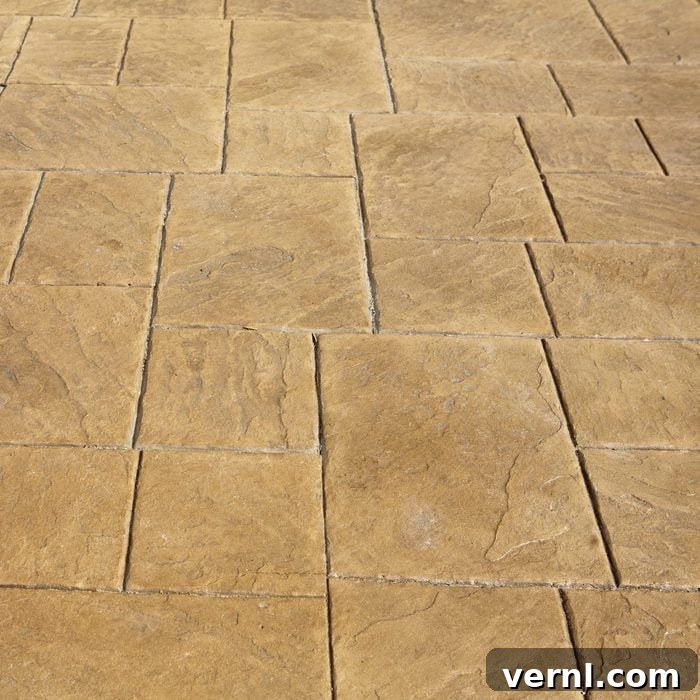
Stamped concrete patio flooring offers a way to achieve the look of more expensive materials, such as pavers, bricks, or natural stone, without the higher cost and installation complexity. This is achieved by “stamping” a pattern onto the wet concrete using a rubber form. This process replicates the outline of various materials and patterns.
If you can pour concrete, you may be able to stamp your own concrete flooring. However, Knapp cautions that precision is key: “The installer must be careful to set the form on the desired area of concrete and then be able to lift it off without messing up the imprints.” As with poured concrete, stamped concrete is also susceptible to cracking over time.
Pros:
- More visually attractive than plain poured concrete.
- Relatively low in price.
- Offers a wide range of patterns and designs to choose from.
Cons:
- Installation requires some experience and skill.
- May eventually crack over time.
Paver Patio Flooring
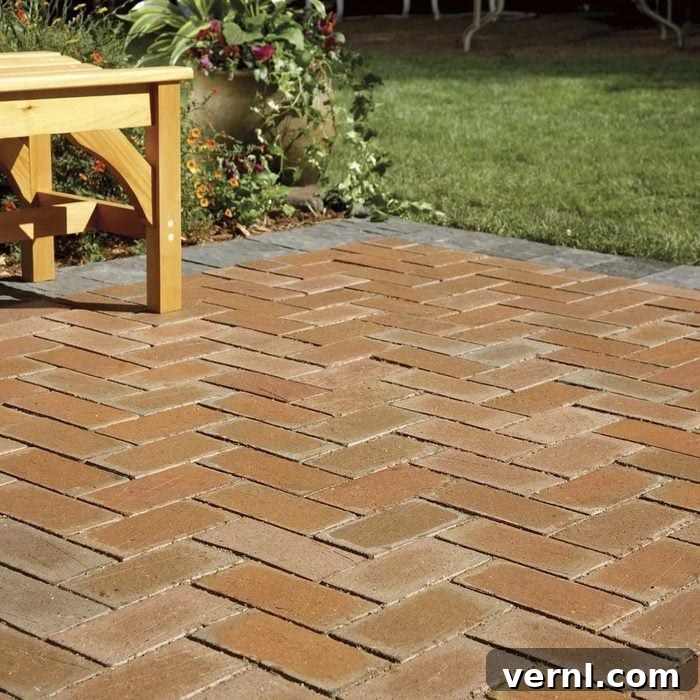
Paving stones, or pavers, are another popular choice for patios. These are typically made of concrete or clay and come in various shapes, sizes, and colors. Traditionally, they measure 4 x 8 inches and are 2.25 inches thick. Sealing pavers can help extend their lifespan.
Costs for pavers can vary. Clay pavers generally cost more than concrete ones, but they do not fade in sunlight, potentially making them a worthwhile investment. Proper installation, particularly a solid base, is crucial for pavers. Without this, your patio may become uneven and unstable.
If you decide on a DIY installation, Knapp suggests using a base of crushed gravel or recycled concrete. First, compact the soil with a hand or machine tamper. Then, install a two-inch layer of gravel and compact again. A residential patio typically requires a gravel base of around six inches, according to Knapp.
Pros:
- Available in a wide range of shapes, colors, and designs.
- Sealers can extend the lifespan of the pavers.
- Clay pavers won’t fade in the sun.
Cons:
- Installation can be complex and may not be ideal for beginners.
Natural Stone Patio Flooring
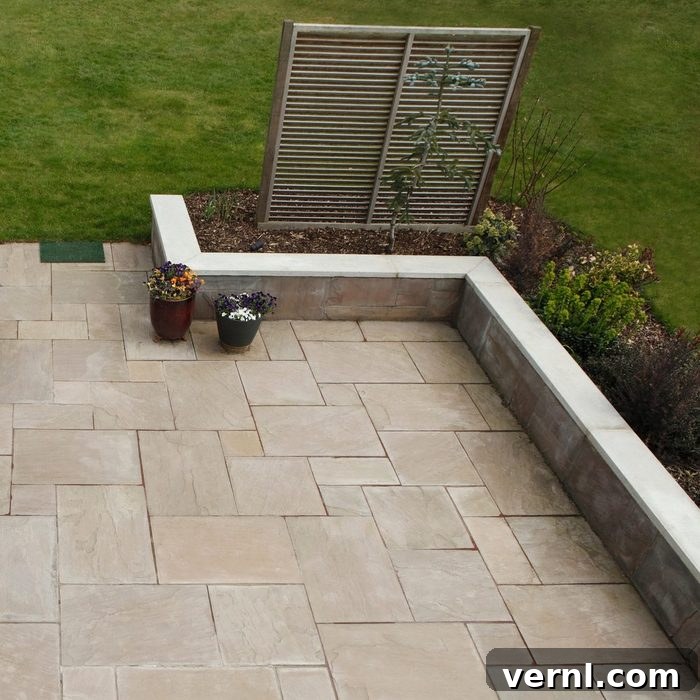
Natural stone, often found in flagstone patios, offers a distinct and attractive alternative to the more manufactured look of concrete and pavers. It is available in irregular shapes and sizes, which gives your patio a unique look. Like clay pavers, natural stone is resistant to fading from sunlight.
Due to the size of natural stone pieces, the labor-intensive quarrying process, and the limited availability of the material, it is one of the more expensive patio flooring options.
Pros:
- Will not fade in sunlight.
- Provides a natural and visually appealing aesthetic.
Cons:
- Generally more expensive than other options.
- Can be challenging to install correctly.
Decorative Chip Gravel Patio Flooring
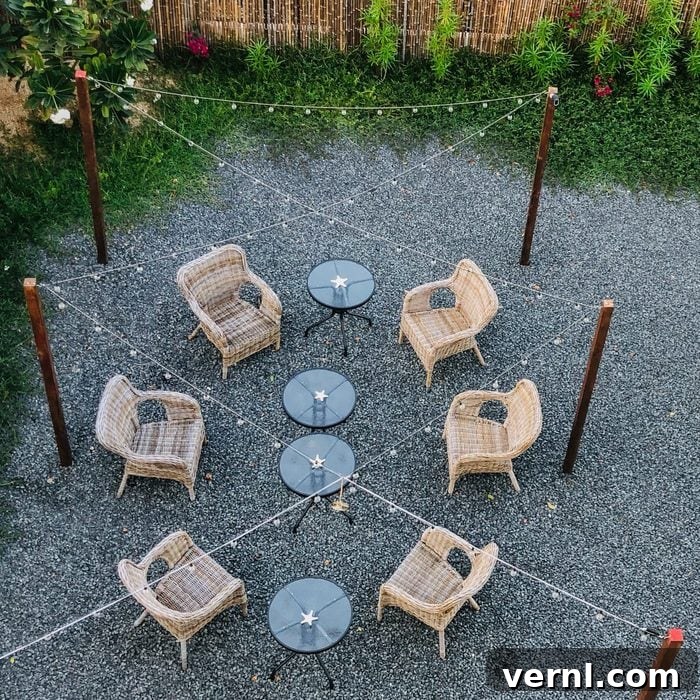
Gravel patios differ from solid flooring options. They consist of loose stones held within a border of plastic or metal edging. While gravel patios require compacting the ground, applying a gravel base, and then topping it with your decorative gravel of choice, the installation process is often less intensive than that of pavers or natural stone.
If you decide to install a gravel patio yourself, Knapp suggests limiting the decorative gravel layer to no more than one inch. Too much gravel can result in a patio that’s uncomfortable to walk on. It is important to note that gravel patios can also be prone to mess, especially if you have children or pets.
Pros:
- Relatively easy to install yourself (DIY-friendly).
- More affordable than many other options.
Cons:
- Can be messy.
- Not ideal for rolling wheeled grills or furniture across.
Choosing the right patio flooring is a significant decision. Consider the pros and cons of each material, your budget, and the overall aesthetic you want to achieve for your outdoor space. Whether you opt for the simplicity of poured concrete or the natural beauty of flagstone, the perfect patio is within reach.