Lumber prices reverberate far beyond the confines of the timber industry itself, touching the lives and financial plans of countless homeowners and businesses. For those contemplating home improvement projects, ambitious additions, or the construction of a new residence, fluctuating lumber costs can significantly alter budgets and timelines. The recent past, particularly the period during and immediately following the COVID-19 pandemic, brought unprecedented volatility to the lumber market. Many homeowners found themselves in a holding pattern, deferring planned projects in anticipation of prices receding. Understanding the intricate dynamics behind these price movements became a critical, yet often complex, endeavor for many consumers.
This comprehensive guide aims to demystify the key elements influencing lumber prices. We will break down everything from fundamental market demand and supply chain intricacies to the nuanced world of futures trading, providing clear insights and actionable information. We also draw upon expert perspectives, including those from Michael King of Fleury Lumber, to offer a well-rounded understanding of this vital commodity market.
Are Lumber Prices Going Up or Down in 2024? Current Market Outlook
As we navigate 2024, the overarching trend suggests that lumber prices are generally on a downward trajectory, albeit with gradual, incremental changes. Following the dramatic and often unpredictable swings observed during the pandemic years, the market has seen a consistent cooling period since 2022. While significant surges are not currently anticipated, the remainder of 2024 is largely expected to see prices maintain a relatively stable course, barring unforeseen global or regional disruptions. Michael King from Fleury Lumber notes, “Everything seems to be pretty stable,” underscoring a period of comparative calm after intense market turbulence. This stability offers a much-needed respite for homeowners and contractors planning projects, allowing for more predictable budgeting than in recent years.
However, it’s crucial to remember that the lumber market, like any commodity market, is subject to a multitude of influences. Geopolitical events, shifts in housing market demand, unforeseen natural disasters, or significant changes in interest rates could always introduce new volatility. For now, the general consensus points towards a more predictable pricing environment, offering a window of opportunity for those who previously delayed their construction or renovation plans.
What Is the Average Cost for Lumber?
Understanding the average cost of lumber provides a practical benchmark for budgeting and planning. These figures represent common retail prices for standard dimensions and types of wood frequently used in residential construction and DIY projects. Keep in mind that actual costs can vary based on location, supplier, grade of lumber, and market conditions at the time of purchase. The following table provides a snapshot of average costs for some of the most widely used lumber products:
| TYPE | COST (Approximate) |
| 1x4x8 (Common board) | $8 to $11 |
| 2x4x8 (Framing stud) | $3 to $6 |
| 4x4x8 (Post) | $11 to $15 |
| 4×8-ft. sheet of 1/2-in. BCX plywood | $40 to $60 |
| 4×8-ft. sheet of 3/4-in. hardwood plywood | $70 to $90 |
These prices offer a general guideline for common softwood framing lumber and plywood, which constitute the bulk of materials for many home projects. Hardwood prices, as we will discuss later, tend to be significantly higher due to different growth patterns, sourcing, and aesthetic demand.
How Are Lumber Prices Determined? Unpacking the Market Forces
The price of lumber is not dictated by a single factor but rather a complex interplay of hyper-localized weather events, global financial markets, and intricate supply chain dynamics. At its core, like most commodities, lumber pricing is a continuous negotiation between supply and demand.
What Factors Impact Lumber Prices? The Supply-Demand Equation
The fundamental principle governing lumber prices is the classic economic relationship between supply and demand. Simply put, prices are determined by the amount of lumber readily available in the market versus the quantity consumers and industries require. When the supply of lumber outstrips demand, prices typically fall as producers compete for buyers. Conversely, when demand for lumber exceeds the available supply, prices tend to rise sharply as buyers compete for a limited resource. Understanding the specific components that influence both sides of this equation is key to deciphering market movements.
What Factors Impact Lumber Supply?
The availability of lumber – from the forest to the lumberyard – is influenced by a diverse set of elements across the entire supply chain. As Michael King emphasizes, “Availability is a key price factor,” highlighting the critical role of production and logistics in shaping market dynamics.
- Production Levels: The volume of lumber harvested and processed is highly sensitive to operational factors. Labor shortages, for example, can significantly impede logging operations and sawmill productivity. Mill closures, whether due to economic pressures, maintenance issues, or regulatory changes, directly reduce the overall processing capacity. Additionally, securing access to timberlands, which involves land ownership, leasing agreements, and environmental permits, can limit the raw material available for harvesting.
- Natural Disasters and Weather Events: Extreme weather phenomena and natural disasters can have a profound and immediate impact on lumber supply. Wildfires can devastate vast tracts of timber, floods can hinder harvesting and transport, and hurricanes can disrupt entire supply chains by damaging infrastructure and mills. As King points out, “Some of the hurricanes in the past have caused plywood prices to go up temporarily,” illustrating how localized events can have ripple effects across the broader market.
- Government Policies and Regulations: Policy decisions at national and international levels play a significant role. Forestry management laws, designed to promote sustainable harvesting or protect endangered ecosystems, can limit the volume of timber available. International tariffs, such as those historically applied to Canadian softwood lumber imported into the U.S., directly increase costs for consumers. Environmental policies, including restrictions on logging in certain areas, also influence the overall supply by controlling access to natural resources.
- Shipping and Logistics: The efficiency and cost of transporting lumber from mills to distributors and ultimately to retailers are critical. Disruptions in the shipping and receiving networks – such as port congestion, truck driver shortages, rising fuel costs, or breakdowns in rail transport – can cause significant delays and increase logistical expenses. During the COVID-19 pandemic, these issues became acutely apparent, with King noting, “Through COVID, we couldn’t get anything,” a major contributing factor to the soaring prices at that time.
What Factors Impact Demand for Lumber?
The demand side of the equation is largely driven by broader economic conditions and prevailing consumer trends, reflecting the health of various industries that rely heavily on wood products.
- Economic Conditions: Periods of robust economic growth typically correlate with increased rates of home construction, commercial development, and infrastructure projects. A healthy economy boosts consumer confidence and investment, directly translating into higher demand for building materials like lumber. Conversely, economic downturns tend to suppress demand.
- Interest Rates: Interest rates exert a powerful influence, particularly on the housing market. Lower interest rates translate into lower borrowing costs for mortgages and construction loans. This affordability stimulates new home construction, renovation projects, and property investment, thereby increasing the overall demand for lumber. Higher rates, conversely, can cool down the housing market and dampen construction activity.
- Construction Industry Activity: The vitality of the construction sector is a direct indicator of lumber demand. A surge in new housing starts, the development of commercial buildings, or large-scale public works projects will inevitably lead to a higher demand for lumber. This includes both residential and non-residential construction, as well as repair and remodeling activities.
- Consumer Trends and Homeowner Demand: Evolving consumer preferences and trends also play a significant role. The “DIY boom” observed during the pandemic, where homeowners invested heavily in home improvement projects like decks, fences, and room additions, created a surge in demand for lumber. The growing popularity of outdoor living spaces or sustainable building practices can also influence demand for specific types of wood products.
Lumber Futures Explained: A Glimpse into Forward Pricing
Beyond immediate supply and demand, lumber contracts bought and sold in regulated commodities markets, known as lumber futures, exert a significant influence on current and anticipated lumber prices. This financial instrument allows market participants to hedge against price volatility and offers insights into future price expectations.
What Are Lumber Futures?
Lumber futures are standardized, legally binding agreements to buy or sell a specific quantity of lumber at a predetermined price on a future date. These are high-volume contracts traded by investors, producers, and various lumber industry stakeholders through established exchanges like the Chicago Mercantile Exchange (CME). Similar to the New York Stock Exchange, which trades company stocks, the CME facilitates the trading of commodities and goods contracts, providing a centralized marketplace for price discovery and risk management for raw materials like lumber.
How Do Lumber Futures Work?
Lumber futures contracts are meticulously standardized to ensure efficient and transparent trading within the CME. This standardization includes specific parameters such as the order size, which is typically 27,500 board feet; the price per thousand board feet (MFBM), which fluctuates based on market conditions; and predefined delivery schedules, typically occurring in specific months. Major participants in this market include large lumber producers, sawmills, and substantial construction companies, who utilize these contracts primarily to minimize their exposure to unpredictable price volatility. By locking in a future price, they can hedge against potential increases in purchasing costs or decreases in sales revenue. Additionally, speculative investors, who aim to profit from price movements, also actively participate in the lumber futures market.
It’s important to note that the vast majority of lumber futures contracts are bought and sold before their expiration date. This means that physical delivery of the lumber rarely occurs. Instead, participants close out their positions, settling the contract for a cash profit or loss based on the price difference between their initial entry and exit points. This cash settlement mechanism makes futures a financial tool for price speculation and risk management rather than a direct method for acquiring physical lumber.
How Do Lumber Futures Affect Retail Prices?
Lumber futures play a pivotal role in shaping retail lumber prices by providing a valuable market outlook several months in advance. This forward-looking perspective significantly impacts price expectations across the supply chain. When futures prices begin to rise, it signals to retailers and distributors that the cost to replenish their inventory in the coming months is likely to be higher. In anticipation of these increased wholesale costs, retailers often adjust their current retail prices upwards to maintain profit margins and hedge against future expenses. Conversely, if futures prices indicate a downward trend, retailers can afford to lower their prices, as the expected cost to restock their shelves is projected to decrease. This direct correlation ensures that the futures market acts as a leading indicator, influencing the pricing strategies of businesses throughout the lumber supply chain and, consequently, the prices consumers pay.
Furthermore, the existence of lumber futures contributes to a more stable pricing environment for consumers over the long term. By allowing industry players to hedge against volatility, it helps mitigate extreme price swings that might otherwise be passed directly onto the retail market. This mechanism provides a degree of predictability, enabling better planning for both suppliers and end-users.
Lumber Futures Prices Now: A Historical Perspective
The period from the summer of 2020 through the spring of 2022 marked an unprecedented era of instability in the lumber futures market, largely driven by the profound disruptions of the COVID-19 pandemic. To put this into perspective: in January 2020, before the pandemic truly took hold, lumber futures were trading at approximately $435.50 per thousand board feet (MFBM). By the end of that summer, fueled by an unexpected surge in home renovation projects and initial supply chain shocks, prices had nearly doubled, reaching $980 MFBM. After a brief dip during the winter months, a perfect storm of sustained demand, acute labor shortages across the supply chain, and severe delivery delays propelled prices to an astonishing peak of $1,500 MFBM by the spring of 2021. This era saw several more drastic ups and downs, creating immense challenges for builders and homeowners alike, until prices finally began to stabilize around the summer of 2022.
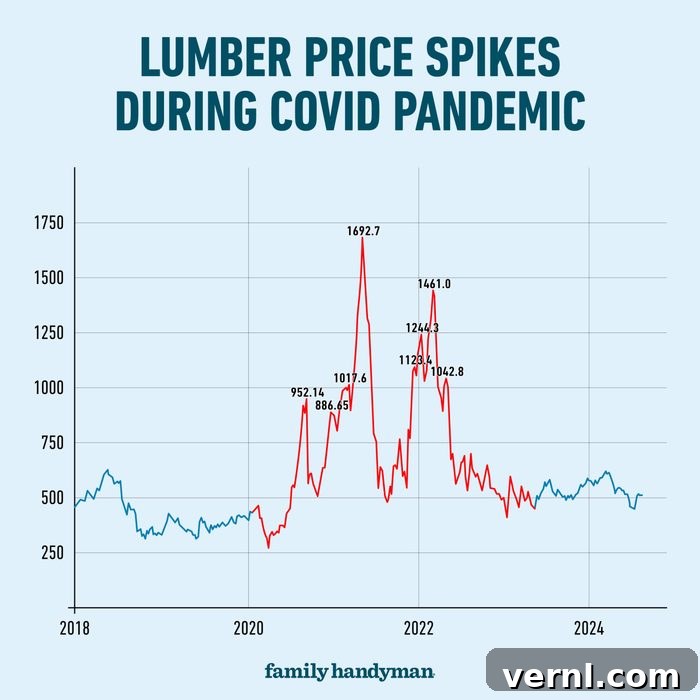
As of this writing, the market has significantly recalibrated. Lumber futures are trading around $446 MFBM, a level very close to pre-pandemic figures. This represents a substantial correction, with 2024 prices down roughly 15.2 percent from the previous year. This current stability reflects a market that has largely absorbed the pandemic-era shocks, with supply chains normalizing and demand adjusting to new economic realities.
Hardwood vs. Softwood Prices: Understanding the Differences
When discussing lumber prices, it’s crucial to distinguish between hardwood and softwood species, as their market values and the factors influencing them differ significantly. Retail prices are determined by unique characteristics, availability, and intended applications for each type of wood.
How Are Hardwood Prices Determined?
Hardwood prices are influenced by a more complex array of factors compared to common softwoods. These include:
- Wood Species: Exotic or rare hardwood species (e.g., mahogany, teak, ebony) command premium prices due to their limited availability and unique aesthetic properties. Even common hardwoods like oak or maple can vary in price depending on the specific variety and regional sourcing.
- Grade of the Wood: Hardwood is typically graded based on its appearance, strength, and workability. Higher grades, such as FAS (First and Seconds), which are nearly free of defects, are significantly more expensive than lower grades, which might have knots, mineral streaks, or other imperfections. This is crucial for furniture making or fine cabinetry where aesthetics are paramount.
- Cut of the Wood: The way a hardwood log is sawn can also impact its price. Quarter-sawn lumber, for example, is more labor-intensive to produce but yields a more stable board with a distinctive grain pattern, often leading to a higher price point than plain-sawn lumber.
- Curing and Processing: Hardwoods often require more extensive and slower drying processes (kiln-drying) to prevent warping and cracking, adding to production costs.
Why Is Hardwood More Expensive?
The higher cost of hardwood stems from several inherent characteristics and market dynamics:
- Slower Growth Rates: Hardwood trees, by definition, grow at a much slower pace than softwood species. This extended growth cycle means it takes longer for hardwood forests to replenish, limiting the sustainable supply available at any given time.
- Environmental Regulations and Sourcing: Many hardwood species are subject to stricter environmental regulations and sustainable forestry practices, particularly for exotic or endangered varieties. This can limit harvesting quotas and make sourcing more challenging and costly. As Michael King notes, “There are fewer hardwood trees, and it is harder to find,” directly impacting supply.
- Density and Durability: Hardwoods are generally denser and more durable than softwoods, making them ideal for applications requiring strength, longevity, and resistance to wear, such as flooring, fine furniture, and cabinetry. This superior quality justifies a higher price for many consumers.
- Milling Complexity: Due to their density, hardwoods can be more challenging and time-consuming to mill and process, requiring specialized equipment and skilled labor, which further contributes to their higher cost.
Four Tips for Saving Money on Lumber
Navigating lumber costs effectively can significantly impact the budget of any construction or renovation project. Here are practical strategies to help homeowners and contractors save money without compromising on quality or structural integrity.
1. Reduce Waste Through Meticulous Planning
One of the most effective ways to save money on lumber is to minimize waste. This begins with thorough and precise planning of your project. Before making any cuts or purchases, create a detailed cut list that accounts for every piece of lumber you’ll need, including exact dimensions. Visualize how each board will be used and how you can optimize cuts to get the most pieces out of each length of lumber. “Try to end up with the least amount of waste,” advises Michael King. Utilizing software or even simple graph paper can help you lay out cuts for sheet goods (like plywood) to ensure maximum yield and avoid costly offcuts. By strategically planning your cuts, you can often reduce the total number of boards or sheets you need to purchase, leading to substantial savings.
2. Buy from a Wholesale Lumber Provider
For larger projects, or if you have storage capabilities, purchasing lumber from a wholesale provider can result in significant cost savings. Wholesale lumber companies operate on a business model of buying high-volume orders directly from mills at discounted rates. They then pass a portion of these savings on to their customers. While they may have minimum purchase requirements, the per-unit cost of lumber is often considerably lower than at traditional retail home improvement stores. If your project demands a substantial quantity of materials, or if you can coordinate with others for a bulk order, exploring wholesale options is a smart financial move. Remember to factor in delivery costs if you cannot transport the large quantities yourself.
3. Strategically Use Lower-Grade Lumber
Not every component of a building project requires the highest-grade, aesthetically perfect lumber. By strategically utilizing lower-grade lumber in areas that will be hidden from view, you can save money while allocating your budget for more expensive, finish-grade materials where they truly matter. For example, framing for interior walls, subflooring, or structural components that will be covered by drywall, insulation, or other finishes do not need to be visually flawless. Save your premium, clear, knot-free lumber for visible surfaces like trim work, custom cabinetry, or exposed beams. This thoughtful approach to material selection ensures you meet structural requirements and aesthetic goals without overspending on hidden elements.
4. Embrace Shortboards for Smaller Projects
Lumber shortboards, typically defined as lengths less than 8 feet, are often overlooked but can be a treasure trove of savings for smaller projects or specific needs. These shorter lengths are frequently priced at a discount compared to standard longer boards because they are often offcuts from larger batches or less in demand by contractors building large structures. For tasks like crafting small furniture, making repairs, creating blocking, or building custom shelving, shortboards can be perfectly adequate and significantly reduce waste. Many lumberyards have a designated “shorts” section where you can find these cost-effective options. By actively seeking out and utilizing shortboards, you can efficiently complete smaller tasks while minimizing material waste and expenditures.
5. Purchase in Volume When Possible
While similar to buying wholesale, purchasing in volume even from a retail supplier can sometimes unlock discounts. For larger projects, buying all your necessary lumber at once can result in better pricing, especially if the supplier offers volume discounts. It also simplifies logistics, as you might qualify for free or reduced-cost delivery. However, ensure you have adequate, dry storage space to protect the lumber from moisture and warping until it’s ready for use. Planning ahead and consolidating your purchases can lead to noticeable savings over multiple smaller trips to the lumberyard.
About the Expert
- Michael King brings over two decades of invaluable experience to the lumber industry. He currently serves in contractor sales at Fleury Lumber, a comprehensive, full-service lumberyard located in Easthampton, Massachusetts. Throughout his extensive tenure at Fleury Lumber, Michael has held various pivotal roles, providing him with a deep, multifaceted understanding of lumber sourcing, pricing, and market dynamics. His insights offer a practical, boots-on-the-ground perspective on the complex world of lumber.
Sources
- CME Group, An Introductory Guide to Random Length Lumber Futures and Options.
- Madison’s Lumber Report, Lumber Prices Go Lower as Summer Downtime Approaches. (2024)
- Statista, Monthly Price of lumber in the United States from January 2016 to February 2024. (2024)
[cf]skyword_tracking_tag[/cf]