
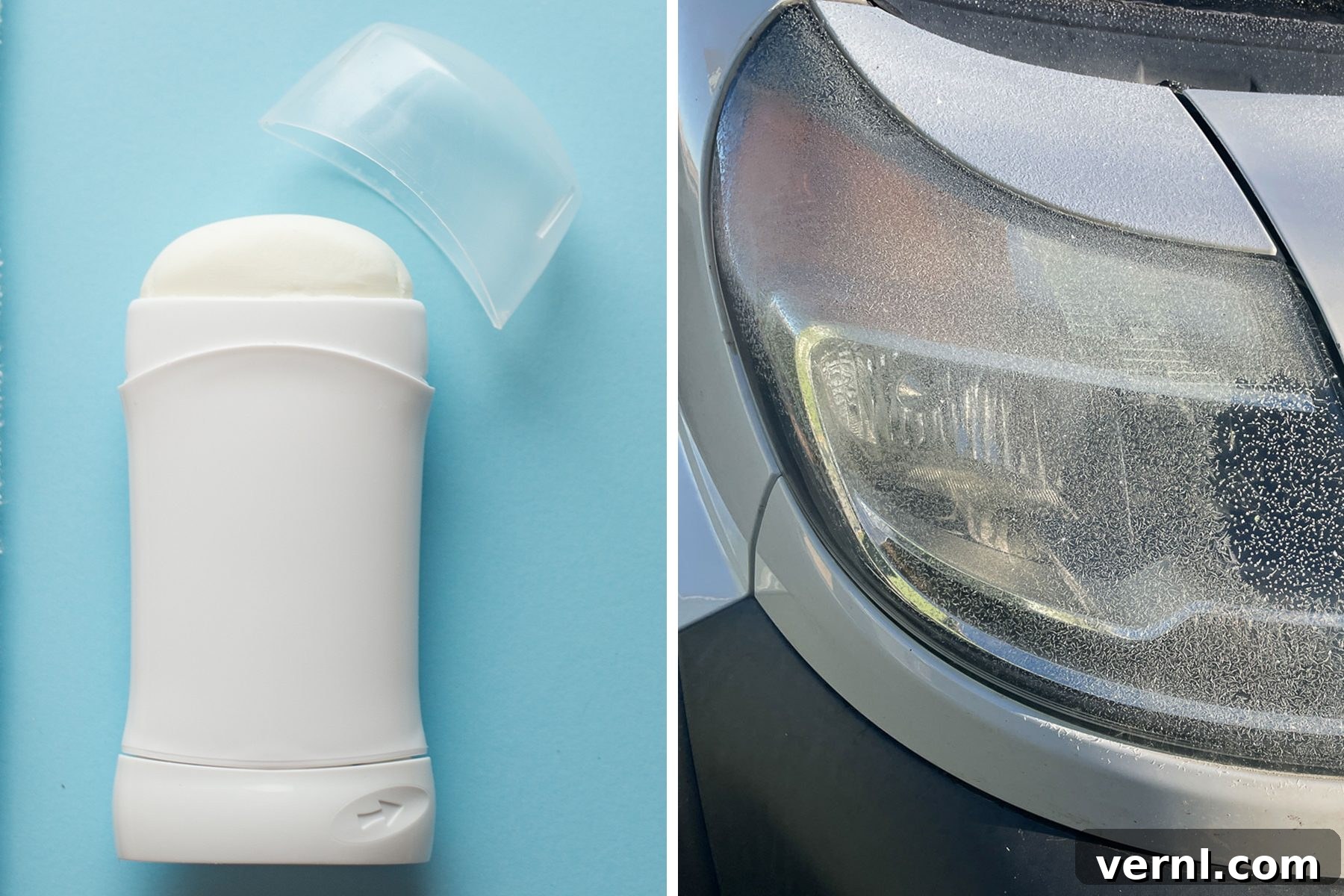
Viral Car Hack Debunked: Does Deodorant Really Work on Headlights?
As colder temperatures sweep across the country, countless drivers turn to the internet in search of quick fixes for common winter car woes. From preventing icy windshields to de-icing frozen locks, ingenious (and sometimes questionable) car hacks become viral sensations. One such trending tip making the rounds on social media, particularly TikTok, suggests rubbing deodorant on your car headlights to prevent ice and snow buildup, clean them, and even combat yellowing.
The allure of a simple, readily available household item solving multiple car problems is undeniably strong. However, experienced automotive professionals often view these viral hacks with a healthy dose of skepticism. “This reminds me of the viral headlight cleaning hack that advised people to use bug spray that contained DEET,” cautions Parham Koukia, lead detailer and operations manager at Panda Hub in Toronto. “It makes it look nice and clear at the time, but you’re creating more work for yourself further down the road because it results in long-term damage to the polycarbonate and quicker hazing.”
Such warnings raise a crucial question: is the deodorant headlight hack a genuine breakthrough for car care, or is it merely another fleeting trend that promises much but delivers little, potentially causing more harm than good? To get to the bottom of this automotive mystery, we consulted with industry experts and put the claim to the test. Here’s what we uncovered about the effectiveness and safety of using deodorant on your car’s headlights.
The Deodorant Car Headlight Hack: A Deep Dive into the Viral Sensation
The origins of this particular hack can be traced back to a viral TikTok video, where the creator enthusiastically demonstrates the supposed benefits. According to the host, any stick deodorant containing the ingredient zirconium – which is present in most antiperspirant deodorants – holds the key to safer, easier winter driving. The method is simple: apply a generous layer of stick deodorant directly onto your car’s headlight lenses, then use a paper towel to buff the residue away until the surface appears clear and free of any film.
The video’s host claims to perform this routine once a month, asserting that it effectively keeps his headlights free of ice and snow, cleans them of dirt and grime, reduces the common problem of yellowing, and even prevents moisture from building up inside the lamp housing. These multifaceted claims paint a picture of a single, inexpensive solution to a range of persistent car headlight issues, making the hack incredibly appealing to budget-conscious and convenience-seeking drivers alike. But do these claims hold up under scrutiny from automotive science and real-world application?
Can Deodorant Really Prevent Ice and Snow Buildup? Unpacking the Science
The primary claim that draws many drivers to this hack during winter is its supposed ability to prevent ice from forming on headlights. The theory behind this lies in one of deodorant’s key ingredients: zirconium. According to the National Institutes of Health, zirconium acetate is a compound often employed in the manufacturing of waterproof chemicals, including those found in antiperspirants, printing inks, and paints. Given this property, it’s theoretically plausible that zirconium could create a hydrophobic (water-repelling) barrier on the surface of a headlight lens, thereby preventing moisture from adhering and subsequently freezing into ice.
Furthermore, some speculate that other oils or chemical compounds present in deodorant might disrupt the formation of ice crystals, either by lowering the freezing point of water on the surface or by creating a smoother, less hospitable surface for ice to bond with. While the scientific premise has a degree of theoretical backing, practical application tells a more nuanced story.
In a real-world, albeit non-scientific, experiment, deodorant was applied to a section of a headlight lens. The next morning, after temperatures dropped to around 10 degrees Fahrenheit, the treated area did show “fewer” ice crystals compared to the untreated sections. However, crucially, there were still “some” ice crystals present. This suggests that while deodorant might offer a marginal reduction in ice formation, it is far from a complete or reliable preventative measure. The effectiveness of such a treatment would also heavily depend on numerous environmental factors, including relative humidity, ambient air temperature, the specific composition of the deodorant, and the frequency of application. For instance, in conditions of heavy snowfall or extreme freezing rain, any minor benefit might be quickly overwhelmed. Relying on such an unreliable method for critical visibility components like headlights can compromise driving safety.
Deodorant as a Headlight Cleaner: A Superficial Shine or a Genuine Solution?
Another enticing claim is that deodorant can effectively clean headlights. Technically, yes, deodorant can remove some surface grime. As Chris “Moose” Pyle, an automotive expert with JustAnswer.com, humorously points out, “But so can toothpaste, coke, urine, gasoline and Jack Daniels.” His statement underscores a critical truth: anything with chemicals, acids, or abrasive properties can, at least temporarily, make headlights appear cleaner. The initial ‘clean’ often comes from a superficial interaction, either dissolving light grime or physically abrading the uppermost layer of the plastic.
However, this temporary cleanliness often comes at a steep price. Many of these unconventional cleaning agents, including deodorant, are not formulated for the specific material of modern headlight lenses, which are typically made from polycarbonate plastic. As Parham Koukia explains, “While it might remove minor surface dust and greasy films in a pinch, it lacks the abrasives or chemical compounds needed to break down oxidation, the real cause of yellowed, hazy headlights.”
Headlight yellowing and hazing are primarily caused by the degradation of the polycarbonate plastic due to prolonged exposure to ultraviolet (UV) radiation from the sun and heat from the headlight bulbs. This process, known as oxidation, creates a microscopic layer of damaged, discolored plastic on the surface. True headlight restoration requires specialized compounds designed to safely remove this oxidized layer without damaging the underlying plastic or its protective clear coat. Deodorant, with its unique chemical composition, does not possess these targeted properties. Instead, it might simply spread oils and other substances across the surface, temporarily filling in micro-scratches or altering light reflection to create a deceptive appearance of clarity, while potentially accelerating long-term damage by chemically reacting with the plastic or clear coat.
Combating Yellowing: Does Deodorant Offer Lasting Protection?
The idea that deodorant could prevent headlights from yellowing is another aspect of the viral hack. Yellowing is a common problem caused by the polycarbonate lenses drying out and degrading under constant exposure to harsh UV rays from the sun and the heat generated by the headlamp bulbs. This degradation leads to the breakdown of the plastic’s chemical bonds, resulting in a cloudy, yellowish appearance that significantly diminishes light output and driving visibility.
Chris “Moose” Pyle concedes that “technically, a little” benefit might be observed. He suggests that because deodorant contains some oils, it could slightly help to replenish oils on the lens surface, offering a minimal, temporary moisturizing effect. However, this is a far cry from a genuine solution. Once yellowing has begun, oils merely mask the symptoms; they do not reverse the underlying chemical degradation. More importantly, and perhaps most detrimentally, deodorant offers no inherent protection against UV rays – the primary culprit behind headlight yellowing. Without robust UV protection, any temporary cosmetic improvement will be short-lived, and the yellowing will quickly return, often worse than before, as the unprotected plastic continues to deteriorate. A proper headlight restoration process always concludes with the application of a UV-resistant clear coat, which is crucial for long-term protection.
Addressing Internal Moisture: A Problem Beyond Deodorant’s Reach
One of the more ambitious claims of the deodorant hack is its ability to prevent moisture buildup inside the headlight assembly. This claim, however, is definitively debunked by automotive experts. Moisture inside headlamps can arise from two distinct issues: normal condensation or a breach in the headlight casing. “Rubbing some Old Spice on the lens is not going to reseal the headlight,” states Chris “Moose” Pyle, highlighting the absurdity of using a surface treatment for an internal structural problem.
Normal condensation occurs when warm, moist air inside the lamp comes into contact with the cooler lens. Modern headlight assemblies are designed with vents, typically located at the back of the lamp, to allow for this condensation to naturally evaporate and dissipate. As Eric Ruble, a senior communications specialist with Nissan, explains, “This is a normal occurrence, and the condensation typically evaporates through vents in the back of the lamp.” If condensation persists, turning on the headlights can often help dissipate the moisture through the heat generated by the bulbs.
The more serious cause of internal moisture is a breach in the casing, which could be due to a crack in the lens, a damaged seal, or a faulty gasket. A breach allows external water to enter the assembly, leading to significant fogging, potential electrical shorts, bulb failure, and even corrosion of internal components. No amount of external application of deodorant can repair a structural breach. Such issues require professional inspection, and often, replacement of the headlight assembly or a specialized sealing repair. Attempting to “fix” internal moisture with deodorant is not only ineffective but can also mask a serious problem that could compromise the integrity and safety of your vehicle’s lighting system.
The Verdict: Is Deodorant a Safe and Effective Headlight Solution?
Based on expert opinions and practical considerations, the consensus is clear: using deodorant on your car’s headlights is likely not a great idea, and its perceived benefits are far outweighed by the potential risks. “Using deodorant isn’t worth it unless you value your headlights smelling like your armpits,” quips Parham Koukia, underscoring the impracticality and unappealing side effects.
While deodorant might offer a fleeting visual improvement, the long-term consequences can be detrimental. You run a significant risk of damaging the delicate plastic or its protective clear coat, especially if you consider this a regular or long-term solution. Koukia further warns, “It could also leave residue, which will cause more things to stick to it, or add more abrasions, meaning it could get hazy quicker with every application.” This residue can attract dust and dirt, making the headlights dirtier faster, and the act of rubbing or the chemical interaction can introduce microscopic scratches, accelerating the hazing process and leading to a duller appearance much sooner than if no product had been used.
Automotive manufacturers strongly advise against such improvised solutions. Eric Ruble confirms that engineers on the Nissan headlight team “recommend against using deodorant or any other product not intentionally designed for headlight care.” He elaborates on why: “Our headlamps feature a protective coating rigorously tested with automotive headlamp cleaners to ensure durability and effectiveness. Using incompatible products may damage this coating, reducing its ability to prevent yellowing, chipping, cracking, and fogging.” This factory-applied coating is a crucial defense against environmental damage; compromising it with inappropriate chemicals can leave your headlights vulnerable and shorten their lifespan significantly, ultimately costing you more in repairs or replacements.
Effective and Safe Alternatives for Headlight Care
Instead of resorting to questionable viral hacks, there are proven, safe, and effective methods to address common headlight issues. Investing in proper care not only maintains the aesthetics of your vehicle but, more importantly, ensures optimal visibility and driving safety.
For Ice and Snow Prevention and Removal:
- Mechanical Removal: For loose snow, gently brush it away from the lenses using a soft-bristled brush or a snow brush. Avoid using harsh scrapers directly on the plastic, which can cause scratches.
- Activate Headlights: The most straightforward solution for thin ice is to simply turn on your headlights. The heat generated by the bulbs is often sufficient to melt a thin layer of ice, aiding in quicker thawing.
- Commercial Deicer Sprays: For more stubborn ice, specialized automotive deicer sprays are readily available. These formulations are designed to quickly break down ice without harming your vehicle’s paint or plastic components.
- DIY Deicing Solutions: You can create effective homemade deicers. A mixture of two parts vinegar to one part water, or a solution of two parts rubbing alcohol to one part water, can be sprayed onto icy headlights. Both vinegar (acetic acid) and rubbing alcohol (isopropyl alcohol) have lower freezing points than water and can help melt ice and prevent refreezing. Always test DIY solutions on a small, inconspicuous area first.
- Preventative Measures: To prevent ice from forming overnight, consider spraying your headlights with a product like Rain-X. Its hydrophobic properties can prevent water from adhering and freezing for a period. Alternatively, covering your headlights with pieces of cardboard or old towels the night before can provide an insulating barrier against freezing temperatures.
For Yellowing, Hazing, and Restoration:
- Headlight Restoration Kits: This is by far the best and most durable solution for yellowed or hazy headlights. Quality headlight restoration kits typically involve a multi-step process that includes sanding to remove the oxidized layer, polishing to restore clarity, and finally, applying a UV-protective sealant. This process not only dramatically improves the appearance and light output but also provides lasting protection against future degradation. As Koukia notes, “A quality headlight restoration kit will do a much better job of truly cleaning and polishing headlights, as well as protecting them for the future.”
- Professional Detailing Services: If your headlights are severely damaged, or if you’re uncomfortable performing the restoration yourself, consider hiring a professional car detailer. They have the specialized tools, products, and expertise to restore headlights to near-new condition.
- Regular Cleaning with Approved Products: For routine maintenance, use automotive-specific car wash soap and water, or a dedicated headlight cleaner. Avoid abrasive cleaners or harsh chemicals not designed for automotive plastics.
Ultimately, while viral car hacks can be entertaining, when it comes to critical safety components like headlights, it’s always best to rely on proven methods and products recommended by automotive professionals and manufacturers. Prioritizing correct care not only safeguards your investment but, more importantly, ensures your safety and visibility on the road.
About the Experts
- Parham Koukia is lead detailer and operations manager at Panda Hub in Toronto. He has spent more than a decade mastering the art of car detailing, after turning his passion for automobiles into his profession.
- Chris “Moose” Pyle is a master-certified technician with 20-plus years of automotive experience. He has also worked as an expert for JustAnswer.com since 2006.
- Eric Ruble is senior communications specialist for technology and safety at Nissan.