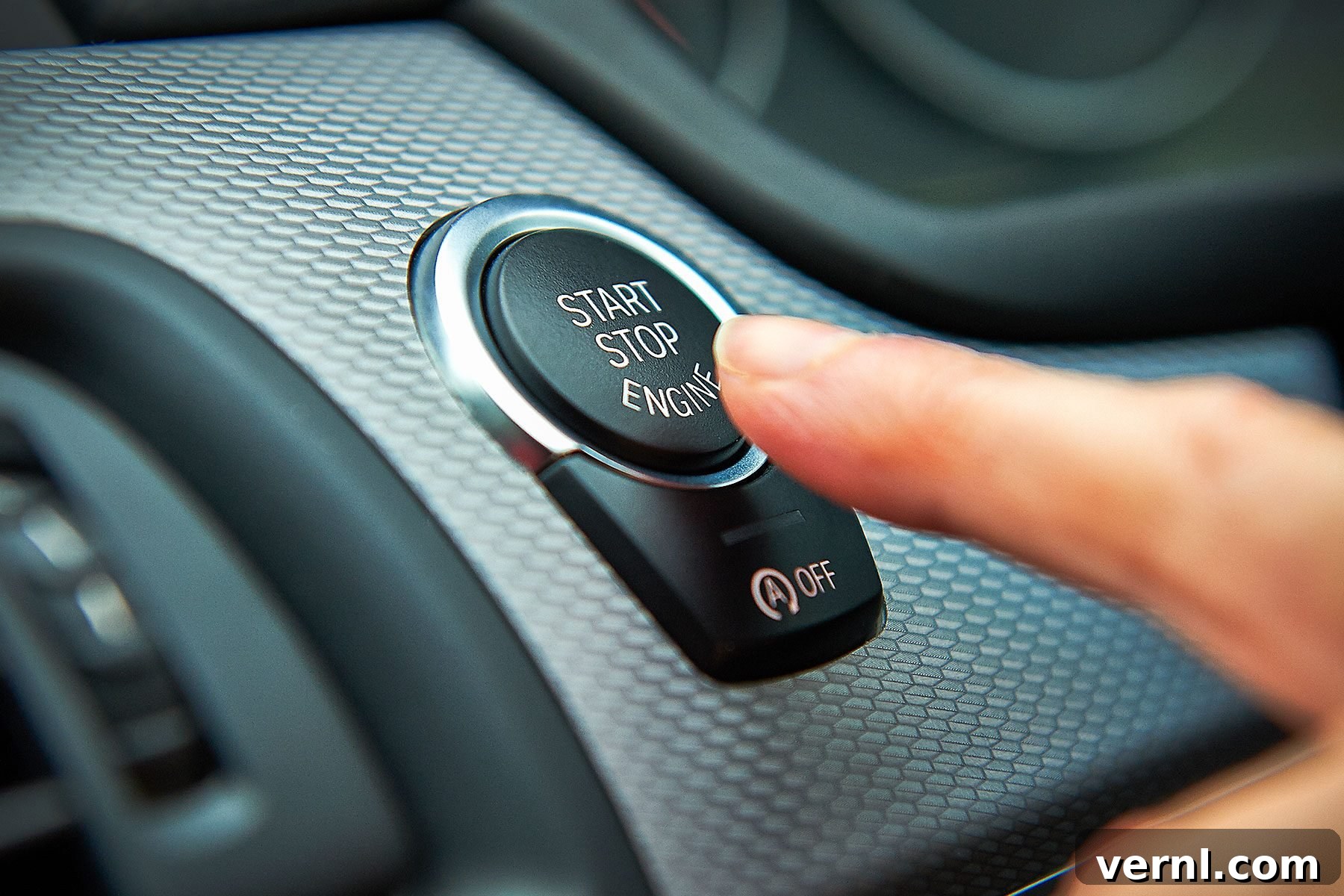
Throughout my extensive career, spanning thousands of vehicles as a 50+ year ASE and General Motors master technician and an automotive technology vocational educator, I thought I had encountered every possible automotive scenario. Imagine my surprise, then, when driving my brand-new car home from the dealership, the engine seemed to stall every time I stopped at a red light. My initial reaction was confusion, quickly followed by frustration, as the engine instantly roared back to life the moment my foot lifted from the brake pedal.
My seasoned automotive “Spidey-sense” immediately kicked in. Before making a potentially embarrassing call to the dealership, questioning a “stalling” car that miraculously restarts itself, I did what any good technician, or car owner, should do: I consulted the owner’s manual – arguably the most important, yet often unread, book for any vehicle owner. It was there that I was formally introduced to the auto start-stop feature. If you’ve recently experienced a similar bewildering moment, or simply want to understand this increasingly common automotive technology, read on to discover everything you need to know about the stop-start system in modern vehicles.
Why Does My Car Shut Off When I Stop? Understanding Auto Start-Stop Technology
If your vehicle’s engine consistently shuts down when you come to a complete stop and then seamlessly restarts as soon as you release the brake pedal, it’s equipped with an auto start-stop system. This innovative feature is a cornerstone of modern automotive design, engineered primarily to enhance fuel efficiency and reduce tailpipe emissions, particularly in urban driving conditions characterized by frequent stops and prolonged idling.
The concept is simple yet effective: an idling engine consumes fuel and emits pollutants without actually moving the vehicle. By momentarily switching off the engine, the stop-start system eliminates this wasteful consumption and emission during periods of inactivity. This is especially beneficial in heavy stop-and-go traffic, where traditional engines would spend significant time idling, burning fuel needlessly. Vehicles featuring this technology are not simply retrofitted; they are purpose-built with heavy-duty components, including robust starter motors, strengthened engine internals, and advanced batteries, all designed to endure the increased cycling without premature wear or diminished performance. This ensures the system operates reliably and extends the lifespan of critical components that would otherwise be strained by the frequent on-off cycles.
What Is the Auto Stop-Start System? Deeper Dive into Its Functionality
The auto stop-start system, often referred to as idle stop-start or simply start-stop, is a sophisticated piece of automotive technology designed to maximize efficiency. When your vehicle comes to a complete halt—whether at a traffic light, in a drive-thru line, or amidst freeway congestion—the system intelligently shuts down the engine. The premise is straightforward: if the engine isn’t running, it’s not consuming fuel, producing exhaust emissions, or contributing to unnecessary wear and tear on internal components. This immediate cessation of fuel consumption during idle periods translates directly into improved fuel economy, reducing the amount of fuel that would otherwise be wasted.
The engineering behind this system ensures a virtually instantaneous restart. From my professional experience, the engine re-engages almost imperceptibly, typically in less than half a second, the moment you begin to lift your foot from the brake pedal. This rapid response means there’s no noticeable hesitation as you prepare to accelerate, allowing for a smooth and continuous driving experience. Advanced sensors monitor various parameters, including vehicle speed, brake pressure, steering angle, and even cabin temperature, to determine the optimal times for activation and deactivation. For instance, if the engine hasn’t reached its optimal operating temperature, or if the air conditioning system requires constant engine power to maintain the desired cabin climate, the system may temporarily disengage, ensuring driver comfort and optimal engine performance are prioritized.
How to Reset Your Car’s Stop-Start System
There may be instances where resetting your vehicle’s auto start-stop system becomes necessary, perhaps due to a persistent malfunction or after certain maintenance procedures. While specific instructions can vary significantly between manufacturers, models, and years, it’s always prudent to consult your owner’s manual first for any specific guidance. However, here are some generic steps and common methods:
- Battery Disconnect: One common method involves disconnecting the vehicle’s battery.
- Carefully disconnect the negative battery terminal, wait for approximately five minutes, and then reconnect it. This process can sometimes clear temporary glitches or erroneous fault codes from the vehicle’s computer system.
- Be aware that disconnecting the battery may cause you to lose certain “pre-sets,” such as radio stations, clock settings, and other personalized vehicle configurations. To mitigate this, consider using a battery memory saver. These devices plug into your car’s power outlet or cigarette lighter, providing a small continuous current to protect the computer, radio, keyless entry, and clock memory settings from being erased during the battery disconnection process.
- Scan Tool Usage: Depending on your vehicle’s make, model, and year, a professional-grade automotive scan tool may be required to reset the start-stop system. These tools can access and clear specific error codes from the Engine Control Module (ECM) and other relevant systems, often a necessary step after component replacement or to address complex system malfunctions.
Why You Might Need to Reset the Start-Stop System
Several factors can lead to the need for a system reset or can prevent the start-stop system from functioning correctly:
- Battery Health: A weak, failed, or shorted battery is a primary culprit. The start-stop system relies on a robust battery to handle the increased power demands of frequent restarts. If the battery’s charge is low or its overall health is compromised, the system will often deactivate itself to conserve power and ensure the engine can always start when needed.
- Battery Cables and Grounds: Loose or corroded battery cables and ground connections can disrupt the delicate electrical balance in modern, highly complex vehicles, whether they are traditional internal combustion engine (ICE) or electrified models. Such issues can prevent the start-stop system from receiving or transmitting proper signals, leading to malfunction.
- Component Replacement: Replacing key components like the starter motor, alternator, or even performing a significant computer software upgrade can sometimes result in a loss of communication between the start-stop system and these new or updated parts. This communication breakdown can prevent the system from operating as intended, requiring a reset or recalibration.
- System Malfunctions: Like any complex electronic system, the start-stop feature can experience issues. Extreme operating temperatures, faulty engine or other vehicle sensors (e.g., brake pedal sensor, hood latch sensor, battery sensor), general wear and tear on components, or even glitches in the control software can all contribute to system errors.
- Warning Lights: If a specific warning light related to the start-stop system illuminates on your dashboard, a reset may be required to clear the fault code, extinguish the warning light, and restore the system’s normal operational functions.
Do All 2024 Cars Have the Stop-Start System?
While the auto start-stop system has become increasingly prevalent across the automotive industry, driven by stricter fuel economy standards and environmental regulations, it is not universally present in all 2024 model year vehicles. The adoption rate is high, especially among mainstream and luxury brands, but there are still exceptions.
Typically, some entry-level or sub-compact vehicles might forgo the start-stop function to keep manufacturing costs down. For example, certain trim packages of vehicles like the Kia Soul might not include this feature. Moreover, hybrid and plug-in hybrid vehicles, which also utilize an internal combustion engine (ICE) alongside electric motors, employ a conceptually similar but technically distinct start-stop system. Their design often integrates the electric motor with the powertrain, resulting in an even smoother, almost imperceptible transition from electric power to gasoline power when accelerating from a stop. Full battery-electric vehicles (BEVs), by their very nature, do not require or utilize a stop-start system, as they do not have an internal combustion engine to shut off and restart.
Can I Turn Off My Car’s Stop-Start System?
Yes, for those who find the frequent engine cycling disruptive or simply prefer a traditional driving experience, virtually all vehicles equipped with an auto start-stop function provide a way to temporarily disable it. Most manufacturers include a dedicated button or switch on the dashboard or center console, often labeled with an “A” encircled by an arrow (or similar iconography), allowing drivers to deactivate the system with a single press. While this provides immediate relief for drivers like my wife, who find the feature “infuriating,” it’s important to understand the implications of doing so.
Is It Recommended to Turn Off the Stop-Start System?
Generally, it is not recommended to permanently disable the auto start-stop function. The primary reasons for its inclusion in modern vehicles are significant: improving fuel economy and reducing tailpipe emissions. While the EPA’s official fuel economy estimates may or may not fully capture the benefit of stop-start in their standardized testing cycles, real-world driving can see a noticeable difference. Depending on your specific driving habits, particularly if you spend a lot of time in urban environments with frequent stops, you could experience a 3-9% increase in fuel economy by allowing the system to operate as intended. Furthermore, from an environmental perspective, remember that an internal combustion engine releases “zero” tailpipe emissions when it is not running, contributing positively to air quality in congested areas.
Important Considerations When Using the Auto Stop-Start System
Concerns about the long-term durability of components due to the frequent cycling of auto start-stop systems are understandable. However, it’s crucial to recognize that these systems are purposely engineered for resilience. Vehicles equipped with start-stop technology incorporate reinforced components specifically designed to withstand the increased stress that would normally cause excessive wear on conventional starter motors and internal combustion engines. This includes heavy-duty starters, more robust engine mounts, and often redesigned crankshaft bearings, all built to ensure longevity and reliability.
The battery in start-stop vehicles also plays a critical role and is subjected to increased demand. Consequently, modern cars featuring high-demand electronics and start-stop technology are typically equipped with specialized batteries: either high-performance Absorbent Glass Mat (AGM) batteries or Enhanced Flooded Batteries (EFB). These advanced battery types are intentionally designed to manage the constant discharging and recharging cycles inherent to the start-stop system more effectively than conventional lead-acid batteries, providing the necessary power and durability. To reduce stress and extend the life of your battery in a start-stop equipped vehicle, consider these tips:
- Regular Battery and Cable Maintenance: Periodically check and service your battery and battery cables/terminals. Ensure connections are clean and tight to maximize electrical flow and prevent corrosion, which can significantly impair battery performance.
- Avoid Prolonged Idleness and Short Trips: While the system aims to counteract idling, allowing your car to sit unused for extended periods can deplete the battery. Similarly, frequent short trips, where the engine doesn’t have sufficient time to fully recharge the battery, can put additional strain on the electrical system.
- Manage Accessory Use: When possible, especially during short stops or when the engine is frequently cycling, consider turning off non-essential accessories. This includes the HVAC system (particularly the fan and AC compressor), infotainment systems, heated seats, and lights. Minimizing these electrical draws helps to reduce the load on the battery, ensuring more power is available for engine restarts.
Understanding and properly maintaining your vehicle’s auto start-stop system ensures you can fully benefit from its fuel-saving and emission-reducing capabilities without compromising reliability or component longevity.
Resources
- U.S. Department of Energy: “Why Is Fuel Economy Important” (Nov 2024)
- Edmunds: Do Stop-Start Systems Really Save Fuel? (Nov 2024)
- Battery Council International: “Start-Stop Vehicles Reduce Emissions & Boost Fuel Economy” (2024)
- Kia: 2024 Soul Owner’s Manual (2024)