
Sustainable Home Insulation: Eco-Friendly Choices for a Smarter, Healthier Home
Every homeowner understands that effective home insulation is foundational to a dwelling’s energy efficiency and its ability to dampen unwanted noise. However, the impact of your insulation choices extends far beyond immediate comfort and utility savings; it significantly influences environmental sustainability and even the health of your household members. As awareness grows regarding eco-friendly living and the long-term effects of our material choices, more homeowners are seeking innovative and responsible insulation solutions.
If you’ve noticed persistent issues with temperature regulation in your home – perhaps rooms that are consistently too hot or too cold, excessive amplification of external sounds, or an unwelcome draftiness – these are often tell-tale signs of inadequate insulation. Such problems inevitably lead to an overworked HVAC system and, consequently, alarmingly high energy bills. Beyond the financial strain, a poorly insulated home contributes disproportionately to greenhouse gas emissions, as its heating and cooling systems must operate far more intensively to maintain desired indoor temperatures.
Why Prioritize Sustainable Insulation?
Choosing sustainable insulation is a decision that pays dividends in multiple ways. It’s not just about compliance with modern building standards; it’s about making a conscious choice for a better future. Eco-friendly insulation materials often boast impressive thermal performance, meaning they excel at resisting heat transfer, thereby keeping your home warmer in winter and cooler in summer. This directly translates to reduced energy consumption and lower monthly utility costs. Furthermore, many sustainable options are manufactured using recycled content or renewable resources, minimizing their environmental footprint from production to disposal.
Another crucial benefit lies in improved indoor air quality. Traditional insulation materials sometimes contain chemicals, formaldehyde, or fiberglass particles that can irritate respiratory systems. Sustainable alternatives, on the other hand, frequently utilize natural fibers or inert materials, contributing to a healthier living environment free from harmful off-gassing. They also often offer superior soundproofing qualities, transforming your home into a quieter, more serene sanctuary.
Expert Insights on Insulation Choices
To gain deeper insights into the best insulation options available today, we consulted with Tony Leiner, owner of Whole House Insulation, Inc. in Milwaukee, Wisconsin. With an impressive 41 years of experience in the insulation industry, Leiner offers invaluable advice for homeowners navigating the vast array of choices: “Do your homework on different insulations and know what chemicals you’re exposing yourself and others to.” This emphasizes the critical importance of research, not just for performance but for safety and long-term well-being.
The good news for today’s homeowners is that the insulation industry has made remarkable strides. We are no longer limited to products laden with toxic chemicals or carcinogenic fumes that compromise indoor air quality and personal health. Without sacrificing an ounce of efficiency or thermal performance, a new generation of sustainable home insulation options has emerged. These innovative materials are not only safe for installation and occupancy but also contribute positively to environmental preservation, all while delivering exceptional insulating capabilities.
Understanding R-Value: The Core of Insulation Performance
Before diving into specific sustainable insulation types, it’s essential to understand a fundamental concept: the R-value. Every insulation product comes with an R-value rating, which is often a requirement specified by local building codes. This value serves as a universal metric illustrating how effectively a material insulates.
The “R” in R-value stands for resistance – specifically, resistance to heat transfer. It quantifies how well a material resists the flow of heat from a warmer area to a cooler area. Simply put, a higher R-value indicates superior thermal resistance, meaning the material is more effective at preventing heat loss in winter and heat gain in summer. This resistance is crucial for maintaining stable indoor temperatures and minimizing the workload on your heating and cooling systems.
It’s important to note that required R-values are not uniform across the board. They vary significantly depending on your geographical region, local climate, and specific building components (walls, attics, floors). Colder climates naturally demand higher R-values to combat greater temperature differentials, while warmer climates might prioritize preventing heat gain. Achieving the mandated R-value often necessitates a certain depth or thickness of insulation material. When selecting insulation, always consult local building codes and consider your climate zone to ensure optimal performance and compliance.
Leading Sustainable Home Insulation Options
Let’s explore some of the most effective and environmentally conscious insulation choices available to homeowners today, offering a blend of performance, safety, and sustainability.
Cellulose Insulation
Cellulose insulation stands out as a genuinely green product, largely derived from recycled materials, primarily post-consumer waste paper like newspapers and cardboard. This commitment to recycling diverts significant waste from landfills, making it an excellent choice for environmentally conscious homeowners. It’s available in two main formats: loose-fill, which is ideal for attics and hard-to-reach cavities, and blown-in, often used in wall cavities of both new and existing construction.
Beyond its eco-credentials, cellulose is treated with borate compounds (boric acid and other borates) during manufacturing. This treatment imbues it with vital protective properties, making it highly effective at repelling mold growth, deterring pests like insects and rodents, and significantly improving its fire resistance. Unlike some traditional insulations, cellulose is non-combustible, offering an enhanced layer of fire protection for your home. Moreover, it’s considered safer to install than fiberglass because it does not contain carcinogens or formaldehyde gases, reducing potential health risks for installers and occupants alike.
From a performance perspective, cellulose excels. It provides robust thermal protection, with an impressive R-value of 3.5 per inch. This means that merely six inches of cellulose insulation can deliver a total R-value of 21, providing excellent thermal resistance. Additionally, its dense composition makes it an exceptional sound barrier, significantly reducing noise transfer between rooms and from outside your home. In terms of cost, cellulose insulation is often comparable to fiberglass, making it an economically attractive sustainable option.
Tony Leiner affirms the growing popularity and effectiveness of this material: “This insulation provides thermal protection, and our customers are happy with the product. New construction is beginning to use cellulose insulation because it is better for the environment and is the best product to install.” This expert endorsement highlights its increasing adoption in the industry due to its superior environmental profile and thermal performance.
Mineral Wool Insulation
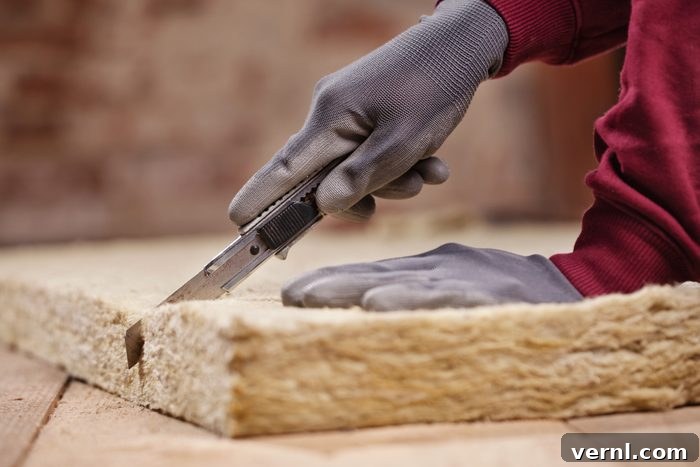
Often recognized by its prominent brand name, Rockwool, mineral wool insulation is a remarkable material crafted through an innovative manufacturing process. It begins with melting basalt rock, a naturally abundant volcanic rock, together with slag. Slag is a significant byproduct of industrial processes such as the copper and steel industries, meaning mineral wool effectively utilizes industrial waste, thereby reducing its environmental impact.
Once melted, the molten material is spun at high speeds into fine, intertwined fibers. These fibers are then compressed and woven into sturdy batts, which are generally comparable in size to fiberglass batt insulation but significantly denser. This increased density is a key factor in mineral wool’s superior performance.
Mineral wool offers a host of compelling benefits. Its inherent fire resistance is exceptional, providing an added layer of safety in your home. It’s also naturally water-repellent, meaning it resists moisture absorption and, consequently, prevents the growth of mold and mildew – a critical feature for maintaining healthy indoor air quality. The material’s extra bulk and density also contribute to its outstanding soundproofing capabilities, making it an ideal choice for internal walls and areas where noise reduction is a priority.
With an impressive R-value of 4.0 per inch, mineral wool provides excellent thermal performance. While mineral wool batts typically run about 25 percent more expensive than fiberglass, the enhanced benefits in fire safety, moisture resistance, and sound attenuation often justify the additional investment, offering long-term value and peace of mind for homeowners.
Denim Insulation
It might sound surprising, but those old, worn-out jeans you once cherished can find a new life as high-performance home insulation. Denim insulation, widely known by the brand name UltraTouch Insulation, embodies the spirit of recycling by featuring a remarkable 80% post-consumer recycled denim jeans. This innovative product turns textile waste into a valuable building material, significantly reducing landfill burden and conserving resources.
Beyond its impressive recycled content, denim insulation is engineered for safety and durability. It is treated with a non-toxic fire retardant and boric acid, which collectively provide crucial protection. The boric acid treatment not only acts as a flame retardant but also effectively prevents the growth of bacteria, fungi, and mold, while simultaneously repelling common household pests and insects. This ensures a healthier and more resilient insulating layer within your home.
Denim possesses natural thermal properties that make it an excellent barrier against heat transfer, positioning it as a strong competitor to traditional fiberglass insulation. Its dense, fibrous structure traps air effectively, providing reliable thermal resistance. Denim insulation typically comes in batts, making it relatively straightforward to install in various applications, including wall cavities, attic floors, and ceilings. It boasts a respectable R-value of 3.5 per inch, delivering consistent thermal performance. While it tends to be approximately 10% more expensive than fiberglass insulation, its eco-friendly credentials, non-toxic composition, and excellent performance make it an increasingly popular choice for sustainable building projects.
Sheep’s Wool Insulation
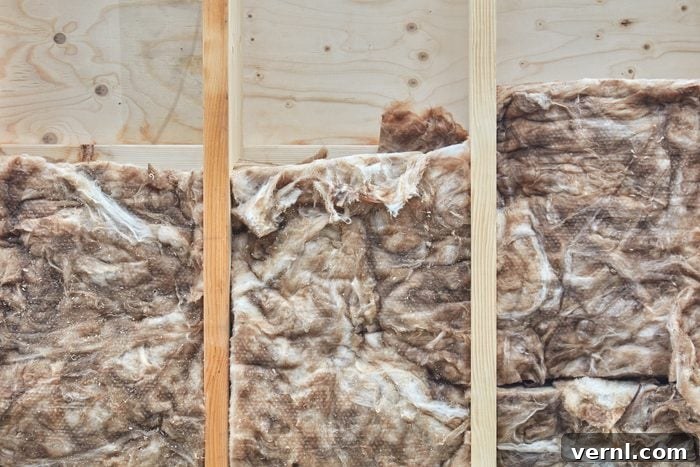
Harnessing the natural wonders of the animal kingdom, sheep’s wool insulation offers a truly unique and highly sustainable approach to home insulation. Made from actual sheep’s wool, this material is not just an insulator; it’s an active component in maintaining a healthy indoor environment. One of its most remarkable natural properties is its ability to absorb and release humidity from the air, acting as a natural humidifier and dehumidifier depending on ambient conditions. This inherent characteristic helps to regulate indoor moisture levels, preventing condensation and inhibiting mold growth, while simultaneously acting as a natural air purifier, absorbing and neutralizing airborne pollutants.
The manufacturing process for sheep’s wool insulation is typically low-impact. It involves cleaning and drying the raw wool, followed by a combing process that aligns the fibers to create multiple layers. Some manufacturers incorporate a small percentage of polyester adhesive to bind these layers together, enhancing structural integrity without compromising the wool’s natural benefits.
Sheep’s wool insulation is versatile in its application, available in both batts and blown-in forms. This flexibility makes it an excellent choice for insulating ceilings, floors, attics, and walls in a variety of home types. Its R-value typically ranges from 3.5 to 3.8 per inch, providing robust thermal performance. While sheep’s wool insulation can be 25% to 50% more expensive than fiberglass, its renewable nature, biodegradability, superior moisture management, and air-purifying qualities present a compelling case for its value as a premium, sustainable insulation solution.
Cork Insulation
Derived from the bark of specific oak tree varieties found predominantly in the Mediterranean region and North Africa, cork insulation stands out as one of the most naturally sustainable and highly effective insulation materials available. The harvesting of cork bark is a remarkably eco-friendly process, as it does not require cutting down the tree. Instead, the bark is carefully stripped from the living tree, which then regenerates its bark over several years, allowing for repeated harvesting without harming the tree itself.
Cork possesses an extraordinary array of natural properties that make it an ideal insulator. It is inherently anti-fungal, fire-resistant, and antimicrobial, eliminating the need for additional chemical treatments to enhance its effectiveness or durability in homes. These natural attributes contribute to a healthier indoor environment and reduce the presence of synthetic substances.
Cork insulation is primarily available in rigid board formats, making it suitable for applications where structural integrity and robust insulation are required, such as exterior wall sheathing, sub-flooring, or internal partition walls. It offers an impressive R-value, ranging from 3.6 to 4.2 per inch, placing it among the top performers in thermal resistance. Despite its numerous advantages and exceptional sustainability profile, cork insulation can be a premium option in terms of cost. Depending on the thickness and density of the corkboard, homeowners can expect to pay anywhere from $4 to $12 per square foot. This is significantly more than traditional fiberglass, reflecting its natural origins, unique properties, and long-term benefits.
Choosing the Best Sustainable Insulation for Your Home
Deciding on the right insulation for your home involves weighing several factors, including your specific climate zone, budget, the R-value requirements for different areas of your home (attic, walls, floors), and any particular needs such as enhanced soundproofing or moisture resistance. While initial costs for sustainable insulation options might sometimes be higher than conventional alternatives, it’s crucial to consider the long-term benefits: substantial savings on energy bills, a healthier living environment, reduced environmental impact, and increased home comfort.
Consulting with experienced insulation professionals, like Tony Leiner, who understand local building codes and climate specificities, can provide invaluable guidance. They can help you assess your home’s unique needs and recommend the most suitable sustainable insulation solution to achieve optimal energy efficiency, comfort, and peace of mind for years to come.