Banish Stubborn Car Odors Forever: The Ultimate White Vinegar Hack
Is your car smelling a little… less than inviting? From the lingering aroma of last week’s takeout to the unmistakable scent of forgotten sports gear, unpleasant car odors are a common nuisance for drivers everywhere. They can transform your daily commute into a less-than-pleasant experience and even impact the resale value of your vehicle. While air fresheners merely mask these smells, and a thorough cleaning sometimes isn’t enough to eradicate deep-seated stenches, there’s a surprisingly simple and natural solution gaining viral attention: distilled white vinegar.
This powerful, yet gentle, household staple has emerged as a hero in the fight against stubborn car smells. Forget expensive chemical sprays or temporary fixes; a popular TikTok hack demonstrates how a single, readily available ingredient can help you neutralize and eliminate those foul odors for good. Get ready to transform your car’s interior into a fresh and inviting space, all with the magic of white vinegar.
Unveiling the Power of Distilled White Vinegar for Car Odors
Before diving into the “how,” let’s explore the “why.” What makes distilled white vinegar such an extraordinary weapon against a wide array of unpleasant car smells? The answer lies in its unique chemical composition and its remarkable ability to neutralize odors rather than just cover them up.
Why White Vinegar? The Science Explained
The secret behind vinegar’s odor-eliminating prowess is acetic acid, a mild acid that constitutes about 5-8% of white vinegar. Unlike perfumed air fresheners that simply try to overpower a bad smell with a stronger (and often artificial) good smell, acetic acid works on a molecular level to neutralize the compounds responsible for foul odors. Many common stench-causing molecules are alkaline in nature. When they come into contact with the acidic vinegar, a chemical reaction occurs that breaks them down, effectively destroying the source of the smell.
Beyond neutralization, white vinegar is also a formidable antimicrobial agent. It has been proven to kill various types of bacteria and mildew, which are frequent culprits behind musty, stale, or sour smells in vehicle interiors. Whether it’s the bacteria thriving in spilled milk, the mildew growing in damp carpets, or the microorganisms breaking down food particles, vinegar directly tackles these microscopic sources of your car’s funk, offering a truly clean and fresh scent, not just a masked one.
Preparing Your Car for Odor Elimination
While the vinegar hack is powerful, a little preparation can significantly enhance its effectiveness. Think of it as setting the stage for success. Before you deploy your vinegar, take these crucial steps:
- Remove Visible Debris: Start by thoroughly vacuuming your car’s interior. Get rid of any loose dirt, crumbs, pet hair, or food particles that might be contributing to the smell. Check under seats, in crevices, and in door pockets.
- Identify and Clean the Source (if possible): If you know exactly what caused the odor – a spilled coffee, a forgotten banana, or a pet accident – try to clean it directly first. For liquid spills, blot as much as possible with a clean cloth. For solid messes, remove them carefully. This initial removal of the physical source will give the vinegar a much better chance at eradicating any lingering molecules and bacteria.
- Ventilate Your Vehicle: Before beginning the vinegar treatment, open your car doors and windows for at least 15-30 minutes. This allows fresh air to circulate and removes any trapped stale air, providing a cleaner starting point for the vinegar to work its magic.
The Simple & Effective White Vinegar Bowl Method (TikTok’s Viral Hack)
This is the core of the viral sensation – an incredibly straightforward, yet remarkably potent, method for using distilled white vinegar to absorb and neutralize unwanted car odors.
What You’ll Need:
- Small, Sturdy Bowl: Opt for a ceramic or glass bowl that won’t easily tip over. A wider opening will allow for better evaporation of the vinegar.
- Distilled White Vinegar: This is the key ingredient. Ensure it’s distilled white vinegar, as other types (like apple cider vinegar) might contain sugars or other components that could attract pests or leave residues.
- Optional: Essential Oils: If you’re particularly sensitive to the initial vinegar smell, a few drops of your favorite essential oil can be added to the bowl. More on this later!
Step-by-Step Application:
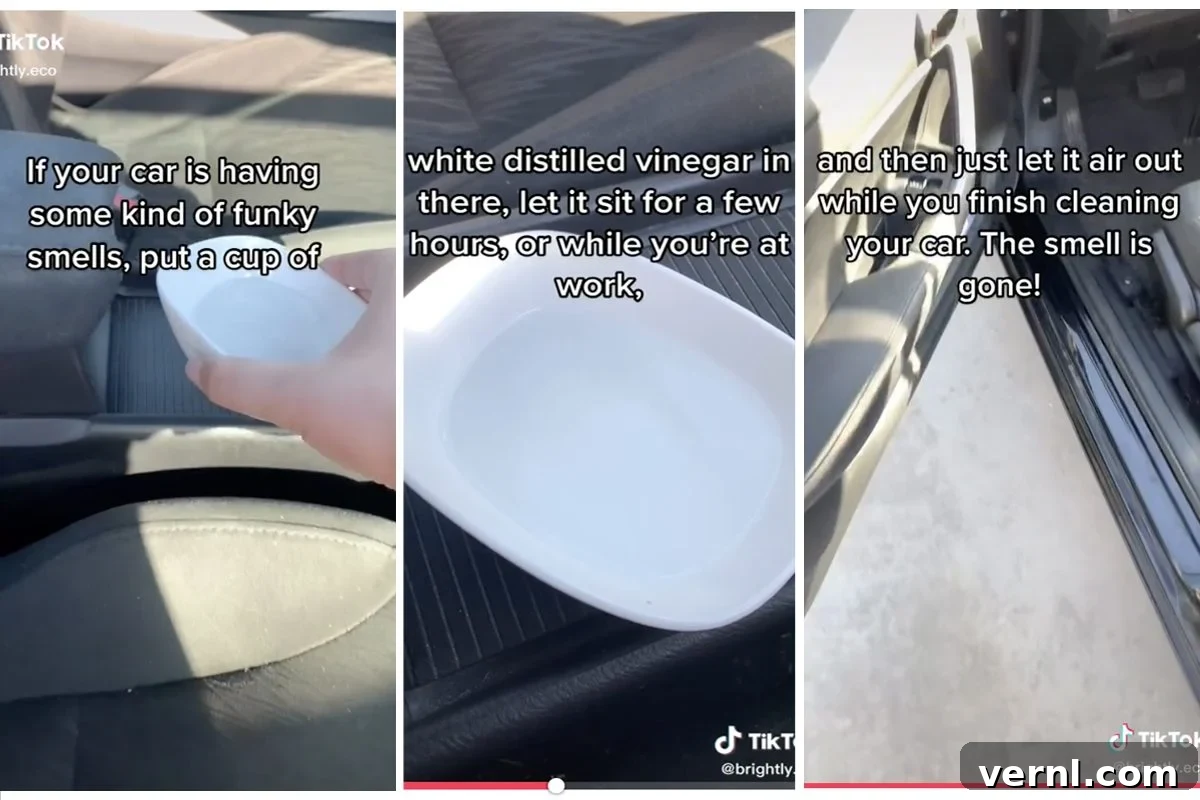
- Pour the Vinegar: Pour about a cup or two of distilled white vinegar into your chosen bowl. The exact amount can vary based on the size of your car and the severity of the odor, but this is a good starting point.
- Strategic Placement: Place the bowl carefully in your car.
- If you’ve identified a specific source for the smell, such as a stain on the back seat or a lingering odor in the trunk, position the bowl as close to that area as safely possible. This concentrates the vinegar’s odor-absorbing power where it’s most needed.
- If the bad smell is more general, or you’re unsure of its origin, a central location like the middle console, a floorboard, or even a cupholder is ideal. This allows the vinegar fumes to circulate throughout the entire cabin.
- The Waiting Game: This is the easiest, yet most crucial, step. Simply shut all your car doors and windows, sealing the vehicle completely. Let the vinegar work its magic uninterrupted. Leave it in the car for at least two hours. For more stubborn or intense odors – like cigarette smoke, pet accidents, or severe mildew – you might need to leave the bowl for four hours, overnight, or even up to 24 hours. The longer the exposure, the more effective the neutralization process will be.
-
@brightly.eco So easy! 👏#ecofriendly #greencleaningtips #cleaningtiktok #cartiktok #carcleaning #sustainableliving #allnatural #lifehack #cleaninghacks
Real-World Results and Deeper Cleaning Strategies
The vinegar bowl hack offers a powerful passive cleaning method, but sometimes a more targeted approach is needed. Here’s how it performs and how you can amplify its effects for the toughest odors.
A Personal Experience: Conquering the Musty Stain
One morning, I opened the door to my SUV and was immediately hit by a pervasive musty smell emanating from the back seat. A quick investigation confirmed my suspicions: one of my children had left a water bottle lying on its side, and its entire contents had leaked onto the fabric seat. The water had dried, but the lingering musty stench was undeniable and unpleasant.
Following the viral hack, I placed a bowl containing about two cups of distilled white vinegar directly on the affected area of the back seat. I sealed the car and left it for approximately four hours while I ran errands. Upon my return, the difference was remarkable. The overwhelming musty odor had vanished! While putting my nose directly against the fabric revealed a very faint residual mustiness, the general cabin air was dramatically fresher. It truly felt as though the vinegar had effectively “soaked up” the foul smells from the air and the fabric.
Taking It Further: Direct Application for Stubborn Stains
For persistent stains or deeply embedded odors, the passive bowl method can be wonderfully complemented by a more direct application. Building on the initial success, I decided to take an extra step for complete eradication:
- Create a Cleaning Solution: In a spray bottle, I mixed equal parts distilled white vinegar and water, then added a couple of drops of a mild dish soap. The dish soap acts as a surfactant, helping to lift dirt and break down greasy residues.
- Apply and Scrub: I lightly misted the affected area of the car seat with this solution. Using a clean, damp microfiber cloth, I gently scrubbed the fabric. It’s important not to oversaturate the fabric to avoid encouraging new mold growth or damaging the upholstery.
- Blot and Dry: After scrubbing, I used a dry, clean cloth to blot the area, absorbing as much moisture as possible. I then left the car doors open for several hours to allow the fabric to air dry completely.
The result? The faint musty odor that had lingered after the bowl treatment was completely gone. The combination of passive absorption and active cleaning proved to be an unbeatable duo, leaving the car seat pristine and genuinely fresh. Always remember to spot test any cleaning solution on an inconspicuous area first to ensure it doesn’t cause discoloration or damage to your car’s interior materials.
Vinegar’s Proven Track Record Against Tough Smells
The efficacy of white vinegar isn’t just anecdotal or confined to minor spills. Its powerful odor-neutralizing properties are recognized by experts for tackling some of the most challenging and pervasive car odors:
- Tobacco Smoke: The International Association of Certified Home Inspectors recommends vinegar as an effective agent for removing stubborn tobacco smoke smells. The acetic acid attacks the tar and nicotine residues that cling to surfaces, breaking them down at a molecular level.
- Pet Urine: For those unavoidable pet accidents, the American Kennel Club suggests combining vinegar with baking soda. Baking soda, an alkaline substance, reacts with the acidic vinegar to create a bubbling action that lifts and neutralizes uric acid crystals, which are the main culprits behind the persistent smell of pet urine. This combination is particularly effective for deep-seated pet odors in car carpets and upholstery.
- Food Spills and Stale Odors: Whether it’s the lingering scent of fast food, a forgotten lunch, or just general stale air, vinegar can effectively refresh the cabin by neutralizing organic compounds that contribute to these odors.
- Mold and Mildew: As an antimicrobial, vinegar is excellent for addressing musty smells caused by mold and mildew in damp areas, helping to kill the organisms and eliminate their characteristic odor.
If you’re dealing with truly persistent odors that seem ingrained in your car’s fabric, you might even consider a more intense application, such as the TikTok viral massage gun hack, which can help work cleaning solutions deeper into upholstery. However, always exercise caution and test on a small, hidden area first.
Addressing Potential Concerns and Maximizing Effectiveness
While the white vinegar hack is incredibly effective, it’s natural to have a few questions or concerns. Here’s what to expect and how to optimize your odor-fighting efforts.
The Temporary Vinegar Aroma: How to Air it Out
The most common concern after using the vinegar bowl method is the distinct smell of vinegar itself. After I removed the bowl from my SUV, a noticeable vinegar aroma temporarily replaced the musty smell. However, this is perfectly normal and, more importantly, temporary. Acetic acid is highly volatile, meaning it evaporates relatively quickly.
To expedite the dissipation of the vinegar scent:
- Open All Doors and Windows: Once you remove the vinegar bowl, open all car doors and windows as wide as possible. Allow for significant cross-ventilation.
- Park in a Sunny Spot: If possible, park your car in direct sunlight. The warmth will help to increase air circulation and accelerate the evaporation of any remaining vinegar molecules.
- Use a Fan: For quicker results, you can place a small portable fan inside your car, facing outwards, to help draw out the air.
Typically, with good ventilation, the vinegar smell will completely fade within a few hours to a day, leaving behind a truly neutral and fresh scent. Unlike many chemical air fresheners, it won’t linger for days or weeks.
Customizing Your Experience: Adding Essential Oils
If you find the initial vinegar smell particularly strong or simply prefer a pleasant lingering scent, you can easily customize the process. Before placing the bowl in your car, add a few drops (5-10) of your favorite essential oil directly into the vinegar. Popular choices include:
- Lemon or Orange: For a clean, zesty, and uplifting aroma.
- Lavender: For a calming and fresh floral note.
- Tea Tree Oil: Known for its antimicrobial properties, it can provide an extra layer of freshness, particularly if mold or bacteria are suspected.
- Peppermint: A refreshing and invigorating scent that can also deter some insects.
The essential oils will help to diffuse a subtle, pleasant fragrance as the vinegar works, making the temporary vinegar smell less noticeable. Ensure you use pure essential oils for the best and safest results.
Bowl vs. Direct Application: Choosing the Right Strategy
Deciding between the passive vinegar bowl method and a more direct, scrub-and-spray approach depends largely on the nature and source of your car’s odor:
- The Vinegar Bowl Method is Best For:
- General Stale Odors: When your car simply smells “off” or “stale” but there’s no obvious spill or stain.
- Mystery Smells: When you can’t pinpoint the exact source of the foul odor.
- Smoke Odors: Especially effective for cigarette smoke that permeates the entire cabin.
- Minimal Effort: It’s the easiest, least labor-intensive method.
- Direct Application (Vinegar & Soap Spray) is Best For:
- Known Stains and Spills: When you have a visible liquid spill (e.g., coffee, milk, pet urine) that has dried into the fabric.
- Deep-Seated Odors: For smells that seem to be deeply embedded in specific areas of the upholstery or carpet.
- Targeted Treatment: When you need to actively clean and scrub a particular spot.
In many cases, a combination of both methods yields the most comprehensive results. Start with the bowl to tackle general ambient odors, and then follow up with direct application for any specific, stubborn spots.
Limitations and When to Seek Professional Help
While white vinegar is incredibly versatile and effective, it’s not a miracle cure for every car odor scenario. There are instances where its capabilities might be limited:
- Extremely Severe, Persistent Odors: If your car has been exposed to extreme sources of odor (e.g., prolonged neglect, rodent infestation, extensive water damage causing severe mold), professional detailing or remediation might be necessary.
- Mechanical Issues: Sometimes, unpleasant smells originate from mechanical problems, such as a clogged or moldy air conditioning system. Vinegar can help with surface mold, but a deeper AC system cleaning or repair by a mechanic will be required for a complete solution.
- Structural Damage: If the odor is due to water leaks through seals or damaged components leading to pervasive dampness, simply treating the smell won’t solve the underlying problem. The source of the leak must be fixed first.
Prevention is Key: Keeping Your Car Fresh Long-Term
Once you’ve successfully banished those unwelcome smells, the best strategy is prevention. A few simple habits can keep your car smelling fresh and clean consistently:
- Regular Cleaning Routine: Vacuum your car’s interior regularly, at least once a month. This prevents the accumulation of dirt, crumbs, and other odor-causing debris.
- Immediate Spill Clean-Up: Don’t let spills sit. Tackle them immediately with a damp cloth and a mild cleaner (or your vinegar solution) to prevent them from soaking in and becoming a breeding ground for bacteria.
- Protect Upholstery: Consider using seat covers, floor mats, and cargo liners. These can protect your original upholstery from spills, dirt, and pet hair, making cleaning much easier.
- Address Moisture Promptly: Ensure all windows are fully closed during rain. If anything gets wet, dry it out immediately to prevent mold and mildew growth. Using a dehumidifier in the car after a significant spill or during very humid weather can also help.
- Maintain Your Cabin Air Filter: Your car’s cabin air filter cleans the air entering your vehicle. A dirty or old filter can trap odors, dust, and allergens, contributing to stale smells. Check and replace it according to your car’s maintenance schedule, typically once a year or every 15,000 miles.
Conclusion: Embrace a Fresher Driving Experience
Driving a car filled with unpleasant odors can diminish the joy of any journey. Thankfully, the solution doesn’t have to be complicated, expensive, or involve harsh chemicals. The simple, natural power of distilled white vinegar offers an incredibly effective way to neutralize and eliminate a wide range of stubborn car smells.
From the passive yet potent bowl method that tackles general mustiness and smoke, to the targeted spray-and-scrub technique for specific stains and deep-seated odors, white vinegar stands out as a versatile and eco-friendly ally in maintaining a pristine car interior. Its acetic acid actively breaks down odor-causing molecules and kills odor-producing bacteria and mold, providing a truly clean slate, not just a temporary cover-up.
So, the next time your car starts to develop an unwelcome aroma, skip the masking agents. Reach for that humble bottle of white vinegar. With minimal effort and maximum impact, you can restore your vehicle to a state of refreshing neutrality, ensuring every drive is as pleasant as it should be. Try this widely acclaimed hack and experience the transformative power of a genuinely fresh-smelling car!