The Ultimate Guide to Choosing and Understanding Water Softeners
A significant majority of households across the United States grapple with the everyday challenges posed by hard water. This common issue arises from water containing elevated levels of dissolved minerals, primarily calcium and magnesium. While seemingly innocuous, hard water can manifest in a myriad of problems, ranging from skin irritations and dry hair to unsightly mineral buildup in plumbing systems, faucets, and vital household appliances. Embracing the benefits of soft water can dramatically enhance your quality of life, bringing a new level of comfort and efficiency to your home. Understanding why a water softener is essential is the first step towards a softer, more convenient existence.
The persistent mineral deposits associated with hard water can lead to costly repairs and reduced efficiency over time. Fortunately, these issues are entirely preventable with the installation of a reliable water softener. This indispensable household appliance is specifically designed to remove those naturally occurring minerals, transforming your water from hard to soft. But with a variety of options available, how do you select the right water softener for your unique household needs? This comprehensive guide will walk you through the crucial considerations.
The Unseen Problem: Understanding Hard Water and Its Impact
Before diving into solutions, it’s vital to fully grasp the pervasive nature of hard water. It’s not just an inconvenience; it’s a constant drain on your resources and comfort. The dissolved calcium and magnesium ions react with soaps and detergents, preventing them from lathering properly and diminishing their cleaning power. This leads to several common frustrations:
- Skin and Hair Irritation: Hard water can leave a residue on your skin, making it feel dry, itchy, or irritated. It can also strip natural oils from your hair, leaving it dull, brittle, and difficult to manage.
- Laundering Woes: Clothes washed in hard water often appear dingy, stiff, and lose their vibrancy. The mineral buildup can even shorten the lifespan of your fabrics.
- Cleaning Challenges: Soap scum on showers, bathtubs, and sinks, along with stubborn spots on dishes and glassware, are tell-tale signs of hard water. You’ll find yourself using more cleaning products and exerting more effort for less satisfactory results.
- Appliance Damage: Perhaps the most insidious effect is the scale buildup inside water heaters, dishwashers, washing machines, and even coffee makers. This accumulation reduces efficiency, increases energy consumption, and significantly shortens the lifespan of these expensive appliances.
- Plumbing Problems: Over time, mineral deposits can narrow pipes, reducing water pressure and potentially leading to blockages and costly plumbing repairs.
The Transformative Power of Soft Water: Benefits You’ll Love
Conversely, soft water brings a wealth of advantages that improve daily life and save you money in the long run. By choosing the right water softener, you unlock:
- Healthier Skin and Hair: Enjoy softer skin, silkier hair, and a more refreshing bathing experience as soaps lather effortlessly and rinse cleanly.
- Brighter, Cleaner Laundry: Clothes will emerge from the wash cleaner, brighter, softer, and last longer, reducing the need for harsh detergents and fabric softeners.
- Spotless Dishes and Glassware: Say goodbye to streaks and spots, as your dishes and glasses will sparkle with minimal effort.
- Extended Appliance Lifespan: Protect your valuable appliances from damaging mineral buildup, ensuring they run more efficiently and last for years longer, saving you on repair and replacement costs.
- Reduced Plumbing Issues: Prevent scale accumulation in pipes, maintaining optimal water pressure and avoiding expensive plumbing emergencies.
- Lower Cleaning Costs: Use less soap, shampoo, and cleaning products, as soft water enhances their effectiveness, ultimately saving you money.
- Energy Efficiency: Water heaters free of scale operate more efficiently, potentially lowering your energy bills.
Choosing the Right Water Softener: A Step-by-Step Guide
1. Sizing Your System: The Grains of Truth
The first and most critical step in selecting a water softener is determining the appropriate size for your household. An undersized unit will regenerate too frequently, wasting salt and water, while an oversized one might be an unnecessary expense. The “size” of a water softener is typically measured by its grain capacity, which indicates how many grains of hardness it can remove before needing to regenerate.
To accurately size your water softener, you need two key pieces of information:
- Your Household’s Daily Water Usage: The average person uses approximately 80 to 100 gallons of water per day. However, this can vary significantly based on lifestyle. Consider factors such as:
- The number of people in your household.
- Presence of infants or toddlers requiring frequent laundry.
- Teenagers who take longer showers.
- Frequent guests or a high volume of dishwasher use.
- Presence of additional water-using appliances like irrigation systems.
Multiply the number of people by your estimated per-person daily usage to get a household total. For example, a family of four might conservatively estimate 320-400 gallons per day (4 people x 80-100 gallons/person).
- The Grains of Hardness in Your Water: This crucial measurement indicates the concentration of minerals in your water. It can be obtained in several ways:
- Municipal Water Report: If you receive city water, your municipal water provider typically publishes annual water quality reports that include hardness levels.
- Home Test Kit: You can purchase a reliable hard water test kit online or from a home improvement store. These strips are easy to use and provide a quick estimate.
- Professional Water Test: Many plumbing companies or water treatment specialists offer free or low-cost water testing services, providing a precise hardness measurement and identifying other potential issues.
Water hardness is usually expressed in grains per gallon (GPG) or parts per million (PPM), where 1 GPG equals approximately 17.1 PPM.
Once you have these two figures, calculate your household’s total daily grain removal requirement: Multiply your total estimated daily water usage (in gallons) by your water’s grains of hardness (GPG). For instance, if a family uses 350 gallons/day and their water is 15 GPG hard, they need to remove 5,250 grains per day (350 gallons x 15 GPG).
Most water softener manufacturers recommend a unit that can handle a 3-7 day supply of grains before needing to regenerate. This helps optimize salt and water usage. For our example family requiring 5,250 grains/day, a 3-day cycle would require a unit with at least 15,750 grains capacity (5,250 x 3). A 5-day cycle would need 26,250 grains. Considering regeneration frequency, a slightly oversized unit is often preferred over an undersized one. For many four-person households, a 33,000-grain (or 33K) water softener often proves to be a suitable and efficient choice, allowing for regeneration cycles every 5-7 days depending on actual water hardness and usage.
2. Water Softener Regeneration Considerations: Efficiency and Convenience
Traditional water softeners operate on an ion-exchange process. Inside the softener’s tank, a bed of resin beads traps hardness minerals (calcium and magnesium) from your water supply. Over time, these resin beads become saturated and lose their effectiveness. This is where regeneration comes in.
Regeneration is the process by which the resin beads are cleaned and recharged with sodium ions, typically from water softener salt. This involves flushing the resin bed with a brine solution (saltwater), which strips away the trapped minerals, sending them down a drain. This process uses a similar amount of water to running a load of laundry and typically takes about 90 minutes to complete.
Modern water softeners offer different regeneration methods, each with implications for efficiency and convenience:
- Timed (Timer-Based) Regeneration: These units regenerate on a preset schedule, regardless of how much water has been used. While simple, they can be inefficient, regenerating even if the resin isn’t exhausted, leading to wasted salt and water.
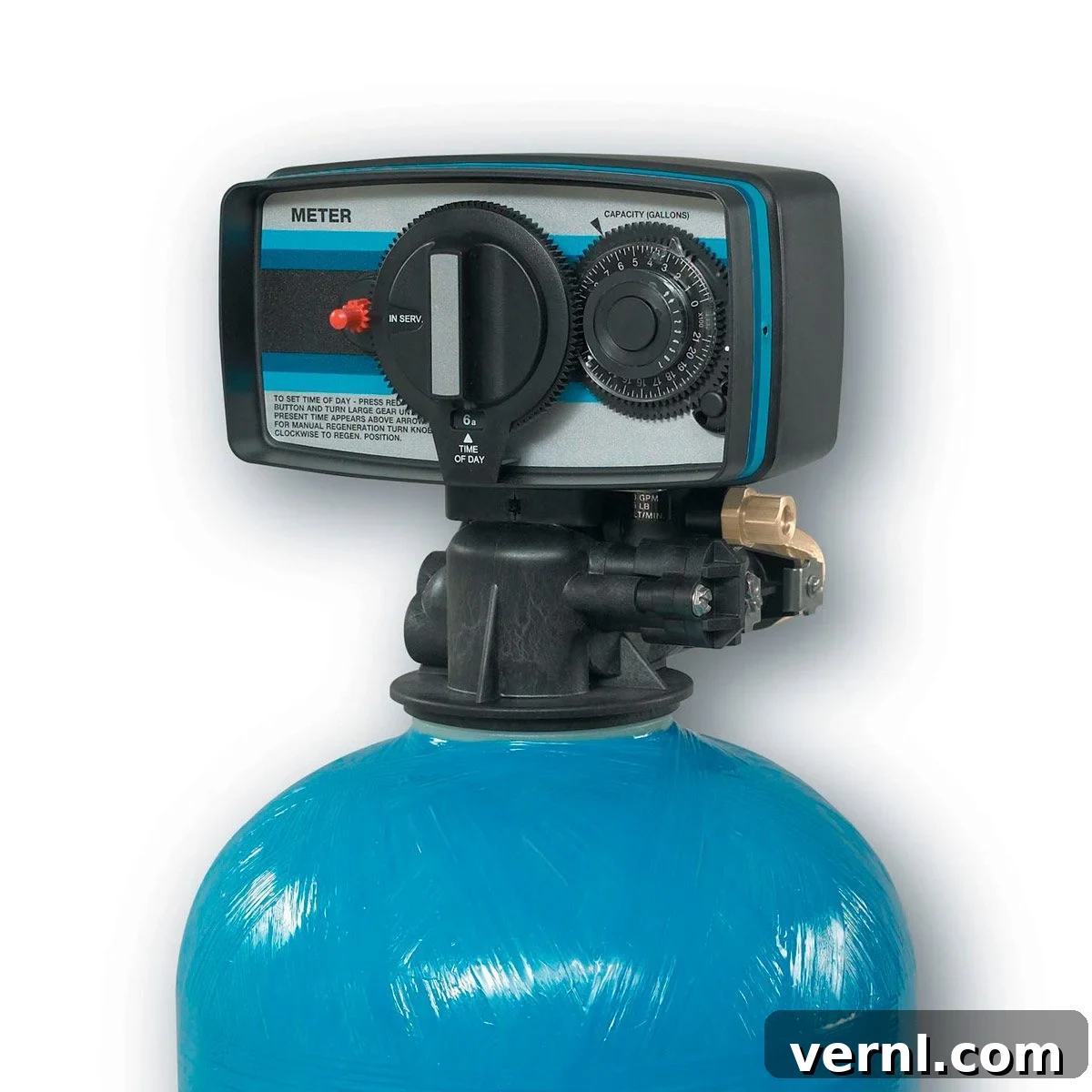
- Metered (Demand-Initiated) Regeneration: This is the most efficient and recommended type. A meter tracks water usage, and the softener only regenerates when a specific volume of water has passed through the system and the resin is nearing saturation. This saves significant amounts of salt and water, as it adapts to your household’s actual usage patterns.
- Smart Controls and Features: Many contemporary models come with advanced controls. Look for features such as:
- Salt Level Indicators: These alerts notify you when the salt tank needs refilling, preventing the inconvenience of running out of salt and temporarily reverting to hard water.
- Programmable Settings: Allows you to set regeneration cycles for off-peak hours (e.g., in the middle of the night) when water usage is minimal, ensuring you always have soft water when you need it.
- Proportional Brining: Some metered systems optimize salt usage by only using the amount of salt necessary to regenerate the portion of the resin that has been used.
For households with high or inconsistent water usage, or those who simply desire uninterrupted soft water, a dual-tank water softener is an excellent solution. These systems feature two resin tanks; while one tank is regenerating, the other automatically takes over the softening process, ensuring a continuous supply of soft water around the clock. This is particularly beneficial for larger families or situations where running out of soft water during regeneration is not an option.
3. What Else to Consider with Water Softeners: Installation, Filtration & Maintenance
Beyond sizing and regeneration, several other factors can influence your choice and satisfaction with a water softener:
Whole-House vs. Partial Softening
You might consider connecting your water softener to just the hot water supply, leaving the cold water supply hard. The primary reason often cited for this approach is to prevent trace amounts of sodium from the softening process from entering your drinking and cooking water. However, it’s important to note that the sodium added by a water softener is usually minimal, especially for moderately hard water, and often less than what’s found in a slice of bread. Softening cold water for bathing, washing, and dishwashing still provides significant benefits.
Most experts recommend a whole-house water softener to maximize benefits, ensuring all water entering your home is treated. If you have concerns about sodium intake, additional filtration for drinking water is a more targeted solution.
Additional Filtration Systems
Many families opt for an additional under-the-sink filtration system or a reverse osmosis (RO) system for water specifically used for cooking and drinking. While a water softener removes hardness minerals, it doesn’t filter out other potential contaminants like chlorine, sediment, or volatile organic compounds (VOCs). An RO system, in particular, provides highly purified water, effectively addressing taste, odor, and a broad spectrum of impurities, making it an excellent complement to a water softener.
Installation and Plumbing Hookups
The plumbing hookups for a water softener can initially seem daunting, but with clear instructions, many homeowners can tackle the installation themselves. Essential components include the main water line connections, a bypass valve (crucial for maintenance or in emergencies), and a drain line for the regeneration discharge. While you don’t necessarily have to be a professional plumber, understanding how to plumb a water softener is key for a successful DIY installation. If you’re uncomfortable with plumbing, hiring a certified professional is always a wise investment to ensure proper installation and compliance with local codes.
Maintenance and Longevity
Maintaining your water softener is relatively straightforward but crucial for its long-term performance and efficiency. The primary task is regularly monitoring and refilling the salt in the brine tank. Using high-quality water softener salt (pellets or crystals are generally recommended over rock salt) can also impact efficiency and prevent bridging (salt caking) in the tank. If your water softener isn’t performing as expected, understanding how to fix a water softener can save you a service call. Common issues often relate to salt levels, resin bed problems, or minor control valve adjustments. Regular cleaning of the brine tank and occasional resin bed cleaners can help extend the lifespan of your unit and ensure it continues to operate effectively. Keeping your water softener healthy with these easy care tips can help you avoid expensive breakdowns and maintain a consistent supply of soft water.
Certifications and Quality Assurance
When investing in a water softener, always look for certification from reputable third-party organizations. Two prominent bodies are the Water Quality Association (WQA) and NSF International. These organizations conduct rigorous testing to ensure products meet specific performance, safety, and quality standards. A WQA Gold Seal or NSF certification provides assurance that the water softener performs as advertised and is built to high standards of public health and safety.
Conclusion: Embrace the Comfort of Soft Water
Investing in a water softener is more than just a home improvement; it’s an investment in your comfort, your health, and the longevity of your appliances. By understanding your household’s unique needs, correctly sizing your unit, and considering modern regeneration technologies, you can select a system that delivers consistent, high-quality soft water for years to come.
Take the first step today: test your water, calculate your needs, and explore the options available. With the right water softener, you’ll soon experience the undeniable benefits of soft water – from healthier skin and hair to sparkling clean surfaces and extended appliance life – transforming your home into a more comfortable and efficient living space.