
Unlocking a Thriving Lawn: The Power of Dethatching and Aerating
Achieving a lush, green lawn that stands out year-round requires more than just consistent watering and mowing. While these fundamental tasks lay the groundwork, two specialized yet often overlooked practices—dethatching and aerating—are absolutely essential for cultivating optimal lawn health and vigor. Though they might sound similar and are often discussed in the same breath, these vital lawn maintenance applications serve distinct purposes and demand different techniques for maximum effectiveness. Understanding when, why, and how to perform each will transform your lawn from merely surviving to truly thriving.
Dethatching vs. Aerating: Core Concepts Explained
To embark on a journey towards a healthier lawn, it’s crucial to first grasp the fundamental differences between dethatching and aerating. Each targets a specific issue that can hinder your lawn’s potential.
What is Dethatching?
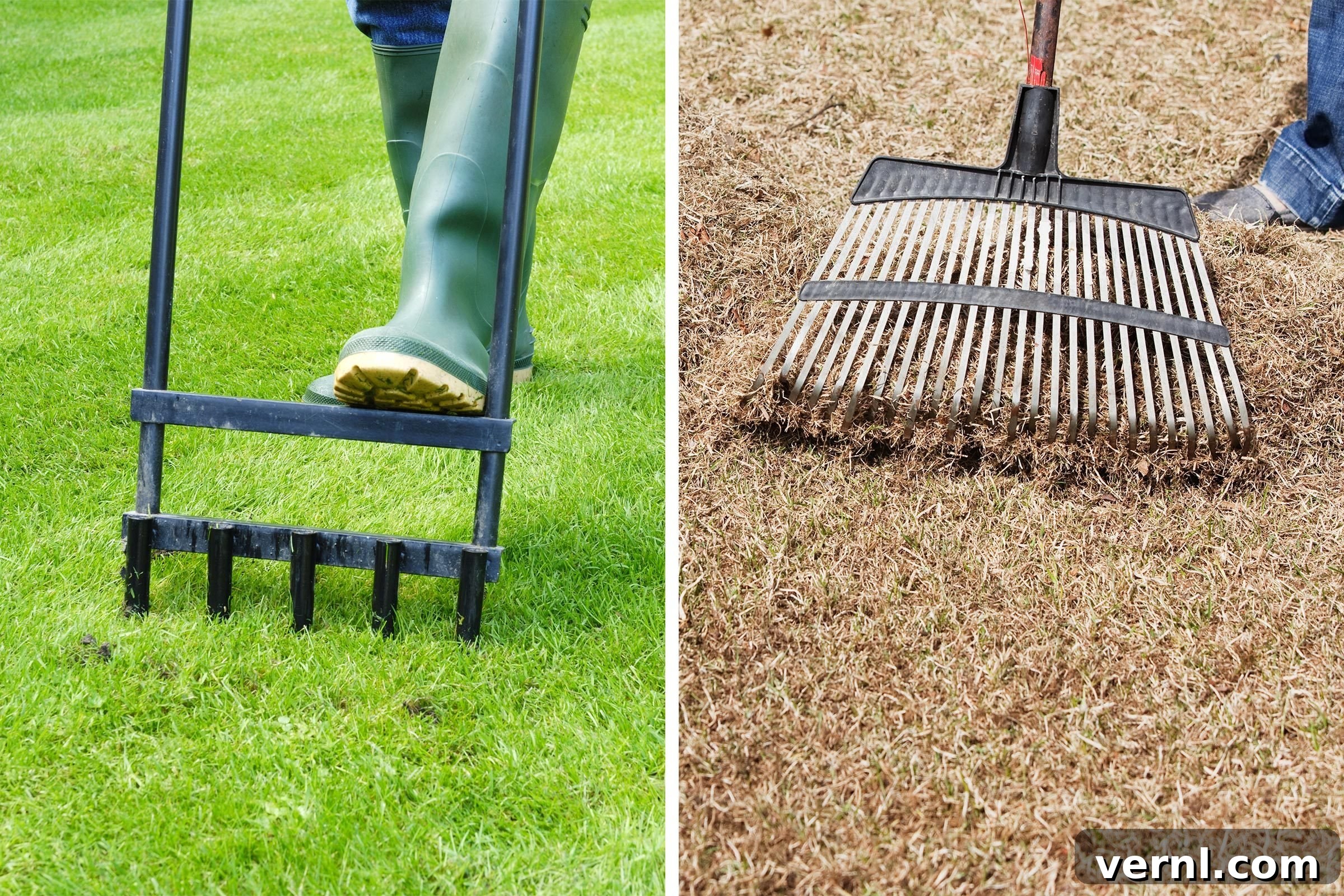
Dethatching is the process of removing the layer of dead grass, stems, roots, and other organic debris that accumulates between the soil surface and the green grass blades. This layer is commonly referred to as “thatch.” While a thin layer of thatch (less than half an inch) can actually be beneficial, acting as a natural mulch that protects soil moisture and moderates temperature, an excessive buildup becomes a significant impediment to lawn health. It forms a dense, impenetrable barrier that prevents essential water, nutrients, and air from reaching the soil and the grass roots below. This leads to unhealthy, shallow-rooted grass and a lackluster lawn that struggles to absorb what it needs. Dethatching can be performed manually with a specialized rake or more efficiently with mechanical equipment.
What is Aerating?
Aerating involves creating small holes or channels in the soil to alleviate compaction and improve the overall soil structure. This process directly enhances the circulation of air, water, and vital nutrients down into the root zone. By breaking up compacted soil, aeration provides a multitude of benefits: it allows grass roots to penetrate deeper, fosters better root growth and development, and significantly improves the soil’s ability to absorb and retain moisture. The result is a more resilient, robust, and healthier lawn. This task typically requires a mechanical aerator, though handheld versions are available for smaller areas.
Is Your Lawn Calling for Dethatching or Aeration? Diagnosing Your Turf’s Needs
Determining which method your lawn needs largely depends on its current condition, including the type of grass you have and your specific soil conditions. Knowing the signs to look for is the first step toward effective lawn care.
Signs Your Lawn Needs Dethatching:
- Spongy Feel: When you walk across your lawn, does it feel overly spongy or springy underfoot? This is a classic indicator of a thick thatch layer acting like a dense mat.
- Visible Thatch Layer: Take a closer look. Part the grass blades and measure the brown, dead layer above the soil. If this layer is more than half an inch thick, it’s a strong sign that dethatching is needed.
- Water Runoff: Do you notice water puddling on the surface or running off your lawn instead of soaking in after watering or rain? Thatch can repel water, preventing it from reaching the roots.
- Yellowing or Stunted Growth: Thatch can starve your grass of essential nutrients and moisture, leading to yellowing grass, slow growth, or general lack of vitality.
- Pest and Disease Issues: An excessive thatch layer can create a welcoming environment for various lawn pests and fungal diseases by trapping moisture and providing shelter.
Signs Your Lawn Needs Aeration:
- Hard, Compacted Soil: Does your lawn feel exceptionally hard and difficult to penetrate? If you try to push a screwdriver into the soil and it meets significant resistance, your soil is likely compacted.
- Heavy Foot Traffic: Areas of your lawn subjected to frequent foot traffic, children playing, or parked vehicles are prone to soil compaction.
- Poor Drainage or Puddling: If water struggles to drain and frequently forms puddles after rain or irrigation, it indicates that the soil is too dense for water to percolate effectively.
- Thinning Grass or Bare Patches: Compacted soil restricts root growth, leading to thin, weak grass and eventually bare spots as the turf struggles to survive.
- New Construction: Lawns established on newly constructed properties often suffer from severe compaction due to heavy machinery used during construction.
- Clay Soil: Lawns with heavy clay content are naturally more susceptible to compaction than those with sandier soils.
Optimal Timing: When to Dethatch or Aerate for Best Results
Timing is a critical factor for both dethatching and aerating to ensure your lawn recovers quickly and benefits fully from the process. Performing these tasks during the wrong season can stress your grass, leading to more harm than good. The ideal window depends on whether you have cool-season or warm-season grasses.
When to Dethatch:
- Cool-Season Grasses: For grasses like Kentucky Bluegrass, Fescue, and Ryegrass, the best times to dethatch are in the early spring (March to April) or early fall (September to October). These periods offer moderate temperatures and adequate moisture, allowing the grass sufficient time to recover and fill in before the extreme heat of summer or the dormancy of winter.
- Warm-Season Grasses: For varieties such as Bermuda, Zoysia, and St. Augustine, dethatching should be performed in late spring or early summer (May to July). This coincides with their active growth period, enabling them to quickly recuperate from the stress of thatch removal.
Always ensure your lawn is actively growing and moist, but not saturated, when dethatching. Avoid dethatching during periods of drought or extreme heat, as this can severely damage the turf.
When to Aerate:
- Cool-Season Grasses: Similar to dethatching, cool-season grasses are best aerated in the fall (September to October) or spring (April to May). Fall aeration is often preferred as it allows the grass to strengthen its roots before winter and benefit from spring growth.
- Warm-Season Grasses: Warm-season grasses should be aerated in the late spring or early summer (May to July), during their peak growth phase. This ensures rapid recovery and maximum benefit from the improved soil conditions.
For both types of grasses, aerating when the soil is moist but not waterlogged is ideal. This makes it easier for the aerator to penetrate the soil and pull out plugs effectively. Aeration can be done annually for highly compacted lawns or every 2-3 years for less compacted areas.
Methods and Equipment: How to Effectively Dethatch and Aerate Your Lawn
Both dethatching and aerating can be accomplished through various methods, each with its own set of benefits, drawbacks, and suitability for different lawn sizes and conditions. Choosing the right tool for the job is crucial for effectiveness and efficiency.
Dethatching Methods:
- Manual Thatching Rake: This is the most traditional method, involving a heavy-duty rake with sharp, curved tines designed to dig into the thatch layer and pull it up.
- Benefits: Affordable, good for small lawns, provides a good workout.
- Drawbacks: Extremely labor-intensive and time-consuming, not practical for large lawns or severe thatch buildup.
- Best Use: Small lawns, light thatch, or touch-up work.
- Power Rakes/Electric Dethatchers: These machines resemble lawn mowers and use rotating flails or tines to mechanically remove thatch.
- Benefits: Much faster and less physically demanding than manual raking, effective for moderate thatch.
- Drawbacks: Can be aggressive and potentially damage the lawn if not used properly or set to the correct depth; requires power source (electric) or fuel (gas).
- Best Use: Medium to large lawns with moderate thatch.
- Vertical Mowers (Verticutters): These are more aggressive machines that use vertical blades to slice into the turf, effectively removing thick thatch and even promoting new growth.
- Benefits: Highly effective for severe thatch, can prepare the lawn for overseeding.
- Drawbacks: Can be very stressful on the lawn; typically used by professionals or for very problematic lawns.
- Best Use: Lawns with very thick thatch layers, often followed by overseeding.
Aerating Methods:
- Spike Aerators: These tools simply poke holes into the soil with solid tines or spikes. They come in various forms, from manual spike shoes to rolling aerators.
- Benefits: Affordable, easy to use, requires minimal effort.
- Drawbacks: Does not remove soil; instead, it can further compact the soil around the edges of the holes, offering limited long-term benefits for severe compaction.
- Best Use: Very light compaction, or as a minimal annual refresh.
- Core (Plug) Aerators: These machines are the most effective type of aerator. They feature hollow tines that actually remove small plugs or cores of soil and thatch from your lawn, depositing them on the surface.
- Benefits: Significantly reduces compaction, creates channels for deep water/nutrient penetration, promotes excellent root growth, and allows for gas exchange.
- Drawbacks: More expensive to rent or purchase, can be heavy and bulky to operate.
- Best Use: All lawns, especially those with moderate to severe compaction, or as part of a comprehensive annual lawn care regimen.
Many homeowners choose to rent dethatching and core aerating machines from garden centers or home improvement stores, as purchasing them might not be cost-effective for infrequent use. Ultimately, the method you select for either task will depend on the size of your lawn, the severity of thatch or compaction you’re addressing, your budget, and the amount of physical effort you’re willing to invest.
Beyond the Process: Essential Post-Treatment Care for Your Lawn
After dethatching or aerating, your lawn will be temporarily stressed and vulnerable. Implementing proper post-treatment care is vital to ensure quick recovery and maximize the benefits of these efforts. This crucial follow-up ensures your investment in time and effort truly pays off, leading to a stronger, healthier lawn.
After Dethatching:
- Clean Up Thoroughly: After dethatching, you’ll have a significant amount of thatch debris on your lawn. Rake it up immediately. Leaving it can smother your grass and negate the benefits of dethatching.
- Fertilize: Your lawn is now ready to absorb nutrients efficiently. Apply a balanced lawn fertilizer to provide the necessary food for recovery and new growth.
- Overseed (Highly Recommended): Dethatching often exposes bare soil, making it the perfect time for overseeding. Spreading new grass seed helps fill in thin areas, improves turf density, and introduces newer, more resilient grass varieties.
- Water: Keep the soil consistently moist, especially if you’ve overseeded. Frequent, light watering is essential to help new seeds germinate and for the existing grass to recover.
- Mow Carefully: Raise your mower blade slightly for the first few mows after dethatching to reduce stress on the recovering grass.
After Aerating:
- Leave the Soil Plugs: Unlike dethatching debris, the soil plugs brought to the surface during core aeration should be left on the lawn. They contain beneficial microorganisms and nutrients that will break down and redistribute into the soil, further enriching it.
- Fertilize: Just like after dethatching, aeration creates an excellent opportunity for nutrients to penetrate deeply. Apply fertilizer immediately after aeration to ensure it reaches the roots effectively.
- Overseed: Aeration also creates ideal pockets for grass seed to fall into and establish deep roots. Overseeding after aeration significantly boosts turf density and helps fill in any bare or thin spots.
- Water: Water your lawn immediately after aeration and overseeding. The open channels allow water to reach the roots more effectively, promoting deeper root growth and helping new seeds germinate. Continue to water consistently to maintain soil moisture.
- Avoid Heavy Traffic: Try to minimize heavy foot traffic on your lawn for a week or two after aeration to allow the soil and grass to settle and recover.
Integrating Dethatching and Aerating into Your Comprehensive Lawn Care Plan
Dethatching and aerating are not isolated tasks but integral components of a holistic lawn care strategy. When combined effectively with other essential practices, they amplify the overall health and beauty of your lawn. Think of them as foundational steps that make all your other efforts more effective.
- Enhanced Fertilizer Absorption: By removing thatch and alleviating compaction, both processes ensure that expensive fertilizers don’t just sit on the surface but are effectively absorbed by the grass roots, leading to more vibrant growth.
- Efficient Watering: With improved water penetration and reduced runoff, your lawn will make better use of irrigation and rainfall, conserving water and ensuring deep hydration.
- Superior Overseeding Results: Dethatching clears the way for seed-to-soil contact, and aeration provides perfect little nests for new seeds, dramatically increasing germination rates and establishment of new grass.
- Reduced Disease and Pest Issues: A healthy, well-ventilated root system and reduced thatch layer create an environment less hospitable to fungal diseases and insect pests, naturally bolstering your lawn’s defenses.
- Stronger, Deeper Roots: Ultimately, both practices contribute to a deeper, more extensive root system, making your lawn more resilient to drought, heat stress, and everyday wear and tear.
Consider creating an annual lawn care calendar that includes these crucial tasks alongside your regular mowing, fertilizing, and watering schedules. For very large lawns or if you’re unsure about the best approach, consulting a professional lawn care service can provide expert advice and execution.
Conclusion: The Foundation of a Flourishing Lawn
Dethatching and aerating are more than just optional maintenance tasks; they are critical investments in the long-term health, vitality, and appearance of your lawn. By addressing the fundamental issues of excessive thatch and soil compaction, you create an optimal environment where your grass can truly flourish. A proper understanding of when and how to implement these practices, combined with diligent post-treatment care, will not only revitalize struggling turf but also sustain the beauty and resilience of even the healthiest lawns. Embrace these essential techniques, and watch your lawn transform into the vibrant, lush landscape you’ve always desired, standing strong and green throughout every season.