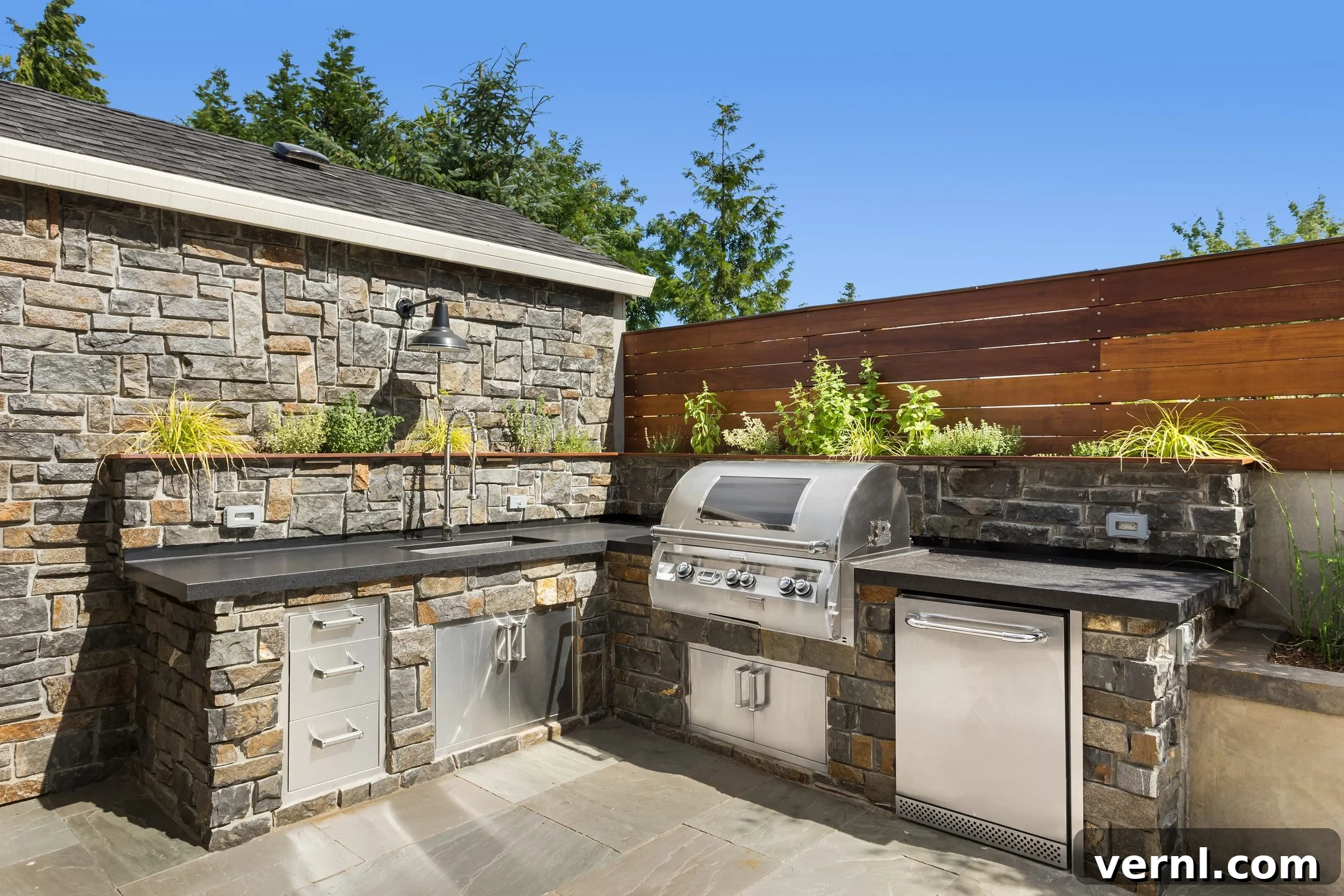
Transforming your backyard into an outdoor culinary haven begins with the exciting prospect of integrating a built-in grill. Far more than just a place to cook, a thoughtfully designed outdoor kitchen significantly enhances your home’s aesthetic appeal, functionality, and overall market value. Imagine hosting unforgettable gatherings, enjoying gourmet meals under the stars, or simply unwinding in a beautifully appointed extension of your indoor living space. Crafting the perfect outdoor kitchen is an exciting journey that blends personal style with practical considerations. While the prospect of such an upgrade might seem daunting, understanding the various components and their associated costs empowers you to design a space that perfectly aligns with your vision and financial plan. This comprehensive guide will walk you through everything you need to know, from average costs and essential elements to luxurious upgrades and budget-friendly alternatives, ensuring you can build the outdoor kitchen of your dreams.
Understanding the Average Outdoor Kitchen Cost
The investment required for an outdoor kitchen varies widely, influenced by numerous factors such as your geographic location, material choices, the complexity of the design, and the brands of appliances you select. Generally, homeowners can expect costs to range from $6,000 for a basic setup to $50,000 or even more for an elaborate, high-end installation. Most homeowners typically spend between $12,000 and $14,000 to achieve a well-appointed and functional outdoor cooking and entertainment area. However, it’s crucial to understand that costs can escalate quickly if you opt for premium materials, advanced appliances, custom features, or complex utility installations. The overall size of your planned outdoor kitchen, encompassing the footprint for cooking zones, dining areas, and integrated amenities, is another primary driver of the total project cost.
Essential Components and Their Impact on Outdoor Kitchen Costs
Building an outdoor kitchen involves integrating several key components, each contributing to the overall functionality and aesthetic, and each carrying its own price tag. Understanding these elements will help you prioritize and allocate your budget effectively:
- Built-in Grill: Often considered the heart of any outdoor kitchen, the grill is where much of the culinary magic happens. Prices for built-in grills can range dramatically, from $150 for a basic, entry-level charcoal model to over $6,000 for high-performance gas grills with advanced features like infrared burners, rotisserie kits, and smart connectivity. Fuel type (natural gas, propane, charcoal, pellet, or electric), brand reputation, size, and additional features all play a significant role in the cost. For those on a tighter budget, a traditional charcoal grill or even a high-quality standalone grill can serve as an excellent starting point, allowing for future upgrades.
- Fireplace and Fire Pit: These features dramatically enhance the ambiance and usability of your outdoor space, especially in cooler climates, extending your entertaining season. Outdoor fireplaces typically range from $1,500 to $20,000, depending on size, material (stone, brick, stucco), and design complexity. Fire pits offer a more affordable alternative, with prices usually between $300 and $1,400 for a basic model. Many DIY enthusiasts can even construct a modern outdoor fireplace or fire pit, saving significantly on labor costs. Beyond warmth, both can offer alternative cooking options, such as roasting marshmallows or even slow-cooking certain dishes.
- Patio or Flooring: A stable and level foundation is crucial for any outdoor kitchen. If you already have a well-maintained patio or paved area, you can save a considerable amount. However, if new flooring is required, costs can range from $5 to $50 per square foot for professional installation, depending on the material. Options include simple poured concrete, elegant pavers, natural stone like flagstone or slate, or even composite decking. Each material has different durability, aesthetic appeal, and maintenance requirements, impacting both initial cost and long-term value.
- Sink: While not strictly essential for every outdoor kitchen, an outdoor sink significantly enhances convenience for food preparation and cleanup. Installation costs, including plumbing lines and the sink unit itself, typically fall between $225 and $1,700. Factors influencing this cost include the type of sink (drop-in, undermount), material (stainless steel is popular for its durability), hot and cold water availability, and drainage solutions. A functional sink minimizes trips indoors, making your outdoor cooking experience much more enjoyable.
- Secondary Appliances: Expanding beyond the grill with additional appliances can transform your outdoor kitchen into a versatile culinary workstation. Adding an oven (such as a pizza oven or a traditional built-in oven) or a refrigerator can cost anywhere from $125 for a basic mini-fridge to $15,000 for high-end, dedicated outdoor models. A small, under-counter stainless-steel refrigerator is a popular choice, offering convenient access to beverages and ingredients without consuming excessive space or breaking the bank. A dedicated outdoor oven, while a luxury addition if you already have a grill, provides unparalleled culinary versatility, allowing for baking, roasting, and more complex meal preparation outdoors. Other luxury appliances might include ice makers, warming drawers, or even dishwashers.
- Cabinetry: Outdoor cabinetry provides essential storage and helps define the aesthetic of your kitchen. Material costs range widely, from $3 to $45 per square foot. Popular options include stainless steel, revered for its hygiene, weather resistance, and ease of cleaning, and offering a moderately priced, professional look. More budget-friendly materials include PVC and marine-grade polymer, known for their resistance to moisture and insects. For a more luxurious feel, homeowners might opt for natural stone, stucco veneer over metal frames, or weatherproof wood varieties, all offering distinct visual appeals and varying degrees of durability. Proper cabinetry protects your kitchen components from the elements and keeps your space organized.
- Countertops: Outdoor countertops must be highly durable and resistant to weather, heat, and stains. Prices typically range from $25 to $100 per square foot. Granite and stainless steel are exceptionally durable and popular options for outdoor use due to their resilience and low maintenance. Other suitable materials include concrete, tile, soapstone, and certain types of engineered quartz, each offering different aesthetic qualities, performance characteristics, and price points. The choice of countertop significantly impacts the overall look and longevity of your outdoor kitchen.
- Enclosure and Framework: An overhead enclosure or framework can add significant value, ambiance, and practicality by providing shade, protection from rain, and a defined sense of space. Expect to pay from $200 to $600 per linear foot for such structures. According to the National Kitchen and Bathroom Association (NKBA), a significant percentage of homeowners invest in overhead structures: 52% install a fixed overhead structure or enclosure, 30% choose a pergola, and 13% opt for a retractable awning. Only a small minority (12%) forgo an overhead structure entirely, with many of those later expressing regret. These structures can transform a simple grilling area into a true outdoor room.
- Labor: Professional labor is a substantial part of the total cost, especially for larger or more complex projects. General contractor fees for a comprehensive outdoor kitchen can range from $3,000 to $12,000, covering project management, scheduling, and oversight. Additionally, specialized professionals such as plumbers for water and drainage, gas engineers for gas line installations, electricians for power outlets and lighting, and landscapers for surrounding hardscaping and planting may be required. Ensuring that qualified individuals handle critical installations like gas and electricity is paramount for safety and compliance with local building codes.
Affordable Options for Budget-Friendly Outdoor Kitchens
Even with a tight budget, creating a functional and enjoyable outdoor kitchen is entirely achievable through strategic planning and smart resource allocation. One of the most significant cost-saving approaches is taking on a considerable portion of the work yourself, often referred to as DIY. For instance, you can visit a big-box retailer or home improvement store like Costco, which often offers outdoor kitchen kits or modular components ranging from $1,500 to $5,000. These kits typically provide a basic island-style countertop with a cutout for a grill, offering a functional foundation. However, keep in mind that these are generally quite basic, and you’ll need to budget extra for additional features, appliances, and aesthetic enhancements to create a more complete kitchen setup.
Beyond kits, several other avenues can help you save money. For flooring, while options range from elaborate natural stone to durable pavers, gravel flooring stands out as the most cost-effective solution, providing good drainage and a rustic aesthetic. Another budget-friendly option for creating an overhead structure or defining your space is a wooden pergola. These can be purchased as kits or built from scratch relatively inexpensively, offering partial shade and a charming architectural element without the high cost of a solid roof enclosure. Prioritizing essential functions, choosing durable yet affordable materials, and being willing to undertake some of the labor yourself are key strategies for building an outdoor kitchen that doesn’t break the bank.
The Investment in a Luxury Outdoor Kitchen
For those looking to significantly upscale their home design and outdoor living experience, a luxury outdoor kitchen offers unparalleled aesthetic appeal and major functionalities. The popularity of luxury outdoor kitchens surged during recent years, as spending more time at home and the desire to entertain within private outdoor spaces became a priority. As noted by The National Kitchen and Bath Association (NKBA), “Luxury in outdoor kitchens grew in popularity during the pandemic as spending time at home and wanting to entertain within an outdoor space became more popular. Luxury outdoor kitchens are becoming a new standard for luxury new home builds as they provide additional usable square footage to a home.”
The price of a luxury outdoor kitchen can vary widely due to the extensive customization options available. Prefabricated and modular luxury options typically range from $4,000 to $10,000. These units tend to be fancier than basic kits, often including higher-quality materials, more robust construction, and some integrated extras. However, even these high-end modular units are frequently focused on the grill or barbecue island and countertops. To achieve a truly comprehensive luxury setup, you’ll still need to factor in additional costs for a full enclosure structure, extra high-end appliances (such as dedicated pizza ovens, multiple refrigeration units, or smart-home integrated components), premium seating, sophisticated lighting, and landscaping. The true luxury experience often involves bespoke designs and top-tier materials.
Custom-built luxury outdoor kitchens represent the pinnacle of outdoor living and are the most expensive option. Expect to pay between $1,200 to $2,000 per linear foot for a custom design. This pricing reflects not only the superior materials and craftsmanship but also the complex planning, design, and integration of high-end appliances and features tailored precisely to your preferences and space. Depending on the specific appliances, exotic finishes, and intricate structural elements you choose, costs can escalate significantly. While some skilled homeowners might save by DIYing certain aspects, budgeting at least $1,000 per linear foot is a good rule of thumb for any custom luxury outdoor kitchen project. This ensures you can accommodate premium fixtures, elaborate designs, and professional installation for a truly bespoke space.
Understanding Modular Kitchen Costs
Modular outdoor kitchens offer a compelling balance between customization and cost-effectiveness, with prices varying based on several factors, most notably your geographic location. Where you live significantly impacts not only labor rates but also the availability and cost of specific materials, ultimately influencing the total project expenditure.
In colder climates, for instance, special considerations are crucial. You’ll need to select materials and appliances that are specifically designed to withstand freezing temperatures, snow, and wet weather conditions to ensure durability and longevity. Marine-grade polymers, sealed natural stone, and heavy-gauge stainless steel are excellent choices for cabinetry and countertops in such environments. Furthermore, winterization becomes an important factor; planning for easily removable faucets, protective insulated covers for your grill and other appliances, and proper drainage systems will protect your investment. If your goal is to utilize your outdoor kitchen through the colder months, integrating an outdoor fireplace or a robust fire pit becomes almost essential. These additions not only provide warmth and ambiance but also enhance the practicality and overall value of your outdoor living space, albeit at an increased cost. Modular systems can often be adapted with these climate-specific features, allowing for a tailored solution that caters to regional demands.
Hiring a Professional vs. DIY: Weighing Outdoor Kitchen Savings
When embarking on an outdoor kitchen project, a critical decision is whether to hire professionals or tackle the build yourself. Many homeowners prefer to engage a professional contractor and specialized tradespeople to ensure the work is completed correctly, safely, and to a high standard, particularly given the complexities of integrating utilities. Professionals bring expertise, efficiency, and often warranties for their work, offering peace of mind.
However, if you possess the necessary skills, experience, and dedicated time, building an outdoor kitchen yourself can lead to substantial savings, potentially reducing total project costs by up to 40 percent. DIY efforts can include constructing the framework, installing basic cabinetry, laying flooring, and performing finishing tasks like sealing countertops and assembling furniture. These aspects can greatly reduce labor expenses. Yet, it’s paramount to recognize that certain installations demand the specialized expertise of licensed professionals. Specifically, all plumbing, electrical wiring, and gas line installations must be managed by qualified and certified personnel to ensure safety, compliance with local building codes, and proper functionality. Attempting these complex installations without proper training or permits can lead to dangerous situations, costly mistakes, and voided warranties.
If you have some contracting experience or are comfortable with construction principles, a hybrid approach can be effective. You might build the main kitchen framework, install non-utility-related components, and then bring in professionals for the critical utility hookups. This strategy allows you to save money on labor where you are capable, while still ensuring that the most critical and potentially hazardous aspects of the project are handled safely and correctly by experts.
Sources:
- NKBA: “NKBA Luxury Outdoor Kitchen Research Report”
- NKBA: “Outdoor Kitchen Profile”
- ResearchGate: “Comparison of Cost and Energy Efficiency of Prefabricated Residential Modules with Various Construction Material Combinations”
- ResearchGate: “Value-driven purchasing of kitchen cabinets in industrialised housing”
- NKBA: “Backyard Business”
- Costco: “Outdoor Kitchens & BBQ Islands”