Unlock Your Garden’s Potential: The Complete Guide to Using Wood Ash as a Soil Amendment
Before you toss out the ashes from your cozy fireplace or wood-burning stove, consider a powerful, natural secret that could revolutionize your garden: wood ash. Far from being mere waste, this byproduct of combustion is a treasure trove of valuable nutrients, capable of transforming your soil and boosting the health of your vegetables, trees, and shrubs. Used correctly, it can even modify your soil pH, providing an eco-friendly alternative to chemical fertilizers and amendments. However, like any potent garden tool, understanding its proper application is key to harnessing its benefits without causing harm.
The Garden’s Secret Weapon: What Makes Wood Ash So Beneficial?
Wood ash is much more than just inert dust; it’s a rich source of essential plant nutrients, primarily calcium and potassium (often referred to as potash). According to the University of Wisconsin Extension Service, wood ash can contain as much as 20 percent calcium and 5 percent potassium, making it an incredibly powerful soil amendment. Beyond these two macronutrients, wood ash also typically contains magnesium, phosphorus, and sulfur in concentrations up to two percent, along with trace amounts of vital micronutrients like iron, aluminum, manganese, zinc, and boron. This diverse nutritional profile makes it an excellent, sustainable option for enriching garden soil.
Key Nutrients in Wood Ash and Their Role
- Potassium (Potash): As one of the three main nutrients (N-P-K) plants need for vigorous growth, potassium plays a critical role in overall plant health. It helps regulate water uptake and retention, enhances disease resistance, and is crucial for the development of flowers and fruits. Plants lacking potassium may exhibit weak stems, poor fruit development, and susceptibility to environmental stresses.
- Calcium: This essential element is vital for strong cell wall development in plants, contributing to overall plant structure and resilience. Calcium also plays a crucial role in nutrient uptake and helps balance soil chemistry. Importantly, calcium can effectively raise the pH level of acidic soil, offering a natural alternative to agricultural lime for gardeners looking to “sweeten” their soil.
- Magnesium: A central component of chlorophyll, magnesium is indispensable for photosynthesis, the process by which plants convert sunlight into energy. It also aids in enzyme activation and nutrient transport within the plant.
- Phosphorus: While usually present in smaller quantities, phosphorus is crucial for root development, flowering, and seed production.
- Trace Elements: The presence of micronutrients like boron, manganese, and zinc, even in minute quantities, ensures plants have access to all the necessary components for healthy metabolic functions and growth.
Modifying Soil pH with Wood Ash
One of wood ash’s most significant advantages is its ability to modify soil pH. Soil pH is a measure of its acidity or alkalinity, with a scale ranging from 0 to 14. A pH of 7 is neutral, below 7 is acidic, and above 7 is alkaline. Most plants thrive in a pH range between 6.0 and 7.0 (slightly acidic to neutral), but some have very specific requirements.
Because wood ash is alkaline, it works to increase the pH of acidic soils, making it a viable and often preferred organic alternative to dolomitic or calcitic lime. For gardens plagued by overly acidic conditions, applying wood ash can create a more hospitable environment for a wide array of plants, improving nutrient availability and microbial activity. However, this also means it must be used judiciously, as over-application can push soil pH too high, which can be detrimental to acid-loving plants and lock up essential nutrients.
How to Safely and Effectively Use Wood Ash in Your Garden
Before you excitedly scatter a bucket of ash across your garden beds, a few crucial steps and considerations are necessary to ensure you’re doing more good than harm. Responsible application begins with understanding your soil and the source of your ash.
Step 1: Test Your Soil’s pH Level
This is arguably the most critical step. Because wood ash raises soil pH due to its alkalinity, it’s essential to know your current soil’s pH level before application. Using wood ash on already alkaline soil, or on beds dedicated to acid-loving plants, can cause significant problems, including nutrient deficiencies and stunted growth. We highly recommend using a reliable soil testing kit. Simple, at-home testers like the SONKIR tester are user-friendly, providing immediate readings for moisture, light, and pH. For more comprehensive results, including nutrient levels, consider sending a soil sample to your local agricultural extension service.
Step 2: Prepare Your Wood Ash
Always sift or “shift” your wood ash before use. This process removes larger chunks of charcoal, unburnt wood, and any other debris that might be present. While charcoal itself can be beneficial for soil structure (biochar), large pieces are best removed for an even application and to prevent uneven nutrient distribution. A simple kitchen sieve or a piece of hardware cloth can work effectively for this task.
Step 3: Determine the Right Application Rate
The amount of wood ash to apply depends directly on your soil’s current pH, your target pH, and the type of plants you are growing. As a general guideline, do not exceed 15 to 20 pounds of wood ash per 1,000 square feet in a single year. For smaller garden beds, this translates to about 1 to 2 pounds per 100 square feet (roughly a coffee can full). Always err on the side of caution; it’s easier to add more later than to correct overly alkaline soil. Consult your soil test results for more precise recommendations, especially if a specific pH adjustment is needed.
Step 4: Use Only Pure Wood Ash from Safe Sources
Not all ash is created equal, and using the wrong type can introduce harmful chemicals into your garden. Always ensure the ash comes from untreated, natural wood. Strictly avoid:
- Ash from treated wood: This includes most lumber, plywood, particleboard, and especially wood treated with preservatives like chromated copper arsenate (CCA) found in older decks or fences. These chemicals can be highly toxic to plants and can accumulate in your soil, posing health risks.
- Ash from burning trash or plastics: Burning household waste, colored paper, or plastics releases a cocktail of harmful chemicals, heavy metals, and dioxins that will contaminate your garden.
- Ash from wood lit with lighter fluid or chemical accelerants: Residues from petroleum-based lighter fluids or other fire starters can persist in the ash and negatively impact soil microbiology and plant health.
- Ash from trees growing near polluted ground or industrial sites: Such wood may have absorbed higher concentrations of heavy metals or other toxins, which can then be transferred to your garden soil.
Stick to ash from clean-burning hardwoods (like oak, maple, hickory) and softwoods (like pine, fir) that have not been chemically treated. Hardwood ash generally has a higher nutrient content and liming effect than softwood ash.
When and How to Apply Wood Ash for Best Results
Timing is Everything
You have flexibility when it comes to applying wood ash, but certain times are more effective:
- Fall, Winter, or Early Spring: These seasons are ideal because they allow the ash to slowly release its nutrients and for its liming effect to take hold gradually, especially if you’re aiming to significantly alter soil pH. Applying it when the soil is moist helps to dissolve the nutrients and integrate them into the soil profile.
- Before Planting: If your primary goal is to amend the pH of your soil for specific plants, apply the wood ash three to six months before planting. This gives the soil ample time to adjust its pH, creating a more stable environment for your new plantings.
Proper Storage
Always store wood ash in a metal container with a tight-fitting lid. This is a crucial safety measure, as ash can sometimes contain dormant embers that are capable of reigniting when exposed to oxygen. Storing it in a sealed container also prevents the nutrients from leaching out due to rain, preserving its effectiveness for your garden.
Application Methods
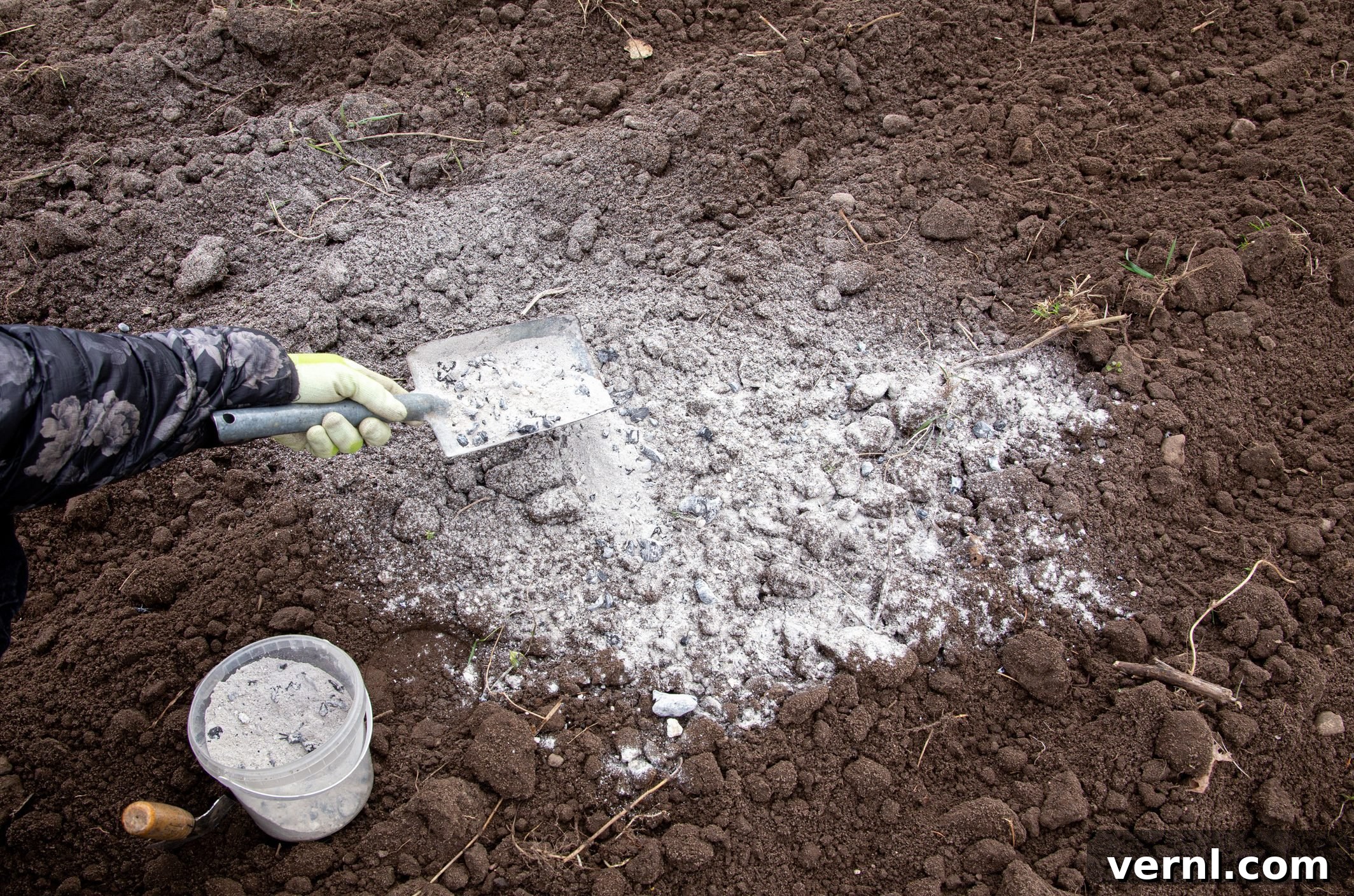
Once you’ve prepared your ash and determined the right amount, apply it evenly over the soil surface you wish to treat. For garden beds, incorporate the ash into the top 2-4 inches of soil using a rake or a garden tiller. This ensures good contact with the soil and prevents it from simply washing away. For established plants, you can gently sprinkle it around the base of the plant, being careful not to create a thick layer directly against the stem.
Essential Safety Precautions When Working with Wood Ash
While wood ash is a natural product, its alkaline nature means it can be an irritant. Taking basic safety precautions is important:
- Protect Your Skin: Wear long pants, a long-sleeve shirt, and durable gardening gloves to prevent skin irritation.
- Protect Your Eyes: Always wear eye protection, such as safety glasses or goggles, to shield your eyes from airborne ash particles.
- Protect Your Lungs: Fine ash particles can irritate your respiratory system. A dust mask or respirator is highly recommended, especially when sifting or spreading large quantities of ash.
- Wash Up: After handling wood ash, wash your hands and any exposed skin thoroughly with soap and water.
Plants That Thrive with Wood Ash Application
Understanding which plants benefit from wood ash is as important as knowing how to apply it. Plants that prefer neutral to slightly alkaline soil conditions will generally respond well to wood ash due to its calcium, potassium, and pH-raising properties.
Beneficial Plant Categories:
- Stone Fruit Trees: Cherries, apricots, and plums are excellent candidates, as they generally prefer soil on the neutral to slightly alkaline side. Wood ash can contribute to stronger fruit development and overall tree health.
- Allium Family Vegetables: Onions, garlic, leeks, and chives are hungry for potassium and calcium, making them ideal recipients of wood ash.
- Root Vegetables (with exceptions): Carrots, turnips, radishes, parsnips, and beets can greatly benefit from the potash and calcium, which support strong root growth.
- Legumes: Peas and beans often appreciate the mineral boost.
- Leafy Greens: Spinach, kale, lettuce, and collard greens can benefit from the added nutrients, particularly potassium, which contributes to robust foliage.
- Brassicas: Cabbage, broccoli, and cauliflower are also good candidates.
- Asparagus: This perennial vegetable thrives in slightly alkaline soil and can be invigorated by an annual application of wood ash.
Plants to Avoid: Where Wood Ash Can Harm
Just as some plants thrive with wood ash, others can be severely harmed. These are typically plants that prefer acidic soil conditions, as the alkalinity of wood ash will raise the pH to an unsuitable level, potentially causing nutrient lockout or other physiological stresses.
Plants to Steer Clear Of:
- Acid-Loving Berries: Blueberries, cranberries, and most other berries (strawberries prefer slightly acidic to neutral, but extreme alkalinity is bad) will suffer if exposed to wood ash.
- Acid-Loving Ornamentals: Rhododendrons, azaleas, camellias, gardenias, and specific types of hydrangeas (especially those grown for blue flowers, which require acidic conditions) should never receive wood ash.
- Many Conifers and Trees: Dogwoods, red maples, magnolias, and many oak varieties prefer acidic soil.
- Specific Vegetables:
- Potatoes: These prefer acidic soil, and wood ash application can lead to a common disease called potato scab, which manifests as rough, unsightly lesions on the tubers.
- Sweet Potatoes: Like regular potatoes, they prefer acidic conditions.
- Peppers and Tomatoes: While they can tolerate a range, they generally prefer slightly acidic soil, and too much alkalinity can hinder their growth and fruit production.
- Corn: Often prefers slightly acidic soil for optimal growth.
- Apple, Peach, and Pear Trees: These fruit trees generally prefer slightly acidic to neutral soil, and a significant increase in alkalinity from wood ash can negatively impact their health and yield.
- Roses: While some rose varieties tolerate neutral soil, most prefer slightly acidic conditions, and wood ash can push the pH beyond their comfort zone.
Conclusion: Embrace the Power of Wood Ash, Responsibly
Wood ash is a remarkable, natural, and often overlooked resource that offers significant benefits to the home garden. By repurposing this fireplace byproduct, you can enrich your soil with vital nutrients like potassium and calcium, improve soil structure, and naturally adjust pH levels, reducing your reliance on synthetic fertilizers.
However, its power lies in informed and responsible use. Always prioritize soil testing, understand the specific needs of your plants, and ensure your ash comes from clean, untreated wood sources. By following these guidelines, you can safely transform “waste” into a valuable garden amendment, fostering a healthier, more vibrant garden while embracing sustainable gardening practices. So, the next time you clean your fireplace, remember: those ashes are not just debris; they are a gift waiting to nourish your garden.