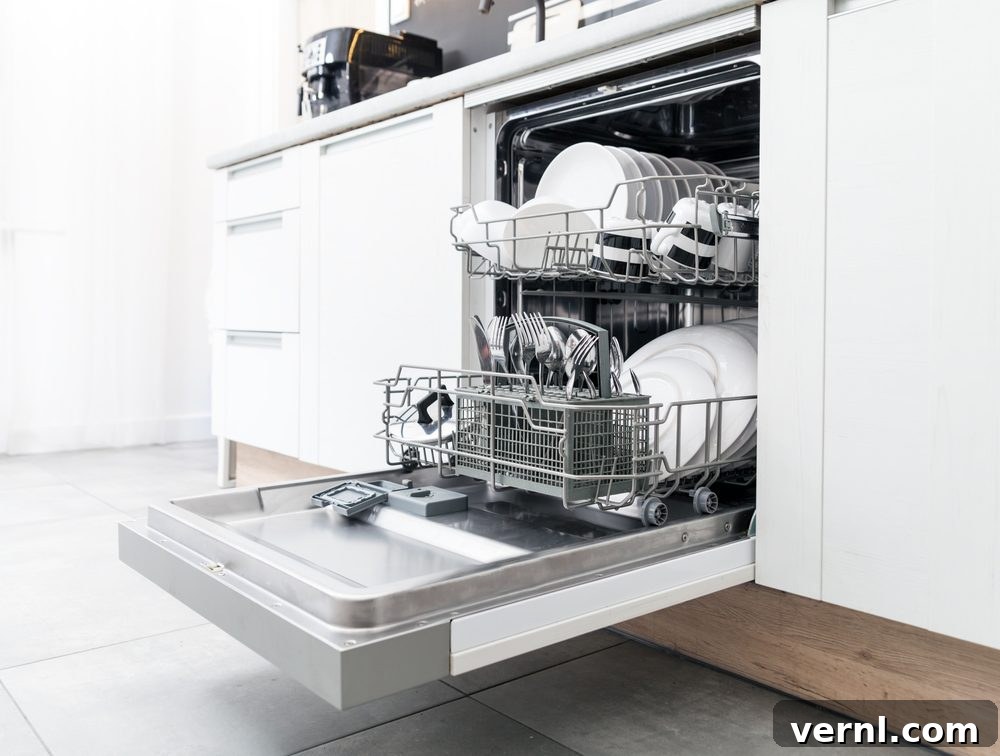
The Great Dish Debate: To Pre-Rinse or Not to Pre-Rinse Your Dishes?
For decades, a simple kitchen chore has sparked countless debates, divided households, and puzzled new generations: the act of pre-rinsing dishes before loading them into the dishwasher. Many of us grew up watching our parents or grandparents diligently scrub plates under running water, meticulously removing every food scrap before placing them in the machine. This routine felt ingrained, an unspoken rule of household hygiene. Yet, for others, the idea of washing dishes that are about to be machine-washed seems utterly illogical, a redundant step that wastes precious time, water, and effort. Which side of this long-standing culinary contention holds the truth? Is pre-rinsing a necessary ritual or an outdated habit that modern technology has rendered obsolete?
From a young age, I found this particular household routine utterly baffling. My mother, like many others, insisted on a thorough pre-rinse, convinced it was the only way to achieve truly clean dishes. This practice, however, always struck me as an inefficient use of resources and energy. Why would you manually clean something that a powerful appliance is specifically designed to handle? The advent of marriage brought a delightful surprise: my in-laws belonged to the non-pre-rinsing camp. Dinner concluded, plates were scraped (not rinsed!), and directly loaded into the dishwasher. It was a revelation, a testament to efficiency, and frankly, a huge relief for someone who despises doing dishes. This stark contrast cemented my belief that there must be a definitive answer to this kitchen conundrum.
The Evolution of Dishwashing: Understanding Modern Appliances
To truly understand whether pre-rinsing is necessary, we must look at how dishwashers and detergents have evolved over the years. Early dishwasher models and detergents were indeed less powerful. They often struggled with baked-on food or hardened particles, making a manual pre-rinse a practical, if not essential, step to ensure dishes emerged spotless. However, appliance technology has advanced significantly, making today’s dishwashers far more sophisticated and efficient than their predecessors.
Smart Sensors: The Brains of Your Dishwasher
Many contemporary dishwashers are equipped with advanced sensors designed to detect the soil level of your dishes. These “soil sensors,” often turbidity sensors, measure how dirty the water is during the pre-wash cycle. They work by shining a light through the water and measuring how much light passes through. The cloudier the water (i.e., the more food particles present), the dirtier the dishes are perceived to be. Based on this assessment, the dishwasher intelligently adjusts its wash cycle, optimizing water temperature, spray intensity, cycle length, and even the amount of water used. If the sensors detect heavily soiled dishes, the machine will initiate a more aggressive, longer wash cycle with hotter water to ensure thorough cleaning. Conversely, if the dishes appear relatively clean, it will opt for a shorter, lighter cycle, conserving both water and energy.
This intelligent design means that removing all food particles through pre-rinsing can actually be counterproductive. If the sensors detect minimal soil, the dishwasher might switch to a gentler cycle, believing your dishes don’t need intense cleaning. This could be problematic if you have a few genuinely dirty dishes mixed with heavily pre-rinsed ones. The overall cycle might not be robust enough to properly clean the truly soiled items, leaving you with less-than-sparkling results.
The Power of Enzymatic Detergents
Modern dishwasher detergents are formulated with powerful enzymes that play a crucial role in breaking down food particles. Amylase enzymes target starches (like potatoes or rice), while protease enzymes tackle proteins (like meat or dairy). These enzymes are designed to latch onto food residues and chemically break them down, making them easier for the dishwasher’s water jets to wash away. Here’s the critical point: these enzymes actually *need* food particles to activate and work effectively. If you meticulously pre-rinse every speck of food from your dishes, the enzymes in your detergent have nothing to latch onto, rendering them less effective and essentially wasted. This not only diminishes the cleaning power but also means you’re not getting the full value out of your detergent.
Water and Energy Efficiency: The Environmental Impact
Beyond the efficacy of cleaning, pre-rinsing has a significant environmental footprint. Manually rinsing dishes under a running tap for even a minute can waste several gallons of water. Multiply that by every meal and every day, and the cumulative waste is substantial. Modern ENERGY STAR certified dishwashers are designed to be incredibly water and energy-efficient, often using less water per load than handwashing the same number of dishes. By skipping the pre-rinse, you allow your dishwasher to optimize its cycles, further reducing water and energy consumption. This translates to lower utility bills and a smaller environmental impact, making it a win-win for both your wallet and the planet.
The Case Against Pre-Rinsing: Why It’s Often Unnecessary
Considering the technological advancements, the arguments against pre-rinsing are compelling:
- Wasted Water and Energy: As discussed, pre-rinsing under a faucet can consume up to 20 gallons of water per wash, while a modern dishwasher might use as little as 3-5 gallons for an entire load.
- Ineffective Detergent Use: Without food particles, enzymatic detergents lose their primary target, diminishing their cleaning power and efficiency.
- Deceiving Smart Sensors: Overly clean dishes can trick your dishwasher’s sensors into selecting a lighter wash cycle, which might not be powerful enough for the few truly dirty items in the load, leading to suboptimal cleaning results for those pieces.
- Unnecessary Time and Effort: Your time is valuable. Why spend precious minutes performing a task that an appliance is designed to do automatically? The entire purpose of a dishwasher is to automate and simplify dishwashing.
When Might Pre-Rinsing (or Rather, Scraping) Be Justified?
While a full pre-rinse is largely unnecessary, there are nuances. The key distinction here is between *rinsing* and *scraping*. You should always scrape off large food particles into the trash or compost bin before loading dishes. This prevents potential clogs in your dishwasher’s filter and ensures that large chunks don’t redeposit onto other dishes. However, scraping is very different from rinsing every last morsel.
There are a few scenarios where a slight modification to the “no pre-rinse” rule might be considered:
- Very Old Dishwashers: If you own a dishwasher from before the early 2000s, it might lack the advanced sensors and powerful spray arms of modern models. In such cases, a light scrape and perhaps a quick, minimal rinse might be beneficial.
- Extremely Hardened or Burned-On Food: For truly stubborn, baked-on, or burned-on food residues (think heavily charred casserole dishes or dried-on oatmeal that’s been sitting for days), a quick soak or a targeted scrape with a spatula before loading is advisable. Even the most powerful dishwashers might struggle with these extreme cases.
- Unusually Long Waiting Periods: If you only run your dishwasher every few days and dishes will sit for a prolonged period (more than 24-48 hours), some people opt for a light scrape to prevent food from cementing onto surfaces, especially if their dishwasher doesn’t have a rinse-only cycle. However, even then, a modern dishwasher should generally manage.
- Specific Food Types: Certain foods like sticky rice, peanut butter, or thick sauces can sometimes be particularly challenging. A quick scrape to remove the bulk of these might prevent them from spreading or clogging the filter.
Best Practices for Optimal Dishwasher Performance
Instead of pre-rinsing, focus on these habits for the cleanest dishes and a well-maintained appliance:
- Scrape, Don’t Rinse: Remove all solid food scraps, bones, and large particles into the trash. Leave the sauces and smaller bits; that’s what your detergent and dishwasher are for.
- Load Correctly: Don’t overcrowd the dishwasher. Ensure water jets can reach all surfaces. Place larger items and pots on the bottom rack, facing the center. Glasses, cups, and smaller items go on the top rack. Avoid nesting items.
- Use Quality Detergent: Invest in high-quality dishwasher detergent, preferably in tablet or pod form, which often contains pre-measured amounts of powerful enzymes and rinse aid. Make sure to store detergent properly to maintain its efficacy.
- Utilize Rinse Aid: Rinse aid helps water sheet off dishes, preventing water spots and promoting faster drying. Most modern detergents include it, but if not, an external rinse aid dispenser is beneficial.
- Clean the Filter Regularly: Most modern dishwashers have a removable filter at the bottom. Check your manual for instructions, but it typically twists out. Clean it regularly (weekly or bi-weekly) to remove trapped food particles and prevent odors. This is far more effective than pre-rinsing for maintaining cleanliness.
- Run Hot Water Before Starting: Before turning on the dishwasher, run your kitchen faucet until hot water comes out. This ensures your dishwasher immediately gets hot water for its wash cycle, rather than waiting for cold water to heat up, which is especially important for the initial cleaning phase.
- Run Full Loads: To maximize water and energy efficiency, wait until your dishwasher is full before running it.
Debunking Common Pre-Rinse Myths
Let’s address a couple of persistent myths surrounding pre-rinsing:
- “It prevents odors”: While leaving very old, festering food can cause odors, proper scraping, regular filter cleaning, and running cycles frequently are much more effective at preventing smells than a superficial rinse. Running a dishwasher cleaner once a month can also work wonders.
- “It prevents clogs”: Modern dishwashers have sophisticated filtration systems designed to handle typical food scraps. As long as you scrape off large solids, the filter should manage the rest. Excessive pre-rinsing does not magically prevent clogs; diligent filter maintenance does.
The Verdict: Embrace Modern Efficiency
For the vast majority of households with modern dishwashers and high-quality detergents, the answer is clear: ditch the pre-rinse. Embrace the efficiency your appliance offers. By simply scraping off large food particles and loading correctly, you’ll save water, energy, time, and money, while allowing your dishwasher and detergent to perform at their peak. It’s time to retire the pre-rinse ritual to the history books, alongside hand-cranked laundry machines and iceboxes.
So, go ahead, embrace the future of dishwashing. My mother will be receiving a copy of this article soon, and perhaps, just perhaps, it will finally put an end to my pre-rinse duties when I visit home.
While you’re rethinking your kitchen routines, don’t forget to check out this easy hack to clean your dishcloths. And if your dishwasher doesn’t have those smart pre-wash cycle sensors, maybe it’s time for an upgrade! Here’s how to replace a dishwasher in 4 easy steps.
Recommended Products for an Efficient Kitchen
To help you achieve sparkling clean dishes without the fuss, here are some top-rated dishwashers and detergents:
- SDW6767HS Stainless Dishwasher with Stainless Steel Interior and Adjustable Rack
- Cascade Dishwasher Detergent ActionPacs, Fresh Scent
- GE 24-in. Built-In Tall Tub Top Control Stainless Steel Dishwasher with Sanitize & Dry Boost
- Cascade Complete 75 oz. Fresh Scent Dishwasher Gel with Dawn
- Cascade Platinum Action Pacs Dishwasher Detergent, Fresh Scent (14 Count)
- BlitzHome Countertop Dishwasher for 6 Place Settings, High-Temp Air Dry Function, 6 Programs
- Frigidaire 60 Decibel Filtration Built-In Dishwasher, Stainless Steel, ENERGY STAR Certified
- Cascade Dishwasher Detergent (Various Sizes)
- Cascade Lemon Scent Platinum ActionPacs Dishwasher Detergents
- Gibson Home Rockaway Round Stoneware Coupe-Edged Dinnerware Set (Service for 4)
- IKEA ESSENTIELL Built-in Dishwasher, Stainless Steel