Mastering Landscape Design: Crafting Your Ultimate Outdoor Oasis
Landscape design is a captivating blend of scientific understanding and artistic expression, a discipline where creativity meets ecological principles. On one hand, it demands a scientific approach: meticulously analyzing your site, understanding its unique conditions, addressing any challenges, and selecting plants that are perfectly suited to thrive there. On the other hand, it is a profound art form, allowing you to transform your wildest imaginings into a tangible, beautiful, and functional outdoor space. This guide will walk you through the essential steps to design a landscape that not only enhances the aesthetic appeal of your home but also enriches your lifestyle. Let’s embark on this exciting journey to create your dream outdoor oasis!
Embarking on Your Landscape Design Journey: A Step-by-Step Guide
Creating a stunning landscape begins with careful planning and a clear vision. By following these foundational steps, you can ensure your project is successful, enjoyable, and results in a space you’ll cherish for years to come.
1. Define Your Vision and Goals
Before any digging begins, it’s crucial to articulate what you truly desire from your outdoor space. What purpose will your landscape serve? Do you envision a serene retreat for relaxation, a vibrant area for entertaining guests, a safe and engaging play zone for children, or a productive edible garden? Perhaps a combination of these? Clearly defining your objectives will act as your compass throughout the design process, guiding every decision from plant selection to hardscape materials. Consider these guiding questions:
- Do you want to create an inviting landscape around a newly installed deck or patio, extending your indoor living space outdoors?
- Is your primary goal to establish a dedicated spot for outdoor dining, barbecues, and social gatherings?
- Are you keen on cultivating a unique garden that blends ornamental beauty with edible bounty, allowing you to harvest fresh produce?
- Do you need enhanced privacy from neighbors or increased curb appeal to boost your home’s value?
- What specific moods or feelings do you want your garden to evoke – tranquility, energy, whimsy?
For more inspiration on practical applications, discover 17 great tips for landscaping your backyard, providing a solid foundation for defining your personal landscape aspirations.
2. Gather Inspiration and Ideas
Once your goals are established, immerse yourself in a world of garden inspiration. This phase is about exploring possibilities and refining your aesthetic preferences. Look beyond just plants; consider hardscaping materials, lighting, water features, and overall garden styles. Here’s how to effectively gather ideas:
- Magazines and Websites: Pore over garden magazines and reputable garden-related websites. Pay attention to layouts, color palettes, plant combinations, and featured landscape elements.
- Online Platforms: Utilize platforms like Pinterest to create digital mood boards. Pin images of landscapes, individual plants, patio designs, and outdoor decor that resonate with you. This visual collection will help consolidate your ideas.
- Neighborhood Walks: Take leisurely strolls around your local neighborhood. Observe what works well in similar climates and architectural styles. Note plant choices, fence designs, and how spaces are utilized.
- Botanical Gardens and Arboretums: Visit local botanical gardens. These living laboratories offer a wealth of information on plant performance, mature sizes, and design principles. They’re excellent places to see plants in a designed context.
- Garden Tours: Attend local garden tours, which often showcase private gardens. This provides a unique opportunity to see real-world applications of design concepts and gather practical insights directly from homeowners.
As you gather ideas, begin to discern what appeals to you in terms of hardscaping materials (e.g., natural stone, pavers, concrete), plant textures and colors, and overall garden style (e.g., a formal English garden, a contemporary minimalist design, or a rustic cottage garden). Understanding these preferences will be instrumental in shaping your unique landscape.
3. Conduct a Thorough Site Analysis
The success of any landscape design hinges on a deep understanding of the site’s unique characteristics. This step is critical for selecting the right plants and materials and addressing potential challenges. Walk around the area you plan to landscape at different times of the day and under various weather conditions. Observe and document the following aspects:
- Sunlight Exposure: This is paramount. Track how long each section of your yard receives direct sunlight and at what time of day. Morning sunshine, often cooler and less intense, is gentler on many plants than the scorching afternoon sun. Categorize areas as full sun (6+ hours), partial sun/shade (3-6 hours), or full shade (less than 3 hours).
- Soil Conditions: Healthy soil is the foundation of a thriving garden. Observe your soil’s texture (sandy, clay, loamy) and its drainage capabilities. You can perform a simple percolation test: dig a hole, fill it with water, and time how long it takes to drain. Slow drainage often indicates heavy clay, while rapid drainage suggests sandy soil. A soil test kit can also reveal nutrient levels and pH, informing necessary amendments.
- Drainage Issues: After a rain shower, identify any spots where water tends to collect or drain poorly. Poor drainage can drown plants and create muddy areas. Your landscape plan must address these issues, either through structural solutions like a French drain or by selecting plants that tolerate or even thrive in soggy conditions. Learn how to achieve better yard drainage effectively.
- Existing Features: Note all existing elements, including mature trees, shrubs, utility lines, fences, sheds, pathways, and hardscaping. Decide which elements you want to retain, remove, or integrate into your new design.
- Views and Privacy: Identify desirable views you want to enhance and undesirable views you wish to screen. Consider where privacy is needed and how plants or structures can achieve it.
- Wind Patterns: Observe prevailing wind directions, especially in open areas. Strong winds can stress plants and make outdoor spaces uncomfortable. Design solutions might include windbreaks or strategically placed structures.
- Slopes and Topography: Assess any changes in elevation. Slopes can present erosion challenges but also offer opportunities for terracing or creating dynamic visual interest.
Documenting these observations, perhaps with photos and notes, will provide an invaluable blueprint for your design.
4. Develop a Comprehensive Landscape Plan
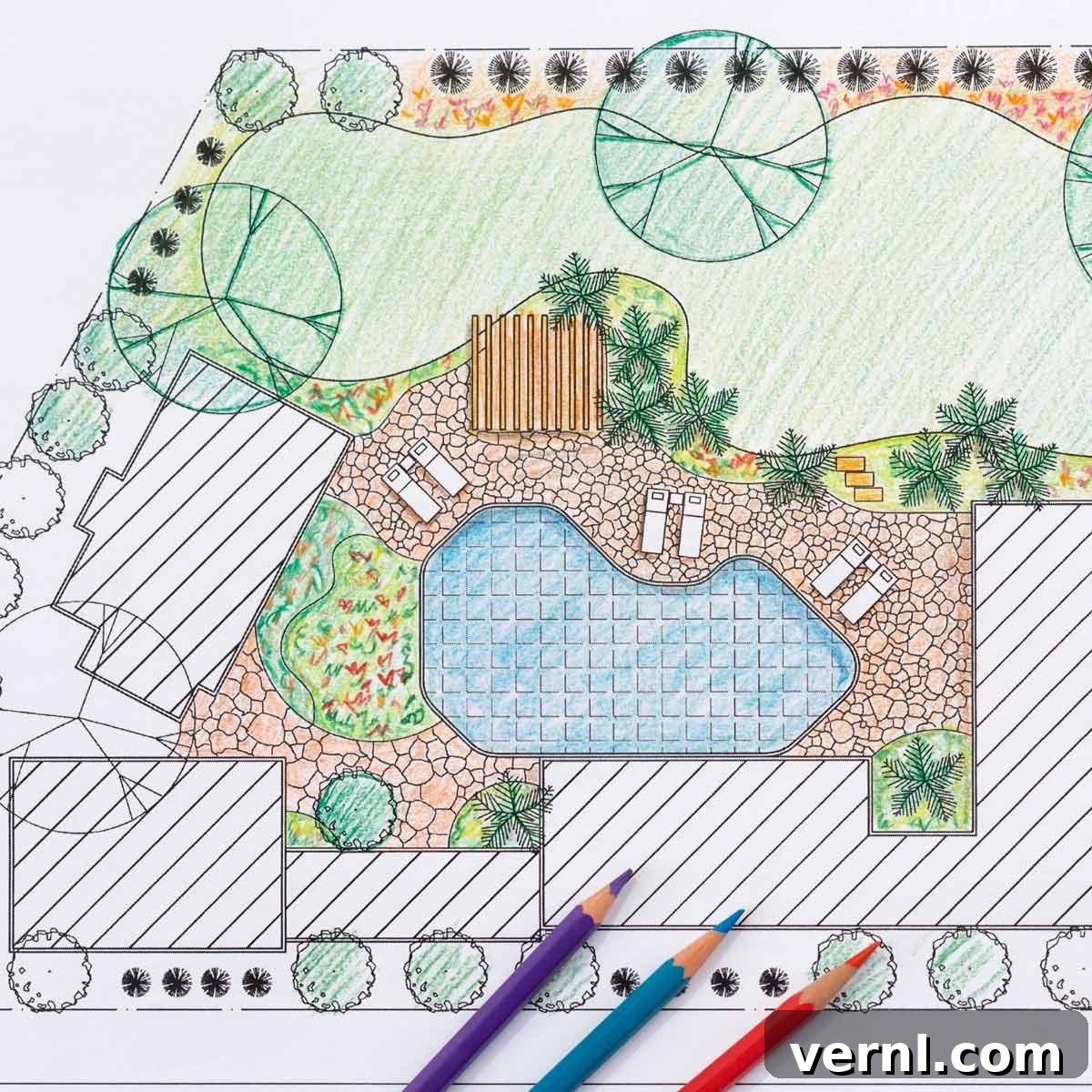
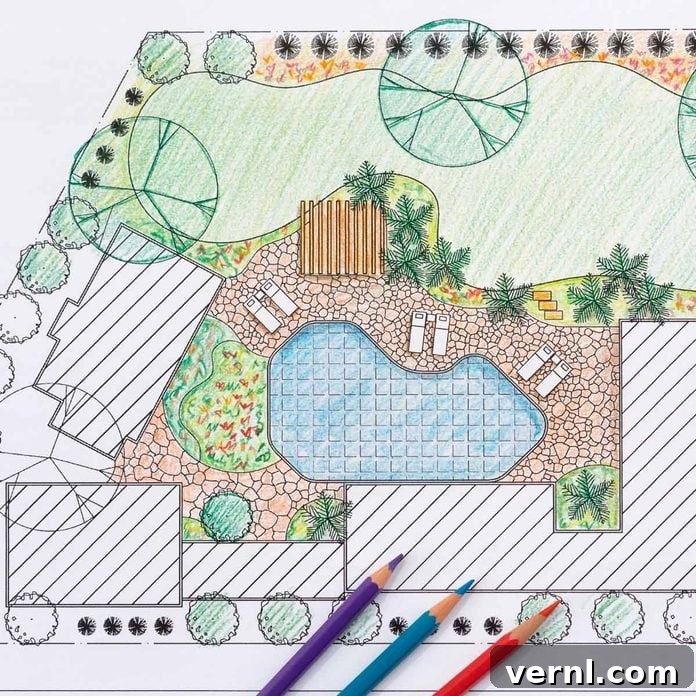
With your goals defined, inspiration gathered, and site thoroughly analyzed, it’s time to translate your ideas onto paper – or screen. This conceptualization phase is where you start mapping out the layout of your new landscape.
- Measure and Sketch: Begin by accurately measuring the entire area you intend to landscape. Use graph paper to draw a scaled base map of your property, including your house, existing structures, and any elements you plan to keep.
- Bubble Diagramming: On this base map, start sketching “bubbles” or loose shapes representing different functional zones. For example, a “relaxation zone,” an “entertainment zone,” a “play area,” or a “vegetable garden.” This helps organize space conceptually.
- Define Boundaries: Use garden hoses, ropes, or even spray paint to create imaginary boundaries for planting beds, pathways, and proposed hardscaping features. Place temporary items like empty pots or small pieces of furniture to represent larger elements like shrubs, trees, or benches. This visualization technique allows you to walk through the space and get a tangible feel for how the elements will relate to each other and the overall scale.
- Consider Flow and Circulation: Think about how people will move through the space. Where will paths lead? How will different zones connect? Ensure smooth, intuitive circulation.
- Incorporate Design Principles: As you draw, consider basic design principles:
- Balance: Achieve a sense of equilibrium (symmetrical or asymmetrical).
- Rhythm and Repetition: Use repeating elements (plants, colors, textures) to create continuity.
- Emphasis: Create focal points that draw the eye.
- Unity: Ensure all elements work together cohesively.
- Scale and Proportion: Make sure elements are appropriately sized relative to each other and the overall space.
This planning stage is iterative; don’t be afraid to experiment with different layouts until you find one that truly resonates with your vision. Discover excellent tips for DIY backyard landscaping projects that can guide your initial planning efforts.
5. Select the Perfect Plants for Your Design
Choosing the right plants is arguably the most exciting, yet critical, step in landscape design. You now have a clear understanding of your site’s conditions (e.g., morning sunlight, afternoon shade, good drainage, soil type) and the available space. This knowledge is your foundation for successful plant selection.
- Match Plants to Site Conditions: This is the golden rule: “right plant, right place.” Research plants thoroughly online, in comprehensive plant catalogs, or by visiting a local nursery. Each plant will typically have a tag detailing its preferred conditions (sun exposure, soil type, water needs) and its mature size. Selecting plants suited to your climate and microclimates significantly reduces future maintenance and ensures their health.
- Consider Mature Size and Growth Rate: Always account for a plant’s mature size – height and spread. A small shrub purchased today can quickly become an oversized monster if not planned for, overwhelming the space or encroaching on pathways.
- Think About Seasonal Interest: Aim for a garden that offers beauty throughout the year. Combine plants with varying bloom times, interesting fall foliage, attractive berries, or architectural winter forms. Evergreens are essential for year-round structure.
- Prioritize Low-Maintenance Options: If you desire a garden that doesn’t demand constant attention, opt for plants known for their resilience, disease resistance, and minimal pruning needs.
- Embrace Native and Drought-Tolerant Plants: Native plants are adapted to your local climate and soil, requiring less water and fewer interventions. Drought-tolerant options are increasingly important for water conservation.
- Explore Color, Texture, and Form: Use these elements to create visual interest. Combine fine-textured plants with bold ones, vary heights and shapes, and play with complementary or contrasting colors.
- Visit the Nursery: A visit to a local nursery is invaluable. It allows you to see plants in person, assess their health, and even place several potential partners next to each other to visualize combinations. Plus, you can confirm availability, preventing the disappointment of falling in love with a plant you can’t acquire. Engage with nursery staff; they are often a wealth of local knowledge.
6. Integrate Hardscaping Elements
Hardscaping refers to the non-living elements of your landscape, and it forms the structural backbone of your design. These permanent features define spaces, provide functionality, and contribute significantly to the overall aesthetic and value of your outdoor area. Integrating them thoughtfully is crucial for a cohesive design.
- Patios and Decks: These create outdoor living rooms, perfect for entertaining, dining, or simply relaxing. Consider materials like natural stone, concrete pavers, brick, or wood/composite decking, each offering different aesthetics and maintenance requirements.
- Walkways and Paths: They guide movement through your landscape, connecting different areas of your garden. Paths can be functional, leading to an entrance, or purely aesthetic, winding through planting beds. Materials should complement your home’s architecture and garden style.
- Retaining Walls: Essential for managing slopes, preventing erosion, and creating terraced garden beds. They can be built from stone, concrete blocks, timber, or gabions, adding both structure and visual interest.
- Water Features: From tranquil ponds and waterfalls to decorative fountains, water features introduce soothing sounds and visual appeal, attracting wildlife and creating a focal point.
- Outdoor Lighting: Strategically placed lighting enhances safety, extends the usability of your outdoor space into the evening, and highlights architectural features or specimen plants, adding drama and ambiance.
- Other Elements: Consider pergolas, arbors, fire pits, built-in seating, and outdoor kitchens. Each adds functionality and character to your landscape.
Careful selection of hardscaping materials ensures durability and seamless integration with your softscaping (plants). Check out these hardscaping and design ideas for your yard to inspire your choices.
7. Finalize Your Design and Visualize the Outcome
With all your elements considered, it’s time to consolidate your ideas into a detailed final design. You can achieve this in several ways:
- Traditional Sketching: Pencil out your plan on grid paper, using circles and shapes to represent the mature size and form of plants, hardscaping features, and other elements. This hands-on approach allows for easy revisions.
- Digital Design Software: Utilize one of the many computer programs available for landscape design. These tools can be incredibly fun and powerful. Good programs allow you to design on a precise grid, then visualize the results in a 2D plan and often a 3-dimensional rendering. This 3D view is invaluable for understanding how elements will look from different angles and how shadows will fall. You can even experiment with adding various hardscaping elements, garden accessories like benches and fountains, and see how different plant choices impact the overall aesthetic.
- Professional Consultation: For complex projects or if you feel overwhelmed, consider consulting a professional landscape designer. They can translate your vision into a professional plan, offer expert advice, and help you avoid costly mistakes.
The goal is to create a clear, comprehensive blueprint that you can use for implementation, whether you’re undertaking the project yourself or hiring contractors.
Understanding Diverse Landscape Styles
The style you choose for your landscape profoundly impacts its overall feel and how it relates to your home’s architecture. Exploring different styles can help you refine your vision:
- Formal Gardens: Characterized by symmetry, straight lines, geometric shapes, and meticulously pruned plants (e.g., hedges, topiary). Often feature classical elements like statues and fountains.
- Informal/Cottage Gardens: Emphasize naturalistic curves, a profusion of flowering plants densely planted, and a charming, somewhat wild aesthetic. Often feature winding paths, antique elements, and a mix of perennial and annual flowers.
- Modern/Contemporary Landscapes: Defined by clean lines, minimalist plant palettes, strong architectural elements, and often incorporate striking hardscaping materials like concrete, steel, and glass. Focus on form, texture, and often a limited color scheme.
- Xeriscape/Drought-Tolerant Gardens: Designed to conserve water by using drought-resistant plants, mulches, and efficient irrigation. Often feature native plants, succulents, ornamental grasses, and gravel paths.
- Native Gardens: Focus on using plants indigenous to the local region. These gardens support local ecosystems, require less water and maintenance, and provide habitat for native wildlife.
You can also blend elements from different styles to create a unique hybrid that perfectly suits your taste.
Budgeting and Phased Implementation
Landscape design can be a significant investment. It’s vital to establish a realistic budget early in the process. Break down costs for plants, hardscaping materials, soil amendments, tools, and labor (if hiring professionals). If your dream landscape exceeds your immediate budget, consider a phased approach. You can implement the most critical elements first, such as main patios and pathways, and then add planting beds, lighting, or water features over subsequent years. This allows you to spread the cost and enjoy incremental progress.
Maintaining Your Beautiful Landscape
A well-designed landscape also considers long-term maintenance. When selecting plants and materials, think about the level of upkeep you’re willing to commit to. Do you prefer a low-maintenance garden that requires minimal pruning and watering, or are you enthusiastic about gardening and willing to invest more time? Designing for sustainability, using native plants, organic practices, and efficient irrigation systems, can significantly reduce maintenance demands and environmental impact.
DIY vs. Professional Landscape Design
Deciding whether to tackle your landscape design as a DIY project or to hire a professional depends on the complexity of your vision, your budget, and your personal skill level and time availability. DIY projects offer the satisfaction of personal creation and can save on labor costs, but they require a significant time commitment, research, and often physical exertion. Professional designers bring expertise, experience, and access to resources, ensuring a coherent and high-quality result, especially for larger or more intricate designs. A hybrid approach, where a professional creates the design and you handle the installation, is also a popular option.
Conclusion: Bring Your Dream Landscape to Life
Landscape design is a rewarding endeavor that transforms your outdoor space into an extension of your home and personality. By methodically defining your goals, gathering inspiration, thoroughly analyzing your site, creating a thoughtful plan, and selecting appropriate plants and hardscaping elements, you can achieve a landscape that is both stunning and functional. Whether you choose to embark on this journey yourself or with the help of professionals, the careful planning outlined above will empower you to craft an outdoor oasis that brings joy, beauty, and value to your life for years to come.