
Ring’s “Search Party” AI Feature: A Creepy Invasion of Privacy or Helpful Tool for Finding Lost Pets?
The 2026 Super Bowl was awash with advertisements touting the latest advancements in Artificial Intelligence (AI), but one ad, in particular, stood out for its unsettling implications: Ring’s “Search Party.” This new feature from the home security company promises to revolutionize the way we find missing pets, but at what cost? By opting into “Search Party,” users are potentially relinquishing control over their cameras and exposing themselves to significant privacy risks. Is the convenience of AI-powered pet searches worth the potential erosion of our personal privacy?
Understanding “Search Party”: How Does It Work?
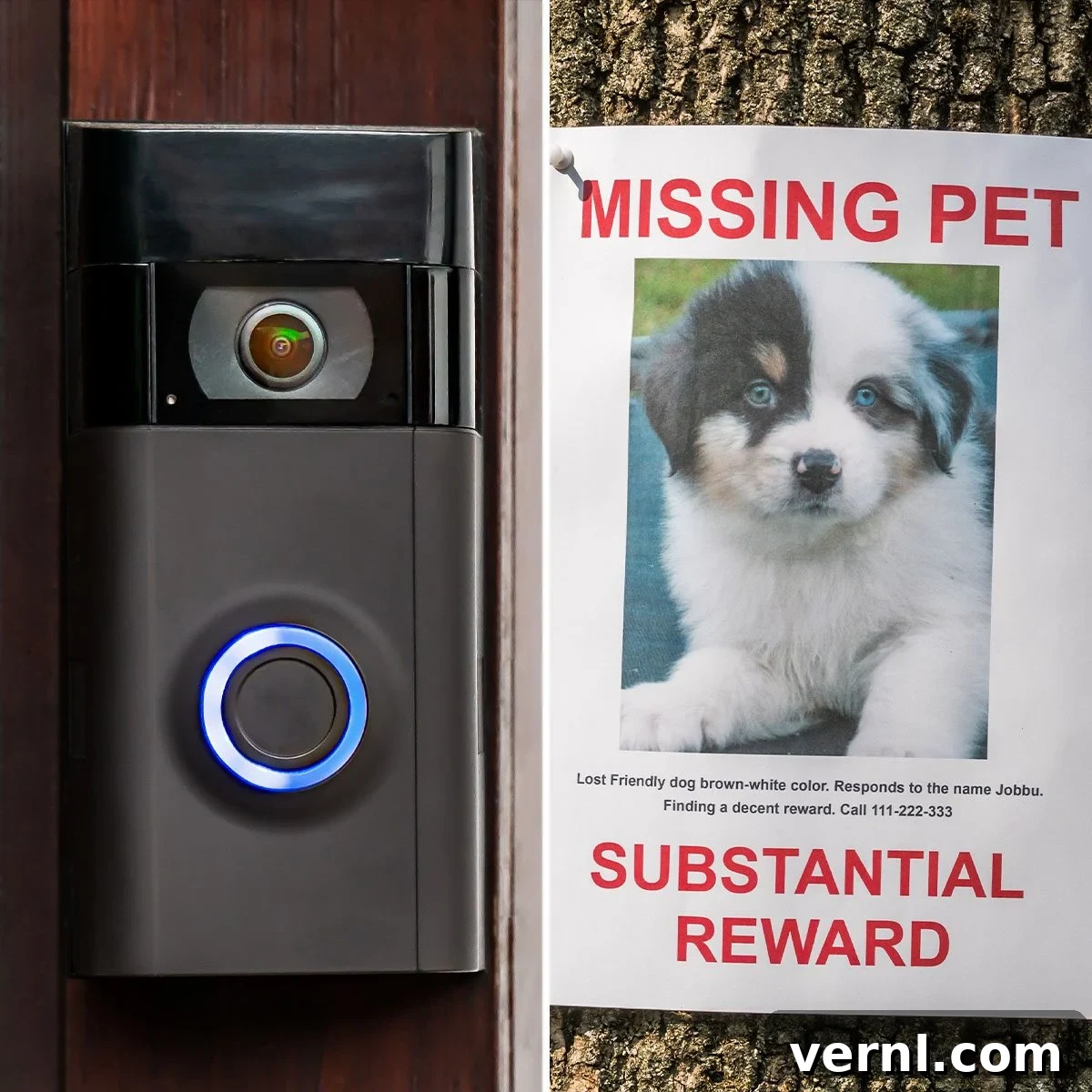
Ring’s advertisement presents “Search Party” as the cutting-edge solution for locating missing pets. The concept is simple: if your beloved dog or cat goes missing, you can upload a photo of your pet to the Ring app and initiate a “search party.” This action automatically activates the cameras of your neighbors who have also opted into the “Search Party” feature. The AI then scans the footage from these cameras, searching for a visual match of your missing pet.
The idea is that by harnessing the collective power of a neighborhood’s surveillance network, you significantly increase your chances of finding your lost animal. However, beneath the surface of this seemingly helpful feature lies a complex web of privacy concerns and questions about its actual effectiveness.
“Search Party” vs. Traditional Methods: Is AI Really the Answer?

While the notion of leveraging your neighbors’ cameras to search for a missing pet might sound appealing, the numbers presented in the Ring advertisement don’t paint a particularly convincing picture. The ad begins by stating that “every year, 10 million [pets] go missing.” However, Ring then claims that “since launch, more than a dog a day has been reunited with their family” through the “Search Party” feature.
Let’s examine these figures more closely. Assuming “more than one a day” translates to an average of three dogs per day (to be generous), this means “Search Party” finds approximately 1,095 dogs per year (3 dogs/day * 365 days/year). When compared to the 10 million pets that go missing annually, the success rate of “Search Party” is a mere 0.01095%. This means that Ring’s AI-powered feature is responsible for finding far less than 1% of missing dogs. To reach a modest goal of locating just 1% of the missing dogs each year, “Search Party” would need to find approximately 274 dogs every single day.
This raises the question: are traditional methods, such as posting missing pet posters, relying on microchips, and simply asking your neighbors for help, not equally, if not more, effective? Missing posters, for example, can be seen by anyone passing by, not just those who own Ring cameras. The personal touch of asking neighbors can also foster a sense of community and increase the likelihood of assistance.
Furthermore, there is no guarantee of the accuracy of the Ring AI feature. Generative AI is known to make errors in image recognition, and the advertisement fails to explain how the AI can reliably distinguish between your Golden Retriever and a similar-looking dog belonging to your neighbor. While unique markings might aid in identification, many breeds with solid coats can appear quite similar from a distance. The potential for misidentification could lead to false alarms and wasted time.
The Dark Side of Surveillance: Why “Search Party” Could Be Dangerous
Beyond its questionable effectiveness, “Search Party” raises significant ethical and security concerns. The ability to activate an entire neighborhood’s cameras with just a few clicks, and without requiring explicit permission from each homeowner, raises serious questions about privacy. If it’s this easy to use the technology for finding a lost dog, it’s also feasible to misuse it for more nefarious purposes, disguised as security measures.
Imagine the potential for abuse: stalkers and abusers could exploit this technology to locate and harm their victims more easily. While Ring may have designed “Search Party” with good intentions, the potential for misuse is undeniable. It creates a powerful surveillance tool that could be used to track individuals and monitor their movements without their knowledge or consent.
Moreover, technologies like “Search Party” can foster a negative mentality within neighborhoods. The old adage, “When all you have is a hammer, everything looks like a nail,” rings true here. Establishing an extensive surveillance network can easily lead to the perception that anyone unfamiliar is a potential threat. Instead of building genuine relationships with neighbors and looking out for each other through human interaction, residents are encouraged to isolate themselves and rely on cameras for security.
This constant surveillance does not cultivate community; it erodes it. A healthy community is built on trust, communication, and mutual support. Over-reliance on technology like “Search Party” can replace these vital elements with suspicion, fear, and a sense of detachment.
Alternatives to “Search Party”: Building a Safer and More Connected Community
Fortunately, there are numerous, more effective, and less intrusive ways to find a missing pet than relying on Ring’s AI-enhanced “Search Party” feature. These alternatives focus on preventative measures, community engagement, and responsible technology use.
First and foremost, ensure that your pets are microchipped and that your contact information is up-to-date with the microchip registry. This simple step significantly increases the chances of your pet being returned to you if it’s found by a local animal shelter or veterinarian.
Second, cultivate relationships with your neighbors. A strong sense of community means that you’ll have a network of people who are ready and willing to help you look for your missing pet. Your neighbors may even recognize your pet before you have a chance to ask for assistance. If your pets are familiar with your neighbors, they are also more likely to allow them to approach and bring them home.
Prioritize training your pets and, where possible, familiarize them with the neighborhood. Cats should ideally remain indoors for their safety and the preservation of local wildlife. Dogs should be trained to obey recall commands, and if they are familiar with their surroundings, they are more likely to find their way home independently if they escape.
Consider using technology you already own responsibly. Many pet owners attach AirTags or similar tracking devices to their pets’ collars. These devices allow you to monitor your pet’s location in real-time, enabling you to quickly locate them if they wander off. Unlike “Search Party,” these tracking devices do not rely on the surveillance of others and respect the privacy of your neighbors.
In an era where AI companies are constantly pushing products that automate decision-making, creative tasks, and even human interactions, it is crucial to remember the value of human connection, community engagement, and responsible technology use. Just because you were subjected to the Ring “Search Party” with AI advertisement doesn’t obligate you to embrace this service. Consider the potential consequences for your privacy and the well-being of your community before opting into technologies that prioritize surveillance over genuine human interaction.
Ultimately, finding a lost pet is best achieved through a combination of preventative measures, community support, and the judicious use of technology. Let’s prioritize building stronger communities and safeguarding our privacy over blindly embracing AI solutions that may ultimately do more harm than good.