Unveiling the Earwig: Understanding the Life Cycle, Habits, and Effective Management
Often recognized by their distinctive rear pincers, earwigs are common insects found across various environments worldwide. While numerous species of earwigs exist, they generally share fundamental life cycles and body structures, adapting uniquely to their surroundings. These fascinating creatures typically live for about one year, thriving in warmer, more humid climates and struggling significantly in colder temperatures. Understanding the earwig’s journey from egg to adult is key to appreciating their role in the ecosystem and, when necessary, managing their presence around our homes. Like many insects, earwigs undergo a process of metamorphosis, evolving through distinct developmental stages to acquire their mature physical features and reproductive capabilities.
The Metamorphosis of an Earwig: A Journey of Transformation
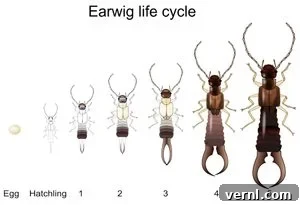
Metamorphosis is the remarkable biological process by which an insect transforms from an immature form to a fully functioning adult. Earwigs undergo what is known as simple, or incomplete, metamorphosis, a less complex developmental pathway compared to the complete metamorphosis seen in butterflies or beetles. This means they progress through three primary life stages: egg, nymph, and adult, conspicuously lacking the larval and pupal stages. This simpler transformation implies that the immature earwig, or nymph, largely resembles a miniature version of the adult, growing progressively larger and developing adult characteristics with each successive molt.
Reproduction: The Vulnerable Egg Stage
The earwig mating season typically commences in the fall and extends into the early winter months, depending on the climate. Following successful mating, the female earwig carries her fertilized eggs internally until she locates an ideal nesting site. This chosen location, often referred to as a “cell,” is usually a carefully selected, hidden spot burrowed under leaves, within damp soil, or nestled in a secluded crevice. These sites are strategically chosen for their moisture content, protection from predators, and stable temperatures, which are crucial for egg development.
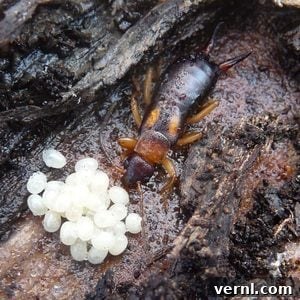
A single female earwig can lay a considerable number of eggs, ranging from 20 to 80, and remarkably, some species can produce two broods within a single season. What truly sets female earwigs apart in the insect world is their exceptional display of maternal care. Unlike many insect species that abandon their eggs, the mother earwig diligently guards her clutch. She meticulously cleans the eggs, removing any potentially harmful parasites or fungi, and carefully repositions any eggs that might separate from the cluster, ensuring optimal conditions for their survival. This dedicated care significantly increases the eggs’ chances of hatching successfully. The duration a mother carries her eggs can vary, sometimes lasting several months before deposition. Once laid, the eggs typically hatch within approximately seven days, at which point the young earwigs will undergo their very first molting.
Baby Earwigs: The Dynamic Nymph Stage
Upon hatching, the young earwig enters the nymph stage, which is essentially its juvenile form. During this critical developmental period, the nymph will undergo a series of transformations, shedding its outer skin and exoskeleton, a process known as molting. An earwig nymph typically experiences between four to six molts before it achieves full maturity and transitions into adulthood. Each molting allows the earwig to grow in size and gradually acquire the more defined features of an adult earwig.
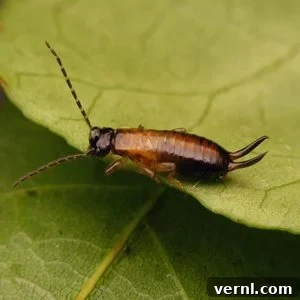
The molting process is vital for growth, as an insect’s hard exoskeleton does not expand. Therefore, to increase in size, the nymph must periodically shed its restrictive outer layer and grow a new, larger one. During these molts, the nymph’s shell progressively hardens, its antennae lengthen, wings (if the species develops them) begin to form, and the characteristic pincers at the rear of its abdomen gradually take shape and strengthen. While a newly hatched nymph might appear lighter in color and slightly less robust than its adult counterparts, its general body shape remains quite similar and easily recognizable. Over a period of approximately 40 to 60 days, depending on environmental factors like temperature and food availability, these pale, soft-bodied nymphs will grow into the darker, harder-bodied adult form.
The Developed Pincher Bug: The Adult Stage
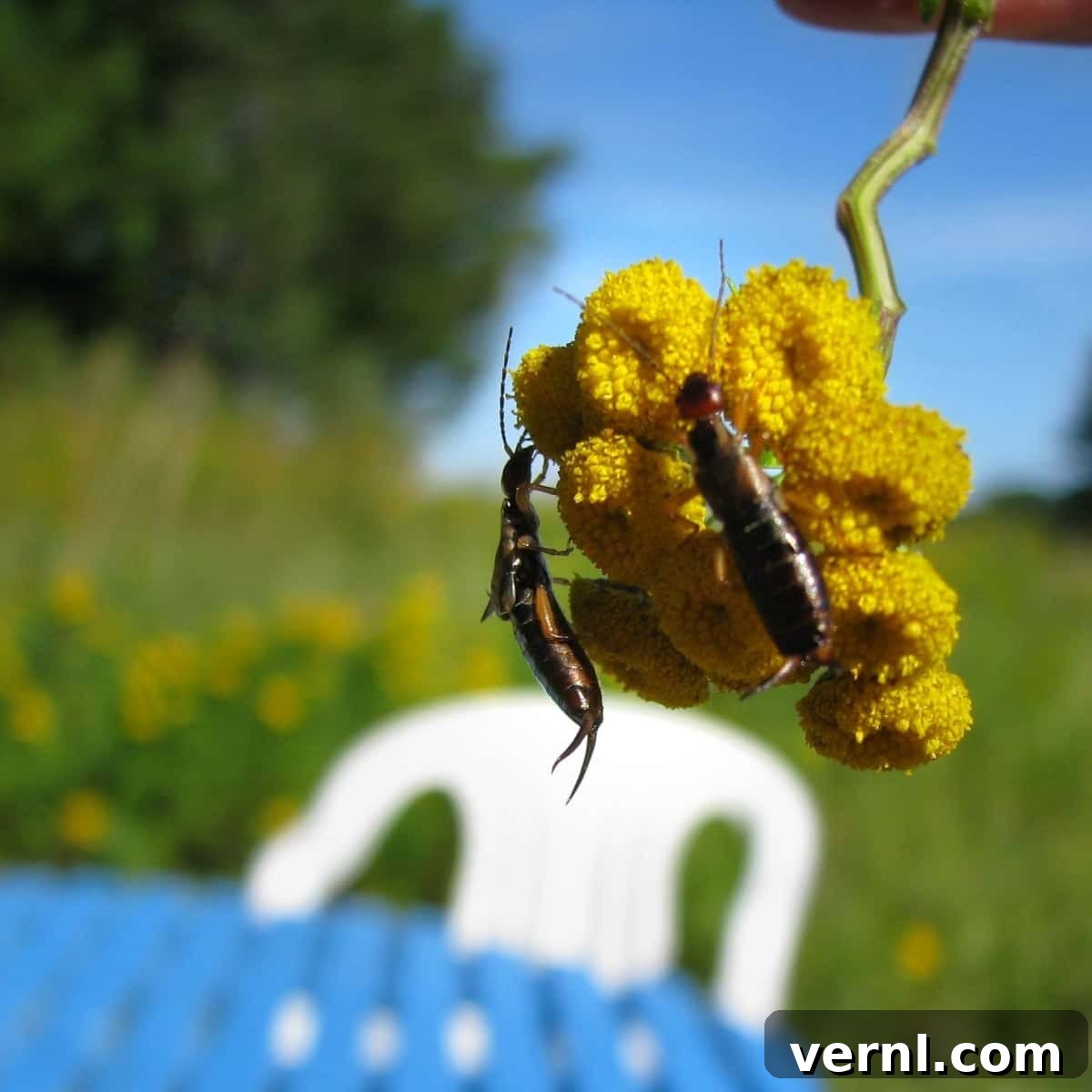
Once an earwig has completed its final molting, it emerges as a fully grown and sexually active adult. At this stage, it possesses all its mature physical features, including fully developed wings (though not all species fly efficiently), functional antennae, and robust pincers, enabling it to independently live, forage, and reproduce. The adult earwig’s body is typically segmented and comprises three main parts: the head, thorax, and abdomen.
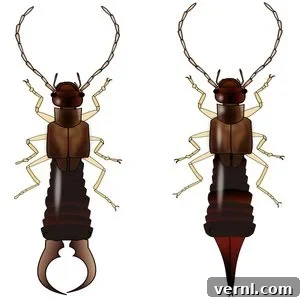
The head hosts two compound eyes for vision, a pair of highly sensitive antennae, which are typically about half the length of its body and crucial for sensing its environment, and specialized mouthparts adapted for chewing food. The thorax, the middle section of the body, serves as the attachment point for its six jointed legs, three on each side, which are used for locomotion. Most earwig species possess two pairs of wings: a tougher, leathery front pair that acts as protective covers for the delicate, fan-like hind wings, which are primarily used for flight in species capable of it. The abdomen, the posterior segment, houses the insect’s vital circulatory and digestive systems. Protruding distinctly from the end of the abdomen are the prominent pincers, scientifically known as cerci. These pincers are versatile tools used for defense against predators, capturing small prey, and assisting in mating rituals. A key distinguishing feature between sexes is the shape of these pincers: male earwigs typically have more rounded, curved, and robust pincers, while female earwigs possess straighter, narrower, and often less intimidating ones. These unique appendages are precisely how they earned their common nickname, the “pincher bug.” Adult earwigs are typically characterized by a dark reddish-brown coloration, which helps them camouflage within their preferred dark, damp habitats.
Understanding Earwig Habitat, Behavior, and Infestations
Earwigs are primarily nocturnal insects, meaning they are most active during the night. During the day, they seek refuge in dark, cool, and moist environments to conserve moisture and avoid predators. Common outdoor habitats include under rocks, logs, leaf litter, mulch, garden debris, and even in dense vegetation. They are omnivores and scavengers, feeding on a wide variety of organic matter, including decaying plants, fungi, algae, small insects like aphids, and sometimes even tender garden plants, fruit, or vegetables. Their role in the ecosystem is dual: they act as decomposers, breaking down organic waste, and can also be beneficial predators of other garden pests. However, their presence can become problematic when they venture indoors.
Earwig Infestations: When They Venture Indoors
Unlike social insects such as ants or bees, earwigs are largely individualistic creatures and do not belong to a queen or form complex colonies. Consequently, true, widespread earwig “infestations” in the traditional sense – involving massive numbers grouped together as part of an organized community – are quite rare. However, it is entirely possible and not uncommon to find a handful or even dozens of earwigs congregated in a single location, particularly if that spot perfectly replicates their ideal environmental conditions: coolness, darkness, and high moisture.
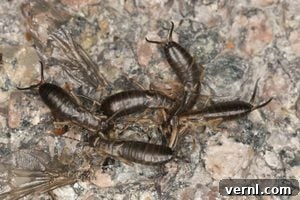
Earwigs do not reproduce indoors and generally do not spend extended periods inside homes. Their venture indoors is typically accidental or driven by a search for more favorable conditions when outdoor environments become too dry, hot, or cold. If an indoor area offers cool, moist conditions – such as a basement with leaky pipes, a damp bathroom, or a humid laundry room – earwigs may seek shelter there to escape the harsh, dry heat or cold outside. Outdoors, you’re more likely to discover them lurking in damp soil, under potted plants, or around vegetation surrounding the foundation of your house. Gardens close to the house that provide a consistent food source of decaying plants or leaves, along with abundant hiding spots, can become localized hotspots for numerous earwigs. They often gain entry through cracks in foundations, gaps under doors, or openings around windows.
How to Effectively Handle and Prevent an Earwig Infestation
The fundamental key to managing earwigs, whether preventing their entry or eliminating their presence, lies in understanding their basic needs and behaviors. Earwigs are relatively simple insects that constantly seek two primary things: food and safety (shelter). They are not aggressive towards humans and generally do not exhibit strong family bonds once the young nymphs mature. Armed with this knowledge, an effective strategy focuses on modifying their environment to make it less appealing.
Eliminating Food Sources: Earwigs thrive on decaying organic matter. Regularly remove dead leaves, grass clippings, old mulch, fallen sweet fruits, and any other decaying vegetation from around your home’s foundation and garden beds. Keep compost piles well away from the house. Ensure garbage cans are sealed tightly.
Removing Harborage (Safety) Spots: Earwigs need dark, damp places to hide during the day. This is perhaps the most crucial step. Clear away leaf piles, old logs, tree stumps, and excessive mulch or ground cover. Trim back overhanging trees and shrubs that create shaded, moist areas directly against your house. Fix leaky outdoor faucets and ensure proper drainage away from the foundation to reduce damp spots. Elevate firewood piles off the ground and away from the house.
Sealing Entry Points: Prevent earwigs from getting indoors by sealing cracks and crevices in your home’s foundation, around windows, and under doors. Install weatherstripping and door sweeps. Repair any holes in window screens. Ensure crawl spaces and basements are well-ventilated to reduce humidity.
Reducing Moisture: Since earwigs are highly attracted to moisture, address any indoor humidity issues. Use dehumidifiers in basements and crawl spaces. Fix leaky pipes promptly. Ensure gutters and downspouts are clean and direct water away from the house.
By systematically depriving earwigs of their essential food and shelter, and by sealing off potential entry points, you can significantly reduce their numbers and effectively keep these “pincher bugs” out and away from your home. If a localized population persists, simple traps like rolled-up damp newspapers or cardboard can be placed in affected areas and then disposed of in the morning. For severe or persistent issues, professional pest control may be considered.
Additional Earwig Information and Resources
For more in-depth information about earwigs, their characteristics, and specific strategies for pest control when these insects are found in your home, consider consulting the following articles and guides:
- Comprehensive Earwig Guide
- Exploring the Types of Earwigs
- Detailed Earwig Life Cycle Analysis
- Strategies for Managing Earwig Infestations
- Practical Methods to Get Rid of Earwigs
- Proactive Steps to Prevent Earwigs
- Understanding Earwig Safety and Risks
- Fascinating Earwig Facts
Sources and External References
- The Old Farmer’s Almanac – Earwigs
- Insect Identification – Earwigs
- University of Minnesota Extension – Earwigs Life Cycle