
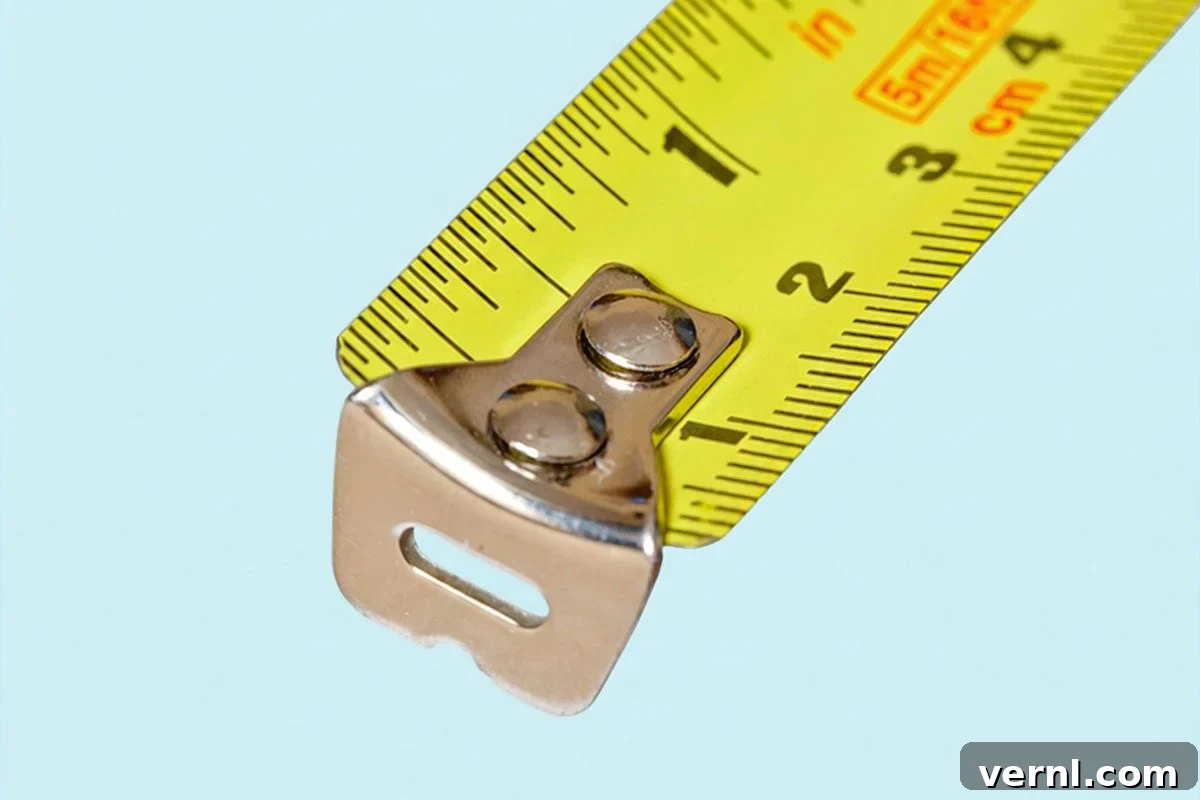
Whether you’re a seasoned handyman or a DIY beginner, you may have noticed the small metal hook at the end of your tape measure isn’t rigidly fixed. It often appears loose or able to move a little, and while many people assume this is a factory defect or wear from use, the loose hook is actually an intentional and important feature of tape measure design. Understanding why it exists and when it becomes a problem can help you measure more accurately and decide when a tape should be replaced.
Why Tape Measures Have a Loose Hook
The small metal hook at the tip of most tape measures is deliberately designed to move slightly. That movement compensates for the thickness of the hook itself so the tape can deliver accurate measurements whether you’re measuring from an outside edge or taking an inside measurement. When the hook catches an external edge, it pulls outward a tiny distance so the blade effectively starts at the true edge. Conversely, when you press the hook firmly against an inside surface, the hook moves inward the same small distance, again compensating for its thickness.
This controlled play in the hook is achieved using small rivets that attach the hook to the blade. These rivets are fitted with just enough clearance to let the hook slide back and forth a precise amount while keeping it securely attached. The design is subtle but essential: without that deliberate movement, measurements taken from inside and outside edges would be off by the thickness of the hook, leading to errors that multiply over the course of a project.
When a Loose Hook Actually Is a Problem
While a small degree of movement in the hook is normal and necessary, excessive looseness or visible damage is a red flag. Over time, rivets can wear, the hook can become bent, or impacts from drops and heavy use can knock the hook out of alignment. Any of these conditions can produce inconsistent or inaccurate measurements.
To check if your tape measure is still reliable, perform a simple test: hook the tape on the same edge and take the same measurement twice, once while pulling the hook outward and once while pressing it inward against a surface. The readings should match. If they don’t, or if the hook wiggles more than a tiny, controlled amount, the tape may need repair or replacement. Attempting to tighten a hook yourself can sometimes help, but it also risks further damaging the blade or the rivet, so proceed cautiously. For most hobbyists and professionals, replacing a compromised tape measure is the safest option to avoid accuracy problems in a project.
Other Useful Tape Measure Functions
Beyond the loose hook, tape measures include several practical design features that many users overlook. One common marking is the small diamond or special mark found at 19.2 inches; this is known as a truss mark and helps builders quickly lay out repeated spacing for floor trusses across a typical eight-foot span. Many tapes also use alternating red and black numbers or colored sections to make reading easier at a glance, and they often include stud spacing marks at 16-inch intervals to speed framing layout.
Other helpful details include measurements printed on both sides of the blade for easy reading from either angle, and a serrated edge on the hook so you can scratch a shallow guide line into wood or drywall before cutting or nailing. These features are small but thoughtfully integrated to save time and improve accuracy on the job.
Understanding the intentional design choices in a tape measure—especially the functional, slightly loose hook—helps you get the most reliable measurements. Regularly inspect your tape for excessive wear or damage and replace it when needed to maintain accuracy across projects.
Sources
- Stanley Tools Support — Why the hook on the end of the tape rule moves
- Reekon Tools Support — Why the hook moves back and forth
- Pro Tool Reviews — Why does a tape measure hook move?