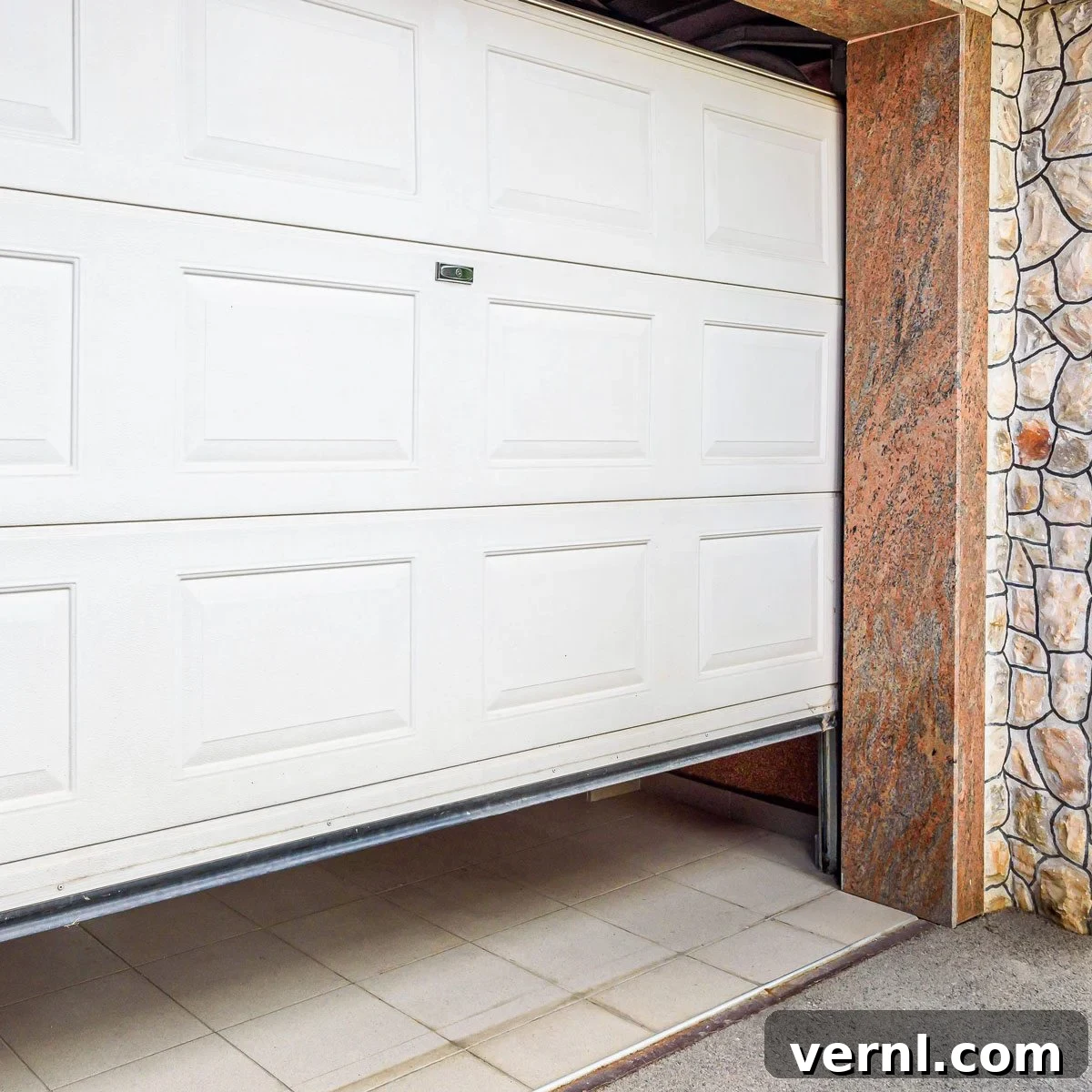
Few things are as unsettling as witnessing your garage door mysteriously open by itself. Whether it stops closing and reverses, or opens completely out of the blue, this phenomenon can be both startling and deeply concerning. It’s a common issue that leaves many homeowners puzzled and uneasy, especially given the potential security implications.
Tommy Mello, founder and CEO of A1 Garage Door Service, confirms this is a genuine and frequent problem. “I find this phenomenon to be quite disconcerting,” Mello states, acknowledging the unease it causes. While a self-opening garage door might initially seem like a quirky malfunction, its implications are far from trivial. “A garage door that opens unexpectedly can pose a security risk, so make sure to address the problem promptly,” he emphasizes.
Indeed, an open garage door acts as an unwelcome invitation to anyone with malicious intent. Your valuable belongings, from tools to recreational equipment, become vulnerable. If your garage is attached to your home, the risk escalates significantly, threatening the safety and security of your entire household. Understanding why this happens and how to fix it is crucial for every homeowner.
Why Does a Garage Door Open By Itself?
The intricate system of a modern garage door opener relies on several components working in harmony. A malfunction in any one of these can lead to the door behaving erratically, including opening without command. Identifying the root cause is the first step toward a lasting solution. Here are the primary culprits that can cause a garage door to open unexpectedly:
- The Remote Control: Physical damage, low batteries, or conflicting signals can all cause your remote to send unintended commands.
- The Wall Switch or Control Panel: Wall-mounted buttons or wired control panels can malfunction due to accumulated dirt, moisture, or faulty wiring connections.
- The Keypad: Similar to wall switches, exterior keypads are susceptible to physical damage, internal wiring issues, or environmental wear.
- The Safety Sensors: These critical safety devices, designed to prevent accidents, can trigger a door to reverse and reopen if their beam is interrupted or misaligned.
- The Opener’s Receiver/Logic Board: The central unit that interprets signals can suffer from signal reception issues, wiring problems, or internal component failure.
- Limit Switches: These internal components tell the opener how far to open or close. If they malfunction, the door might interpret an incorrect “open” signal.
- External Interference: Radio frequencies from other devices or nearby sources can sometimes mimic an authorized signal.
Let’s delve into each of these potential issues and explore practical, effective solutions to restore your garage door’s reliability and your peace of mind.
Troubleshooting Your Garage Door: Step-by-Step Fixes
1. Address Remote Control Malfunctions
Your garage door remote is often the most frequently used component, making it a common source of unexpected openings. Several factors related to the remote can trigger erratic behavior:
Change the Remote Batteries
One of the simplest and most overlooked solutions is replacing the batteries in your remote control. Low or depleted batteries can send weak or erratic signals, which the garage door opener might misinterpret as a command to open. This can lead to intermittent opening, or the door failing to respond predictably. Always opt for fresh, high-quality batteries to ensure consistent signal strength. This quick fix can save you a lot of troubleshooting time and frustration.
Clean Remote Buttons and Casing
Over time, the buttons on your remote can accumulate dirt, grime, and even moisture from everyday use. This buildup can create a conductive path, essentially causing the button to “stick” internally or register phantom presses without physical activation. For remotes, wall switches, and keypads, a simple wipe-down with a clean, damp cloth (ensure it’s not dripping wet) can often resolve the issue. If dirt has seeped behind the button mechanism, you might need to carefully open the remote to clean the internal contacts, much like cleaning a TV remote. Refer to guides on cleaning TV remotes for similar disassembly and cleaning techniques, always being mindful of delicate electronics.
Clear and Re-Sync the Opener and Remotes
Another common issue, particularly in older systems, involves signal interference or overlapping codes. If your garage door opener uses the same entry code as a neighbor’s, your door could inadvertently open when they operate theirs. This was especially prevalent in garage door openers manufactured in the mid-90s or earlier, which often utilized dual in-line package (DIP) switches. These small units, featuring a series of numbered on/off toggles, were used to set a unique code for the opener and its remotes.
While modern openers use more advanced “rolling code” technology, which changes the code with each use to enhance security and prevent interference, signal issues can still occur. “I’ve noticed that interference from nearby radio frequencies can sometimes unintentionally trigger a garage door remote,” says Mello. “This interference could come from your neighbor’s remote, a nearby radio tower or even electronic devices within your home.” This highlights how various external factors can play a role.
The solution involves clearing your opener’s current memory of synched remotes and then re-syncing them. For older DIP switch models, you’ll need to manually change the switch settings on both the opener unit and all your remotes to a new, unique combination. For newer models, the process typically involves pressing a “learn” button on the opener unit and then pressing a button on each remote to re-establish the connection. For a comprehensive guide, consult resources like How To Program a Garage Door Opener.
2. Inspect Wall Control Panels and Keypads
Beyond the handheld remote, fixed controls like wall switches and exterior keypads can also be sources of problems. They face similar issues with dirt and wear, but also unique challenges related to their wiring.
Clean Wall Switch and Keypad Buttons
Just like remote controls, the buttons on your wall-mounted control panel and exterior keypad can collect dust, grime, and even moisture. This accumulation can lead to buttons getting stuck or sending erroneous signals. Regularly cleaning these surfaces with a soft, dry cloth can prevent such issues. For exterior keypads, consider their exposure to elements like rain, humidity, and extreme temperatures, which can accelerate wear and tear.
Check the Wiring for Wall Controls and Keypads
Wiring issues are a common culprit for wall switches and keypads. A short circuit, loose connection, or damaged wire can cause the door to open unexpectedly. If you’re comfortable working with low-voltage electrical systems, carefully inspect the wiring connecting your wall switch or keypad to the main opener unit. Look for any frayed wires, exposed copper, or loose terminals. Pests can sometimes chew through wires, or staples used during installation might have pierced insulation. Reattach any loose wires securely and insulate any exposed sections. If the problem persists or if you’re uncomfortable with electrical work, it’s best to consult a professional.
3. Address Safety Sensor Misalignment or Obstruction
The safety sensors are one of the most vital components of your garage door system, designed to prevent accidents by detecting obstructions in the door’s path. If your garage door reopens immediately after attempting to close, these sensors are very likely the cause.
Clear Away Debris and Obstructions
Located near the bottom of each side of the garage door frame, these sensors project an invisible infrared beam across the doorway. If this beam is interrupted while the door is closing, the opener’s safety mechanism immediately stops the door’s descent and reverses its direction, causing it to reopen fully. This is an essential safety feature, preventing serious injury or damage. However, even harmless clutter can trigger it.
Common culprits include leaves, cobwebs, sawdust, pet toys, or small tools that have strayed into the door’s path. A swift sweep with a broom can often clear these obstructions. It’s also worth checking for larger items that might be just barely clearing the door. I once had my truck’s trailer hitch graze the inside lip of the garage door, causing it to immediately reopen. Ensure the entire path is clear.
Align Misaligned Sensors
Beyond physical obstructions, the sensors themselves can become misaligned. They are relatively delicate and can be easily bumped out of position by moving trash cans, gardening tools, or even playful children or pets. When misaligned, the sensors can no longer “see” each other, leading the opener to believe there’s a permanent obstruction, thus refusing to close the door or causing it to reverse. Many sensors have small LED indicator lights that glow steadily when properly aligned and blink or turn off when misaligned or obstructed. Gently adjust the sensors until both indicator lights are solid, ensuring they are pointed directly at each other. Secure them tightly once aligned.
Clean Dirty Sensor Lenses
Sometimes, it’s not a physical obstruction, but simply dirt or grime on the sensor lenses themselves. Dust, mud, or even a thin film of condensation can obscure the infrared beam, preventing accurate detection. A quick wipe of the sensor lenses with a soft, clean cloth can often resolve this issue, allowing the beam to transmit clearly once more.
Address Sunlight Interference
In some cases, direct sunlight hitting one of the sensor lenses can interfere with the infrared beam, making the opener believe there’s an obstruction. This is more common at certain times of day or seasons. If this is suspected, try shading the affected sensor or consider installing a small hood over it to block direct sunlight.
4. Diagnose Opener Receiver and Logic Board Issues
The garage door opener’s main unit contains the receiver and logic board – the “brain” of the system. Problems here can manifest as erratic operation.
Check Opener Wiring Connections
Similar to wall switches and keypads, the wiring leading to and within the main opener unit itself can be a source of malfunction. Loose or damaged low-voltage wiring connecting the wall switch, safety sensors, or keypad to the opener’s terminal block can disrupt signals. Visually inspect these connections, ensuring they are snug and free of corrosion or damage. However, exercise extreme caution when dealing with any wiring inside the main opener unit, especially high-voltage connections.
Malfunctioning Limit Switches
Inside the opener, there are internal components called limit switches. These switches tell the garage door opener exactly how far to open and how far to close. If a limit switch malfunctions, the opener might receive incorrect signals, causing it to “think” the door hasn’t fully opened or closed, leading it to reverse or open unexpectedly. Adjusting or replacing these is usually a task for a professional, as it requires careful calibration to ensure the door opens and closes to the correct positions.
Internal Component Failure
The receiver itself, responsible for interpreting signals from your remotes and keypad, can fail due to age, power surges, or manufacturing defects. Similarly, the logic board, which controls all the opener’s functions, can become faulty. If basic troubleshooting steps haven’t resolved the issue, and you suspect an internal component failure, it’s highly recommended to call a professional. Tampering with the logic board or other internal electronics without proper knowledge can be dangerous and may void your warranty. Here’s what you should do if your garage door keypad isn’t working.
5. Mitigate External Interference and Electrical Problems
Beyond internal malfunctions, your garage door can be influenced by its surrounding environment.
Minimize Radio Frequency (RF) Interference
As Tommy Mello pointed out, external radio frequencies can interfere with your garage door opener’s signal. Sources can include powerful HAM radios in your neighborhood, nearby military bases, airport control towers, or even other smart home devices operating on similar frequencies. While hard to completely eliminate, understanding this possibility can help in diagnosis. If you notice the problem occurring only at specific times or when certain devices are active, it might point to RF interference.
Address Power Fluctuations
Brief power outages, surges, or “brownouts” (temporary drops in voltage) can sometimes cause garage door openers to behave erratically. These power anomalies can momentarily reset the opener’s logic board or trigger a false signal. While not a common direct cause of self-opening, consistent power issues can contribute to internal component degradation over time. Consider installing a surge protector for your garage door opener if you live in an area prone to power fluctuations.
When to Call a Professional Garage Door Technician
While many garage door issues can be resolved with DIY troubleshooting, there are situations where professional expertise is indispensable. If you’ve systematically worked through the troubleshooting steps above and the problem persists, it’s time to call in a garage door repair service. Specifically, you should contact a professional if:
- You suspect major electrical issues within the opener unit, beyond simple loose wires.
- There’s damage to the main logic board or motor.
- The problem involves heavy, tensioned components like springs, which can be extremely dangerous to handle without proper training and tools.
- You lack confidence or comfort in performing any of the diagnostic or repair steps, particularly those involving electrical components.
- The door’s erratic behavior could pose a safety risk to you or your family.
A certified technician has the specialized tools, knowledge, and experience to safely diagnose and repair complex issues, ensuring your garage door operates reliably and safely.
Prevention is Key: Maintaining Your Garage Door System
Proactive maintenance can significantly reduce the likelihood of your garage door opening unexpectedly and extend the lifespan of your system:
- Regular Inspections: Periodically check all components, including remotes, wall controls, sensors, and wiring, for signs of wear or damage.
- Keep Sensors Clear and Aligned: Make it a habit to quickly sweep debris away from sensors and ensure they remain properly aligned.
- Test Remote Batteries: Replace remote batteries annually or when you notice a decrease in range or responsiveness.
- Lubricate Moving Parts: Lubricate rollers, hinges, and springs with a silicone-based garage door lubricant every few months to ensure smooth operation and reduce strain on the opener.
- Secure Your Garage: Beyond fixing the opener, ensure your garage is secure with proper locks, and consider smart garage door openers that allow you to monitor and control the door remotely.
Conclusion
A garage door that opens by itself is more than just an inconvenience; it’s a security vulnerability and a potential safety hazard. By systematically troubleshooting the common causes – from dead remote batteries and dirty buttons to misaligned sensors and wiring issues – you can often identify and resolve the problem yourself. Remember to approach all repairs with caution, especially when dealing with electrical components. If the issue remains elusive or if you encounter complex problems, don’t hesitate to seek assistance from a professional garage door technician. Addressing this problem promptly will restore your peace of mind and the crucial security of your home.