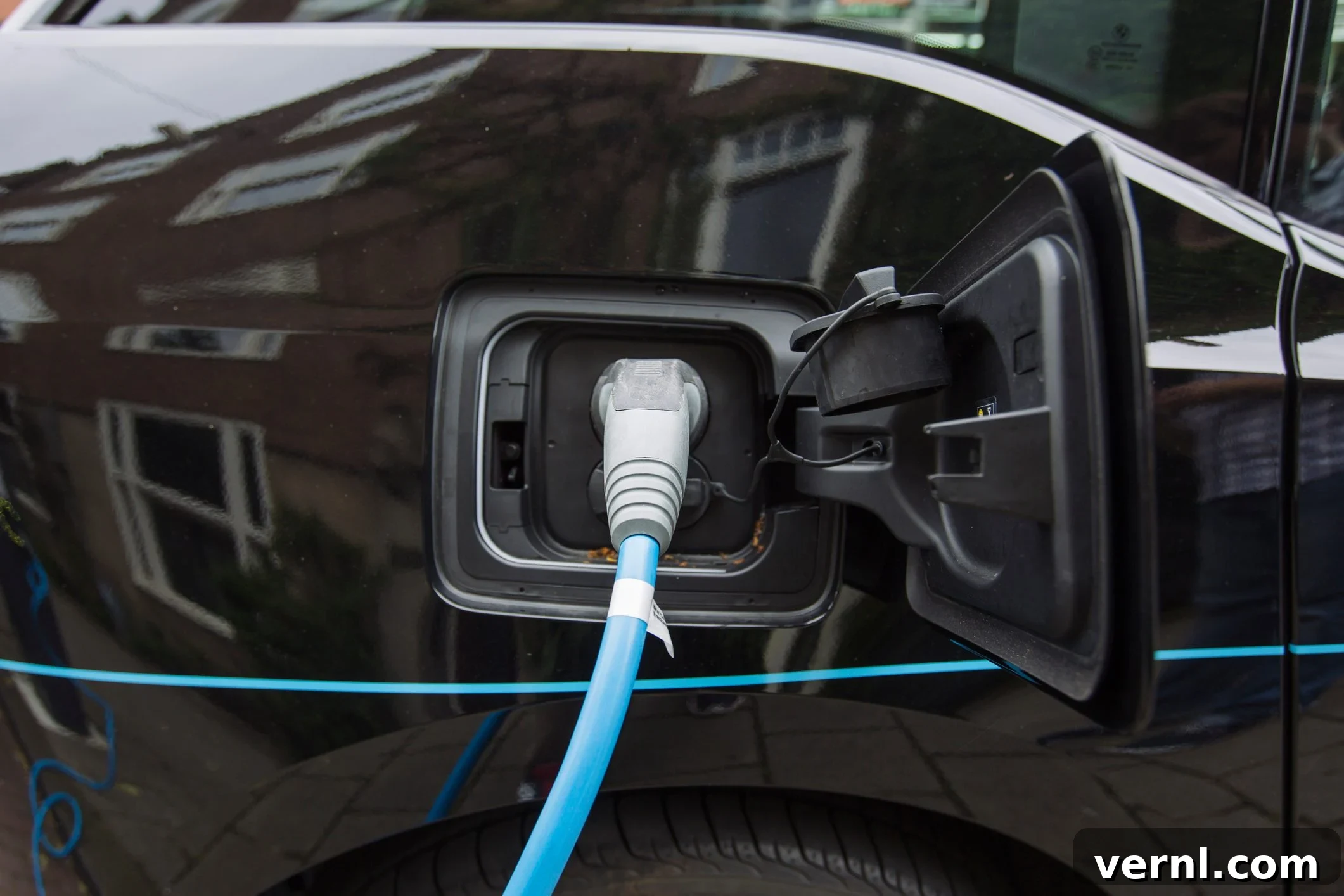
Many years ago, I held a firm belief that electric vehicles (EVs) were destined to remain niche market products, unlikely to ever truly challenge the dominance of the internal combustion engine. After an intensive three-day training at an advanced EV development facility, my skepticism deepened. Concerns about limited battery range, the complexities of charging infrastructure, and the relatively low miles per charge at the time seemed insurmountable hurdles. I simply couldn’t envision a future where EVs would gain widespread acceptance as a viable alternative for daily transportation. The idea of “range anxiety” was very real, and the thought of long charging times on unfamiliar networks was daunting.
However, time and technological progress have a way of altering perspectives. Following extensive research into electric vehicles for Family Handyman, my initial opinions and attitudes have undergone a complete transformation. This shift is particularly profound concerning EV batteries, which have evolved far beyond my earlier expectations. The advancements in battery technology, charging efficiency, and overall vehicle performance have not only addressed my previous concerns but have also paved the way for a revolutionary change in how we perceive personal transport. Today, it’s clear that the future of mobility is increasingly electric, and much of this transformation is powered by the incredible strides made in battery innovation.
Before diving deeper, it’s always useful to know how you can jump-start your electric car, though it’s less common than with traditional vehicles.
How Long Does an Electric Car Battery Last? A Deep Dive into EV Longevity
One of the most common questions from prospective EV buyers is about battery lifespan, and the answer is consistently surprising: EV batteries are engineered to outlast the vehicles they power. This might seem counterintuitive given the perception of consumer electronics batteries, but automotive-grade EV batteries are a different class of technology, designed for extreme durability and reliability over many years and hundreds of thousands of miles.
According to comprehensive life-cycle analyses, such as one conducted by the National Renewable Energy Laboratory (NREL), electric vehicle batteries are expected to perform reliably for a remarkable 10 to 15 years. This duration can vary slightly depending on factors like the prevailing climate and the owner’s specific discharging and charging cycles. For instance, vehicles operating in consistently extreme hot or cold environments might experience a slightly different degradation curve compared to those in moderate climates.
Further reinforcing these findings, a study by the U.S. Department of Energy Alternative Fuels Data Center indicated that new lithium-ion batteries in electric vehicles could last between 12 and 15 years in temperate climates, while in more extreme conditions, their lifespan might range from eight to 12 years. This robust longevity is a testament to sophisticated battery chemistry, advanced thermal management systems, and intelligent Battery Management Systems (BMS) that constantly monitor and optimize battery health.
To instill consumer confidence and underscore this reliability, federal regulations in the United States mandate that all EV batteries sold come with warranties covering at least eight years or 100,000 miles, whichever comes first. This provides a substantial safety net for owners and reflects the manufacturers’ confidence in their battery technology. Should an EV battery fail prematurely under normal operating conditions, it will almost certainly be covered under the original equipment manufacturer’s (OEM) warranty. These warranties are not merely a legal obligation; they offer a crucial insight into the expected battery life, as manufacturers meticulously estimate durability to avoid costly replacements, which ultimately benefits the consumer.
Beyond their primary automotive use, the extended lifespan of EV batteries also opens doors for “second-life” applications. Even when a battery no longer meets the performance requirements for propelling a vehicle, it often retains a significant percentage of its original capacity, making it suitable for stationary energy storage, grid stabilization, or even residential backup power. This further emphasizes the inherent longevity and sustainable potential of these advanced power sources.
How Much Do Electric Car Batteries Cost? Understanding the Investment
While the longevity of EV batteries is impressive, their replacement cost can be a significant consideration for potential owners. An EV battery replacement can range from $5,000 to $15,000, including labor. This substantial cost is primarily due to the intricate manufacturing processes, the high value of raw materials like lithium, cobalt, and nickel, and the complex engineering involved in creating a robust and safe power pack. However, it’s crucial to note that battery costs have been steadily decreasing over the past decade due to economies of scale, advancements in materials science, and increased competition, making future replacements potentially more affordable.
Understanding Warranty Exclusions
Given the high replacement costs, it’s imperative for EV owners to be aware of the terms and conditions of their OEM battery warranties. While these warranties offer excellent protection, they often contain specific exclusions that, if violated, could void coverage. These exclusions are designed to protect manufacturers from damage caused by misuse or negligence, rather than inherent defects in the battery itself. Common warranty exclusions, though not an exhaustive list, typically include:
- Using a non-standard or unapproved charging station: Utilizing charging equipment that is not certified or recommended by the vehicle manufacturer can potentially damage the battery’s internal components or charging control systems, leading to voided warranty claims.
- Damage caused when installing non-approved aftermarket parts or accessories: Modifying the vehicle with components not endorsed by the OEM can interfere with the battery’s thermal management or electrical systems, which can result in damage.
- Using the EV as a stationary/backup power source: While some EVs offer vehicle-to-load (V2L) capabilities, using the battery for prolonged, unauthorized stationary power delivery can strain its components in ways not covered by the standard warranty.
- Damage to the battery coolant reservoir: The battery’s thermal management system is critical for its health. Any damage to the coolant system that leads to overheating or improper cooling can severely degrade the battery and void the warranty.
- Failing to install software or firmware updates: Manufacturers frequently release software updates for the Battery Management System (BMS) to optimize performance, enhance safety, and improve battery longevity. Neglecting these updates can lead to suboptimal battery operation and potentially void the warranty.
- Repairs performed by non-certified technicians: The high voltage systems and complex nature of EV batteries require specialized knowledge and tools for repair. Any unauthorized attempts at repair can cause further damage and void the warranty.
- Lifting the vehicle by the battery instead of designated body lift points: The battery pack is an integral structural component in many EVs, but it has specific points designed for safe lifting. Improper lifting can cause structural damage to the battery casing or internal cells.
- General abuse, lack of maintenance, or failure to make necessary repairs: This broad category covers any damage resulting from neglect, severe accidents, or consistent operation outside normal parameters that can negatively impact battery health.
How Do EV Batteries Degrade? Understanding the Science Behind Battery Aging
Like any energy storage device, electric vehicle batteries experience degradation over time, which gradually reduces their capacity and power output. This process isn’t caused by a single factor but rather a combination of electrochemical and physical changes within the battery cells. Fundamentally, every time a lithium-ion battery undergoes a charge and discharge cycle, its internal chemical and physical reactions slightly decrease in efficiency. This cumulative effect gradually diminishes the battery’s potential to generate and store electricity.
In more technical terms, as an EV battery is used, a thin, insulating layer known as the solid electrolyte interface (SEI) builds up on the anode surface. While the SEI layer is necessary for battery stability, its continuous growth can become problematic. Over time, an excessively thick SEI layer can block the efficient passage of lithium ions between the electrolyte and the electrodes, slowing down the vital chemical reactions that produce electricity. This phenomenon is a primary contributor to the gradual reduction in battery performance.
Beyond regular cycling and SEI layer formation, several other factors can accelerate battery degradation. Over-charging, for instance, stresses the battery cells by pushing them beyond their optimal voltage, which can lead to unwanted side reactions and internal structural damage. Similarly, exposure to extremely cold temperatures can impede the movement of lithium ions, reducing efficiency and potentially causing lithium plating, a damaging process. Conversely, prolonged exposure to high temperatures can accelerate chemical reactions, leading to faster degradation. Leaving an EV parked for extended periods with a very low state of charge (e.g., less than 20%) can also be detrimental, as it can lead to deep discharge and irreversible damage to the cell chemistry.
Corrosion is another subtle yet significant factor. Even trace amounts of moisture inadvertently trapped within a battery during manufacturing can react with the electrolyte, producing highly corrosive hydrofluoric acid. This acid then slowly damages the delicate internal battery cells, gradually reducing their capacity. Ultimately, whether due to cycling, environmental stress, or internal chemical reactions, degradation leads to fewer miles per charge, a reduced overall range, and potentially slower acceleration.
However, it’s important to emphasize that modern EVs are equipped with highly sophisticated Battery Management Systems (BMS) that actively mitigate these degradation factors. The BMS monitors cell voltage, temperature, current, and state of charge, ensuring that the battery operates within safe parameters. It balances cell charges, manages thermal conditioning (heating or cooling the battery as needed), and protects against overcharge and deep discharge. Thanks to these advanced systems, real-world battery degradation is remarkably minimal. According to a comprehensive study by GeoTab involving data from 6,000 EVs, the average annual capacity loss for EV batteries was less than 3% over a six-year period. This impressive statistic suggests that even after a decade of use, an EV battery should still retain a healthy 70% to 80% of its original capacity, offering continued reliable performance.
How to Extend EV Battery Life: Practical Tips for Optimal Battery Health
While EV batteries are designed for longevity, owners can take proactive steps to further extend their lifespan and maintain optimal performance. Good battery care practices are not difficult and mostly involve smart charging habits and mindful driving. By following these guidelines, you can significantly contribute to the long-term health of your electric vehicle’s battery:
- Maintain an Optimal State of Charge (SoC): Aim to charge your EV battery to about 80% for daily use and keep the charge level generally between 20% and 80%. This “sweet spot” minimizes stress on the battery’s chemistry, as the extremes of full charge and full discharge are where degradation can accelerate most rapidly.
- Limit Daily Use of DC Fast Chargers (Level 3): While convenient for long trips, frequent reliance on Level 3 fast chargers can generate significant heat within the battery, which over time can contribute to degradation. For routine overnight charging, opt for a Level 1 or Level 2 charger, which deliver power at a slower, gentler rate.
- Avoid Charging to 100% (Unless Needed): Charging to 100% can put unnecessary strain on the battery for daily commutes. More importantly, leaving a bit of headroom (e.g., charging to 80-90%) allows the battery to efficiently capture energy produced from regenerative braking. When the battery is full, regenerative braking efficiency can be limited, meaning less energy is recovered.
- Allow the Battery to Cool Down Before Charging: If you’ve just completed a long drive or a spirited driving session, the battery might be warm. It’s often beneficial to allow it to cool down slightly before initiating a charge, especially a fast charge. Additionally, check if your utility company offers a Time-of-Use (ToU) plan, which allows you to charge your battery during off-peak hours when electricity rates are lower, often at night when temperatures are also cooler.
- Protect Against Extreme Temperatures: Both extreme heat and extreme cold can stress an EV battery and reduce its efficiency and lifespan. Parking your EV in a well-insulated garage will help maintain a more moderate temperature, keeping it cooler in summer and warmer in winter. This not only allows for steadier charging rates but also decreases battery load by reducing the need for the battery to power the vehicle’s heater or air conditioning immediately upon startup.
- Adopt Good Driving Habits: Aggressive driving behaviors, such as constant hard acceleration and sustained high-speed driving, significantly increase the power demands on the battery, leading to more rapid discharge and charge cycles and generating excess heat. Driving smoothly and moderately will not only conserve battery energy and extend range but also reduce stress on the battery and minimize premature tire wear.
- Avoid Driving in Very Low-Power Mode: Consistently allowing your EV battery to drop below 20% charge before recharging, or operating it frequently in very low-power modes, can stress the battery and negatively affect its chemistry. Modern EVs are designed to give you ample warning well before the battery falls below critical charge levels, so heed these warnings and recharge promptly.
- Keep Your Software Updated: Your vehicle’s Battery Management System (BMS) relies on software to optimally manage battery performance and health. Regular software and firmware updates, often delivered over-the-air, can introduce improvements that enhance battery longevity and efficiency.
- Maintain Proper Tire Pressure: This might seem unrelated, but properly inflated tires reduce rolling resistance, which in turn reduces the energy demand on the EV battery. Check tire pressure monthly and look for abnormal tire wear. Keeping tires at their recommended pressure is a simple yet effective way to increase driving range and lessen the workload on your battery.
The Future is Electric: A Renewed Perspective
My initial skepticism about electric vehicles stemmed from genuine concerns regarding battery technology and infrastructure. I once believed EVs weren’t practical because their batteries were suspect, limited in range, and slow to charge. However, years of research, significant technological breakthroughs, and real-world data have unequivocally convinced me otherwise. The rapid advancements in battery chemistry, sophisticated thermal management, and intelligent Battery Management Systems have transformed EV batteries into highly reliable, long-lasting, and efficient power sources.
Today, the landscape of personal transportation is undeniably shifting towards electrification. The once-daunting challenges of range anxiety and charging times are being addressed through continuous innovation in battery density, faster charging capabilities, and the rapid expansion of robust charging networks. The longevity and resilience of modern EV batteries not only make electric vehicles a practical choice for everyday drivers but also contribute significantly to a more sustainable future by reducing emissions and offering second-life applications for battery packs.
My journey from skepticism to conviction mirrors the broader industry’s evolution. EVs are no longer a niche concept; they are a powerful and increasingly prevalent reality. The future of mobility is here, and it is indeed electric, propelled by batteries that are far more advanced and durable than many might still perceive.