
Unraveling the Mysteries of the Giant Desert Centipede: An Essential Guide
The vast, sun-drenched landscapes of the American Southwest and parts of northern Mexico are home to an array of unique wildlife. Among them is the formidable yet often misunderstood giant desert centipede, sometimes referred to as the giant Arizona desert centipede. This creature, with its striking appearance, frequently evokes both awe and apprehension. While its formidable presence might seem intimidating, the giant desert centipede plays a crucial and often underappreciated role in maintaining the delicate balance of its arid ecosystem. By preying on various insects and small vertebrates, it acts as a natural pest controller, contributing significantly to biodiversity. This comprehensive guide aims to shed light on these captivating arthropods, dispelling myths and providing essential information for understanding and coexisting with them.
What Exactly Is the Giant Desert Centipede?
The giant desert centipede (Scolopendra heros) is a fascinating nocturnal creature belonging to the class Chilopoda. Like its close relatives, the millipedes, it is characterized by a robust, segmented body protected by a hard exoskeleton and equipped with numerous jointed appendages. Specifically, the giant desert centipede is a terrestrial, carnivorous arthropod, renowned for its predatory prowess within its natural habitat. Its diet is remarkably diverse, consisting primarily of insects, spiders, scorpions, lizards, frogs, small rodents, and even other centipedes. This broad dietary preference underscores its importance as a top invertebrate predator in the desert food web.
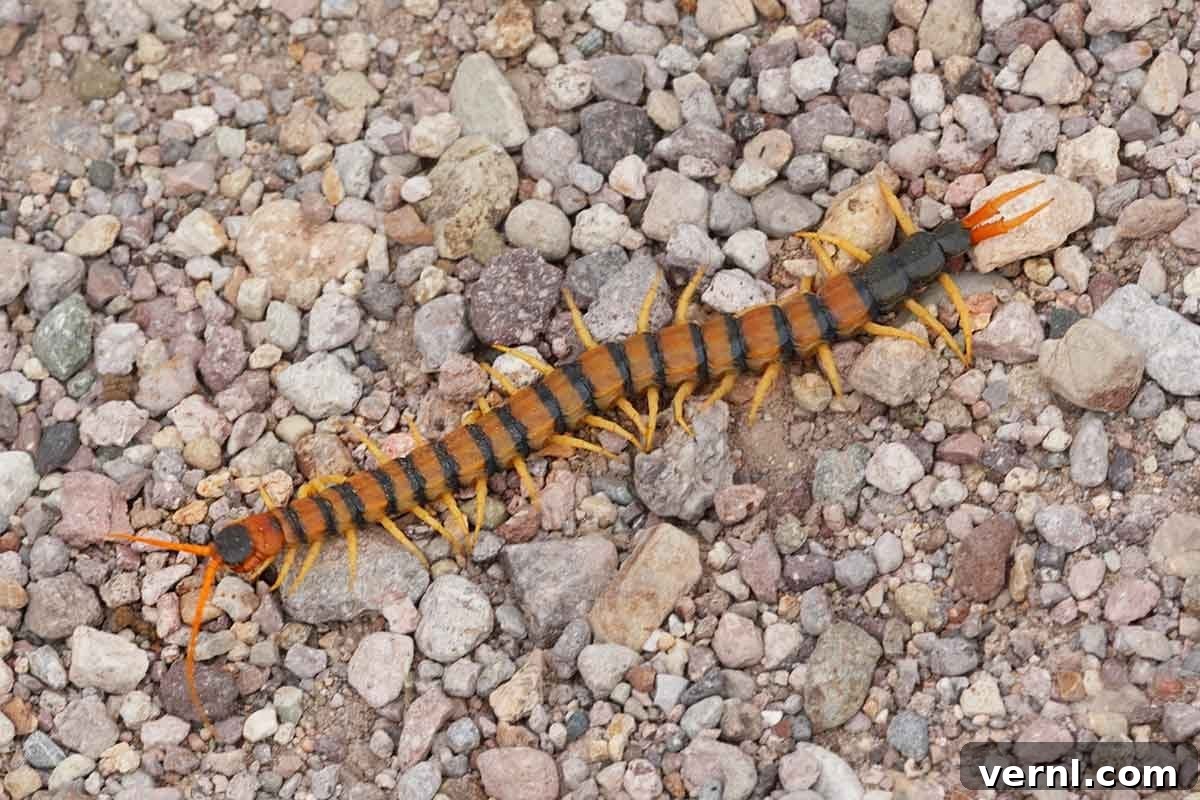
Adult giant desert centipedes typically measure between six and eight inches in length, though some individuals can grow larger. Their distinctive appearance includes a flat, orange body composed of approximately 26 to 30 segments, each flanked by a pair of bright yellow legs. The head and tail segments are characteristically black, creating a stark contrast that can make it challenging to discern which end is which at first glance. Unlike many other creatures, centipedes do not possess eyes in the conventional sense. Instead, they navigate their world and locate prey through a highly developed sense of touch and chemoreception, primarily utilizing their prominent antennae.
As a predatory being, the giant centipede is remarkably agile and quick. Its multitude of legs allows for rapid locomotion across varied terrain, making it an efficient hunter. These centipedes have been observed moving at speeds of approximately 1-1/3 feet per second, which, while not incredibly fast for a human, is quite swift for an arthropod of its size, enabling it to ambush and overpower its prey effectively.
The reproductive cycle of centipedes, including the giant desert centipede, is quite unique among arthropods. All known 8,000 species reproduce without direct copulation. Instead, the male centipede deposits a spermatophore (a packet of sperm) onto the ground, leaving it for the female to discover. Once the female locates this sperm bundle, she picks it up for internal fertilization of her eggs. Following fertilization, she lays her eggs, typically in a secluded, moist location. A remarkable aspect of their reproduction is the maternal care exhibited; the female centipede remains coiled around her eggs, diligently guarding and protecting them from predators and desiccation until they hatch. After hatching, the young centipedes will stay with their mother for a brief period before dispersing to begin their independent lives. The average lifespan of a giant desert centipede is estimated to be around five years in the wild, a considerable duration for an invertebrate.
Are Giant Desert Centipedes the Largest of Their Kind?
While undeniably impressive in size, the giant desert centipede isn’t the absolute largest centipede species on Earth, though it certainly holds a place among the biggest found in North America. Experts at institutions like the Arizona-Sonora Desert Museum confirm that at six to eight inches in length, the giant desert centipede significantly outstrips the common house centipede, which typically measures a mere four to five inches. However, its imposing stature is dwarfed by its South American cousin, the infamous giant Amazonian centipede (Scolopendra gigantea).
The giant Amazonian centipede is a creature of truly horrifying proportions, capable of growing up to a staggering one foot (30 cm) in length. This colossal centipede is known for its incredible strength and venom, powerful enough to subdue and kill prey up to 15 times its own size, including large insects, amphibians, reptiles, and even small mammals and birds. This makes the giant Amazonian centipede a true apex predator in its ecosystem, overshadowing its desert relative in sheer might and terrifying reputation.
Beyond current living species, the fossil record reveals even more gigantic centipede-like creatures. For instance, a fossilized centipede relative named Euphoberia, dating back approximately 300 million years to the Carboniferous period, was estimated to have measured an astounding 39 inches (nearly 1 meter) long. This ancient arthropod stands as one of the largest centipede-like creatures ever recorded, providing a glimpse into the colossal invertebrates that once roamed prehistoric Earth.
Do Giant Centipedes Bite, and Are They Dangerous?
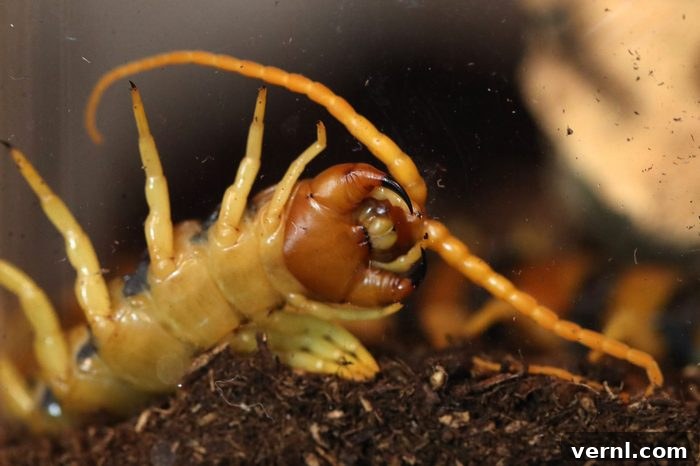
A common misconception is that centipedes “bite.” In reality, they do not possess traditional jaws for biting. Instead, giant centipedes deliver a potent venom through specialized appendages called forcipules. These forcipules are actually modified first pair of legs, located just behind the head, and function like powerful pincers. When a centipede attacks, it uses these forcipules to grasp its prey or perceived threat and inject venom.
While many may perceive giant desert centipedes as aggressive due to their imposing size and predatory nature, they are generally not. These arthropods typically only employ their venomous forcipules in two primary scenarios: when actively hunting prey for sustenance or when they feel threatened. If a centipede senses danger, it will defend itself, and a human coming into contact with it might experience what is commonly referred to as a “centipede sting” or “pinch.”
The question of whether giant centipedes are dangerous carries a nuanced answer: yes and no. The venom of the giant desert centipede is not generally considered lethal to healthy adult humans. The effects of a centipede sting are often compared to a severe bee sting or wasp sting, characterized by intense localized pain, swelling, redness, and a burning sensation at the site of injection. These symptoms typically subside within a few hours to a day.
However, the potential for medical seriousness does exist, especially for certain vulnerable groups. Small children, whose bodies are smaller and immune systems less developed, may experience more pronounced reactions. Pets, particularly smaller ones, are also at higher risk. Furthermore, individuals with pre-existing allergies to insect stings or bug bites may suffer a more severe, systemic allergic reaction, including anaphylaxis in rare cases. Symptoms of a more serious reaction can include severe swelling that spreads, persistent redness, chills, fever, muscle weakness, nausea, or dizziness. Should any of these more severe symptoms develop, particularly if accompanied by difficulty breathing or widespread rash, immediate medical attention is absolutely crucial.
What To Do If You Encounter a Giant Centipede
Encountering a giant desert centipede, whether in its natural outdoor habitat or surprisingly within your home, requires a cautious approach. Since these centipedes are primarily nocturnal and averse to the intense heat of the sun, they spend daylight hours seeking refuge in cool, damp, and dark places. Outdoors, this often means under rocks, logs, leaf litter, piles of wood or bricks, potted plants, and various debris in your yard. As the sun begins to set, they emerge to hunt and become active. The golden rule for peaceful coexistence is simple: if you don’t bother it, it likely won’t bother you.
If you discover a giant desert centipede inside your home, it might indicate that your home offers suitable conditions or that other centipedes could be present. While giant desert centipedes are not poisonous to humans (meaning they are not toxic if ingested), their pinch is reputedly excruciatingly painful. Therefore, we strongly advise against attempting to handle one with bare hands or without proper protective gear. The initial surprise and instinct to react quickly should be tempered with caution.
Preventing Giant Centipedes from Entering Your Home
The best defense against unwanted centipede encounters is prevention. By making your home and yard less appealing and accessible, you can significantly reduce the likelihood of these creatures seeking shelter indoors. Here are some effective strategies:
- Relocate Firewood and Compost Piles: Move any stacks of firewood, lumber, or compost piles away from the immediate perimeter of your house. These provide ideal cool, damp, and dark hiding spots, as well as potential food sources for centipedes and their prey.
- Seal Entry Points: Conduct a thorough inspection of your home’s foundation, walls, and utility penetrations. Caulk cracks, seal gaps around pipes, and repair any damaged screens on windows and doors. Even small openings can serve as an entry point for centipedes and other pests.
- Maintain Screens and Weather Stripping: Ensure all window and door screens are intact and properly fitted. Replace any torn screens. Check and replace worn or damaged weather stripping around doors and windows to create a tight seal, preventing easy access.
- Reduce Moisture and Humidity: Centipedes thrive in moist environments. Address any leaks in plumbing, repair leaky faucets, and ensure proper drainage around your home’s foundation. Use dehumidifiers in basements, crawl spaces, or other damp areas to reduce overall humidity levels.
- Eliminate Food Sources: Centipedes are predators, so controlling their prey population is an indirect but highly effective prevention method. Implement strategies to eliminate other common household pests such as cockroaches, ants, spiders, and even bed bugs. Without a readily available food supply, centipedes will be less likely to linger near or enter your home.
Dealing with an Indoor Encounter
If, despite your best efforts, you find a giant centipede inside your home, you have a few options for dealing with it. One method is to use a household pesticide spray specifically designed for crawling insects, or you can physically dispatch it with a broom or shoe. However, for those who prefer a more humane approach, capturing and relocating the centipede is a viable alternative.
To safely capture a centipede, use long tongs or a broom to gently guide it into a sturdy jar or container. Always wear heavy-duty gloves to protect your hands from a potential sting. Once secured, you can release the centipede outdoors in a more suitable location, preferably away from your home. Releasing it into the yard or garden can actually be beneficial, as these centipedes are excellent predators that help keep populations of undesirable garden pests in check, contributing to a healthy outdoor ecosystem.
Understanding and respecting the giant desert centipede is key to coexisting with this unique desert dweller. While its appearance and venom can be alarming, its ecological role is vital, and with proper precautions, encounters can be managed safely and effectively.