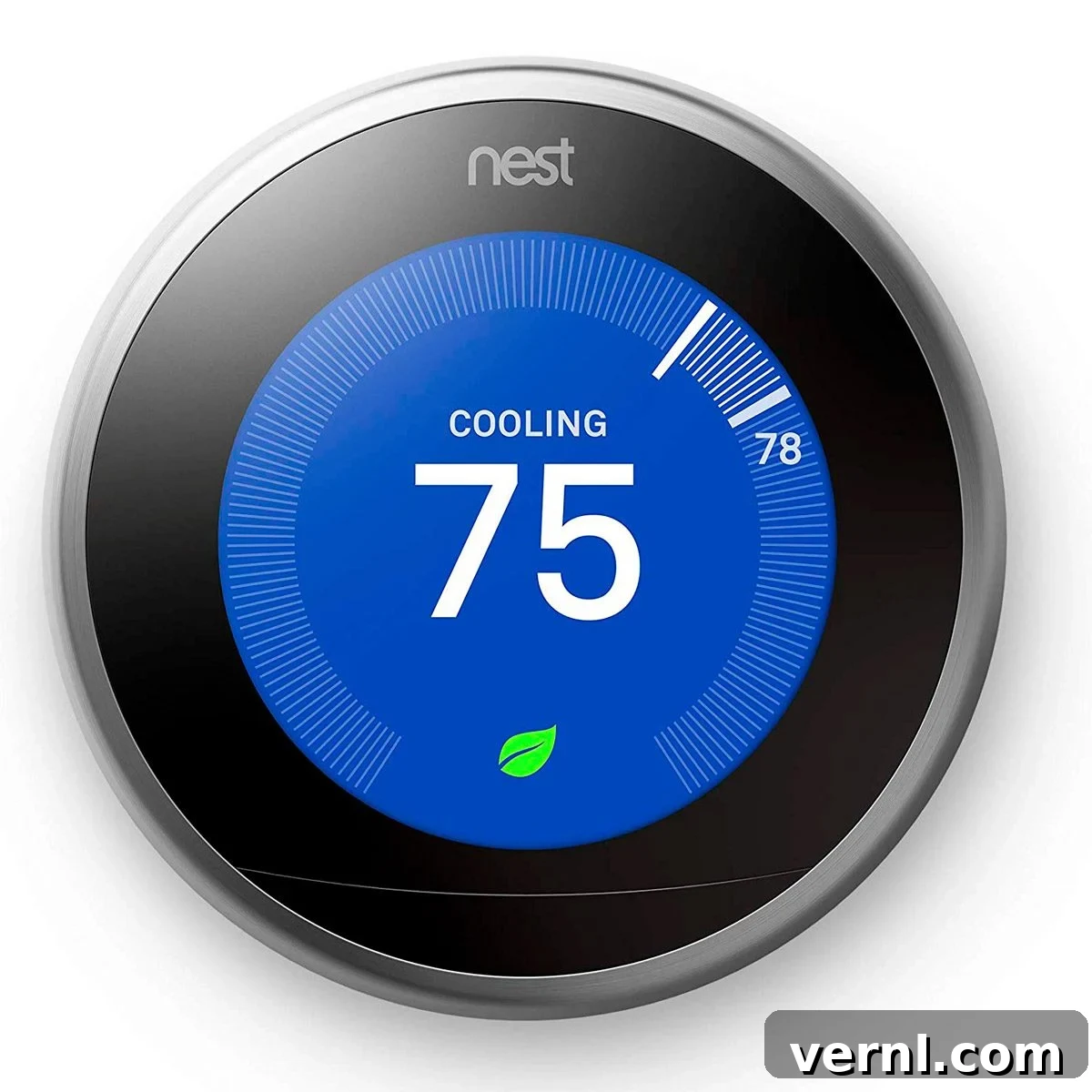
In the rapidly evolving landscape of smart home technology, few devices have made as significant an impact as the Nest Learning Thermostat. When it first debuted in 2011, it was a groundbreaking innovation that quickly captured the attention of homeowners, long before smartphones were ubiquitous and smart home ecosystems were even a concept. This revolutionary device didn’t just offer remote temperature control; it promised an intuitive, energy-saving experience that truly adapted to your lifestyle.
Today, Nest is an integral part of Google’s extensive hardware division, following a strategic merger in 2018. Under Google’s stewardship, the Nest smart thermostat has continued its journey of evolution, solidifying its position as a leader in smart climate control. It remains a top choice for those looking to enhance their home comfort, reduce energy consumption, and seamlessly integrate their heating and cooling systems into a connected smart home environment.
What Exactly is a Nest Thermostat?
At its core, the Nest Thermostat functions much like a traditional thermostat, but with a suite of intelligent capabilities that elevate it far beyond simple temperature regulation. It’s a sophisticated smart home device designed to optimize your home’s climate control through advanced technology. The device connects to your home’s internet network via Wi-Fi, enabling seamless control and communication. This connectivity is the cornerstone of its smart features, allowing you to manage your home’s temperature from virtually anywhere using a dedicated app on your smartphone, tablet, or even through voice commands.
Over the years, the Nest Thermostat has grown progressively smarter and more user-friendly. The latest iterations, such as the third-generation Nest Learning Thermostat, boast a significantly larger display and a host of new features aimed at maximizing both comfort and energy savings. Google proudly reports that the Nest Learning Thermostat has collectively saved over 56 billion kilowatt-hours (KWh) of energy globally, a testament to its efficiency and widespread adoption. This remarkable achievement underscores its effectiveness in helping households minimize their environmental footprint and utility expenses.
Understanding How the Nest Thermostat Works
The true brilliance of the Nest Thermostat lies in its ability to constantly learn, adapt, and adjust to your preferences and your home’s unique characteristics. Unlike conventional programmable thermostats that require manual scheduling, the Nest Learning Thermostat takes an innovative approach: it learns from you. After a period of initial use, typically about a week, it observes your temperature adjustments throughout the day and night. Based on these observations, it intelligently constructs an “Auto-Schedule” that automatically adjusts the temperature to match your desired comfort levels at specific times. This means no more fiddling with settings or forgetting to adjust the thermostat when you leave or return home.
Beyond learning your schedule, the Nest Thermostat is also equipped with advanced occupancy sensing capabilities. Its “Home/Away Assist” feature utilizes a combination of built-in sensors and, optionally, your phone’s location (geofencing) to determine whether you are home or away. When it detects that you’ve left the house, it automatically enters an Eco Temperature mode, dialing back heating or cooling to conserve energy and save money on your utility bills. Conversely, it can begin to warm or cool your home before you arrive, ensuring it’s comfortable the moment you walk through the door.
Furthermore, the Nest Thermostat is adept at understanding the specific heating and cooling patterns of your home’s HVAC system. It learns how quickly your home heats up or cools down, taking into account factors like insulation and external weather conditions. By integrating local weather forecasts, it can proactively adjust its operation, ensuring your home remains at a consistent and comfortable temperature regardless of what Mother Nature brings. Whether it’s a sudden cold snap or an unexpected heatwave, the Nest intelligently anticipates and responds, optimizing system performance.
A unique visual cue called the “Nest Leaf” further empowers users to make energy-efficient choices. When you manually adjust the thermostat to a temperature that is recognized as energy-saving and economical, a small green leaf icon appears on the device’s display or within the Nest app. This intuitive feedback mechanism provides instant encouragement and reinforces good energy-saving habits, guiding you towards optimal efficiency without sacrificing comfort.
Why Choose a Nest Thermostat for Your Home?
The reasons for adopting a Nest Thermostat are compelling and multifaceted. The most straightforward answer is its unparalleled ability to help you significantly reduce your energy costs while simultaneously ensuring your home remains consistently comfortable. However, its benefits extend far beyond just savings and comfort. It also keeps you informed about your energy usage, providing insights and tracking capabilities that empower you to make smarter decisions about your home’s climate control.
For those seeking even more reasons to make the switch, consider these additional benefits of using a Nest Thermostat:
- **Remote Control and Convenience:** Adjust your home’s temperature from anywhere in the world using your smartphone. Forgot to turn down the heat before leaving for vacation? No problem. Want to warm the house before you get home from work? Easily done.
- **Voice Control Integration:** Seamlessly connect with Google Assistant or Amazon Alexa to control your thermostat with simple voice commands, adding another layer of hands-free convenience.
- **Detailed Energy History:** Gain valuable insights into your energy consumption with daily, weekly, and monthly reports. Understand when and why you’re using energy, helping you identify areas for further savings.
- **Smart Home Ecosystem Integration:** The Nest Thermostat integrates effortlessly with other Google Nest devices like cameras, doorbells, and smoke detectors, creating a cohesive and intelligent home environment. It also plays well with many third-party smart home platforms.
- **HVAC System Monitoring:** Receive alerts and reminders for routine maintenance, such as changing your air filter, ensuring your heating and cooling system operates efficiently and prolonging its lifespan.
- **Enhanced Safety Features:** Some Nest models can even integrate with Nest Protect smoke and carbon monoxide alarms to automatically turn off your furnace in case of an emergency, preventing the spread of smoke or carbon monoxide.
- **Environmental Impact:** By actively reducing energy consumption, you’re not just saving money; you’re also contributing to a smaller carbon footprint and a more sustainable future.
Significant Savings with the Nest Thermostat
One of the most attractive propositions of the Nest Thermostat is its proven capability to generate substantial savings on your energy bills. Google’s own research provides compelling figures on how much you can expect to save by switching from a regular, non-smart thermostat to a Nest device. According to Google’s official website, “On average, the Nest thermostat saved U.S. customers about 10 to 12 percent on their heating bills, and about 15 percent on their cooling bills.”
These percentages translate into tangible financial benefits for homeowners. Google further estimates, “We’ve estimated average savings of $131 to $145 a year, which means the Nest Thermostat can pay for itself in under two years.” This rapid return on investment makes the Nest Thermostat a highly practical and economically sound upgrade for any home. Factors influencing these savings include your local climate, the efficiency of your home’s insulation, your previous thermostat usage habits, and your specific energy rates. Regardless, the intelligent optimization provided by Nest consistently works to minimize waste and maximize efficiency, leading to a noticeable difference in your monthly utility statements.
Installation and Compatibility Considerations
While the Nest Thermostat is a powerful piece of technology, its installation is surprisingly user-friendly, often suitable for a DIY approach for those comfortable with basic home improvement tasks. Each Nest thermostat comes with clear, step-by-step instructions, and the Nest app provides interactive guides to walk you through the process. Installation typically involves turning off power to your HVAC system, removing your old thermostat, connecting the appropriate wires to the Nest base, and then attaching the display.
A key consideration for compatibility is the wiring of your existing HVAC system. Most modern systems are compatible, but some older systems may require a “C-wire” (common wire) for consistent power. While the Nest Learning Thermostat can sometimes work without a C-wire by “power stealing” (drawing minimal power from other wires), a C-wire generally ensures more stable operation and is often recommended, especially for more complex HVAC setups or multi-stage systems. Google provides an online compatibility checker to help you determine if your system is suitable before purchase. For those who prefer professional assistance or have complex HVAC systems, professional installation services are readily available.
Overview of Nest Thermostat Models and Pricing
The Nest ecosystem offers a range of thermostat models, each designed to cater to different needs and budgets, ensuring there’s a perfect fit for almost every household.
Nest Learning Thermostat (3rd Generation)
This is the flagship model, widely recognized for its iconic design and advanced features. The third-generation Nest Learning Thermostat typically retails for around $199. It boasts a sleek, premium design, a high-resolution display, and is available in a variety of seven sophisticated colors to match any home decor. This model offers the full suite of Nest’s learning capabilities, Home/Away Assist, Farsight (which shows you the temperature, weather, or time when you walk into the room), and extensive smart home integration. It’s ideal for users who want the most comprehensive set of features and are looking for a premium aesthetic.
Nest Thermostat E
The Nest Thermostat E presents a more budget-friendly alternative, often priced around $169. While it retains many core smart features like Auto-Schedule and Home/Away Assist, it offers a slightly simpler design with a frosted display that blends more subtly into the background. It is exclusively available in white and has fewer wiring compatibility options compared to the Learning Thermostat. This model is an excellent choice for those seeking Nest’s intelligent energy-saving capabilities at a lower price point, particularly for homes with less complex HVAC systems.
Google Nest Thermostat (Newest Model)
Google also introduced a newer, even more affordable model, simply called the Google Nest Thermostat, typically retailing around $129. This version features a touch-sensitive side for adjustments rather than the rotating ring of its predecessors and integrates fully with the Google Home app (rather than the separate Nest app, though older models can also be controlled via Google Home). It offers a refined design and essential smart features like remote control, energy monitoring, and Home/Away Assist, making smart climate control accessible to an even wider audience. While it foregoes the “learning” capabilities of the Learning Thermostat, it offers guided scheduling to help users create efficient programs.
Compared to other smart home thermostats on the market, which typically range from $170 to $250, Nest’s pricing strategy offers competitive options across various tiers, catering to different financial considerations and feature demands. Additionally, accessories like trim kits (to cover wall imperfections from previous thermostats) and stands (for placing the thermostat on a shelf or table) are available for aesthetic and installation flexibility.
Potential Drawbacks and Considerations
While the Nest Thermostat offers numerous advantages, it’s important to consider a few potential drawbacks. The initial upfront cost, though often recouped through energy savings, can be a barrier for some. Compatibility with older or more unusual HVAC systems can sometimes be an issue, particularly concerning the need for a C-wire, which might require a minor electrical modification. Furthermore, while designed for simplicity, the advanced features and extensive customization options might feel slightly overwhelming for users who prefer a truly bare-bones thermostat. Finally, like all smart devices, there are considerations around data privacy, as the thermostat collects usage data to learn and optimize performance. Google has robust privacy policies, but it’s a factor for privacy-conscious individuals to review.
Conclusion: The Future of Home Comfort and Efficiency
The Nest Thermostat, from its pioneering beginnings to its current diverse lineup under Google, has consistently set the standard for intelligent home climate control. It expertly combines sleek design with powerful, adaptive technology to offer an unparalleled user experience. By seamlessly blending learning algorithms, remote accessibility, and comprehensive energy tracking, Nest empowers homeowners to achieve optimal comfort while significantly reducing their energy consumption and utility bills.
Its ability to learn your preferences, adapt to your presence, and respond to changing weather conditions makes it more than just a thermostat – it’s an active manager of your home’s comfort and efficiency. With a range of models catering to different budgets and feature requirements, and robust integration within the broader smart home ecosystem, the Nest Thermostat continues to be a leading choice for anyone looking to modernize their home, save money, and contribute to a greener planet. As smart home technology evolves, the Nest Thermostat remains a testament to innovation that truly makes a difference in daily living.