
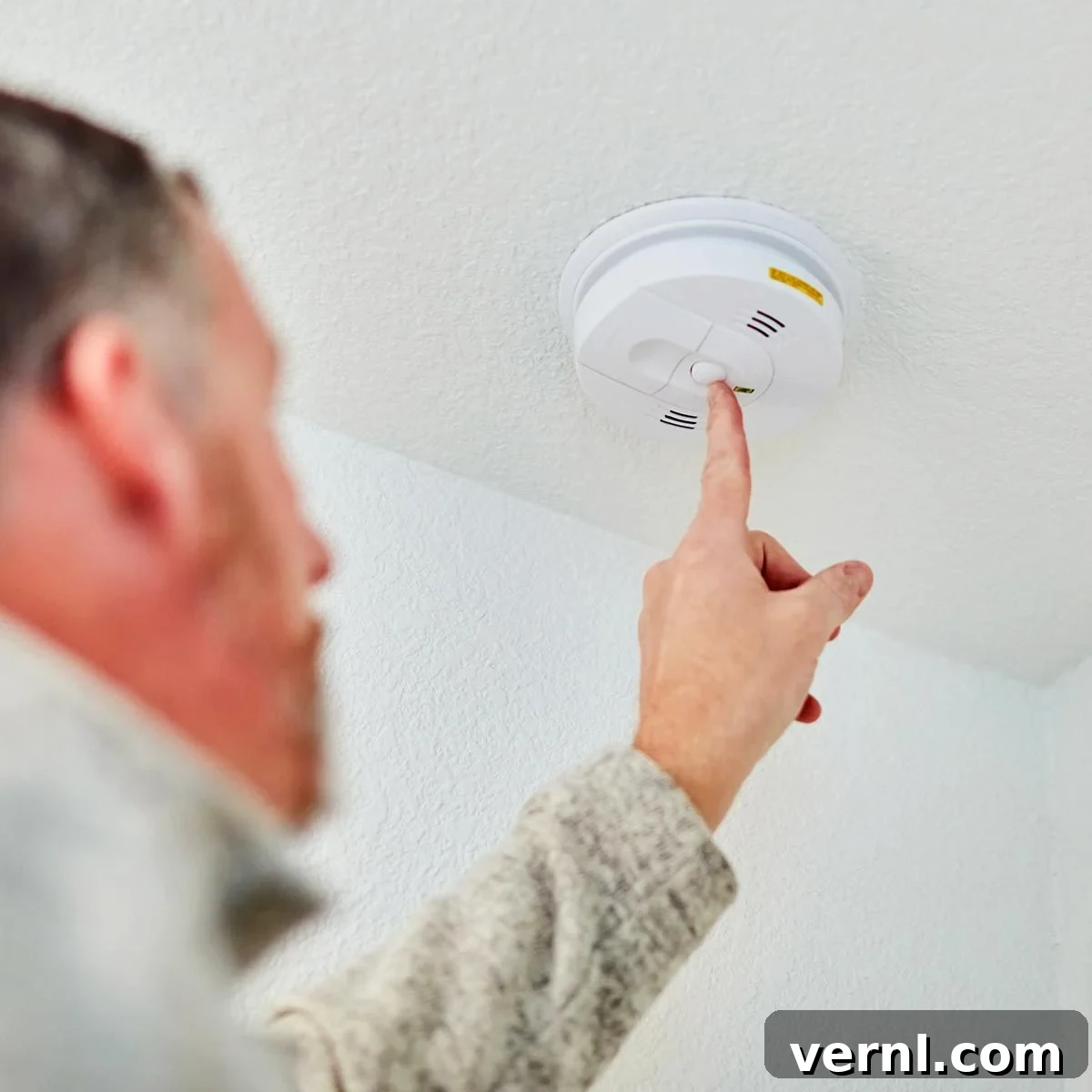
When Your Smoke Alarm Goes Off for No Reason: A Comprehensive Troubleshooting Guide
Beep. Beep. Beeeeeeep. Few sounds are as startling, or as irritating, as the shrill, persistent tone of a smoke or fire alarm blaring when there’s seemingly no emergency. We’ve all been there: frantically waving a towel, fanning windows open, and yet, that insistent beeping just won’t stop. If you’ve ever experienced the frustrating phenomenon of a smoke alarm sounding without any apparent fire, you’re not alone, and this in-depth guide is tailored for you. Understanding why these crucial safety devices can malfunction and how to address false alarms is key to maintaining both your peace of mind and the effectiveness of your home’s fire safety system.
To help us unravel this common household mystery, we consulted with leading experts in fire safety. We spoke with Kevin Feak, PE, a licensed fire protection engineer and former firefighter whose extensive experience provides invaluable insights into the mechanics and common issues of smoke detection. Additionally, we gathered crucial information from Susan McKelvey, communications manager at the National Fire Protection Association (NFPA), a renowned authority dedicated to fire safety standards and education for over 125 years. Together, their expertise will shed light on one of life’s more annoying, yet potentially serious, home dilemmas: a fire alarm that activates without an actual fire.
What Does Your Home Alarm System Actually Detect: Smoke vs. Fire?
Despite the common colloquialism “fire alarm,” the detection devices typically installed in residential homes are primarily designed to sense smoke, not the flames of a fire directly. As Kevin Feak clarifies, “In most cases, the correct term for what we have in our homes is a smoke alarm.” These essential units are engineered to trigger an audible or visual alert when they detect the presence of smoke particles in the air. This differs significantly from the more complex fire alarm systems found in commercial buildings, which are often integrated into a centralized network that transmits signals to a main control panel or even directly to fire departments.
Rest assured, a smoke detector in your home will still activate if there’s an actual flaming fire. The underlying principle is that fire produces smoke, and it’s the smoke particles that the alarm’s sensors are constantly monitoring. Modern home smoke alarms are also increasingly interconnected. This means that if one alarm detects smoke, it communicates with all other connected alarms in your home, causing them to sound simultaneously. This interconnectedness is a critical safety feature, ensuring that everyone in the household receives an immediate and widespread warning, regardless of where the fire originates.
Beyond smoke from conventional fires, many contemporary detectors offer enhanced safety by incorporating carbon monoxide (CO) detection. Carbon monoxide is a notoriously dangerous gas, colorless, odorless, and tasteless, making it impossible for humans to detect without specialized equipment. Inhaling CO can be fatal, and its silent nature makes combination alarms invaluable. Feak notes, “Many smoke alarms are now combination detectors. This means they will sense both smoke and carbon monoxide.” These dual-purpose devices provide a holistic approach to home safety, protecting against multiple life-threatening hazards within a single unit.
The Science Behind the Siren: How a Smoke Alarm Works
Understanding the fundamental mechanisms of smoke detection can help demystify why these devices sometimes trigger false alarms. Kevin Feak explains that “Most homes use either an ionization or photoelectric smoke alarm,” and while their core function is the same – to detect smoke particles – they employ distinct technologies to achieve this. At a high level, both types operate by having smoke particles enter an internal sensing chamber within the device. Once inside, these particles disrupt a critical signal, which then prompts the alarm to activate.
Let’s delve a bit deeper into these technologies:
- Ionization Smoke Alarms: These alarms contain a tiny amount of radioactive material, typically Americium-241, positioned between two electrically charged plates. This creates a small, constant electric current. When smoke particles enter the chamber, they disrupt this current flow, causing the alarm to sound. Ionization alarms are generally more responsive to fast-flaming fires, which produce smaller, invisible combustion particles.
- Photoelectric Smoke Alarms: These alarms contain a chamber with a light source (often an LED) and a photosensor positioned at an angle where the light beam does not directly hit the sensor. When smoke particles enter the chamber, they scatter the light beam, deflecting some of it onto the photosensor. This scattered light triggers the alarm. Photoelectric alarms are typically more responsive to smoldering fires, which produce larger, visible smoke particles.
Susan McKelvey from the NFPA highlights the strengths of each type: “Ionization alarms are more responsive to flaming fires; photoelectric alarms are more responsive to smoldering fires.” Both technologies are vital, and each is designed to provide residents with sufficient time to escape a home fire safely. Given that fires can start in various ways and produce different types of smoke, McKelvey, echoing NFPA recommendations, strongly advises opting for “a combination or dual-sensor detector, which provides both types of detection in one unit.” This ensures comprehensive protection against both fast-flaming and slow-smoldering fires, offering the broadest possible safety net for your home and family.
Why Your Fire Alarm Might Be Crying Wolf: Common Reasons for False Alarms
As irritating as false alarms can be, it’s paramount never to ignore a smoke alarm when it activates, even if you suspect it’s a mistake. A malfunctioning or ignored alarm renders a crucial safety device useless. As Susan McKelvey gravely reminds us, “In fact, the majority of U.S. home fire deaths occur in homes where the alarms either aren’t working properly or there are no alarms.” Every alarm, whether true or false, warrants investigation to ensure your system is functional and ready for a real emergency. Let’s explore the most common culprits behind those unexpected beeps:
Humidity and Steam
Smoke detectors are mandated inside every bedroom and in hallways or areas directly outside sleeping spaces. This strategic placement is crucial for early warning. However, depending on your home’s architectural layout, these alarms are frequently located in close proximity to bathrooms. This common placement can unfortunately be a prime trigger for false alarms.
Kevin Feak explains, “Smoke alarms placed too close to a bathroom door may alarm during a hot shower.” The dense steam produced by a hot shower mimics the appearance of smoke, causing the sensor to react. He adds, “even using a steamer to remove wrinkles from clothes could cause an unwanted surprise.” To effectively mitigate these nuisance alarms, the NFPA recommends maintaining a minimum distance of at least three feet between your smoke alarm and any bathroom door. Good ventilation in bathrooms, such as using an exhaust fan during and after showers, can also significantly reduce steam accumulation and prevent these activations.
Dust and Debris
“Dust is another culprit for activations,” Feak confirms. Both ionization and photoelectric smoke detectors rely on sensitive sensors to detect microscopic particles in the air. This makes them susceptible to airborne contaminants that aren’t smoke. Everyday household dust, construction debris, or even the fine particles generated by home improvement tools like sanders and saws, can easily trigger a false alert. It’s not just immediate exposure, either; the gradual accumulation of dust on the sensors over time can degrade their performance and eventually cause them to malfunction, leading to intermittent or constant false alarms. Regular cleaning and careful planning during dusty projects are essential preventative measures.
Cooking Mishaps and Kitchen Fumes
“I think most of us have set our smoke alarms off during cooking,” says Feak, a sentiment many can instantly relate to. Even if your sizzling steak or forgotten toast doesn’t burst into actual flames, the excessive smoke, steam, or even intense heat generated during cooking can easily trigger a smoke detector. High heat, particularly from ovens or stovetops, can also cause certain chemicals within the alarm to react, leading to false alerts. To minimize these common kitchen-related false alarms, the NFPA advises positioning smoke detectors at least ten feet away from cooking appliances. If your kitchen layout makes this difficult, ensure excellent ventilation, such as powerful range hoods, is always in use when cooking.
McKelvey points out that technological advancements are actively addressing this issue. “New technologies are on the market to help minimize nuisance cooking alarms,” she says. If you’re tired of the frantic waving of a cookie sheet and the desperate scramble to open windows and doors every time you prepare a meal, it might be time to explore these newer alarm models. Upgrading your alarms, especially if they are older, can significantly improve your quality of life while maintaining robust fire safety.
Bugs and Spiders
It might sound improbable, but tiny intruders can also be big trouble for your smoke alarms. McKelvey notes that “insects and spiders have been known to set up shop in smoke detectors.” When these small critters move across the sensitive internal sensors, they can mimic the presence of smoke particles, thus triggering a false alarm. Similar to dust and humidity, the physical obstruction or movement caused by an insect can trick the alarm’s delicate detection mechanism. If you observe insect activity around your smoke detector, it’s crucial to address it promptly. Not only will it stop nuisance alarms, but it will also ensure your detector is fully operational and ready to alert you during a genuine emergency, free from internal obstructions.
Chemical Fumes and Aerosols
While less common than cooking smoke, certain chemical fumes can also trigger smoke alarms. Products like strong cleaning sprays, paint aerosols, air fresheners, or even insecticide sprays can release particles or vapors that mimic smoke or interfere with the alarm’s sensors. Always ensure good ventilation when using such products, especially near smoke alarms, to prevent accidental activation.
What to Do When Your Fire Alarm Goes Off Without a Fire: A Step-by-Step Guide
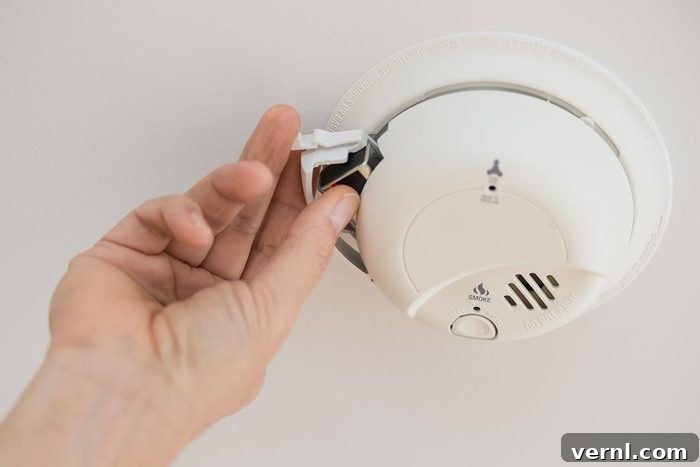
The moment your smoke alarm sounds, your first and most critical action is always the same: ensure there is no actual fire. Even if you’ve experienced numerous nuisance alarms in the past, never assume it’s a false alarm. Swiftly check for any signs of heat, visible smoke, or the smell of burning, and if you have a combination alarm, observe if it’s indicating carbon monoxide. Prioritize safety and evacuate if there’s any doubt. Only when you are absolutely certain there is no immediate danger should you proceed with investigating and remedying a disruptive smoke detector.
Once you’ve confirmed it’s safe to proceed, here’s a comprehensive guide on how to troubleshoot and silence your alarm, and more importantly, prevent future false activations:
- Change the Battery Annually: This is arguably the simplest yet most overlooked maintenance step. Kevin Feak advises that “Most newer alarms have 10-year sealed batteries that can not be replaced,” indicating a shift towards longer-lasting, low-maintenance units. However, for every other type of smoke alarm, the NFPA strongly recommends changing the batteries at least once a year. A good practice is to do this when you change your clocks for daylight saving time. A low battery is a very common cause of nuisance chirping (a distinct, intermittent beep that’s different from the full alarm siren) and can also lead to full false alarms. Replacing batteries proactively ensures your detector is always powered and ready for an emergency.
- Clean with Compressed Air: Many false alarms are caused by foreign particles within the sensing chamber. “Steam from a shower or even condensation on a hot day can be corrected by using a can of compressed air to blow the moisture out of the chamber,” Feak explains. This method is equally effective for removing accumulated dust, lint, spiderwebs, or other debris that might have entered the detector from renovations or general household activity. Always hold the can upright and use short bursts to avoid damaging the internal components.
- Invest in Detectors Designed to Reduce False Alarms: Technology is constantly improving, and smoke alarms are no exception. Susan McKelvey highlights, “To help prevent nuisance alarms from cooking, a new multi-criteria smoke alarm technology is now on the market that states ‘helps reduce cooking nuisance alarms’ on the packaging.” These advanced alarms utilize intelligent algorithms and often combine multiple sensor types (photoelectric, ionization, heat, CO) to better differentiate between actual threats and benign environmental factors like cooking smoke or steam. “People should consider using new multi-criteria alarms when it is time to replace existing photoelectric or ionization alarms,” she advises, emphasizing the long-term benefits of upgrading your safety system.
- Optimize Detector Placement: Strategic positioning can significantly reduce false alarms while maximizing effectiveness. As mentioned, keep smoke detectors at least three feet away from bathroom doors and a minimum of ten feet from cooking appliances. Additionally, avoid placing alarms too close to air vents, windows, or ceiling fans, as strong drafts can interfere with their operation or blow particles into the chamber. Never remove a smoke detector completely, even if it’s frequently alarming; instead, relocate it to a more suitable spot.
- Maintain a Bug-Free Environment: If insects are the suspected cause, carefully remove the detector’s cover (following manufacturer instructions) and gently clean out any visible spiderwebs, insect carcasses, or live bugs. Use a soft brush, a vacuum cleaner with a brush attachment, or compressed air for this task. To deter future infestations, ensure your home is generally pest-free, seal cracks, and avoid using insect sprays directly on or near the alarm, as the chemicals can damage its sensors or trigger false alarms themselves. Physical removal is always preferred over chemical solutions for cleaning these sensitive devices.
- Regular Testing and Replacement: Beyond changing batteries, test all your smoke alarms monthly using the test button. This ensures the battery and electronics are working. Furthermore, smoke alarms don’t last forever. Most manufacturers recommend replacing smoke alarms every 10 years, regardless of whether they appear to be functioning. The sensors can degrade over time, reducing their effectiveness. Check the manufacture date on the back of your alarm to know when it’s time for an upgrade.
About the Fire Safety Experts
- Kevin Feak, PE, is a distinguished Senior Fire Protection Engineer at LaBella Associates. His extensive expertise is underscored by a wide array of certifications in emergency management, infrastructure protection, fire protection, crime prevention through environmental design, fire investigation, firefighting, and codes enforcement. His practical experience as a former firefighter provides him with a unique, on-the-ground perspective on fire safety systems and their critical role.
- Susan McKelvey serves as the Communications Manager at the National Fire Protection Association (NFPA). The NFPA stands as a globally recognized and trusted source of fire protection information, with a legacy spanning over 125 years. Through the collaborative input of thousands of professional members and 250 technical committees, the NFPA is responsible for publishing authoritative documents such as the National Electrical Code and other highly respected fire protection codes and standards that shape safety guidelines worldwide.
Sources
- Kevin Feak, Senior Fire Protection Engineer at LaBella Associates; email interview, March 4, 2025.
- Susan McKelvey, Communications Manager at the National Fire Protection Association; email interview, March 6, 2025.
- National Fire Protection Association: “Changing Clocks and Batteries.”
- National Fire Protection Association: “Installing and Maintaining Smoke Alarms.”
- National Fire Protection Association: “Smoke Alarms.”