
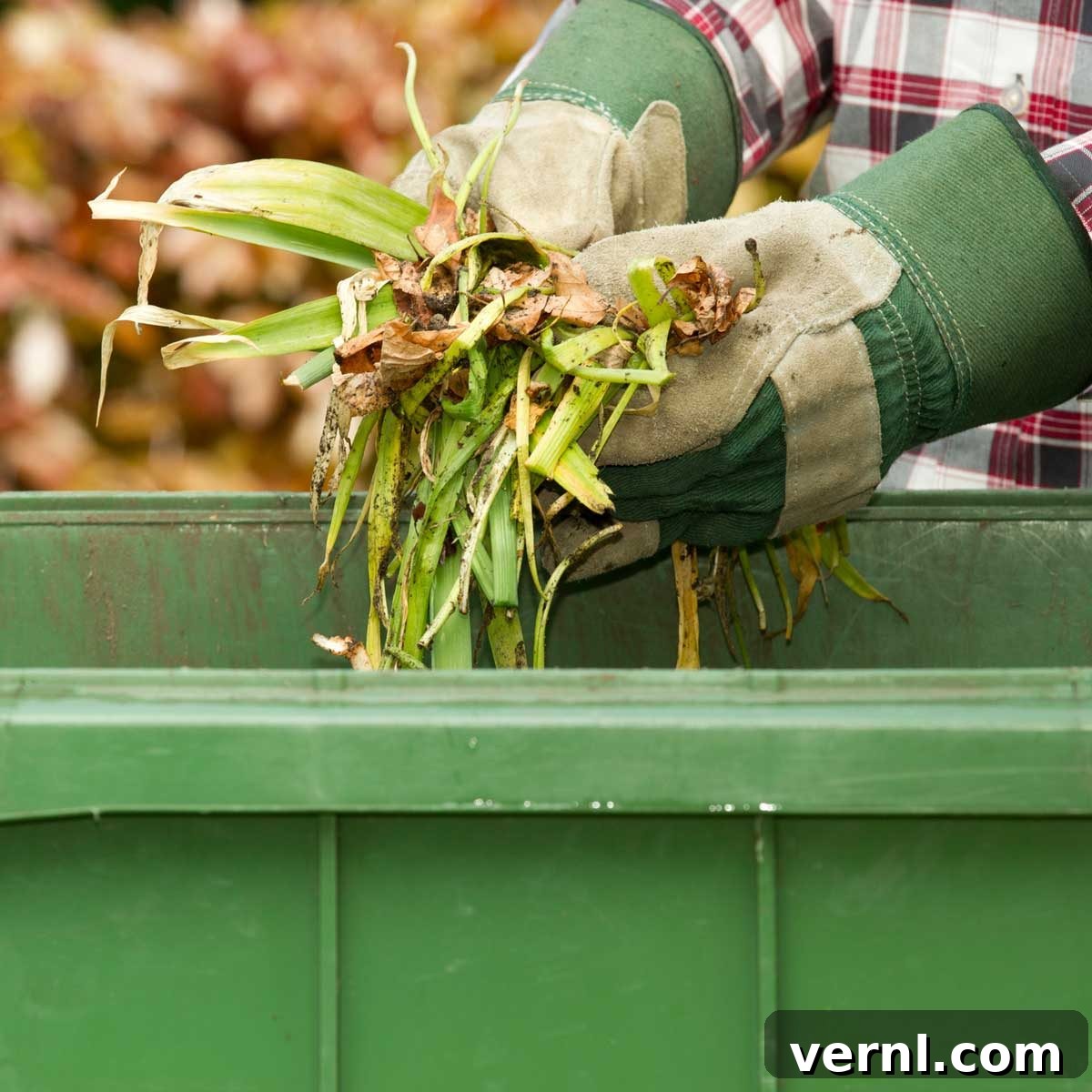
According to the United States Environmental Protection Agency (EPA), food scraps and yard waste together constitute a significant portion of our discarded materials, currently making up more than 28 percent of what we send to landfills. This substantial volume contributes to greenhouse gas emissions and places an unnecessary burden on our waste management systems. However, there’s a more environmentally conscious and budget-friendly approach to managing your outdoor space than traditional yard waste disposal methods.
Instead of simply throwing away the organic material from your garden and lawn maintenance, consider embracing a sustainable practice known as greenscaping. By recycling yard waste right at home, you can transform these discarded materials into valuable resources for your landscape. This guide will introduce you to three straightforward, chemical-free methods that will not only help you achieve the lush, vibrant yard of your dreams but also contribute positively to the environment and your wallet.
Grasscycling for a Healthier Lawn and Faster Mowing
Grasscycling is perhaps the easiest and most immediate way to begin your journey toward sustainable yard care. It simply means leaving your grass clippings on the lawn after mowing, rather than bagging them for disposal. This eliminates a completely unnecessary step in your lawn care routine, saving you valuable time and effort. While you might find yourself mowing slightly more frequently to maintain your desired lawn length, the EPA estimates that by skipping the bagging process, you can reduce your total mowing time by an impressive 38 percent. This efficiency gain makes more frequent mowing a small, worthwhile trade-off for a greener, healthier lawn and an easier chore.
Beyond the time-saving benefits, grasscycling significantly boosts your lawn’s health. When properly grasscycled, clippings fall to the soil surface, where they quickly decompose. This natural process returns essential nutrients, particularly nitrogen, directly back into your lawn’s ecosystem. The EPA highlights that these added nutrients can reduce your need for commercial nitrogen fertilizers by “25 to 50 percent,” translating into substantial savings on lawn care products and less environmental impact from chemical runoff.
Tips for Effective Grasscycling:
- Mow Frequently and Consistently: The University of Maryland recommends mowing your lawn when it’s dry and never removing more than one-third of the grass blade’s length at a time. This ensures clippings are small enough to decompose rapidly without clumping or smothering the grass.
- Maintain Sharp Blades: Regularly sharpening your mower blades every four to six weeks is crucial. Sharp blades create a clean cut, which helps the grass recover quickly and allows clippings to decompose more efficiently. Dull blades tear the grass, making it susceptible to disease.
- Optimal Clipping Length: The University of Minnesota suggests that clippings should be no longer than an inch. Shorter clippings break down faster and are less likely to form a thick thatch layer, which can impede water and nutrient penetration to the roots.
- Consider a Mulching Mower: While any mower can be used for grasscycling, a mulching mower is designed to cut clippings into finer pieces, accelerating their decomposition and ensuring an even distribution across the lawn.
- Avoid Over-Fertilizing: Since grasscycling provides natural nutrients, monitor your lawn’s needs and adjust any supplemental fertilization accordingly to prevent nutrient imbalances.
By integrating grasscycling into your routine, you’re not just saving time and money; you’re actively building a more resilient, self-sustaining lawn that thrives naturally while minimizing your environmental footprint.
Recycle Yard Waste with DIY Mulch for Enriched Gardens
Beyond your lawn, your garden beds and landscaping can also benefit immensely from recycled yard waste in the form of homemade mulch. Materials like grass clippings, fallen leaves, and even small wood scraps can be transformed into organic, free mulch. Spreading a layer of this natural material around your flower beds and gardens offers a multitude of benefits, from suppressing weeds to enriching your soil and regulating critical environmental factors.
Mulch acts as a protective barrier for your soil. It effectively blocks sunlight, making it difficult for weed seeds to germinate and thrive, significantly reducing the need for tiresome weeding. Furthermore, organic mulches excel at regulating soil temperature, keeping roots cooler in the summer and warmer in the winter, which is vital for plant health. They also conserve soil moisture by reducing evaporation, meaning your plants require less frequent watering. As the organic materials slowly decompose, they continuously release valuable nutrients back into the soil, improving its structure and fostering a healthy microbial environment.
Creating Your Own Mulch:
- Autumn Leaves: Nature’s Gift: The fall season provides an abundant, free source of mulch. Instead of raking and bagging leaves for curbside pickup, shred them with your lawn mower. You can either run over piles with your mower or use a leaf shredder. These shredded leaves can then be spread in a thin layer (1-3 inches deep) at the base of your plants and around garden beds. They are excellent for improving soil structure and adding organic matter as they break down.
- Wood Chips and Scraps: Long-Lasting Beauty: If you have recently trimmed trees or removed shrubs, you likely have wood scraps that can be converted into durable wood chip mulch. Rather than purchasing and hauling heavy bags of mulch from a home improvement store, consider renting a wood chipper or shredder. Wood mulch, when properly applied, lasts longer than grass and leaf mulches, breaking down more slowly and providing a clean, traditional appearance to your landscaping. Always ensure the wood is untreated to avoid introducing chemicals into your garden.
- Grass Clippings as Mulch: While grasscycling on the lawn is ideal, fresh grass clippings can also be used as mulch in garden beds. However, apply them in very thin layers (no more than an inch) to prevent matting, which can lead to anaerobic conditions and an unpleasant odor. Allow clippings to dry slightly before applying, or mix them with leaves to create a balanced mulch.
Applying Mulch Effectively:
For best results, aim for a mulch layer of 2-4 inches deep, depending on the material. Ensure the mulch doesn’t directly touch the stems or trunks of plants and trees, as this can trap moisture and lead to rot or pest issues. Leave a small gap (an inch or two) around the base of plants. Mulching is most effective when applied in spring or fall, preventing weeds before they emerge and providing insulation during temperature changes.
By creating your own mulch, you are not only saving money but also actively contributing to a healthier, more beautiful garden that requires less water and fewer chemical interventions.
Recycle Yard Waste and Food Scraps with Composting: Creating “Black Gold”
Composting, often considered a cornerstone of the zero-waste lifestyle, may sound like a complex endeavor, but it is far simpler than many imagine. It’s essentially mimicking nature’s decomposition process to transform organic waste into a rich, nutrient-dense soil amendment often referred to as “black gold.” This powerful resource can significantly boost the health and vitality of your garden and lawn, all while diverting valuable materials from landfills.
You can begin composting on a small scale, even starting with a dedicated indoor compost bin specifically for kitchen scraps. This is an excellent way to get acquainted with the process without needing a large outdoor space. However, if your goal is to recycle a broader range of kitchen and yard waste items, expanding to an outdoor system is highly recommended. This could involve building a large backyard compost bin or investing in a ready-made barrel tumbler, both of which are designed to efficiently process larger volumes of organic matter. If DIY isn’t your style, numerous excellent composting containers and accessories are readily available online.
The Art and Science of Composting:
The EPA emphasizes that the most fundamental and crucial tip for successful backyard composting is to get your ratio right. A balanced mix of “greens,” “browns,” and adequate water is the secret to a thriving compost pile. These three components work synergistically to create the ideal environment for the microorganisms that break down organic matter.
- Greens (Nitrogen-Rich): These materials provide nitrogen, essential for microbial growth and activity. Examples include fresh grass clippings, fruit and vegetable scraps, coffee grounds, tea bags, and fresh plant trimmings. Avoid adding meat, dairy products, oily foods, or diseased plants, as these can attract pests and create foul odors.
- Browns (Carbon-Rich): Browns provide carbon, which is the energy source for the decomposers, and also help to create air pockets in the pile. Common browns include dry leaves, straw, shredded newspaper and cardboard, wood chips, sawdust, and small twigs.
- Water: Moisture is vital for the decomposition process. Your compost pile should be consistently damp, similar to a wrung-out sponge. Too dry, and decomposition slows; too wet, and the pile can become anaerobic and smelly.
Compost Pile Maintenance:
While composting is inherently a natural process, a little routine maintenance can significantly speed things up and prevent issues. This includes regular watering to maintain moisture and turning the pile periodically. Turning introduces oxygen, which is critical for aerobic bacteria that efficiently break down materials, preventing unpleasant odors and ensuring even decomposition. Troubleshooting issues like a slow pile or bad smells often involves adjusting the greens-to-browns ratio, adding water, or turning the pile more frequently.
Once your compost is ready – typically a dark, crumbly, earthy-smelling material – it can be used in countless ways. Mix it into garden beds to improve soil structure and fertility, use it as a nutrient-rich top dressing for your lawn, or incorporate it into potting mixes for healthier container plants. Composting truly is an easy, impactful way to recycle yard and kitchen waste, bolstering the health of your entire yard and contributing to a more sustainable home.
Embrace Greenscaping for a Sustainable Future
The journey towards a more sustainable home begins in your own backyard. By adopting greenscaping practices like grasscycling, creating DIY mulch, and composting, you’re not just reducing waste; you’re actively nurturing a healthier environment, saving money, and cultivating a more vibrant and resilient landscape. These three simple, yet powerful, methods collectively transform what was once considered waste into valuable resources, embodying a holistic approach to land management.
Imagine a lawn that feeds itself, garden beds that stay weed-free and hydrated with natural coverings, and a constant supply of rich, organic soil amendment derived from your own home. This isn’t just a dream; it’s an achievable reality with greenscaping. By implementing these practices, you’ll witness a tangible improvement in your yard’s health, a reduction in your household’s waste footprint, and a greater connection to the natural cycles of growth and decomposition. Start your greenscaping journey today and enjoy the manifold benefits of a truly sustainable and beautiful outdoor space.