
Like many essential components of our vehicles, car doors are far more than simple access points. They represent an integral safety system, meticulously engineered to provide vital protection for passengers and robust security from theft. Despite their critical role, their complex mechanisms are often overlooked until something goes wrong. A properly functioning car door must be able to open smoothly, remain securely closed when shut, and lock reliably on demand to protect your most precious cargo — yourself, your passengers, and your personal belongings. It’s a sobering thought, but a vehicle with compromised door latches could dangerously eject an occupant in the event of an accident, particularly if seat belts are not properly worn. Understanding how these vital components work, and what to do when they don’t, is crucial for both safety and peace of mind.
The Intricate Anatomy of a Car Door
A car or truck door is a sophisticated assembly of many interconnected parts, all designed to operate in perfect harmony. Each component plays a specific role in ensuring the door functions properly, providing both convenience and security. Beyond the visible exterior, a complex world of mechanics and electronics resides within.
The primary component responsible for keeping the door closed is the **latching mechanism**. Housed within the door assembly itself, this intricate device engages with a robust door anchor, also known as a striker plate, which is securely bolted to the vehicle’s body frame. When the door is shut, the latch firmly grips the striker, preventing the door from inadvertently opening. Operating either the inside or outside door handle initiates a sequence that releases the latch from the anchor, thereby allowing the door to open freely.
Other vital parts contributing to the door’s functionality include:
- The Door Assembly Itself: This structural shell houses all the internal components, including the window mechanism, wiring, and side-impact protection beams.
- Door Hinges: These heavy-duty components allow the door to pivot open and closed. They must be robust enough to support the door’s considerable weight while ensuring precise alignment.
- Door Lock: Whether manual or power-operated, the door lock mechanism is crucial for securing the vehicle against unauthorized entry.
- Door Latch Linkage or Cables: These connect the door handles and lock mechanisms to the latch, transmitting the mechanical force needed to release or engage it.
- Electrical Actuators and Switches: In modern vehicles, these components are responsible for the remote or internal locking and unlocking of doors, often integrated with central locking systems and key fobs.
- Window Regulators and Motors: These control the raising and lowering of the door glass.
- Weather Stripping: These rubber seals around the door frame protect the interior from wind, water, and noise.
- Side-Impact Beams: Integrated within the door structure, these provide crucial protection during a side-on collision.
Given the complexity and the constant use car doors endure, it’s not uncommon for things to go awry. When any of these integrated systems malfunction, preventing your doors from closing securely or locking properly, it creates a significant safety hazard and demands prompt attention. Ignoring a faulty door can lead to serious consequences, from personal injury in an accident to the loss of valuables due to inadequate security.
Why Isn’t My Car Door Closing Properly? Common Causes and Solutions
As previously mentioned, driving a vehicle with a door that refuses to stay securely closed is extremely dangerous. It compromises both passenger safety and vehicle security. Addressing the issue promptly is not just a matter of convenience but a critical safety measure. Here are some of the most common reasons a car door might fail to close properly, along with potential solutions and when it’s best to seek professional assistance.
Latch Issues: The Heart of the Closing Mechanism
The door latch is the most frequent culprit when a door won’t close. Several problems can afflict this crucial component:
- Stuck, Binding, or Rusted Latch: Over time, dirt, grime, and moisture can accumulate within the latch mechanism, causing it to seize up or operate sluggishly. Rust is a particular problem, especially in older vehicles or those exposed to harsh climates.
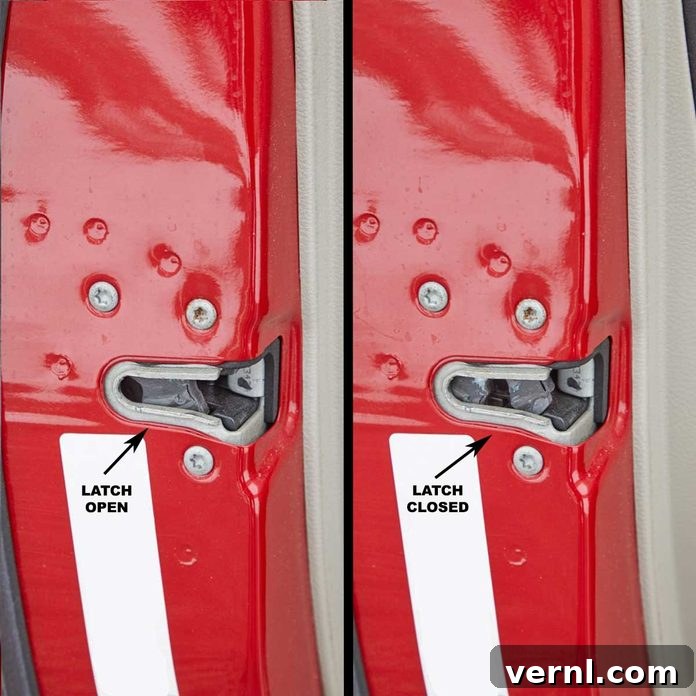
- Accidentally Closed Latch (False Latch): Sometimes, the latch can inadvertently snap into its “closed” position while the door is open. When you try to shut the door, the already-closed latch collides with the striker, preventing the door from fully engaging.
- Worn or Damaged Latch: Constant use can lead to wear and tear on the internal components of the latch, causing them to fail to engage properly with the striker. Damage from impacts or forced entry attempts can also compromise the latch’s integrity.
Troubleshooting Latch Problems:
For minor issues like a stuck or binding latch, a simple DIY fix might be possible. Begin by spraying a generous amount of WD-40 or a similar penetrating oil onto the latch mechanism. Allow it to penetrate for a few minutes, then use a clean rag to wipe away any visible grunge, dirt, or grime. Be meticulous in cleaning all accessible parts of the latch. Crucially, avoid accidentally closing the latch during this cleaning process. After cleaning, work the inside and outside door handles several times to help distribute the lubricant and free up the mechanism. Then, test if the door closes securely.
If the latch appears to be in the “closed” position, preventing the door from shutting, you can often reset it. Examine the latch on the problematic door and compare its position to a door that closes normally. A functional, “open” latch typically resembles the open part of the letter “C,” ready to slide over the door anchor. If it’s in the “closed” position (no opening), take a flat-head screwdriver. While gently pulling the door handle to release any internal tension, use the screwdriver to carefully push up or rotate the latch until it snaps back into its open “C” shape. This should allow it to engage with the striker.
However, if the latch is visibly faulty, excessively worn, or structurally damaged, it’s a repair best left to your professional mechanic. Attempting to force a damaged latch can cause further damage to the door or its internal components, making the repair more costly.
Door Handles: The Access Point to the Latch
Car door handles, both interior and exterior, are the primary interfaces for operating the latch. When you pull a handle, it typically either extends a metal rod or pulls a cable that directly disengages the door latch from its anchor. Problems with these components include:
- Binding or Jammed Door Handle: Accumulated dirt, rust, or damage can cause the handle mechanism itself to stick or bind, preventing it from fully returning to its resting position or engaging the latch.
- Damaged Linkage or Cable: The rods or cables connecting the handle to the latch can become stretched, bent, corroded, or even break. A broken cable or bent rod will prevent the handle from properly actuating the latch, leaving the door stuck in either an open or closed position.
- Broken Return Spring: Many handles have a return spring that brings them back to their neutral position. If this spring breaks, the handle may feel loose or fail to fully disengage the latch.
Due to the intricate nature of the internal door panel components and the precise adjustments often required, replacing a malfunctioning door handle, a worn door latch release linkage, or a broken latch release cable is generally a task best entrusted to automotive professionals. They have the specialized tools and expertise to correctly access the internal door mechanism without causing damage and ensure proper function.
Door Anchor (Striker Plate) Misalignment
The door anchor, or striker plate, is the sturdy post on the vehicle’s body that the door latch engages with. If this anchor is out of its correct adjustment, it can prevent the door latch from properly aligning and securing the door. Even a slight misalignment can cause the door to not close fully, requiring excessive force, or not latching at all. Over time, the constant impact of the latch can cause the striker to shift slightly from its original position.
Troubleshooting Striker Plate Adjustment:
Inspect the door anchor carefully. You might notice wear marks or scratches on the striker where the latch is making contact, indicating a misalignment. To attempt an adjustment, locate the retaining bolts that secure the striker to the vehicle body. Loosen these bolts just enough to allow the striker to be moved. Carefully move the anchor in tiny increments—perhaps 1/16-inch at a time—up/down and in/out. After each small adjustment, retighten the bolts firmly and test the door’s closure. This process often involves a bit of trial and error to find the sweet spot where the door closes smoothly and securely without excessive force. Be patient and make only small adjustments at a time to avoid over-correcting.
Door Hinges: Structural Integrity and Alignment
If adjusting the door anchor doesn’t resolve the closing issue, the problem might stem from the door’s structural support: the hinges. Door alignment is critical for proper closure, and hinges play a pivotal role. Common hinge problems include:
- Worn Hinges: From normal wear and tear, especially on heavily used doors, the pins or bushings within the hinges can wear out, causing the door to sag. This drooping prevents the latch from aligning correctly with the striker.
- Bent Hinges: A sudden forceful opening, such as the door being caught by a powerful gust of wind, or physical impact during an accident, can bend the hinges. Bent hinges severely compromise the door’s alignment and structural integrity.
- Damaged Hinges: More severe damage from collisions can completely distort the hinges, making proper closure impossible.
You can often spot hinge issues by observing the door’s alignment. If the door appears to be drooping, or if the gaps between the door and the vehicle’s fender or door frame are uneven, it’s a strong indicator of hinge trouble. In severe cases, the door frame itself might be twisted, which is a much more significant structural issue.
Because car doors are surprisingly heavy, and hinge placement and adjustment are critically important for both safety and structural integrity, this type of car body repair is almost always best handled by a professional body shop. They possess the specialized equipment and expertise to correctly diagnose structural damage, replace or repair hinges, and ensure the door is perfectly aligned and safe.
Electronics: The Modern Complication
In contemporary vehicles, electronics play an increasingly significant role in door operation, particularly for power locks. A malfunctioning or shorted power door lock motor (often called an actuator) or a shorted door lock switch that is stuck in the “open” or “unlocked” position can prevent a door from closing and securing properly. Even if the mechanical latch appears fine, the electronic system might be preventing it from fully engaging.
Troubleshooting Electronic Issues:
Begin by checking the vehicle’s fuse box for any blown fuses related to the power door locks. A blown fuse can incapacitate the entire system. Sometimes, a temporarily stuck door lock motor can be freed by gently smacking the door with your hand near the lock switch and latch assembly. This minor impact can sometimes jar a sticky motor loose. However, this is a temporary fix and the underlying issue should be addressed.
With complex door locking mechanical and electrical devices nestled deep inside the door frame, diagnosing and making door lock/latch repairs can be incredibly tricky. Accessing these components often requires removing the interior door panel, which can be a delicate process. If you plan to attempt these repairs yourself, ensure you have a comprehensive repair manual specific to your vehicle and a set of specialty automotive tools handy. For most drivers, however, electronic door issues are best diagnosed and repaired by a qualified automotive electrician or mechanic.
Cold Weather: The Freezing Challenge
For drivers in colder climates, low temperatures combined with moisture can cause a door lock to freeze solid, making it impossible to open or close the door. This often happens when water seeps into the lock cylinder or latch mechanism and then freezes overnight.
Troubleshooting Frozen Locks and Latches:
The simplest and safest fix for a frozen lock is to spray it with a specialized de-icer product or a penetrating lubricant like WD-40. These products are designed to penetrate and melt ice without causing damage. **Crucially, never use boiling water directly on a frozen lock or door mechanism, as the sudden temperature change can crack the metal or glass, and the water will quickly refreeze, potentially worsening the problem.**
If you don’t have these items immediately available, a surprising household item can come to the rescue: hand sanitizer. The high alcohol content in hand sanitizer is effective at melting ice. Simply coat your key with a generous amount of hand sanitizer. Slowly insert the key into the frozen lock. If you encounter resistance, jiggle it gently but avoid forcing it. Leave the key in place for approximately 30 to 45 seconds to allow the alcohol to penetrate and melt the ice within the lock cylinder. Once the ice has melted, the key should turn freely.
To prevent future freezing, regularly apply a silicone-based lubricant to the door lock cylinders and spray the latch mechanism with a dry silicone spray, especially before cold weather sets in. This repels moisture and helps prevent ice formation.
Preventive Maintenance: Ensuring Your Car Doors Last
While many modern cars no longer feature grease fittings for general chassis lubrication, the importance of lubrication for specific components remains undiminished. The old adage of “lube, oil, and filter change” might seem cliché to some, but applying lubricant to key moving parts of your vehicle is still a vital part of preventive maintenance. This practice significantly helps to extend the life of your car and enhance both driving pleasure and safety.
Your car doors, along with other moving parts like the hood, trunk, gas filler door, and hatchback hinges—and even interior components such as glove box and console door latches and anchors—all benefit immensely from regular lubrication. These parts are constantly in motion and exposed to various environmental elements, making them susceptible to wear, corrosion, and stiffness.
Lubrication Best Practices:
- Choose the Right Lubricant: For general lubrication of hinges and latches, a drop or two of multi-purpose oil, white lithium grease, or a dry spray silicone lubricant is highly effective. White lithium grease is excellent for heavy-duty metal-on-metal contact points, while dry silicone spray is ideal for rubber seals and electrical components as it doesn’t attract dirt.
- Target Key Areas:
- Door Hinges: Apply lubricant directly to the hinge pins and the pivot points. Open and close the door a few times to work the lubricant in. This will prevent squeaks, stiffness, and premature wear, helping to maintain proper door alignment.
- Door Latches and Strikers: Spray or dab lubricant onto the moving parts of the latch mechanism (inside the door frame) and the striker plate on the vehicle’s body. This ensures smooth engagement and prevents the latch from sticking.
- Window Tracks and Weather Stripping: A silicone-based spray lubricant is perfect for the rubber seals around your windows and doors. This helps prevent them from drying out, cracking, and sticking in cold weather, and ensures smooth window operation.
- Lock Cylinders: For lock cylinders, a specialized graphite lubricant or a dedicated lock de-icer/lubricant is best. Avoid oil-based lubricants as they can attract dust and dirt, eventually gumming up the mechanism.
- Clean Before Lubricating: Before applying new lubricant, always clean the area thoroughly with a rag to remove old grease, dirt, and grime. This prevents contaminants from being trapped within the mechanism.
- Regular Schedule: Incorporate door lubrication into your routine preventive maintenance routine, perhaps every six months or annually, especially before the onset of extreme weather.
By investing a small amount of time in these simple lubrication tasks, you can significantly improve the longevity and functionality of your vehicle’s doors and other moving parts. This proactive approach ensures smoother operation, enhances security, and contributes to a safer, more enjoyable driving experience for years to come.