Mothballs for Pest Control: Effective, Safe, or a Risky Myth?
The distinctive, pungent aroma of mothballs is often associated with grandmothers’ attics, antique shops, or the deep recesses of a vintage clothing store. For generations, these small, white pellets have served a singular purpose: to protect natural fibers from destructive moths. Their history as a household staple is undeniable, primarily as a powerful pesticide designed to kill moths and their larvae that feast on wool, silk, and other natural textiles. However, the appeal of mothballs has, over time, stretched beyond mere garment protection, leading some to believe they offer a magical solution for a broader range of unwelcome guests. Anecdotal advice often suggests using mothballs as a quick and easy way to prevent mice, rats, squirrels, and even other critters from establishing residence in your home or garden.
While the idea of a simple, inexpensive deterrent might be tempting, the reality is far more complex and concerning. The widespread notion that mothballs can effectively ward off rodents is largely a myth, and more importantly, it poses significant health and environmental risks. Before you scatter these potent chemicals around your property in an attempt to keep pests away, it’s crucial to understand their true nature, their limited efficacy beyond their intended use, and the serious hazards they present. Ultimately, when it comes to safeguarding your home from rodents, there are far more reliable, safer, and ecologically responsible methods of keeping unwanted pests out—methods that don’t compromise the health of your family, your pets, or the environment.
What Exactly Are Mothballs Made Of? Understanding Their Chemical Composition
Mothballs are not just a simple fragrance or a benign repellent; they are chemical pesticides, strictly regulated by the Environmental Protection Agency (EPA) due to their potent nature and potential risks. The active ingredients responsible for their distinctive odor and pesticidal action are typically one of two volatile organic compounds: naphthalene or 1,4-dichlorobenzene, more commonly known as paradichlorobenzene (PDB). While both chemicals serve the same primary function, they differ in their chemical structure, flammability, and specific health implications, though both are hazardous.
Historically, naphthalene was the more prevalent active ingredient in mothballs. Derived from coal tar, naphthalene is characterized by a strong, tar-like odor. However, its use has somewhat declined due to its inherent flammability, which adds an extra layer of risk in household settings, especially when stored or used improperly. Furthermore, naphthalene has been identified as a potential human carcinogen by the EPA, prompting a shift towards alternatives.
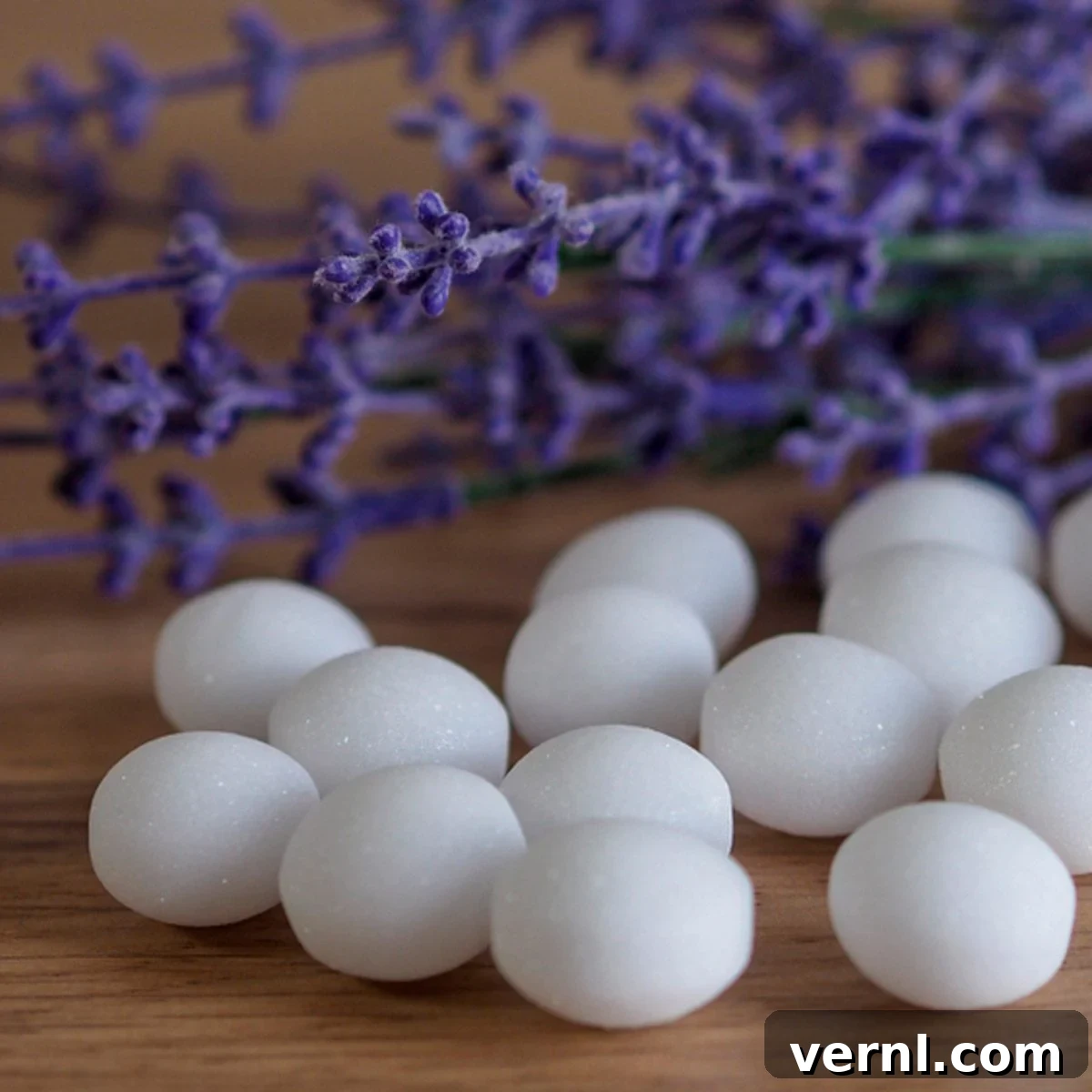
Today, the vast majority of mothballs you encounter contain 1,4-dichlorobenzene (PDB) as their primary active ingredient. PDB has a somewhat less pungent, camphor-like odor compared to naphthalene, but it is no less toxic. While less flammable than naphthalene, PDB also evaporates slowly over time, releasing toxic fumes designed to kill insects. Both naphthalene and PDB are potent chemicals that transition directly from a solid state to a gas, a process known as sublimation, which is central to their function as pesticides. They are typically sold as small, white spherical pellets, but can also be found in flake or cake forms, all designed to release their active ingredients into the air.
The Origin of the Name: Why Are They Called Mothballs?
The naming of mothballs is refreshingly straightforward and directly reflects their primary and intended purpose. As the name explicitly suggests, they are called “mothballs” because their fundamental function is to combat moths. Specifically, these chemical pellets are designed to act as a potent pesticide against clothes moths (Tineola bisselliella and Tinea pellionella) and other small, destructive insects such as silverfish (Lepisma saccharina) and carpet beetles (Anthrenus scrophulariae). These pests are notorious for infesting and damaging natural fibers found in clothing, upholstery, carpets, and other textiles, leading to irreparable harm to cherished garments and household items.
Their efficacy against these specific textile pests stems from the slow release of toxic vapors, which, when concentrated in an enclosed space, create an environment lethal to moths and their larvae. Therefore, the “ball” refers to their common spherical shape, and “moth” clearly indicates the pest they are engineered to eradicate. This clear and direct naming convention reinforces the fact that mothballs were developed and marketed for a very particular problem: protecting natural fiber goods from insect damage, not as a general-purpose repellent for larger animals like rodents.
How Do Mothballs Work? The Science of Sublimation and Toxicity
The effectiveness of mothballs, when used correctly for their intended purpose, lies in a fascinating chemical process known as sublimation. Sublimation is a unique physical change where a solid substance transforms directly into a gas or vapor without first passing through a liquid phase. This is precisely what happens with the active ingredients in mothballs—naphthalene or 1,4-dichlorobenzene.
When mothballs are exposed to air, even at room temperature, their solid form gradually releases a continuous stream of toxic vapors. This slow, steady release of gas is what creates the characteristic, strong odor associated with mothballs. The fumes are then inhaled by insects, particularly moths and their larvae, disrupting their nervous systems and respiratory functions, ultimately leading to their death. For this process to be most effective and to ensure a high enough concentration of the toxic fumes, mothballs are specifically designed to be placed in airtight or tightly sealed containers, such as garment bags, storage chests, or sealed boxes, along with the items they are meant to protect. This enclosed environment traps the vapor, allowing it to reach a lethal concentration that eradicates the pests. Without proper containment, the vapors dissipate quickly into the open air, rendering the mothballs largely ineffective against their target pests and dangerously dispersing chemicals into unintended areas.
Do Mothballs Keep Mice Away? Debunking a Dangerous Myth
Despite persistent rumors and anecdotal advice, the scientific consensus and official recommendations are clear: **no, mothballs do not effectively keep mice, rats, or other rodents away from your home or property.** This is a dangerous misconception that not only proves ineffective in solving a rodent problem but also introduces significant health and environmental risks.
The idea that the strong smell of mothballs might deter rodents seems plausible on the surface. Rodents, like many animals, have a keen sense of smell, and the pungent odor of naphthalene or paradichlorobenzene is undeniably powerful. However, studies and real-world experience consistently demonstrate that while rodents might initially be repelled by the unfamiliar and intense scent, their innate drive for food, shelter, and water quickly overrides any temporary aversion. A hungry or nesting rodent will often simply navigate around the areas treated with mothballs or become acclimated to the smell over time, rendering the deterrent useless. Furthermore, for mothballs to have any significant effect, they would need to be used in such high concentrations and in so many locations that the entire environment would become toxic and uninhabitable for humans and pets, which is neither safe nor practical.
Moreover, using mothballs in outdoor environments or even in non-sealed indoor spaces for rodent control presents several practical problems. As mentioned by the Louisiana Department of Health, mothballs can easily dissolve in rain, be blown away by wind, or simply break down under environmental conditions, quickly losing any minimal deterrent effect they might have had. This scattering of chemicals leads directly to environmental contamination, polluting soil and water systems and harming non-target wildlife. The active ingredients are designed to be lethal to small organisms, and their indiscriminate dispersal poses a threat to beneficial insects, birds, and other animals in the ecosystem.
Crucially, using mothballs in a manner inconsistent with their label instructions—such as scattering them around a yard or house to deter rodents—is not only ineffective and dangerous but can also be illegal. Mothballs are registered pesticides, and their labels explicitly state their approved uses. Deviating from these instructions is a violation of federal law (under the Federal Insecticide, Fungicide, and Rodenticide Act, FIFRA). This means that using mothballs for rodent control could result in legal penalties in addition to the health and environmental hazards it creates.
Why Are Mothballs So Dangerous? Unpacking the Health and Environmental Risks
The very chemicals that make mothballs effective against moths also make them exceptionally hazardous to humans, pets, and the environment. The fumes produced by the sublimation of naphthalene or 1,4-dichlorobenzene are toxic and can have serious adverse health effects upon exposure. It is imperative to understand these risks before considering their use for any purpose, especially off-label applications like rodent control.
Risks to Human Health
When mothballs are not used strictly in airtight containers, as required by the EPA, their toxic fumes disperse into the living environment. Chronic or acute inhalation of these vapors can damage lung tissue, according to the National Pesticide Information Center (NPIC). Common symptoms of exposure include headaches, nausea, dizziness, vomiting, eye and nose irritation, and coughing. Prolonged exposure can lead to more severe respiratory problems, including shortness of breath and bronchitis-like symptoms. Specific populations are particularly vulnerable: infants, young children, pregnant women, the elderly, and individuals with pre-existing respiratory conditions like asthma or emphysema are at a higher risk for adverse reactions to mothball fumes.
Naphthalene, in particular, is categorized as a possible human carcinogen by the Environmental Protection Agency. This means there is evidence, primarily from animal studies, suggesting that exposure could increase the risk of cancer in humans. Both chemicals can also cause hemolytic anemia, a condition where red blood cells are destroyed faster than they can be made, especially in individuals with a genetic condition called glucose-6-phosphate dehydrogenase (G6PD) deficiency. Direct contact with exposed skin can also cause irritation, redness, and a burning sensation.
Risks to Pets and Wildlife
Pets, especially curious dogs and cats, are at a significant risk from mothballs. The small, pellet-like appearance of mothballs can be appealing to pets, who may mistake them for toys or treats. If ingested, mothballs can cause severe poisoning. Symptoms in pets can include vomiting, diarrhea, lethargy, seizures, tremors, anemia (especially hemolytic anemia), liver damage, and kidney failure. The outcome can be fatal without immediate veterinary intervention. Furthermore, wildlife in outdoor environments can also suffer from exposure or ingestion of mothballs scattered improperly, leading to similar toxic effects. Birds, squirrels, and other small animals can be harmed, disrupting local ecosystems.
Environmental Contamination
Beyond direct health risks, the improper use of mothballs contributes to environmental pollution. When scattered outdoors, mothball chemicals can leach into the soil, contaminating groundwater and surface water sources. This poses a threat to aquatic life and can enter the food chain, affecting a wider range of organisms. The persistent nature of these chemicals means they can remain in the environment for extended periods, causing long-term ecological damage. Their volatility also means they contribute to air pollution, extending their reach far beyond the immediate area of application.
In case someone ingests a mothball, you should immediately contact the Poison Control Center at 800-222-1222 or call 911. If you’re concerned that a pet has eaten a mothball, contact a veterinarian immediately.
Safer and More Effective Rodent Control Alternatives
Given the ineffectiveness and significant dangers associated with using mothballs for rodent control, it is essential to turn to proven, safer, and humane methods. Protecting your home from mice, rats, and other unwanted pests does not require hazardous chemicals. Instead, a multi-faceted approach focusing on prevention, trapping, and targeted repellents offers the best results.
1. Exclusion and Prevention: The First Line of Defense
The most effective way to deal with rodents is to prevent them from entering your home in the first place. This involves a thorough inspection and sealing of all potential entry points:
- Seal Cracks and Gaps: Mice can squeeze through openings as small as a dime, and rats through a quarter-sized hole. Inspect your home’s foundation, walls, and roofline for cracks, gaps around utility pipes, vents, and eaves. Seal these with steel wool (which rodents cannot chew through), caulk, expanding foam, or mesh.
- Repair Damage: Fix broken screens on windows and doors, repair damaged siding, and ensure chimneys have caps.
- Maintain Your Yard: Keep shrubs and trees trimmed away from your house, as they can provide pathways for rodents. Clear away debris, woodpiles, and overgrown vegetation near your foundation.
- Proper Food Storage: Store all food, including pet food, in airtight containers. Clean up crumbs and spills immediately. Don’t leave pet food bowls out overnight.
- Manage Garbage: Use sturdy garbage cans with tight-fitting lids, and empty them regularly.
2. Effective Trapping Methods
Once rodents have entered your home, trapping is generally considered the most direct and effective way to remove them. There are several types of traps available, each with its own advantages:
- Snap Traps: These are traditional and highly effective. They are designed for quick and humane dispatch when properly placed and baited. Use peanut butter, cheese, or even chocolate as bait. Place traps along walls where rodents tend to travel. We recommend using high-quality mouse traps for optimal results.
- Humane/Live Traps: These traps catch rodents without harming them, allowing you to release them outdoors (far from your home). While seemingly compassionate, it’s important to note that releasing rodents into unfamiliar territory can be stressful for them and may not solve the problem if they return or find a new home nearby.
- Electronic Traps: These use a high-voltage shock to quickly and humanely kill rodents. They are often reusable and can be easier to clean than snap traps.
- Glue Traps: While available, glue traps are often considered less humane as they trap the animal, which then starves or dehydrates. Many pest control experts and animal welfare organizations advise against their use.
3. Proven Rodent Repellents
While mothballs are ineffective, there are other repellents that can help deter rodents, especially as part of a comprehensive prevention strategy:
- Peppermint Oil: Rodents dislike strong, fresh scents. Peppermint is a great choice if you’re looking for a chemical-free natural hack to keep mice away. Soak cotton balls in pure peppermint essential oil and place them in areas where rodents might enter or travel. Refresh the cotton balls regularly as the scent dissipates. Other strong essential oils like eucalyptus or clove oil may also be used.
- Ultrasonic Repellents: These devices emit high-frequency sound waves that are purportedly irritating to rodents but inaudible to humans and most pets. Their effectiveness is debated among experts, with some studies showing limited success. If you choose to use them, ensure you select well-reviewed mouse repellents and integrate them with other methods.
- Ammonia: The smell of ammonia can mimic the scent of predator urine, potentially deterring rodents. However, it needs to be used cautiously due to its strong fumes and potential irritation to humans and pets.
4. When to Call the Professionals
If you have a significant rodent infestation, or if DIY methods are not yielding the desired results, it’s best to contact a professional pest control service. Exterminators have the expertise, tools, and access to more potent, yet regulated, solutions to safely and effectively eliminate severe infestations. They can also identify hidden entry points and provide long-term prevention strategies tailored to your home.
Conclusion: Prioritizing Safety and Effectiveness in Pest Management
In conclusion, while mothballs hold a nostalgic place in the history of fabric preservation, their role in modern pest control, particularly against rodents, is unequivocally misguided and dangerous. They are specifically formulated as pesticides for moths and silverfish, relying on toxic chemical vapors that pose serious risks to human health, pets, and the environment when used improperly or off-label. The strong smell of mothballs is not a reliable deterrent for determined rodents, making their use for this purpose not only ineffective but also a potential violation of federal law.
Responsible and effective pest management demands a commitment to safety and proven methods. Instead of resorting to hazardous and ineffective solutions like mothballs for mice or rats, homeowners should prioritize comprehensive prevention strategies, employ targeted trapping methods, and consider safe, natural repellents. By sealing entry points, maintaining a clean environment, and utilizing appropriate trapping or professional services when necessary, you can protect your home and loved ones from rodents without introducing unnecessary dangers. Always remember to read and follow product labels carefully for any pest control product you choose to use, ensuring that your efforts are both safe and genuinely effective.