
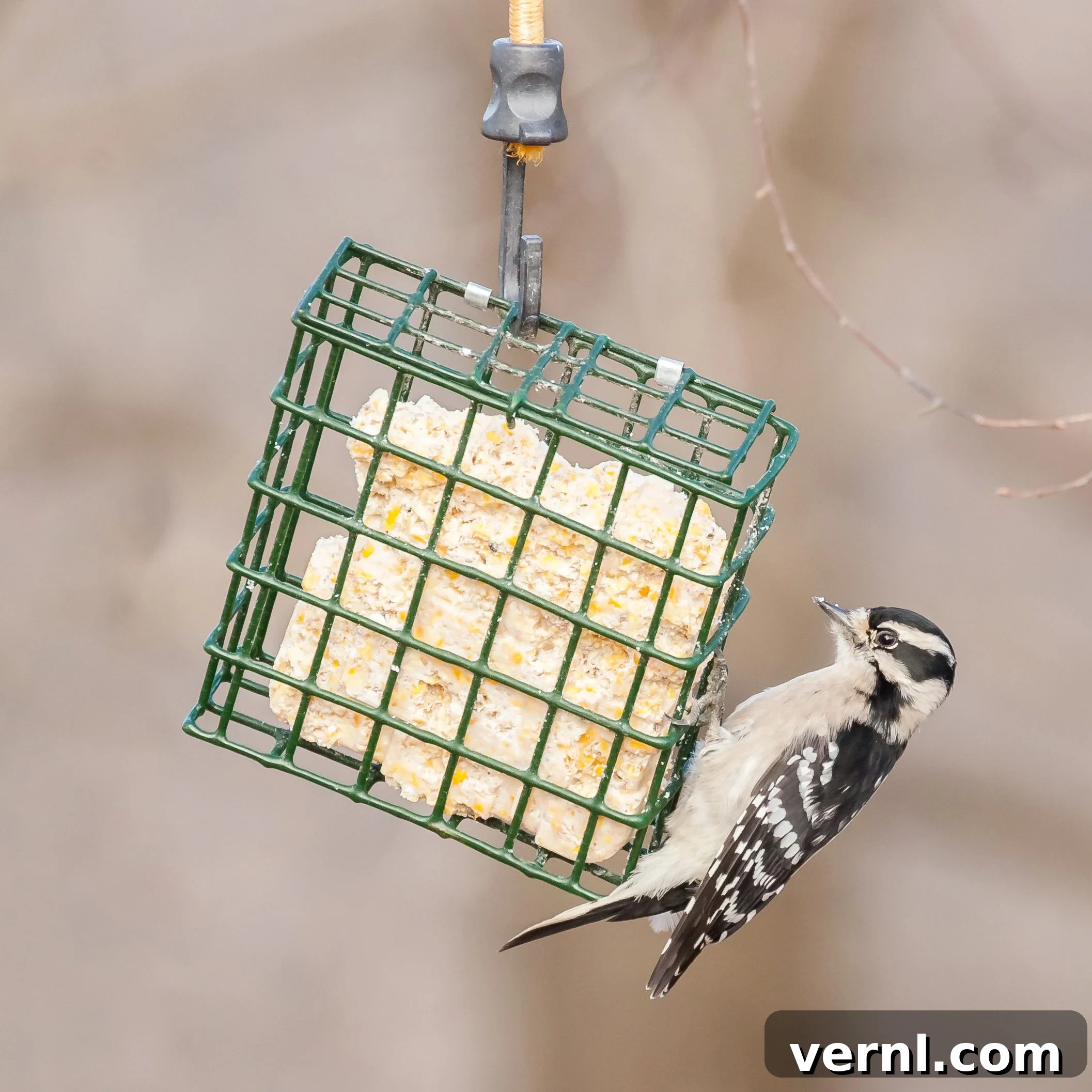
Suet Feeders: The Ultimate Guide for Bird Lovers
Backyard bird enthusiasts are constantly searching for innovative ways to draw their feathered friends closer. One of the most effective methods is by introducing a new bird feeder to your setup. This guide delves into the world of suet feeders, exploring their benefits, the diverse bird species they attract, and how to choose the perfect one for your backyard birding experience.
What is a Suet Feeder?
A suet feeder is a specialized type of bird feeder designed to provide birds with a nutritious and energy-rich food source. Unlike traditional feeders that dispense seeds, suet feeders offer a solid block or cake of suet. This allows birds to perch and peck at the food, making it easy for them to access the high-fat, high-protein treat.
Suet, at its core, is rendered beef fat. It’s a valuable energy source, especially during colder months. When combined with other ingredients such as seeds and dried insects, suet cakes become a powerhouse of nutrients that many birds eagerly seek out.
Key Ingredients and Nutritional Value of Suet Cakes
Suet cakes are more than just fat; they are a carefully crafted blend of ingredients designed to meet the nutritional needs of various bird species. According to ornithological research, suet cakes often contain a combination of cornmeal, peanuts, fruits, and dried insects like mealworms.
These diverse ingredients ensure that birds receive a balanced diet. The fat provides essential energy, while the seeds, fruits, and insects offer vitamins, minerals, and proteins that might be scarce during the winter months.
Birds Commonly Attracted to Suet Feeders
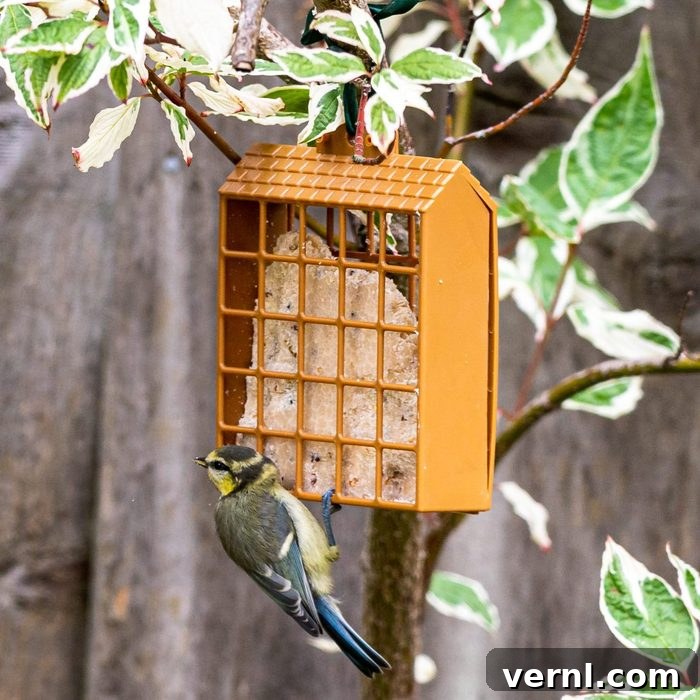
Suet feeders are versatile in attracting a wide array of bird species. The availability of various suet cake recipes allows you to customize your offerings and target specific birds. For instance, you can find specialty cakes like Oriole Delight, which incorporates flavors like papaya and orange to attract orioles.
The National Audubon Society highlights the following birds as frequent visitors to suet feeders:
- Chickadees
- Tufted Titmice
- White-breasted Nuthatches
- Carolina Wrens
- Downy Woodpeckers
- Hairy Woodpeckers
- Red-bellied Woodpeckers
- Northern Flickers
As the list shows, woodpeckers are especially drawn to suet feeders, making them a great option for attracting these interesting birds.
Different Types of Suet Feeders
Suet feeders come in various designs, each catering to different bird species and offering unique advantages. Understanding these different types will help you select the most suitable feeder for your backyard.
- Cage Suet Feeders: These are the most common type, consisting of a wire cage that holds a square suet cake. They are easy to find and can be hung from a branch or mounted on a pole.
- Tail Prop Suet Feeders: Ideal for woodpeckers, these feeders feature a wire enclosure with an extended bottom piece. This extension allows woodpeckers to brace themselves with their tails while feeding.
- Upside-Down Suet Feeders: Designed to deter unwanted birds like starlings, these feeders require birds to feed upside down, allowing only certain species access to the suet.
- Sheltered Suet Feeders: These feeders protect the suet from the elements, ensuring it remains dry and accessible, even in wet weather. Some have a roof, while others have a dome to shield the food.
- Cylinder Suet Feeders: These feeders accommodate suet logs instead of square cakes, offering a different presentation for the birds.
- Suet Ball Feeders: These feeders hold multiple suet balls, allowing you to offer a variety of suet mixtures simultaneously.
- Suet Bags: Mesh bags are a simple and inexpensive option for hanging suet around the yard. They’re also an excellent choice for DIY suet projects.
- Combo Feeders: These feeders combine suet cake with other types of bird food, such as loose bird seed, to attract a wider range of birds.
- Suet Plug Feeders: These feeders typically resemble logs and have holes designed to hold suet plugs, offering another way to serve suet to your backyard birds.
Placement and Maintenance of Suet Feeders
Proper placement is key to attracting birds to your suet feeder. Similar to other bird feeders, suet feeders can be hung from tree branches or hooks or mounted on a bird feeder pole.
If you have woodpeckers causing a nuisance by pecking at your home, placing the suet feeder near the affected area could provide an alternative food source and deter them. For optimal viewing, consider placing the feeder near a window or patio.
Squirrels and other critters may also be attracted to suet. Use squirrel baffles or guards if you want to protect your suet from being devoured by unwanted visitors.
DIY Suet Feeder Options
Creating your own suet feeder is a fun and rewarding way to engage in backyard birding. You can easily make a suet mixture at home, using peanut butter as a substitute for the beef fat, along with birdseed and nuts. After melting the fat or mixing the peanut butter, mix in the birdseed and nuts, pour the mixture into a mold, and let it solidify.
For a more basic approach, consider hanging suet in a mesh onion bag. Another popular DIY project involves using a pine cone, spreading it with peanut butter, and rolling it in birdseed and nuts. Hang the pine cone wherever you would normally place a feeder. These DIY options provide excellent opportunities for family projects.
By understanding the benefits, types, and placement of suet feeders, you can significantly enhance your backyard birding experience and enjoy the delightful presence of various bird species throughout the year. Happy birding!