
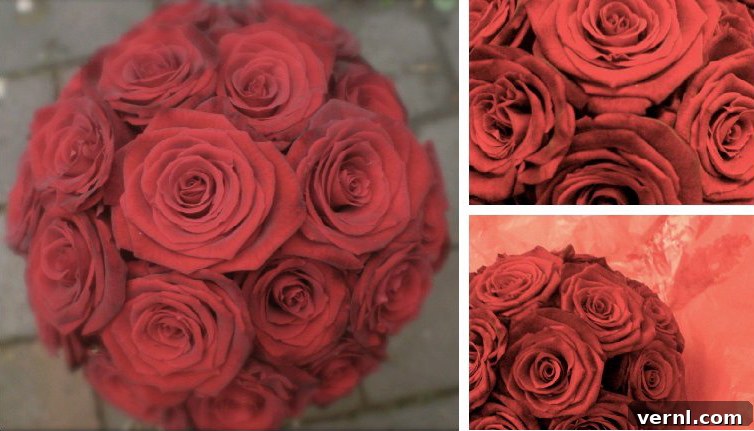
Grand Prix roses are a timeless and popular choice for bridal bouquets, and with good reason. Their large, flat heads and sturdy stems make them an ideal option for creating a refined, dome-shaped bouquet that looks elegant and cohesive without requiring complex wiring or intensive construction techniques. These roses have a classic, romantic silhouette that photographs beautifully and holds up well throughout a long wedding day.
For today’s bride, Phillipa, I designed a bouquet that celebrates the full, rounded form of the Grand Prix rose. The goal was to produce a balanced, soft dome that complements a variety of gown styles while remaining comfortable for the bride to carry. To achieve this, I selected blooms at slightly varying stages of opening so the bouquet would have texture and depth: some roses were nearly fully open to showcase their layered petals, while others were kept a touch more closed to maintain structure and longevity.
When assembling a bouquet like this, attention to stem length and angle is key. The stems were graded and trimmed so that each flower sat neatly into the overall shape without leaving awkward gaps. I arranged the roses in a spiral hand-tie, rotating the stems as I worked to maintain a consistent dome. This method creates a secure, ergonomic handle and allows the blooms to sit naturally together, producing a polished, unified appearance.
To support the roses and add subtle contrast, I layered a few complementary foliage stems around the outer edges and in between blooms. I chose foliage sparingly to avoid distracting from the roses themselves; instead, the greenery serves to accentuate the flowers’ color and form while helping to frame the bouquet. A simple ribbon wrap around the stems finished the piece, providing a comfortable grip and a neat visual anchor from the bouquet down to the bride’s hands.
One of the practical advantages of Grand Prix roses is their durability. With proper conditioning before arranging—such as hydrating the stems, removing excess foliage, and allowing them to rest in cool water—the roses remain fresh and perky for many hours. For wedding day logistics, I always recommend keeping the bouquet in a cool, shaded space until the moment it is needed, and misting the blooms lightly if the day is warm. These small steps help preserve the crisp edges of the petals and the overall silhouette.
Design-wise, the Grand Prix rose works well in both monochrome and mixed palettes. For Phillipa’s bouquet, the chosen hues harmonized with her dress and venue, creating a cohesive visual story. Whether paired with soft pastels, deep romantic tones, or pure whites, these roses provide a signature look that reads as both classic and contemporary.
Creating a bridal bouquet is about balancing aesthetics with function. In this case, the Grand Prix rose offered both beauty and practicality, resulting in a bouquet that looked luxurious while remaining manageable for the bride to carry through her ceremony and photos. It was a pleasure to craft this arrangement for Phillipa, and the finished bouquet showcased the strengths of this rose variety—elegant form, reliable performance, and timeless appeal.