
A few years ago, I vividly recall a sweltering summer day spent trying to install baffles around soffit vents in a friend’s attic. The heat was unbearable. Despite the fact it was midday, neither of us could endure more than a few minutes inside that oppressive space. While we didn’t have a thermometer to confirm, we were certain the temperature easily soared past 120 degrees Fahrenheit. It’s not uncommon for attic temperatures to reach as high as 150 degrees – hot enough, as the saying goes, to fry an egg.
This intense heat trapped within the attic inevitably radiates downwards, making the entire house warmer and forcing air conditioning systems to work overtime. The result? Skyrocketing cooling costs and diminished indoor comfort. Faced with this common dilemma, many homeowners ponder: what if there was an effective, electricity-free way to cool down the attic? This is precisely the promise held by solar attic fans. However, whether these innovative devices will prove to be a worthwhile investment for you depends heavily on your specific climate, existing home conditions, and the unique characteristics of your attic.
Understanding the Problem: Why Attics Get So Hot
The attic acts like a giant heat trap. During the day, sunlight beats down on your roof, heating the shingles and the roof decking. This heat then radiates into the attic space. Without adequate ventilation, this hot air becomes stagnant, and temperatures can quickly climb far beyond the outside ambient air. This isn’t just an issue of discomfort; extreme attic heat has several detrimental effects:
- Increased Energy Consumption: As the attic heats up, it transfers that heat into the living spaces below through the ceiling. Your air conditioner then has to work harder and longer to combat this heat gain, leading to higher electricity bills.
- Premature Roof Aging: The constant exposure to intense heat can accelerate the deterioration of roofing materials, such as asphalt shingles, reducing their lifespan and potentially leading to costly repairs sooner than expected.
- Reduced Indoor Comfort: Even with air conditioning running, a superheated attic can make your home feel less cool and comfortable, especially on the upper floors.
- Moisture Issues: In cooler months, poor ventilation can trap moisture, leading to condensation, which can foster mold growth, damage insulation, and compromise the structural integrity of your attic’s framing.
How Does a Solar-Powered Attic Fan Work?
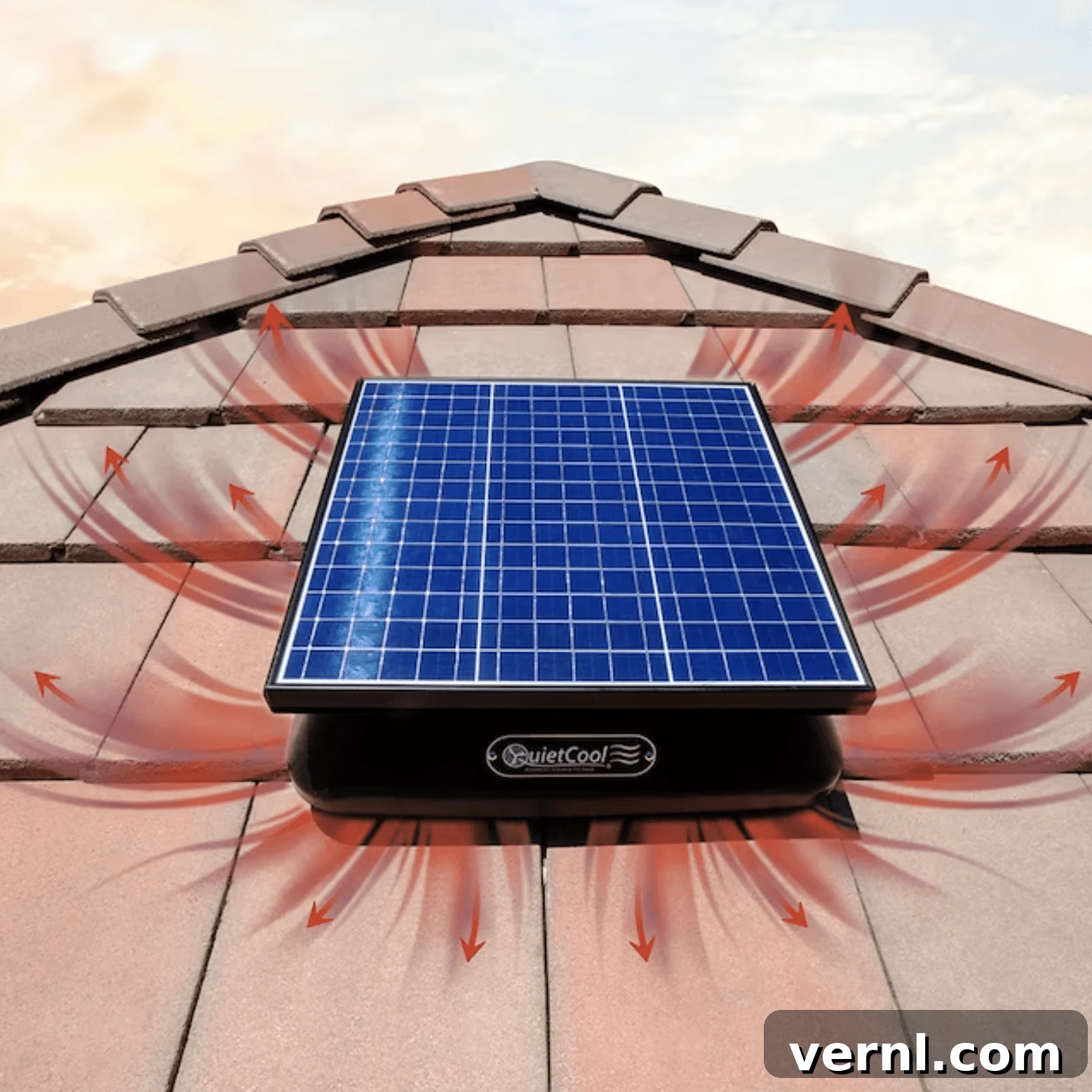
A solar-powered attic fan is designed to actively remove superheated air from your attic space, promoting a healthier and cooler environment. These fans can be installed either on the roof itself or within a gable vent. When operational, the fan draws hot, stagnant air from the attic and expels it outside through existing roof or gable vents. Simultaneously, this creates a negative pressure that pulls cooler, fresh air into the attic through the soffit vents (located under the eaves of your roof).
Installation Process
The installation of a solar attic fan shares similarities with other types of roof or soffit vents. Typically, it involves:
- Cutting a precisely sized hole in the roof deck or existing gable opening.
- Securing the fan housing in place, ensuring it properly covers the opening.
- Applying flashing and sealant around the edges to create a watertight seal, preventing potential leaks.
The defining feature of a solar attic fan is its power source: a solar panel. This panel is usually integrated directly into the fan unit itself, or it may be a separate component mounted nearby on the roof and wired to the fan. Since it relies entirely on the sun’s energy, these fans boast zero operating costs. Naturally, a solar fan operates most effectively and provides the most significant cooling benefits during periods of direct sunlight – precisely when your attic is likely to be at its hottest and when you need that refreshing air circulation the most.
In our own experience, a solar attic fan genuinely makes a noticeable difference. It helps keep the attic temperature significantly more bearable on scorching hot days. It’s important to manage expectations, however; it won’t transform your attic into a refrigerated space, but it certainly prevents it from reaching those extreme, oven-like temperatures.
What Are the Benefits of Solar Attic Fans?
The primary advantage of installing a solar attic fan is achieving a considerably cooler attic during the warmer months. This central benefit cascades into several other valuable advantages for your home and finances:
- A More Comfortable Living Environment: By reducing the heat radiating from the attic into your home, you’ll experience a cooler, more consistent indoor temperature, leading to greater comfort for your family, especially on upper floors.
- Reduced Energy Costs for Cooling: A cooler attic means your air conditioning system doesn’t have to work as hard or run as long to maintain your desired indoor temperature. This direct reduction in AC usage translates into tangible savings on your monthly electricity bills.
- Extended Roof Lifespan: Excessive heat is a major contributor to the premature degradation of roofing materials. By actively ventilating your attic, a solar fan helps to mitigate this heat stress, potentially extending the life of your roof and delaying costly replacements.
- Improved Moisture Control and Mold Prevention: Beyond heat, attics can also suffer from moisture buildup, especially in humid climates or during cooler periods when condensation forms. The additional air circulation provided by an active fan helps to evaporate trapped moisture, significantly reducing the risk of mold and mildew growth on insulation, wood framing, and other surfaces. While natural convection often handles adequate ventilation, attics with existing moisture problems or poor passive airflow can greatly benefit from this active assistance.
- Environmental Friendliness: Harnessing renewable solar energy means these fans operate with a minimal carbon footprint. They offer an eco-conscious solution to home cooling, reducing reliance on grid electricity.
- Zero Operating Costs: Once installed, the fan runs purely on sunlight, eliminating any ongoing electricity costs associated with its operation.
- DIY Potential: For the handy homeowner, installing a solar attic fan can be a manageable DIY project, saving on professional labor costs.
An Important Disclaimer: All these potential benefits are contingent upon one critical factor: the attic must be properly sealed off from the conditioned living space of the house. If there are unsealed gaps, cracks, or openings (such as around light fixtures, plumbing stacks, or attic access points), the fan’s suction can inadvertently pull expensive, cool, conditioned air from your home into the attic, only to blow it right out the roof vents. This counterproductive scenario would, in fact, *increase* your cooling costs rather than reduce them. Therefore, proper air sealing is a foundational step before considering an attic fan.
What Are the Drawbacks and Considerations for Solar Attic Fans?
While solar attic fans offer compelling advantages, it’s essential to consider their limitations and potential drawbacks to determine if they are the right fit for your home:
- Intermittent Operation: The very essence of solar power is also its main limitation: the fan only runs when the sun is out. This means it won’t operate at night, on heavily overcast or rainy days, or during extended cloudy periods. If your primary concern is continuous moisture control in the attic, particularly in damp climates where humidity is a year-round issue, an electric (wired) attic fan with a humidistat control might be a more reliable option, as it can run whenever needed, regardless of sunlight. Wired fans also tend to be more powerful than their solar counterparts, making them better suited for attics with severe ventilation problems.
- Potential for Roof Leaks: Any time you create a new opening in your roof, there is an inherent risk of leaks. While a properly installed roof-mounted fan should be watertight, anyone who has ever owned a skylight or dealt with a poorly sealed vent knows that water has a remarkable ability to find its way through even the smallest imperfections over time, regardless of how meticulously the initial sealing was done. This risk necessitates professional, high-quality installation and regular inspection.
- Limited Power Output: Solar-powered fans, especially smaller models, may not generate as much airflow as larger, electrically wired fans. In very large attics or those with significant heat loads, a single solar fan might not provide sufficient ventilation to achieve a dramatic temperature reduction.
- Dependency on Existing Attic Conditions: As previously mentioned, the effectiveness of a solar attic fan is highly dependent on your attic being well-sealed from the conditioned living space and having unobstructed passive ventilation pathways (soffit and ridge vents). If these conditions are not met, the fan’s impact will be diminished, or it could even be counterproductive.
- Initial Investment Cost: While operating costs are zero, the upfront cost of purchasing and installing the fan (or multiple fans) can be a significant investment, requiring careful consideration of the potential return.
Are Solar Attic Fans Truly Effective? Maximizing Their Impact
Yes, solar attic fans can be effective, but their impact on the overall temperature of your house depends significantly on several critical conditions within your attic. It will undoubtedly cool the attic space itself, but for those benefits to translate into noticeable relief within your living areas, these factors must be addressed:
- Attic Air Sealing is Paramount: This cannot be stressed enough. The attic must be completely sealed off from the living space below. Even seemingly small gaps around recessed lighting fixtures, electrical boxes, plumbing vents, chimney chases, or the attic access hatch can act as pathways, allowing your expensive, conditioned indoor air to be drawn directly into the attic and then exhausted by the fan. This phenomenon, known as the “stack effect,” works against your cooling efforts and inflates energy bills. Prioritizing air sealing is crucial before fan installation.
- Unobstructed Soffit Vents: For the fan to effectively pull in cooler air and create a healthy airflow, the soffit vents must be clear and unobstructed. In many older homes, insulation is often pushed into the eaves, partially or completely blocking these vital intake vents. This common issue can be easily and affordably remedied by installing inexpensive polystyrene or cardboard baffles or “insulation channels” that maintain a clear pathway for air from the soffits into the attic space, allowing proper cross-ventilation.
- Adequate Exhaust Venting: While the solar fan acts as a powerful exhaust, the attic must also have enough passive roof vents (e.g., ridge vents, static vents) to facilitate the free exhaust of circulated air. The fan works best in conjunction with a well-designed passive ventilation system, ensuring that sufficient intake and exhaust points are available for optimal airflow.
Another factor that limits the fan’s direct cooling effect on your living space is radiative heat transfer. Heat radiating into the attic through the roof decking itself cannot be directly cooled by air circulation alone. The fan removes hot air, but the roof deck will still get incredibly hot under direct sunlight, and anything in close proximity to the decking (like storage items) will also get hot due to radiant heat, regardless of whether a fan is running. This is where a radiant barrier, installed beneath the roof deck, can offer complementary benefits by reflecting radiant heat away from the attic space.
Cost Considerations and Return on Investment (ROI)
The upfront cost of a solar attic fan generally ranges from $300 to $500 for the unit itself. Installation adds another layer of expense, typically between $150 to $250, depending on the complexity of your roof (pitch, material, accessibility) and local labor rates. While installation can be a DIY-friendly project for those with moderate home improvement skills, professional installation ensures proper sealing and avoids potential issues. Therefore, a single fan could potentially cost as little as $300 for a DIY project, but most attics, especially larger ones, benefit from or even require two or three fans to achieve optimal airflow. This could bring the total cost to anywhere from $600 to $1,500 or even more.
When is it a Good Investment?
- Existing Well-Ventilated Attics in Hot Climates: If you own a relatively new house with an already tightly sealed and well-ventilated attic (featuring proper soffit and ridge vents), a solar attic fan might be an unnecessary expense. In such cases, natural convection often provides all the cooling necessary.
- Comfort as a Primary Goal: If your main motivation is to make your attic more tolerable for occasional visits or storage on hot days, then a solar fan is a good buy. The enhanced comfort for accessing the attic space can be a significant personal benefit.
- Attics with Minor Moisture Issues: For attics experiencing occasional or minor moisture buildup where a constant electric fan isn’t deemed necessary, the intermittent operation of a solar fan can provide sufficient airflow to mitigate humidity.
- Supplementing Passive Ventilation: In homes where passive ventilation is decent but could use an extra boost during peak heat, a solar fan can provide that additional active exhaust.
When It Might Not Be the Best Investment
- Older Homes Requiring Significant Air Sealing: In many older homes, the attic is far from sealed. You’ll likely need to invest significantly in air sealing (plugging gaps, cracks, and penetrations) before an attic fan can genuinely make your house cooler. The combined expense of air sealing and fan installation might make the energy savings negligible, or the payback period very long. In such scenarios, basic air sealing and improved insulation often yield a much higher and faster return on investment than an attic fan.
- Expectations of Drastic Whole-House Cooling: While the fan cools the attic, its impact on the *conditioned* living space below might not be as dramatic or immediately noticeable as some homeowners hope, especially if the attic is not well-sealed or if existing insulation is insufficient.
- Purely for Energy Savings with High Initial Costs: If your sole goal is to save enough in energy costs to quickly offset the expense of sealing the attic and installing multiple fans, you might find the ROI challenging. Thorough air sealing and proper insulation upgrades often offer a more direct and substantial reduction in energy bills.
Conclusion: Is a Solar Attic Fan Right for You?
Solar attic fans present an appealing solution for combating excessive heat and moisture in your attic, offering benefits like reduced energy bills, enhanced home comfort, and extended roof lifespan. Their zero operating costs and eco-friendly nature are significant advantages. However, they are not a one-size-fits-all solution.
To maximize their effectiveness, your attic must be properly sealed from your living spaces, and its passive ventilation system (soffit and ridge vents) must be clear and unobstructed. Without these foundational elements, a solar attic fan may underperform or even exacerbate energy issues.
Ultimately, the decision to invest in a solar attic fan should be based on a careful assessment of your specific home and climate conditions. If you frequently find yourself braving a sauna-like attic for storage or maintenance on hot days, the increased comfort alone might make it a worthwhile investment. For those seeking significant energy savings, it’s crucial to first address air sealing and insulation, as these often provide a more impactful and cost-effective approach to improving your home’s overall energy efficiency and comfort. When integrated thoughtfully into a well-sealed and properly ventilated attic, a solar attic fan can be a valuable addition to your home’s energy management strategy.