Choosing Your Arsenal: A Comprehensive Guide to Premium vs. Budget Power Tools
As a dedicated DIY enthusiast and a self-proclaimed jack-of-all-trades, I’ve amassed a considerable collection of power tools over the years. When it’s time to add a new tool to my workshop, I gravitate towards a specific brand – one I’m eager to share with you, along with the reasons behind my preference. It’s important to clarify upfront that my favored brand isn’t typically the first recommendation from seasoned contractors. During my research for this guide, I consulted numerous professionals, and their priorities often lean towards unparalleled precision and maximum longevity. My primary consideration, however, is almost always the budget, and my go-to brand consistently delivers affordability without compromising on essential performance. I’ve yet to encounter a task where my trusted tools fell short.
The distinction between premium and budget power tools is undeniable, but whether that difference genuinely impacts your projects hinges entirely on your specific requirements. Jonathan Palley, an expert in tiny-home construction, offers insightful advice for those navigating this crucial choice:
“Budget power tools are an excellent starting point if you’re still exploring your needs or if you require a tool for a singular, specific project. They are generally capable of getting the job done, especially when new. If you find yourself using a budget tool until it reaches its breaking point, that’s often a clear signal it’s time to upgrade and invest in a premium model. By then, you’ll have a much clearer understanding of which features and capabilities are most valuable to you.”
Understanding the Core Differences: Premium vs. Budget Power Tools
Delving deeper into the disparities, Myles Robinson, a boiler repair professional and composite door manufacturer, asserts, “The distinction primarily boils down to durability, performance, and long-term value.” Master plumber Cameron Anderson further elaborates on why it might be prudent to allocate extra funds for higher-end equipment when considering premium vs. budget power tools.
Durability: Built to Last or Built to Budget?
While the external housing of most power tools, regardless of cost, is often made of plastic, the true measure of durability lies beneath the surface. Premium tools incorporate superior-grade materials in their internal components. This includes advanced brushless motors, robust metal gearing, and high-capacity lithium-ion batteries designed for sustained use and resilience. In stark contrast, many budget-friendly tools frequently utilize all-plastic internal mechanisms, which are more susceptible to wear and tear under strenuous conditions or over prolonged periods of operation. This fundamental difference in material quality directly impacts a tool’s lifespan and its ability to withstand demanding work environments.
Performance: Power, Efficiency, and Precision
The efficiency and raw power delivered by premium tools can significantly streamline challenging tasks, making your work not only easier but also faster. As Anderson highlights, “A cheap impact driver might struggle considerably when attempting to sink lag bolts into dense, pressure-treated lumber, potentially stripping the bolt or straining the tool itself. Conversely, a professional-grade impact driver will drive those same bolts effortlessly, thanks to its superior torque and motor design.” This translates to less frustration, greater productivity, and more reliable results on every job.
Longevity & Consistency: A Long-Term Investment
Thanks to their more robust construction and higher-quality materials, premium power tools are engineered for an extended operational life. They are designed to endure rigorous use without succumbing to premature failure. Budget tools, while functional initially, tend to degrade more rapidly. Their performance can dip noticeably when pushed to their limits, or even during routine, repeated use. A premium tool, however, is built to deliver consistent power and peak performance whether it’s its first use or its hundredth, offering unwavering reliability over many years.
Usability & Ergonomics: Comfort During Extended Use
Another often-overlooked advantage of premium tools is their superior ergonomic design. Manufacturers of high-end tools invest significantly in research and development to create tools that are comfortable to hold and operate for extended periods. This includes balanced weight distribution, textured grips to reduce slippage, and vibration dampening features, all contributing to reduced user fatigue and increased control during long work sessions. Budget tools, while functional, often lack these refined ergonomic considerations, leading to discomfort and potential strain over time.
Warranty & Support: A Sign of Manufacturer Confidence
The warranty period offered by a manufacturer often serves as a telling indicator of their confidence in a product’s quality and reliability. Premium power tools typically come with extensive warranties, often ranging from three to five years, sometimes even more. Budget tools, conversely, usually offer a much shorter warranty, often just one year, if any at all. “This difference in warranty duration speaks volumes about how much faith the manufacturer truly has in the durability and performance of their product,” explains Anderson, suggesting that a longer warranty translates to greater peace of mind for the consumer.
Premium Power Tools: Unpacking the Advantages and Disadvantages
Pros of Investing in Premium Tools
- Unmatched Durability and Longevity: Premium tools are constructed with superior components, ensuring they withstand heavy, continuous use for many years. Lawn care professional Ryan Farley emphasizes this point: “The most significant difference you’ll observe between premium and budget power tools is the incredible longevity of premium options. Brands like Honda, renowned for their lawnmowers and snow blowers, are considered premium for a reason – you consistently see people still operating these machines decades after purchase.” This translates to fewer replacements and a better return on your initial investment over time.
- Enhanced Performance and Advanced Features: Beyond mere power, premium tools often incorporate advanced performance and crucial safety features not found in their more affordable counterparts. Anderson warns, “Some budget tools unfortunately cut corners on vital safety mechanisms. If you’re operating high-speed equipment like an angle grinder or a circular saw, having proper blade guards, electronic brakes that stop the blade quickly, and overload protection is non-negotiable. I’ve personally witnessed cheaper grinders overheat dangerously, almost causing severe burns.” These features not only improve efficiency but, more importantly, protect the user.
- Superior Precision and Consistency: For tasks demanding accuracy, premium tools offer tighter tolerances and more consistent output. This is vital for professional work where every cut, drill, or fastening needs to be perfect, reducing material waste and rework.
- Better Resale Value: Due to their durability and brand reputation, premium tools generally retain a higher resale value compared to budget options, should you decide to upgrade or sell them in the future.
Cons of Premium Tool Ownership
The most apparent drawback of premium power tools is their significantly higher upfront cost. The price disparity between a basic circular saw and a top-tier professional model can easily exceed $300, representing a substantial investment for many users. This initial outlay can be a barrier for hobbyists or those with infrequent tool usage. Furthermore, while premium tools are often more efficient in their power delivery, they might also consume more power overall due to their higher performance capabilities, potentially leading to slightly higher operating costs, especially for corded models under constant heavy load.
Budget Power Tools: Practicality and Pitfalls
It’s clear that budget power tools wouldn’t exist if they were entirely without merit. As Anderson observes, “Over my career, I’ve used everything from rudimentary, no-name drills to cutting-edge impact drivers. While pros undoubtedly gravitate towards premium brands, that doesn’t diminish the legitimate place budget tools hold in the market.” Here are the key reasons why a budget tool might find a home in your collection, alongside some critical caveats.
Benefits of Affordable Power Tools
- Exceptional Affordability: The most compelling advantage of budget tools is their low price point. This makes them highly accessible for beginners, students, or anyone needing a tool for a one-off project or very occasional use without a significant financial commitment. For example, if you need a specific type of sander for a single furniture refinishing project, a budget model might be perfectly adequate.
- Adequate Performance for Light Tasks: In many common household scenarios, budget tools are perfectly capable of performing the required task. Plumber and HVAC expert Danny Penn concurs: “Honestly, for routine tasks around the house, like hanging picture frames, assembling flat-pack furniture, or minor repairs, budget tools will serve you perfectly fine. There’s genuinely no need to invest in an expensive, professional-grade tool for these simple applications.” They fulfill their purpose without unnecessary complexity or cost.
- Low-Risk Entry Point: For those new to DIY or exploring a new hobby, budget tools offer a low-risk way to experiment with different types of equipment before committing to a more expensive, specialized model.
Drawbacks of Budget-Friendly Options
- Limited Durability and Shorter Lifespan: Constructed from less robust materials and often with plastic internal components, budget tools are not built for endurance. Repeated or heavy use often leads to premature wear, performance deterioration, and eventual failure, necessitating frequent replacements and potentially costing more in the long run.
- Compromised Safety Features: As previously mentioned, some budget tools may lack critical safety mechanisms that are standard in premium models. This can expose users to higher risks of injury, especially when operating cutting, grinding, or high-speed tools. Prioritizing safety should always outweigh initial cost savings.
- Inferior Battery Performance: For cordless budget tools, the batteries are often a weak point. Anderson illustrates: “A low-end drill might boldly claim to have a 20V battery. However, in practical terms, it often struggles to hold a charge for long and fails to deliver consistent power throughout its discharge cycle, leading to frustrating interruptions and reduced efficiency.” This can significantly hamper productivity and convenience, requiring frequent recharges or battery swaps.
- Reduced Precision and Control: For tasks requiring accuracy, budget tools might fall short. Looser tolerances, less powerful motors, and poorer ergonomics can lead to less precise results, making intricate work more challenging.
When to Invest in Premium Power Tools: Making the Smart Choice
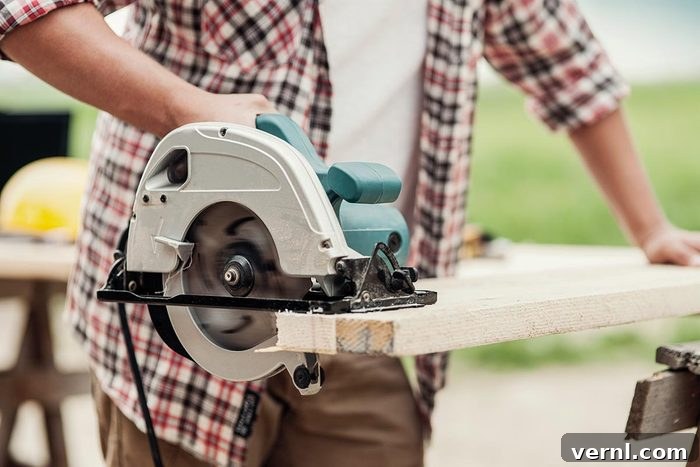
For anyone working professionally in the trades – be it carpentry, plumbing, electrical, or construction – a premium tool is almost always the correct choice. These tools are engineered to last longer under daily, rigorous use; they offer superior ergonomics for extended comfort; and critically, they perform demanding jobs with unparalleled precision and reliability. Myles Robinson rightly emphasizes: “It’s crucial to remember that tools represent an investment. If you’re using them on a daily or frequent basis, paying more upfront for a quality product can lead to significant savings in the long term by eliminating the need for constant, costly replacements.” The efficiency gains and reduced downtime alone justify the initial expenditure.
For the average DIYer, however, such a high level of consistent quality might not always be necessary. Robinson adds, “For DIY enthusiasts, the decision to go budget or premium largely depends on two factors: how frequently the tool will be used, and the nature and complexity of the work being performed.” Based on my own extensive DIY experience, it often makes perfect sense to opt for budget-friendly versions of most portable power tools, particularly for tasks that are infrequent or less demanding. This includes common items like:
- Drills (for general purpose screwing and drilling)
- Circular saws (for occasional wood cutting)
- Bench saws (for hobby-level projects)
- Angle grinders (for light metalwork or grinding tasks)
- Sanders (for intermittent surface preparation)
However, when it comes to stationary workshop tools, such as a robust table saw or a dedicated drill press, my inclination is strongly towards investing in a premium model. Precision becomes paramount in a workshop setting, where accurate cuts and repeatable drilling are essential for quality craftsmanship. Furthermore, workshop tools are typically used repeatedly over many years, making durability and consistent performance crucial. For outdoor and garden power tools, Ryan Farley offers pertinent advice: “If you’re contemplating a power tool for a task you’ll be undertaking very frequently, such as purchasing trimmers, a lawnmower, or an edger for a large property, I would personally advocate for investing in a premium brand. The reliability and longevity will pay dividends. If, however, it’s not a tool you anticipate using often, then opting for a budget brand is perfectly acceptable.”
Frequently Asked Questions About Power Tools
Do budget power tools use less power than premium power tools?
Generally, this is true. Premium power tools are typically equipped with more powerful motors, often featuring higher amperage ratings and advanced designs that allow them to handle tougher loads and operate more efficiently at peak performance. Budget tools, on the other hand, usually have less powerful motors, which draw less electricity but also deliver less torque and speed, making them suitable for lighter tasks. So, while they might use “less power” in terms of overall draw or peak output, they are also less capable of heavy-duty work.
What power tool brand is the best for different needs?
This brings me back to my personal favorite: Ryobi. Despite being widely considered a budget brand, I’ve found Ryobi tools to be consistently reliable and remarkably long-lasting. My Ryobi drill and circular saw, for instance, have been stalwart companions for over a decade, seeing frequent use without complaint. Ryobi is also an impressively innovative brand, having been at the forefront of offering cordless versions of a wide range of equipment, from chop saws and table saws to lawnmowers, for many years.
However, the consensus among the contractors I interviewed offers a broader perspective for premium options. For carpentry and general construction, Milwaukee, DeWalt, Makita, and Bosch are universally praised as top-tier premium brands, with Milwaukee often cited as having a slight edge in popularity due to its robust ecosystem and innovative battery technology. For specialized metalwork and fabrication tasks, Cameron Anderson points to Metabo and Hilti as the undisputed gold standards, known for their extreme durability and precision. When it comes to outdoor and lawn care equipment, the leading premium brands include Stihl, Honda, and EGO, celebrated for their power, efficiency, and environmental considerations (especially EGO’s battery systems). On the budget front, the contractors generally agreed with my assessment of Ryobi, also giving high marks to Ridgid and Black+Decker for their accessible price points and dependable performance for DIY and light professional use.
Meet Our Expert Contributors
- Jonathan Palley embarked on building his own tiny home, a venture so successful it led him to establish Clever Tiny Homes, where he now serves as CEO. His hands-on experience offers invaluable insights into practical construction and tool selection.
- Myles Robinson dedicated many years to operating a successful boiler repair service before selling it to launch UK Composite Doors. His extensive background provides a wealth of practical experience in home maintenance, DIY projects, and property improvements.
- Cameron Anderson is a highly respected expert in both commercial and residential plumbing systems. He is the esteemed Founder of All Kind Gas & Plumbing, based in vibrant Brisbane, Australia, known for his comprehensive knowledge of tools essential to the trade.
- Ryan Farley is the visionary Founder of LawnStarter, an innovative online marketplace connecting customers with a wide array of outdoor home services. His insights are invaluable for selecting the right outdoor power equipment.
- Danny Penn brings over 12 years of specialized experience in plumbing, heating, and cooling services. He currently leads New Era Plumbing & HVAC in Dracut, MA, offering expert advice on tools critical for these skilled trades.