
For many homeowners, especially those living in older houses or regions with fluctuating climates, the battle against basement humidity is a persistent challenge. My own home, a charming but leaky century-old dwelling with an unfinished basement, perfectly exemplifies this struggle. This lower level, which doubles as my woodworking shop, experiences the full brunt of Minnesota’s unpredictable weather: drafty winters and notoriously damp summers. The constant fight to maintain optimal humidity levels using various humidifiers and dehumidifiers has been a cornerstone of my home maintenance routine for years.
With over three decades of experience in home remodeling and repair, I’ve witnessed firsthand the devastating effects of uncontrolled humidity. Beyond mere discomfort, excessive moisture can lead to serious issues such as material deterioration, compromised structural integrity, and the unwelcome proliferation of mold. These problems aren’t just cosmetic; they can impact indoor air quality, property value, and even the health of occupants. This personal and professional background provides a unique perspective on the critical role a reliable dehumidifier plays in preserving a home.
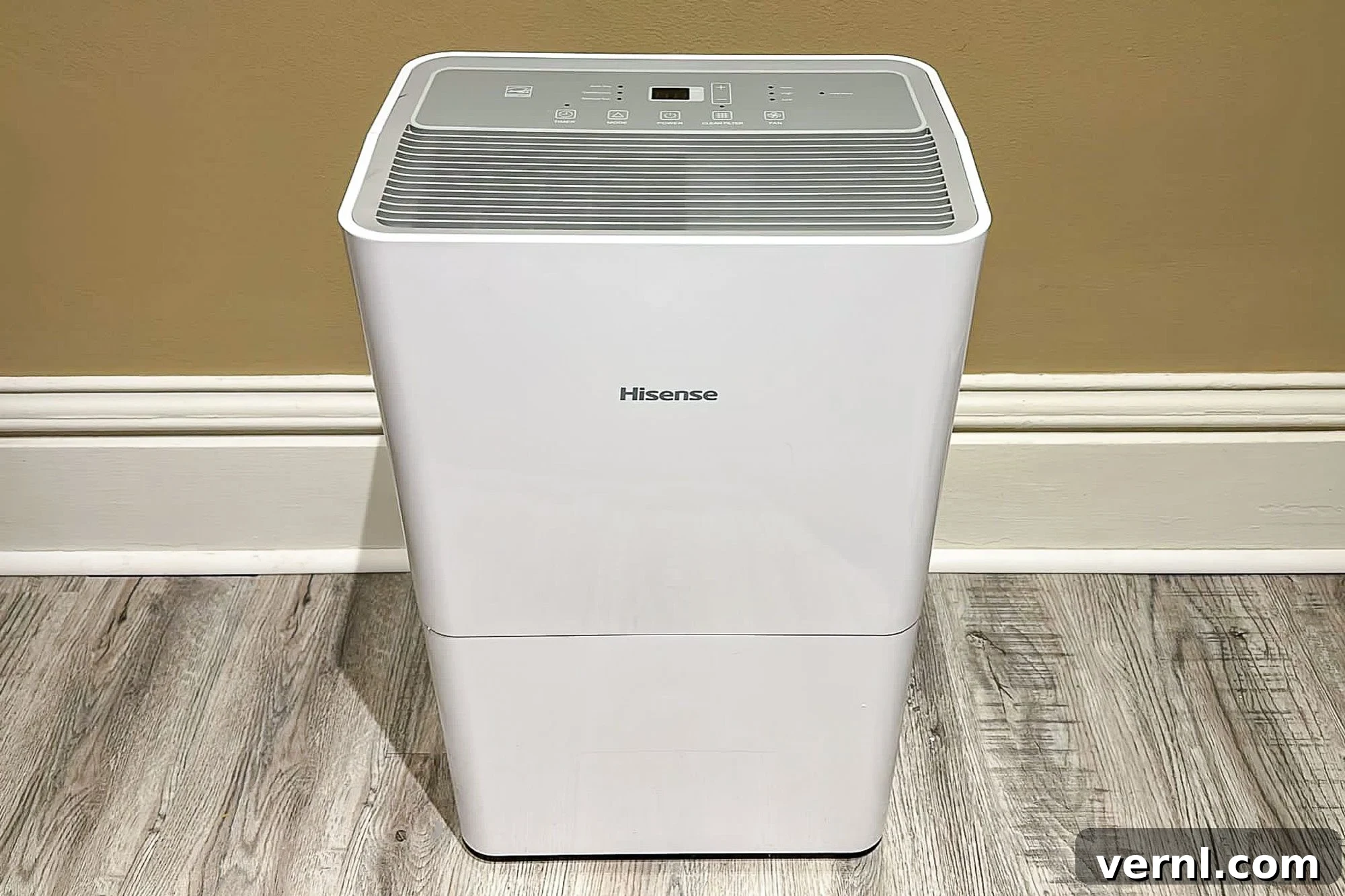
In my ongoing quest for superior humidity control, I recently put the Hisense 50-Pint Dehumidifier to the test. Priced affordably, this unit promised to be a formidable adversary against the pervasive moisture in my space. My rigorous evaluation aimed to determine if this budget-friendly option could genuinely deliver the performance needed for demanding environments like a woodworking shop. Continue reading for a comprehensive breakdown of its capabilities, features, and overall performance, helping you decide if it’s the ideal choice for your home’s humidity management needs.
For those interested in exploring a broader range of options, you can also check out my full assessment of the best dehumidifiers for basements.
Introducing the Hisense 50-Pint Dehumidifier: A Closer Look
The Hisense 50-Pint Dehumidifier is marketed as a powerful solution capable of managing humidity in expansive areas, claiming coverage for homes up to 4,500 square feet. While my entire home, including the basement, is less than 2,000 square feet, the demanding environment of my woodworking shop—where precise humidity levels are crucial for protecting tools and materials—offered a perfect real-world test for its performance claims. This setting requires a dehumidifier that doesn’t just reduce humidity but actively maintains a consistent, low moisture environment.
To be candid, I harbor some skepticism about any single portable dehumidifier’s ability to effectively dehumidify a truly massive home (4,500 sq ft) without supplementary air circulation. These units are typically designed for localized control, and moving air through such a vast and complex space is a significant challenge for a standalone machine. However, this is precisely where the Hisense excels, offering a compelling proposition: affordability without compromising on core performance.
Often costing significantly less than units from more established, premium brands, the Hisense dehumidifier presents an economical solution. Its attractive price point makes it feasible for homeowners to deploy multiple units across different floors or problem areas within a larger property, achieving comprehensive humidity control without breaking the bank. Based on my experience, I would confidently expect the Hisense 50-pint model to efficiently manage humidity in a single-story residence or a dedicated large room, even one with specific needs like a busy woodworking shop.
Despite its robust performance, the Hisense maintains a compact footprint, making it easy to integrate into various spaces. It features a generously sized condensation tank, which significantly reduces the frequency of manual emptying—a major convenience for continuous operation. For those seeking a truly hands-off experience, the unit also offers a direct drain option, allowing continuous operation via a standard garden hose attachment, bypassing the reservoir entirely. Weighing approximately 40 pounds, it’s a substantial unit, and while the integrated carrying handles could benefit from a more ergonomic design, the inclusion of sturdy wheels ensures easy maneuverability. Perhaps one of its most impressive attributes is its remarkably quiet operation, making it one of the least intrusive dehumidifiers I’ve encountered.
Unpacking the Hisense Dehumidifier’s Key Features and Design
The Hisense 50-Pint Dehumidifier is thoughtfully equipped with a suite of features designed to enhance user comfort and convenience, rivaling those found in many higher-priced models. At its core is a substantial 50-pint water reservoir, adept at capturing a significant volume of moisture extracted from the surrounding air. This large capacity is a boon for busy households, reducing the constant chore of emptying. For uninterrupted operation, the unit also provides a direct bypass connection for a drain hose, completely eliminating the need to manage the reservoir. Should you choose to rely on the tank, an automatic shut-off feature activates when full, safeguarding against potential overflows and water damage.
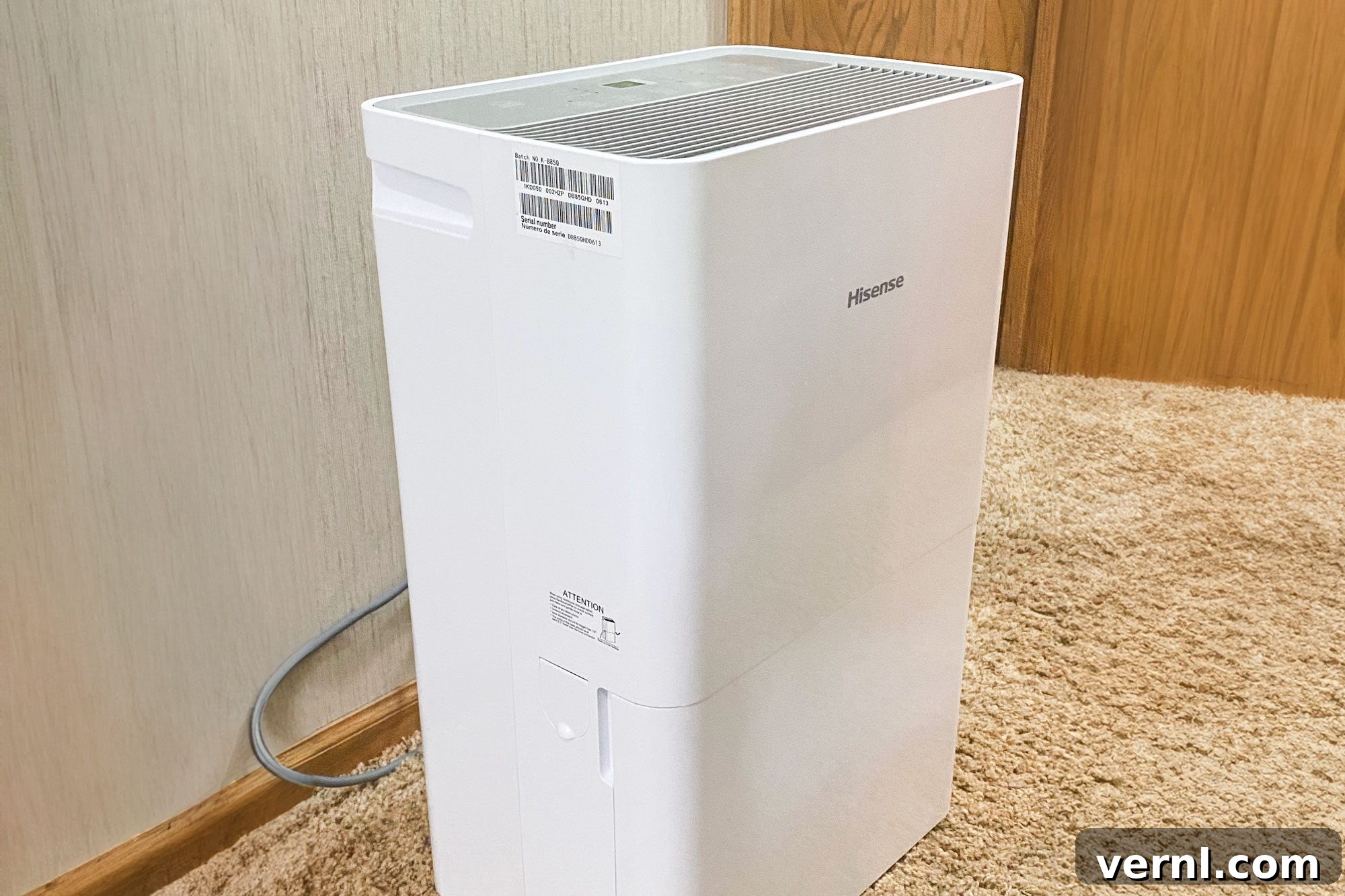
Portability and ease of movement are crucial for a device that might need to be repositioned. The Hisense model incorporates seemingly durable wheels, making daily relocation effortless. While the molded carrying handles are present, their design appears to prioritize aesthetics over pure functionality. However, they proved adequate for the occasional task of transporting the unit up and down the basement stairs during my testing period.
Hisense has particularly excelled in the design of the air filter system. Featuring a micro-mesh design, the filter is conveniently located on the back of the machine, ensuring effortless access for routine cleaning. What truly sets this design apart is how easily removing the filter exposes the critical coil fins. In many dehumidifier models, these fins are hidden deep within the unit, making thorough cleaning a cumbersome, if not impossible, task. The Hisense, however, streamlines this maintenance, allowing for easy access with a coil fin brush, which is vital for maintaining the unit’s efficiency and longevity.
Operationally, the Hisense dehumidifier offers a comprehensive suite of controls including automatic operation, a quiet sleep mode, a programmable timer, and a clear digital display for precise humidity settings. It also features a convenient filter cleaning reminder indicator, ensuring timely maintenance. Users can select between high- and low-speed settings; the low-speed option is exceptionally quiet, ideal for spaces where noise is a concern, while the high-speed setting operates at a noise level comparable to that of a typical compact dehumidifier.
Putting the Hisense Dehumidifier to the Test: Real-World Performance
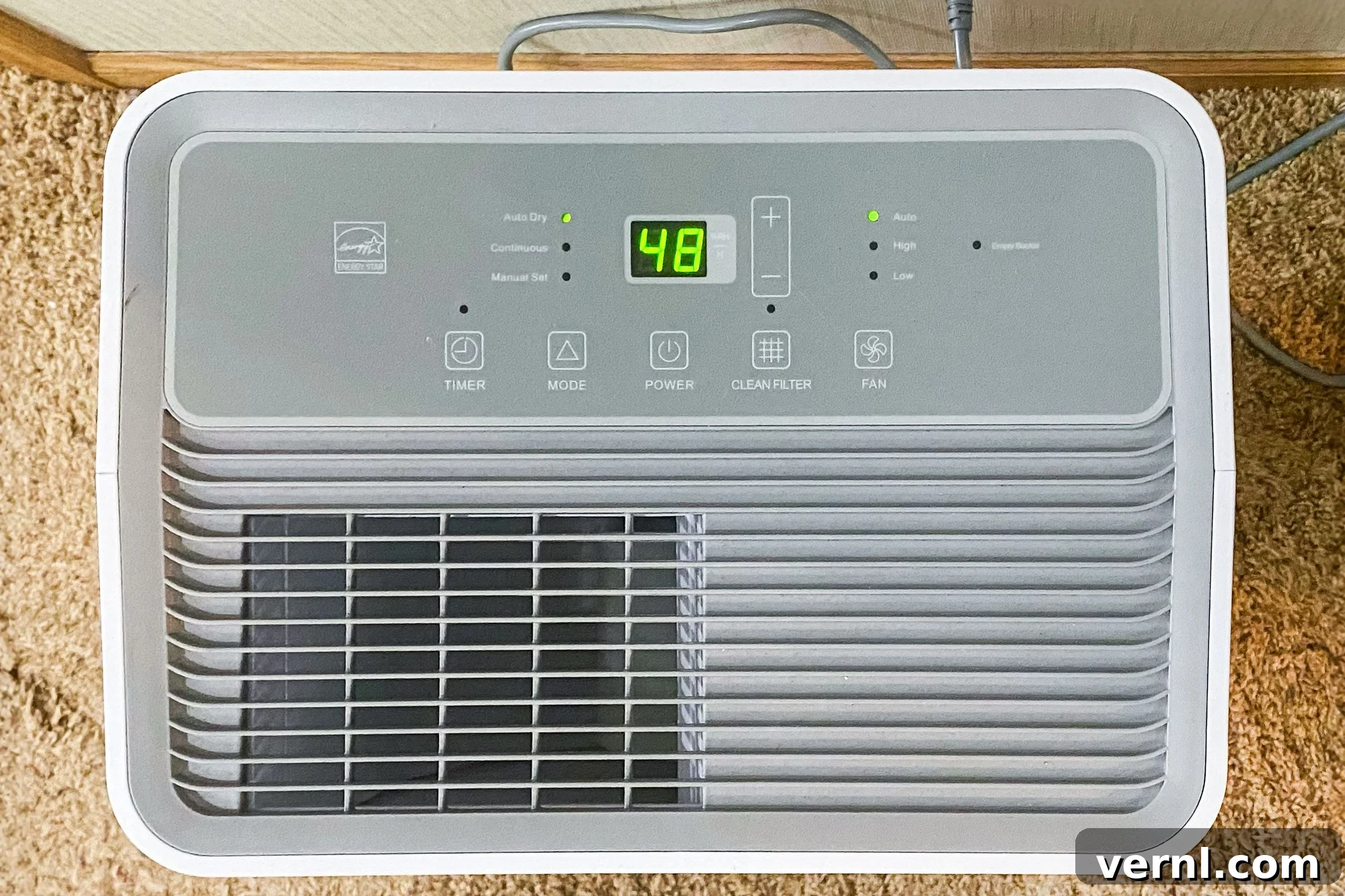
The rigorous testing of dehumidifiers is an ongoing endeavor in my home and woodworking shop, a necessity given the constant battle against Minnesota’s high humidity. Over the years, I’ve cycled through numerous models in my pursuit of optimal moisture control. For this dedicated review, the Hisense dehumidifier underwent an intensive two-week evaluation. This period was split into two distinct phases: one week utilizing the integrated water reservoir, and another week with the continuous drain hose attached, allowing for a thorough assessment of both operational modes.
I set the target humidity level to the lowest possible setting of 30%, aiming to challenge the unit to its maximum capacity. During the week with the reservoir, following periods of heavy rainfall—which are common during Minnesota summers—I found myself emptying the machine at least once daily. On particularly damp days, this increased to emptying the reservoir twice: once during the day and again just before bed to ensure uninterrupted operation throughout the night. This highlights the unit’s efficiency in pulling a significant amount of moisture from the air, but also underscores the labor involved in manual emptying during peak humidity.
My preference quickly shifted to using the drain hose attachment, transforming the Hisense into a truly “set it and forget it” appliance, much like a self-draining dehumidifier. This continuous drainage capability is a game-changer for long-term, low-maintenance humidity control, especially in persistently damp environments like a basement. While the unit performed exceptionally, I did note a couple of minor points. The filter-cleaning indicator would illuminate every couple of days, even when the filter appeared visibly clean, suggesting it might be overly sensitive. Additionally, while functional, the water reservoir, particularly its handle, felt somewhat less robust than I would prefer. Although it likely withstands regular use, a slightly more substantial build would instill greater confidence. Despite these minor observations, the Hisense ran flawlessly, consistently maintaining the humidity levels in my shop between 30% and 32% whenever I monitored it. This consistent performance is a testament to its effectiveness and reliability.
Advantages of the Hisense Dehumidifier (Pros)
- Exceptionally Quiet Operation at Low Speed: Ideal for living spaces or workshops where noise is a concern, allowing for comfortable use without disruption.
- Generous Water Reservoir Capacity: The 50-pint tank minimizes the frequency of manual emptying, enhancing convenience for users.
- Continuous Drain Bypass Option: Offers true “set-it-and-forget-it” operation, eliminating the need to empty the tank and making it perfect for sustained use in very damp environments.
- Durable Power Cord: A robust power cord ensures safety and longevity, resisting wear and tear from frequent use or movement.
- Budget-Friendly Pricing: Provides excellent value for its performance, making effective humidity control accessible to a wider range of homeowners.
- Energy Star Certified: Operates efficiently, helping to reduce energy consumption and lower electricity bills, contributing to both environmental and financial savings.
- Accessible Coil Fins for Easy Cleaning: A standout design feature that simplifies maintenance, promoting longer unit lifespan and optimal performance by preventing dirt buildup on crucial components.
Considerations for the Hisense Dehumidifier (Cons)
- Carrying Handles Could Be More Ergonomic: While present, the design of the carrying handles could be improved for more comfortable and secure lifting, especially given the unit’s weight.
- Water Reservoir Handle and Construction Feel Slightly Flimsy: The reservoir’s overall build and handle, while functional, might feel less durable than desired to some users.
- 4,500-Square-Foot Capacity Claim Appears Overstated for Solo Use: While powerful, relying on a single unit to effectively dehumidify such a large, multi-room area without additional air circulation might be unrealistic.
Frequently Asked Questions (FAQ) About the Hisense Dehumidifier
What is the ideal humidity setting for my Hisense dehumidifier?
The optimal humidity setting for your dehumidifier largely depends on your personal comfort level and the specific conditions of your home. While many dehumidifiers, including the Hisense, can be set as low as 30% relative humidity, some individuals find this level too dry, potentially leading to discomfort such as dry skin or irritated sinuses. For those residing in naturally humid climates, a setting of 50% often provides a noticeable and comfortable improvement over outdoor conditions, striking a good balance between moisture removal and air quality. Generally, for the well-being of your home and its occupants, maintaining indoor humidity between 30% and 50% is recommended for the best results, preventing both excessive dampness and overly dry air.
What does continuous mode mean on a Hisense dehumidifier?
Understanding the fundamental function of a dehumidifier helps clarify the continuous mode feature on your Hisense unit. When operating a dehumidifier under a specific humidity setting, the machine works diligently to extract moisture from the air until that predetermined humidity level is achieved. Once reached, the unit will cycle off or reduce its operation to maintain that setting.
In contrast, continuous mode instructs the dehumidifier to operate non-stop, continually removing as much water vapor from the air as possible, regardless of any set humidity target. This feature is particularly valuable for situations requiring rapid or maximum drying, such as after a flood, during severe damp periods, or when trying to quickly dry out a particularly wet room or affected area. It ensures the machine works without interruption to achieve the lowest possible humidity.
How do I set up my Hisense dehumidifier for hose drainage?
Configuring your Hisense dehumidifier for continuous hose drainage is a remarkably straightforward process. Begin by locating the small access door, typically situated on the left side of the machine, which becomes visible once the water reservoir is removed. Behind this door, you will find the provided drain attachment, designed to accept a standard garden hose fitting. Simply connect a garden hose to this fitting, ensuring a snug and secure connection. Once the hose is attached, there is no need to reinsert the reservoir or make any further adjustments to the unit’s settings. The dehumidifier will automatically divert collected water directly through the hose, allowing for continuous, hands-free operation and eliminating the need for manual tank emptying.
Beyond User Experience: External Reviews and Comparisons
What Other Reviewers and Experts Had to Say
Delving into the broader consumer landscape, Hisense Dehumidifier owners on Lowe’s, for example, show significant satisfaction, with approximately 60% of reviewers awarding the machine a five-star rating. Many positive reviews frequently laud the dehumidifier’s consistent and efficient operation, with several users reporting satisfactory performance even after five years of continuous use. This speaks volumes about the unit’s long-term durability and effectiveness, especially considering its budget-friendly price point.
However, it’s equally important to consider dissenting opinions. A recurring concern highlighted in some negative reviews pertains to a specific issue: the appearance of an “E9” error code on the machine’s display, often occurring within or shortly after the first year of operation. The E9 code typically indicates a communication failure with the humidity sensor, rendering the dehumidifier largely inoperable. While the sensor itself is a replaceable component, addressing this issue might prove to be more inconvenient and troubleshooting-intensive than most homeowners are willing to undertake. It’s crucial to note that, despite being a recurring theme in some negative feedback, this reported issue appears to affect only a relatively small percentage of the total units sold, suggesting it might not be a widespread manufacturing defect.
Hisense Dehumidifier vs. GE Dehumidifier: A Comparative Analysis
When considering options for home humidity control, comparing the Hisense 50-Pint 2-Speed dehumidifier with a model like the GE dehumidifier (often represented by a smaller capacity unit, such as a 20-pint model) reveals distinct use cases. The Hisense is engineered as a full-sized, high-capacity unit, making it an ideal choice for comprehensive humidity management across larger areas or even an entire home. In contrast, the typical GE dehumidifier in the smaller capacity range is better suited for more localized, single-room applications.
While both brands feature in reviews for the best basement dehumidifiers, their specifications cater to different needs. The Hisense boasts a substantial 50-pint water collection capacity, offering extended operation before manual emptying, whereas a smaller GE model might come with a 20-pint bucket. Both units generally offer the convenience of attaching a drain hose for continuous operation, removing the hassle of frequent tank emptying. A notable difference is that some GE models include an auto-defrost option, a feature not typically found on the Hisense. Ultimately, the choice between these two largely hinges on the scale of your humidity problem.
If your goal is to efficiently tackle humidity in a confined space, like a small bedroom, bathroom, or closet, the GE model is likely more portable, compact, and perfectly adequate for the task. However, if you require a robust, high-performance workhorse capable of managing significant moisture levels across a large area, such as a sprawling basement, a multi-room living space, or a dedicated workshop, the Hisense dehumidifier presents itself as the superior and more efficient option.
For those looking to explore other top-performing dehumidifiers, we’ve extensively tested various models, including the Midea Dehumidifier, the Frigidaire Dehumidifier, and the Eva-Dry Mini Dehumidifier, with the latter standing out as one of the best small dehumidifiers available for compact spaces.
Final Verdict: Is the Hisense Dehumidifier Right for You?
Despite some noted concerns regarding the “E9” error codes in certain Hisense dehumidifier reviews, it’s important to view this issue within the broader context of overall units sold, where it appears to affect a relatively small fraction. From my intensive testing, this machine proved itself to be a remarkably hard-working and reliable unit, fully capable of handling the challenging humidity control demands of my woodworking shop—a task that is by no means trivial. Its consistent performance in maintaining desired humidity levels, even in a perpetually damp environment, truly impressed me.
For homeowners seeking a powerful and efficient dehumidifier that can tackle substantial moisture problems without a significant financial outlay, the Hisense dehumidifier presents an exceptionally compelling option. Its blend of performance, features, and attractive pricing makes it a standout choice in its category.
While the Hisense is a robust unit, I wouldn’t recommend it for the specialized and often extreme conditions found in crawl spaces; for such demanding applications, dedicated crawl space dehumidifiers are generally better suited due to their specific design and resilience. However, for general basement or living area humidity control, the Hisense is more than capable. Given its impressive moisture extraction capabilities, I strongly advise utilizing the continuous drain hose attachment. This not only maximizes the unit’s effectiveness by allowing uninterrupted operation but also eliminates the inconvenience of frequent reservoir emptying, particularly beneficial in homes prone to high humidity levels.
Where to Purchase the Hisense 50-Pint Dehumidifier
The Hisense 50-Pint Dehumidifier is readily available from major retailers, offering convenience for prospective buyers. You can find this model at Lowe’s and Amazon, with prices typically ranging from $152 to $214, making it an accessible option for many household budgets.