
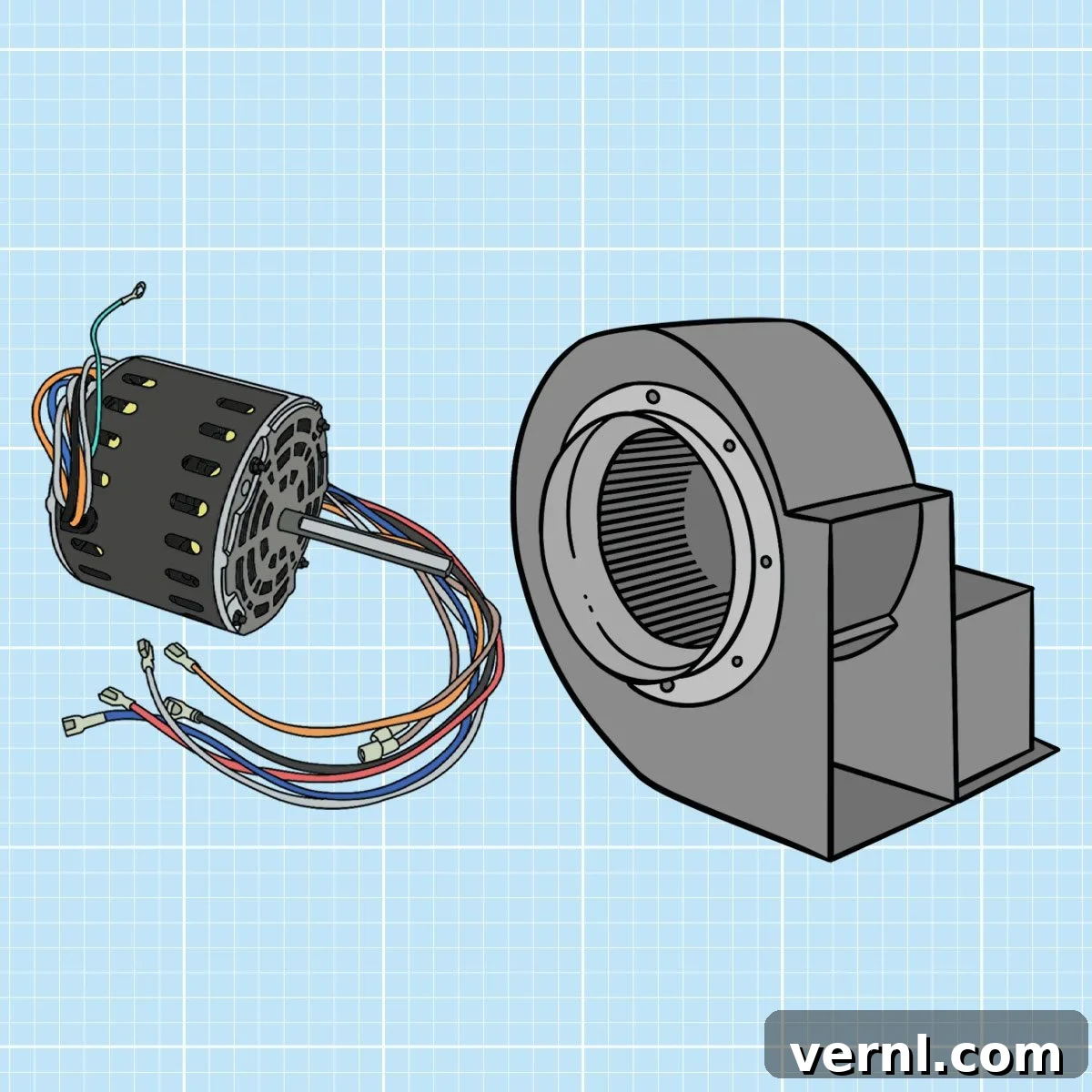
A furnace blower motor stands as an indispensable component within any functional forced-air heating, ventilation, and air conditioning (HVAC) system. This vital part ensures your home remains comfortably warm during the harsh winter months and refreshingly cool throughout the scorching summer season. Its seamless operation is often taken for granted until it unexpectedly falters, at which point its absence becomes immediately noticeable and highly inconvenient.
To empower homeowners with essential knowledge before potential issues arise, we’ve consulted two distinguished industry experts: Joshua Smith from Berkshire Heating and Air Conditioning, and Alexander Siv from Amherst Plumbing and Heating. Together, we’ll delve into the intricacies of furnace blower motors, explore the clear indicators of a failing unit, and provide a comprehensive understanding of the associated replacement costs. This guide aims to equip you with the insights needed to maintain your home’s comfort system effectively.
What Is a Furnace Blower Motor?
At its core, a furnace blower motor is the powerhouse responsible for turning the blower fan, which then distributes conditioned air throughout your home’s ductwork. In a forced-air HVAC system, it’s the principal mechanism that facilitates air circulation, ensuring heated or cooled air reaches every room. As Alexander Siv succinctly puts it, “It’s the main mechanism to get the air circulating through the ductwork and through your house.” Without a properly functioning blower motor, your furnace or air conditioner might generate conditioned air, but that air would remain trapped within the unit, unable to provide comfort where it’s needed most. This critical component is exclusively found in forced-air systems, which rely on mechanical force to move air, unlike radiant heating systems or systems without ductwork.
What Is the Life Expectancy of a Furnace Blower Motor?
On average, a furnace blower motor is designed to last between 10 to 20 years. Joshua Smith highlights that “Motors are designed by the manufacturer to live as long as the life of the appliance.” This typically translates to 12 to 15 years under normal operating conditions. However, with diligent and proper maintenance, this lifespan can often be extended to an impressive 18 to 20 years, as noted by Alexander Siv. Factors such as consistent filter changes, regular professional tune-ups, and ensuring the motor operates within its recommended parameters significantly contribute to maximizing its operational longevity. Neglecting these maintenance practices can lead to premature wear and tear, reducing its overall useful life.
How to Tell if Your Furnace Blower Motor Is Bad
Recognizing the early warning signs of a failing furnace blower motor can save you from complete system failure and potentially costly secondary damages. Here are the key indicators to watch out for:
- Grinding or Screeching Sound: One of the most common and alarming symptoms is the presence of unusual noises emanating from your furnace. As Joshua Smith explains, “The bearings in the motor can start to go bad or get dirt stuck in them.” These critical components, which allow the motor to spin smoothly, can wear down or become contaminated over time, resulting in a distinct grinding, squealing, or screeching sound. This noise typically intensifies as the motor struggles to operate, signaling that internal friction is increasing and component failure is imminent.
- Burning Smell: An electrical burning smell is a serious red flag that should never be ignored. If the motor is on the verge of failure, “sometimes you’ll get an electrical burning smell before it goes,” cautions Smith. This odor usually indicates that the motor is overheating, and its electrical windings or insulation are burning due to excessive strain or a short circuit. Continuing to operate a motor exhibiting this symptom can pose a fire hazard and lead to more extensive damage to your HVAC system.
- Short Run Times (Short Cycling): If your furnace repeatedly powers on, runs for a very brief period, and then shuts off quickly, this pattern, known as “short cycling,” can be a clear sign of a struggling blower motor. Smith clarifies the underlying issue: “Without the blower running, the furnace gets too hot and shuts itself down. Then it cools down and restarts again, gets too hot and shuts down again.” Alexander Siv identifies this cycle as a common initial symptom. “People don’t realize it’s happening, and eventually it will seize and stop working,” he adds. The furnace’s safety mechanisms detect the rising internal temperature due to lack of airflow and trigger an automatic shutdown to prevent damage, but this constant start-stop cycle puts immense stress on the system.
- No Air Flow: Perhaps the most straightforward indicator of a problem is a complete lack of air blowing through your supply vents when the system is supposedly running. If you feel no air, or only very weak airflow, even when the thermostat is set to heat or cool, Smith confirms that “one cause could be a bad blower motor.” This symptom indicates that the motor is either completely seized, not receiving power, or is running at such a low capacity that it cannot effectively move air through the ductwork.
Are Furnace Blower Motors Universal?
The question of whether furnace blower motors are universal often leads to a nuanced answer: yes and no. While there are generic or “universal fit” motor replacements available in the market for both electric and gas-powered furnaces, the term “universal” can be misleading. It’s not as simple as picking any motor off the shelf. The compatibility of a replacement motor critically depends on matching several specific technical specifications of your existing unit. As Joshua Smith explains, “You have to match everything up. You can’t just walk into a store and ask for a universal blower motor.”
Key specifications that must be precisely matched include:
- Horsepower (HP): This indicates the motor’s power output. Installing a motor with incorrect horsepower can lead to insufficient airflow, inefficiency, or premature failure due to overworking.
- Voltage: Residential furnace motors typically operate on 115V or 230V. Mismatching voltage can cause electrical damage to the new motor or the furnace’s control board.
- Rotations/Revolutions-Per-Minute (RPM): The speed at which the motor spins the blower fan. An incorrect RPM can drastically affect airflow and system performance.
- Frame Size and Mounting: Motors come in various physical sizes and mounting configurations (e.g., belly band, resilient mount). The replacement must physically fit into the existing blower housing.
- Rotation Direction (CW/CCW): The direction the motor shaft spins (clockwise or counter-clockwise) is crucial for proper fan operation. Some universal motors can be reversed, but many are fixed.
- Shaft Diameter and Length: The shaft must match the size of your blower wheel’s hub.
- Motor Type (PSC, ECM): Older furnaces often use Permanent Split Capacitor (PSC) motors, while newer, more efficient units utilize Electronically Commutated Motors (ECM), which are often variable-speed. ECM motors are significantly more complex and not interchangeable with PSC motors.
Therefore, while some “universal” motors offer flexibility in certain parameters, you absolutely must know the precise specifics of the motor you are replacing to ensure a compatible and efficient operation. Incorrectly installed motors can cause reduced efficiency, excessive noise, or even damage to other parts of your HVAC system.
What Happens if the Furnace Blower Motor Goes Out?
If the furnace blower motor completely ceases to function, the implications for your home’s comfort and the integrity of your HVAC system can be severe. The primary and most immediate consequence is that conditioned air—whether heated in winter or cooled in summer—cannot be moved through the ductwork. This means your furnace or air conditioning unit will be unable to heat or cool your home as directed by the thermostat, rendering your comfort system effectively useless.
Beyond the obvious lack of airflow and temperature control, a non-functional blower motor can lead to other critical issues:
- Overheating of the Furnace: In heating mode, if the furnace’s heat exchanger continues to produce heat without the blower fan to dissipate it, the unit will rapidly overheat. Modern furnaces are equipped with safety limits that will automatically shut down the system to prevent damage or fire hazards. However, repeated overheating can stress the heat exchanger, potentially leading to cracks, which is a dangerous condition as it can allow carbon monoxide to escape into your home.
- Frozen Evaporator Coil in AC Mode: During cooling operation, if the AC unit continues to run its compressor and evaporator coil without the blower fan to move air over the coil, the coil can freeze solid. This not only impairs cooling performance but can also damage the compressor, a very expensive component to repair or replace.
- Reduced Indoor Air Quality: The blower motor also plays a role in circulating air through the system’s filter, which removes dust, allergens, and other particulates. With no airflow, the filtration process stops, potentially leading to a decline in your home’s indoor air quality.
- Discomfort and Inconvenience: Ultimately, the biggest impact is the loss of a comfortable living environment. You’ll be left without essential heating or cooling, leading to significant discomfort and the urgent need for professional intervention.
Prompt attention to a non-functional blower motor is crucial to prevent these cascading issues and restore your home’s comfort.
How to Test the Furnace Blower Motor
While definitive diagnosis of a furnace blower motor issue often requires specialized tools and expertise, homeowners can perform a simple preliminary test to determine if the motor might be the culprit. Alexander Siv suggests this straightforward method: switch your thermostat to ‘fan’ mode (usually ‘ON’ instead of ‘AUTO’). Once the fan mode is activated, walk to your supply vents and feel for airflow. If there’s no air being pushed through the vents, or if the airflow is unusually weak, “that’s a sign your blower motor may not be working,” he states. This simple test helps confirm that the issue lies with the air distribution system rather than just the heating or cooling components.
It is vital to convey this information accurately to an HVAC professional, who can then use it as a starting point for their diagnosis. Further, more intricate testing of the blower motor’s electrical functioning and mechanical integrity should always be conducted by a qualified technician. This involves using specialized tools such as multimeters to check voltage and amperage, testing the motor’s capacitor, and inspecting wiring connections. This detailed diagnostic process is not a regular homeowner maintenance task but is typically performed to pinpoint the exact cause of a furnace malfunction.
Attempting complex electrical diagnostics without proper training and safety equipment can be extremely dangerous due to the high voltage present in furnace systems. Always defer to a professional for thorough testing and repair to ensure safety and system integrity.
How Much Should It Cost to Replace a Furnace Blower Motor?
The cost to replace a furnace blower motor can vary significantly, depending on several factors including the type of motor, its horsepower, the brand, and regional labor rates. According to Joshua Smith, “An average blower motor can cost anywhere from $500 to $1,500.” This broad price range typically includes both the cost of the replacement parts and the labor involved in the installation. The more powerful the motor, generally the higher the cost of the unit itself. Smith further clarifies, “The more horsepower your motor has, the more expensive the replacement will cost.”
Residential blower motors commonly come in sizes such as one-quarter (1/4) horsepower (hp), one-third (1/3) hp, or one-half (1/2) hp. A one-half hp motor will naturally have a higher material cost than a one-quarter hp motor, reflecting its greater power and sometimes more complex design. However, it’s important to note that labor costs typically remain consistent regardless of the motor’s horsepower, as the installation process itself doesn’t vary drastically with motor size. Factors influencing the total cost include:
- Motor Type: Standard PSC (Permanent Split Capacitor) motors are generally less expensive than more advanced ECM (Electronically Commutated Motor) or variable-speed motors, which offer greater energy efficiency but come at a higher price point.
- Brand and Quality: Premium brands or higher-quality aftermarket motors might have a higher price but could offer better durability and efficiency.
- Accessibility: If the motor is difficult to access within the furnace unit, labor time and thus costs might increase.
- Additional Repairs: Sometimes, related components such as the motor capacitor or wiring may also need replacement, adding to the overall expense.
Obtaining quotes from multiple reputable HVAC professionals is always advisable to ensure you receive a fair and competitive price for the replacement service.
Can I Replace the Furnace Blower Motor Myself?
While the temptation to save money through DIY projects is understandable, replacing a furnace blower motor is unequivocally a job best left to a qualified HVAC professional. Both experts strongly advise against homeowners attempting this repair. “It’s not something I recommend [for DIYers],” states Joshua Smith. Alexander Siv echoes this sentiment, emphasizing the complexity involved: “It requires a lot of tools and knowledge about the whole system. Furnaces are complex equipment.”
The reasons for this recommendation are multifaceted and critical for both safety and the proper functioning of your HVAC system:
- Complexity of Diagnosis: Simply identifying that the blower motor is “bad” is often just the tip of the iceberg. “It could be all kinds of stuff that causes a blower motor to stop working,” Siv points out. “It could be a relay switch or a safety switch that’s not connected.” A professional has the experience and diagnostic tools to accurately pinpoint the root cause, preventing unnecessary motor replacement or missed underlying issues.
- Electrical Hazards: Furnaces involve high voltage electrical components. Working with these parts without proper training and safety precautions poses a significant risk of electric shock, which can be fatal. Professionals are trained in electrical safety protocols.
- Specialized Tools: As Smith highlights, “Just to get the motor wheel off the blower, you’ll need special tools that a typical homeowner just won’t have available.” Specialized pullers and wrenches are often required to safely remove the blower wheel from the motor shaft without causing damage.
- Proper Motor Matching: As discussed, finding the exact replacement motor requires matching several technical specifications (HP, voltage, RPM, frame size, rotation, type). An incorrect motor can lead to inefficiencies, further damage, or system malfunction.
- System Calibration and Testing: After replacement, a professional will ensure the motor is properly installed, wired, and calibrated, and will conduct thorough testing to confirm optimal operation and system balance.
- Warranty Voidance: Attempting DIY repairs on complex appliances like furnaces can often void existing warranties on the unit itself, leaving you responsible for future repair costs that would otherwise be covered.
Considering the inherent dangers, the need for specialized tools, the complexity of diagnostics, and the potential for costly mistakes, entrusting blower motor replacement to an HVAC professional is the safest and most reliable course of action.
Furnace FAQs: Common Questions and Parts Explained
Whether you’re trying to understand how your furnace works, troubleshoot common issues, or simply learn more about your home’s heating system, here are answers and resources addressing some of the most frequently asked furnace questions and explanations of key components:
- What Is a Furnace?
- How Does a Gas Furnace Work?
- What Are Furnace Energy Efficiency Ratings?
- Understanding the Different Parts of a Furnace
- What That Furnace Switch Is For
- What Is a Furnace Heat Exchanger?
- What Is a Furnace Inducer Motor?
- What Does a Furnace Pressure Switch Do?
- Boilers vs. Furnaces: What’s the Difference?
- How to Choose Between a Heat Pump vs. a Furnace
About the Experts
Our comprehensive guide on furnace blower motors benefits from the valuable insights and extensive experience of two highly respected professionals in the HVAC industry:
- Alexander Siv is the proud owner of Amherst Heating and Plumbing, serving the community of Amherst, Massachusetts. With a master plumber’s license in Massachusetts and over a decade of hands-on plumbing and heating experience, Alexander brings a wealth of practical knowledge to his clients and to this discussion.
- Joshua Smith serves as the operations manager at Berkshire Heating and Air Conditioning, located in West Springfield, Massachusetts. Boasting more than 20 years of dedicated experience in the HVAC field, Joshua currently holds both a Massachusetts oil burner and refrigeration license, demonstrating his deep understanding of complex heating and cooling systems.