My dad played college football in the 1980s, so knee surgery had always been a possibility he understood might come one day. When an injury earlier this spring sped up that timeline, he and my mom had to act quickly to prepare for both the operation and the long recovery that would follow.
They discovered that knee surgery brings not only medical considerations but also significant logistical changes at home. Recovery required rearranging daily life and living spaces so he could be safe, comfortable, and as independent as possible while healing.
The Problem: No Stairs
The biggest immediate constraint after knee surgery is avoiding stairs for the first couple of weeks. Any change in elevation can cause pain and strain, so a multistory home effectively cuts off access to entire areas of the house until mobility improves.
For my dad, that meant temporarily losing access to his upstairs bedroom, closet, and bathroom. Fortunately, there was a spare room on the main floor that could be converted into a comfortable recovery space. If you live in a multilevel home, identify an accessible main-floor room ahead of time so you won’t have to scramble after surgery.
Thinking about long-term home planning is useful, too: single-level layouts or ranch-style homes are much easier to navigate when stairs become difficult, whether for short-term recovery or longer-term aging in place.
The Solution: A One-Floor Life (For a While)
Moving my dad’s essentials to the main floor took planning and effort. We set up a comfortable futon for sleeping, brought part of his closet downstairs, and created a dedicated corner for icing and pain-management supplies. A small table held medication, water, and remote controls so he wouldn’t need to reach or strain.
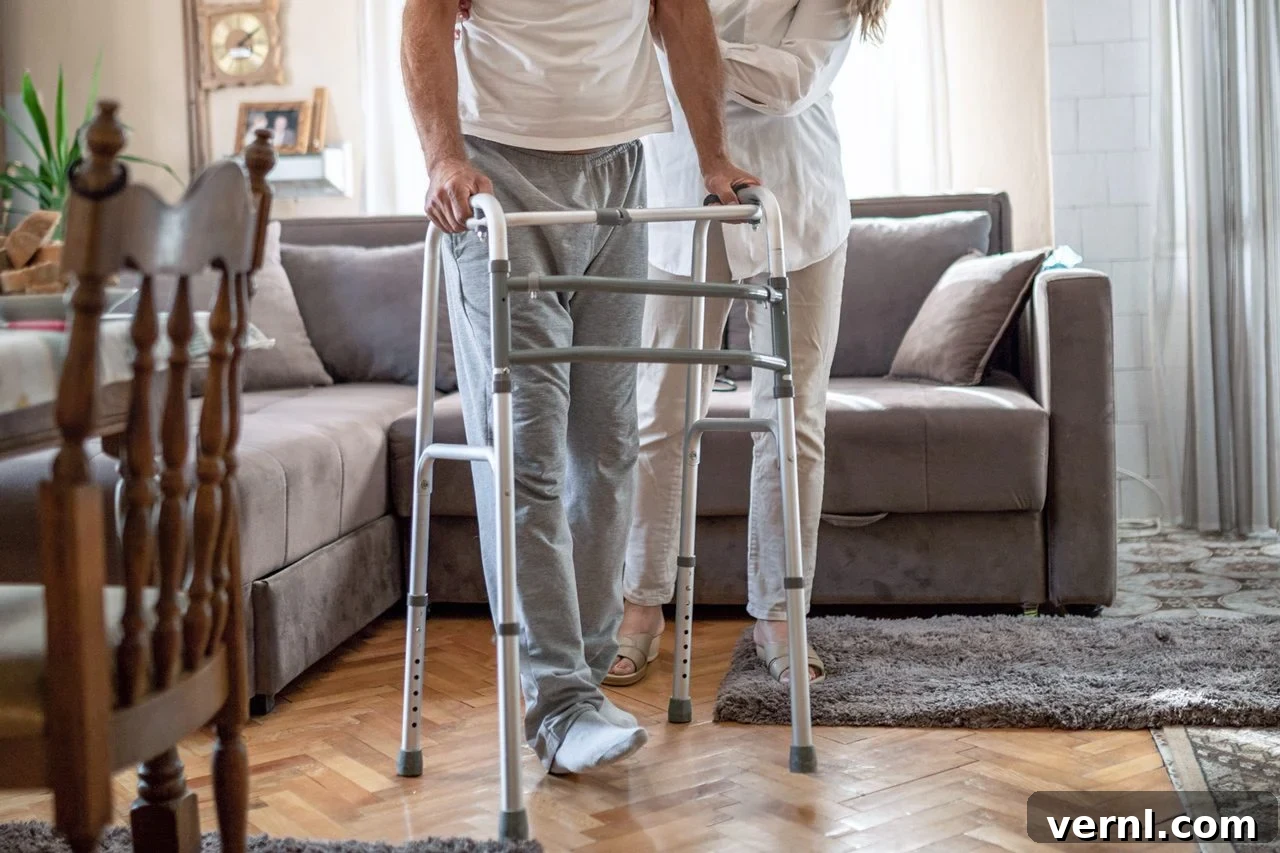
One surprising detail was how much space a walker needs to operate. Hallways and doorways must be clear of clutter. Even small obstructions like area rugs or narrow furniture placements can become hazards when using mobility aids.
Other practical considerations included:
- Positioning chargers, phones, and frequently used items within arm’s reach so he could be independent if my mom wasn’t nearby.
- Ensuring good lighting in the recovery room and along the route to the bathroom to reduce fall risk at night.
- Keeping a small cooler or dedicated shelf for ice packs and compresses so they’re always available.
Other Challenges Presented By Surgery
Recovery looks different for everyone. For my dad it meant long stretches of resting, frequent icing, and lots of time watching sports while an ice pump circulated cold water around his knee. Comfort and temperature control become major concerns — if your surgery is during warm months, make sure your air conditioning is reliable, and have fans available to help maintain comfort.
Monotony is another issue. When you’re confined mainly to one room, days can drag. Stocking up on entertainment, books, puzzles, and hobbies that can be done seated helps pass the time. My dad emphasized the importance of having things to do: boredom makes recovery feel longer and more frustrating.
Physical therapy and light exercise are central to regaining mobility. Before surgery, we cleared and insulated part of the garage so he would have a separate space for daily exercises and short walks without being stuck in his room. A clear, flat area with a sturdy chair and resistance bands or light weights is often all you need for initial PT routines.
Medication management and wound care are also key. Organize a simple system for medication times, wound checks, and follow-up appointments so nothing is missed. Keep a notepad or a phone reminder app handy to track pain levels, ice sessions, and physical therapy progress.
The main goal is to anticipate needs and build as much self-reliance as possible. Think through scenarios where help might not be immediate and plan for those moments. Small adjustments — a bedside caddy, reachable snacks, grabbers to pick up dropped items — can make a huge difference in comfort and safety.
My dad is still healing, but he’s now navigating stairs with less pain than before the surgery and slowly getting back his routine. Getting the rest of the house back was a big relief for him, but the period of living on one floor taught our family useful lessons about preparation, accessibility, and the small comforts that make recovery easier.
RELATED:
- 7 Signs You’re Over-Decorating
- 18 Cheap Decor Ideas That Look Expensive
- 9 Creative Home Hacks That Will Improve Your Life