Essential Homeowner’s Guide: Locating and Operating Your Water and Gas Shutoff Valves
As a homeowner, there are fundamental pieces of knowledge that can prove invaluable, especially during unexpected emergencies. Among the most critical is understanding the precise locations and proper operation of your home’s water shutoff valve and gas shutoff valve. This isn’t just about convenience; it’s about safeguarding your property from extensive damage and ensuring the safety of everyone within.
“One of the first things I show homeowners during a plumbing walkthrough is where all their shutoff valves are,” emphasizes Randal Fuller, a seasoned contractor with decades of experience. “If a pipe bursts or a faucet won’t stop leaking, you need to be able to shut off the water immediately to prevent thousands in water damage. Similarly, knowing your gas shutoff could prevent a catastrophe.”
It’s true that these vital valves are often tucked away in less-than-inviting spaces—dark basements, utility closets, or even underneath your home in a crawlspace. Despite their often-hidden nature, locating and familiarizing yourself with these valves is a proactive step every homeowner should take. A timely response to a water or gas leak can significantly reduce repair costs and protect your family from potential hazards.
Beyond emergencies, these valves are indispensable for routine home maintenance and improvements. Major plumbing repairs, fixture replacements, or gas appliance installations all necessitate temporarily shutting off the supply. While the principles are similar for both water and gas, strict safety precautions apply particularly to gas systems. This comprehensive guide will equip you with all the essential information you need to confidently manage these critical home systems.
Main Shutoff Valve vs. Individual Fixture Valves
Your home’s water and gas distribution systems are designed with layered control, featuring two primary types of shutoff valves: a main or master shutoff valve, which controls the entire supply to your house, and individual or supply shutoff valves dedicated to specific appliances and fixtures. Understanding the difference and the role of each is key to effective home management and emergency response.
These valves can vary significantly in location, appearance, and operation depending on several factors, including your home’s age, local building codes, and even regional climate considerations. Therefore, while this guide provides general insights, always verify the specific setup in your own home. We’ll explore both types, guiding you on how to identify them, where they are commonly found, and how to safely operate them.
Gas Shutoff Valves: Ensuring Safety and Control
Natural gas is a common and efficient energy source for many homes, powering everything from heating systems to stoves and water heaters. However, due to its flammable nature, knowing how to control its flow is paramount for safety. Your home’s gas system typically features a main shutoff valve and multiple individual appliance shutoff valves.
Street-Side Main Gas Shutoff Valve
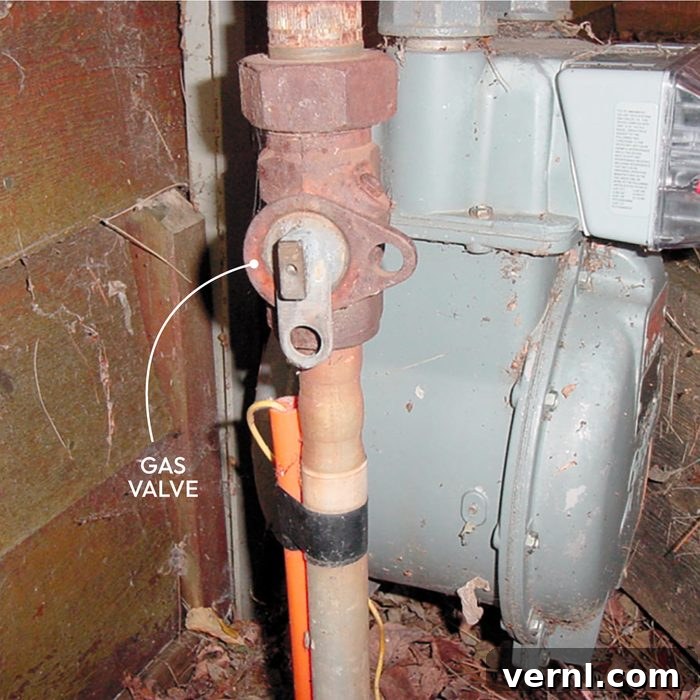
For houses connected to a natural gas line, a primary shutoff valve is located just before the gas meter. This is often referred to as the “street-side” or “utility-side” valve. Typically, it’s a robust valve with a rectangular nub or handle. Its operational status is indicated by the position of this handle: when the long side of the nub is parallel to the incoming gas line, the valve is open, allowing gas to flow. When it’s turned a quarter turn, making it perpendicular to the pipe, the gas supply is cut off.
It’s crucial to understand that operating this particular valve usually requires a specialized wrench, and gas utility companies generally prefer that homeowners do not operate it. They reserve its use for their trained employees, licensed plumbing and heating contractors, and fire department personnel during critical emergencies. For homeowners, the safer and more appropriate point of control is the “house-side” main shutoff valve, which is located downstream from the meter, inside your property line.
House-Side Main Gas Shutoff Valve
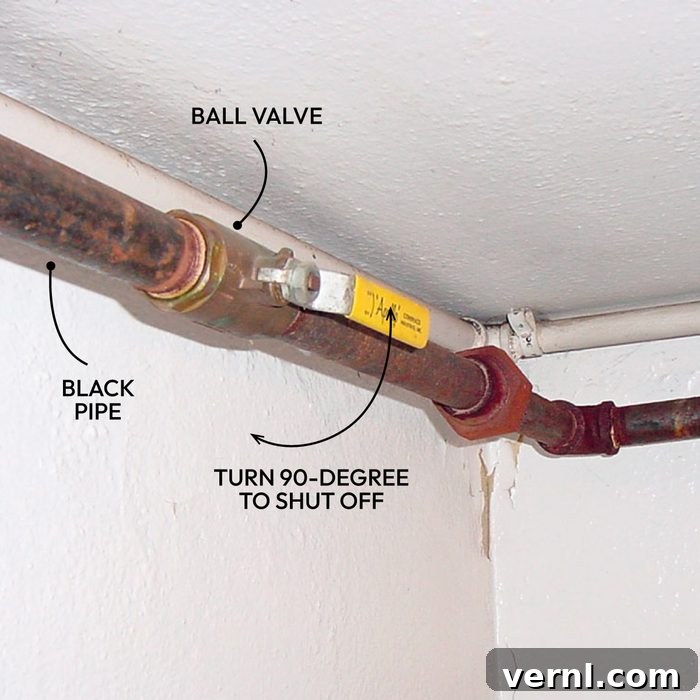
The “house-side” main gas shutoff valve serves as the primary control point for your entire home’s gas supply, located after the meter but before the gas line branches off to individual appliances. This valve is typically a ball valve, identifiable by a lever-style handle. It may be situated where the gas pipe first enters your house, often in a utility room, basement, or garage, or further along the main gas line. Regardless of its exact position, it will always be found upstream of the first gas appliance.
The gas piping in older homes is often made of black iron, which helps differentiate it from similar-shaped, gray galvanized water pipes. In newer constructions, flexible stainless steel lines are also common. Knowing the specific type and location of this valve is essential for quickly cutting off the gas supply to the entire home when necessary.
Valves for Higher-Pressure Natural Gas Systems
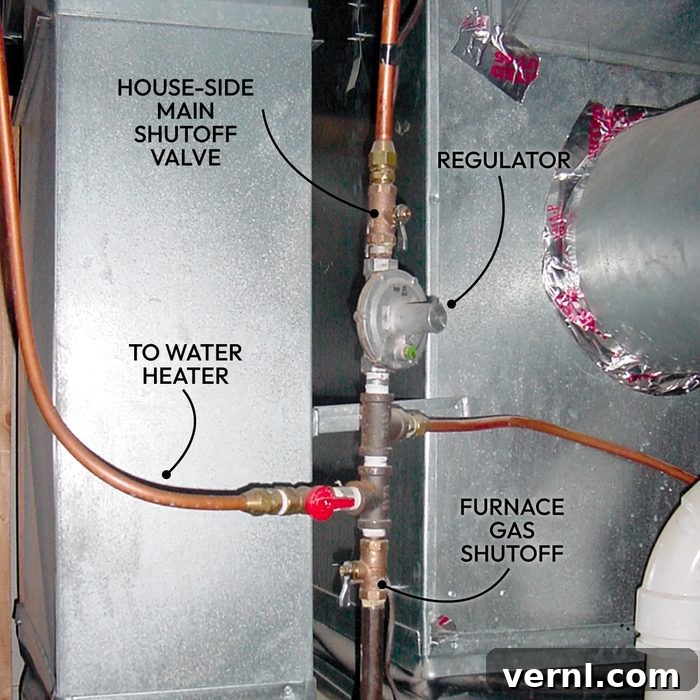
Modern homes, particularly those with newer gas systems, might feature a higher-pressure gas supply. In such cases, you might observe a flexible copper pipe extending from the meter directly into a utility area. If this describes your setup, your inside main shutoff valve is often found near major gas appliances like your furnace or water heater. It’s typically positioned just before the gas enters a “flying saucer-shaped” device known as a pressure regulator, which reduces the gas pressure to a safe level for household use. It’s also important to note that some older homes might not have a dedicated house-side main shutoff valve, making the street-side valve the only point of control for the entire home’s gas supply.
- Pro Tip: Emergency Wrench Placement. Secure the specialized wrench required to operate the gas meter supply pipe to the meter itself using a piece of stainless steel wire. Twist the wire just a few times at the bottom so it can be quickly released. This ensures the wrench is always accessible and easy to find during an emergency, allowing for a swift response.
Individual Gas Service Valves for Appliances
In addition to the main house-side shutoff, every individual gas appliance in your home—be it a dryer, oven, furnace, water heater, or gas fireplace—should be equipped with its own easily accessible service or appliance shutoff valve. These valves are designed to be in the same room as the appliance, typically within six feet of it. The presence of these individual valves is incredibly convenient, allowing you to isolate the gas flow to a single appliance for repairs, maintenance, or new installations without disrupting the gas supply to the rest of your home.
Most service valves are single-lever ball valves. Like the main shutoff, the handle’s position indicates the valve’s status: parallel to the gas line means gas is flowing, while perpendicular means the gas is cut off. These valves are often discreetly located behind appliances like dryers and ranges, which may require sliding the appliance out from the wall to gain access.
- Pro Tip: Handle Flexible Connectors with Care. Appliance service valves are typically found at the end of a rigid pipe, connected to the appliance via a flexible supply pipe, often called an appliance connector. When moving appliances or accessing these valves, always take extreme care not to kink, pinch, or damage this flexible pipe, as such damage can lead to dangerous gas leaks.
Propane (LP Gas) Systems
For homes utilizing propane or liquefied petroleum (LP) gas, the primary shutoff valve is typically located directly on the propane tank itself. In many systems, an additional main shutoff valve can also be found on the supply line somewhere before the first appliance, providing an extra layer of control. Familiarize yourself with both locations if your home uses LP gas.
Maintaining Older Valves
Valves, both for gas and water, manufactured before approximately 1980, often incorporate an internal lubricant designed to enhance their sealing capabilities and smooth operation. Over time, this lubricant can harden or react with the gas, causing the valve to become stiff or completely stuck. If you encounter a stubborn valve, you can try applying gentle heat with a hair dryer to soften the lubricant. Then, carefully work the valve open and shut in small increments. For particularly stubborn handles, pliers can be used to assist, but always apply force gently to avoid damaging the valve or pipe. If a valve remains difficult to operate or shows signs of wear, consider having a professional inspect or replace it.
Figure A: Typical Gas System Overview
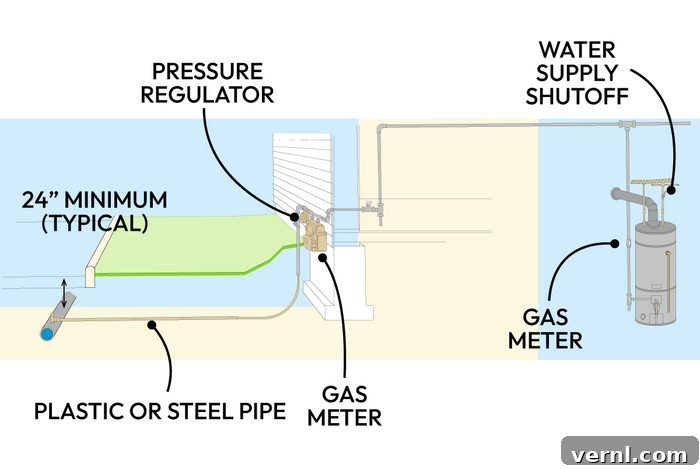
This illustration provides a schematic overview of how natural gas is typically supplied to a residential property from the street. Understanding this layout can help you visualize the system. A larger, more detailed version of this image is available in the “Additional Information” section.
Figure B: Gas System Inside the House Diagram
This illustration details the distribution of gas within the home, showing how the main line branches out to various appliances. Once you have identified your main and individual gas shutoff valves, it’s highly recommended to label them clearly for quick identification during an emergency. For a more comprehensive view, refer to the larger version of this diagram in the “Additional Information” section.
Safety Measures: Critical Gas Precautions
Extreme Caution with Gas Leaks!
Now that you’re aware of the locations of your gas valves, it’s vital to understand a critical safety principle: it’s not always safe for a homeowner to turn off these valves during a gas emergency. When natural gas accumulates to a certain concentration within a room or house, even the tiniest spark can trigger a devastating explosion. Everyday household items, such as a light switch, a telephone, or even static electricity generated from your clothing, can produce such a spark.
“When it comes to gas,” contractor Randal Fuller strongly advises, “I always tell people: if you’re not 100 percent sure, don’t touch it. If you smell gas, hear a hissing sound, or suspect a leak for any reason, your absolute priority is to get everyone out of the house immediately. Once you’re safely outside and away from the property, call your utility company or the fire department. Even for tasks that seem simple, like disconnecting a stove, it’s always best to call a licensed professional. Natural gas is incredibly volatile, and an incorrect connection or faulty repair can create an extremely dangerous situation.”
- Stay Informed: Gas Leak Signs. If your home uses natural gas, ensure you are thoroughly familiar with the distinct signs of a gas leak (often a “rotten egg” smell) and the precise steps to take in such an emergency. Your quick and correct actions could save lives.
Be Prepared for Gas Emergencies
Proactive preparation for gas emergencies is a fundamental aspect of home safety, as even carefully planned projects involving gas lines can sometimes encounter unforeseen issues. An unexpected gas leak is not the time to be frantically searching for the correct tool to shut off the gas at the meter. A smart strategy is to purchase an emergency gas meter shutoff wrench and securely attach it to your gas meter, as previously described. These essential tools are inexpensive, typically costing around $12 at most home improvement centers, and can be a lifesaver.
- Pro Tip: Relighting Pilot Lights. Be aware that shutting off either the main or individual gas valves will extinguish the pilot lights on any gas appliances that use them. Many newer gas appliances feature modern electronic ignition systems that don’t require pilot lights. However, if you have older appliances (furnace, water heater, stove), you will need to relight them after restoring the gas supply. Most appliances have clear, step-by-step relighting instructions printed on a label near the pilot light or detailed in their instruction manual. Some pilot lights, however, can be challenging to access. If you feel uncomfortable or unsure about relighting a pilot light, it’s always safest to contact a qualified plumber or your local gas service company for assistance.
Water Shutoff Valves: Protecting Your Home from Leaks
Water leaks, whether from a burst pipe or a continuously dripping faucet, can cause significant damage to your home’s structure and contents if not addressed swiftly. Knowing how to turn off your water supply, both entirely and to individual fixtures, is a crucial skill for every homeowner.
Main Water Supply Valve
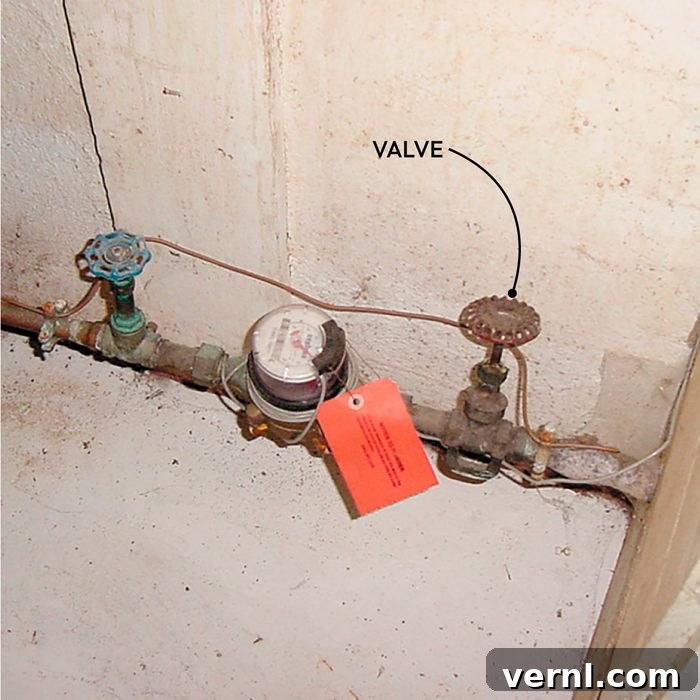
Almost all residential water systems feature at least two main shutoff valves: one located immediately before the water meter (often controlled by the utility company) and another just after the meter, which is typically under the homeowner’s control. The exact placement of your water meter and its associated shutoff valves largely depends on your local climate.
- Cold Climates: In regions prone to freezing temperatures, the water meter and main shutoff valves are almost always located inside the home—typically in a basement, crawlspace, or utility closet—to protect them from ice damage.
- Milder Climates: In areas with temperate weather, the meter and its two shutoff valves might be attached to an exterior wall or encased within an underground box with a removable lid, usually located near the street or property line.
Understanding Water Shutoff Valve Appearance and Types
The appearance and mechanism of main water shutoff valves can vary. Historically, gate valves were common for main shutoffs. These feature a round handle that you turn multiple times clockwise to slowly lower a gate and stop water flow. While effective, they can seize up if not operated regularly. In modern homes, and increasingly as replacements, ball valves are favored. These have a lever handle and operate with a quick quarter-turn, making them faster and generally more reliable. The photo depicts an older street-side gate valve and a house-side ball valve, though in newer homes, both will likely be modern ball valves. It’s important to differentiate between them and know how to operate each.
The Importance of Individual Fixture Shutoff Valves
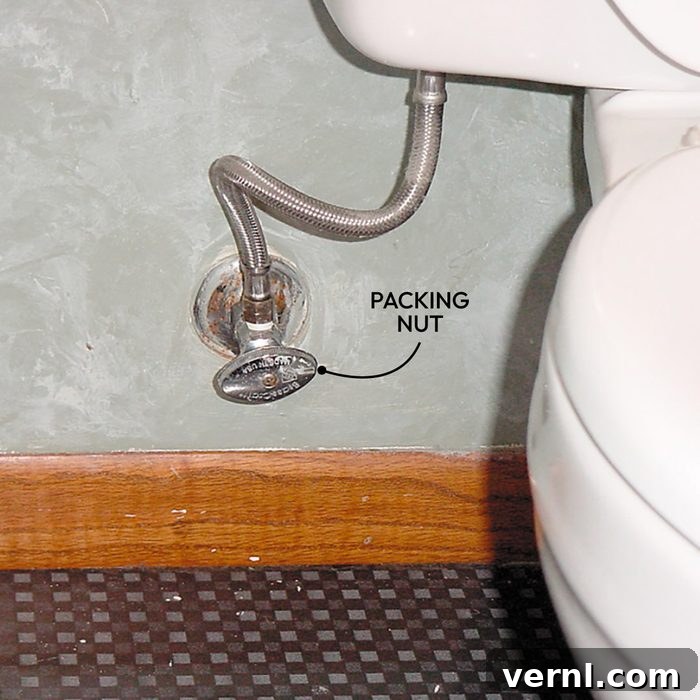
Most homes constructed today are equipped with small, localized shutoff valves, often referred to as fixture supply stops, installed on the supply lines for nearly every water-using fixture and appliance. This includes toilets, faucets, dishwashers, washing machines, water softeners, and water heaters. These supply stops typically feature a small round or oval handle that you turn two to four full turns clockwise to shut off the water flow to that specific fixture. Unfortunately, many older homes may only have these valves on toilets, if at all.
The convenience offered by these individual valves cannot be overstated. Without them, even a simple task like repairing a dripping faucet would necessitate shutting off the main water supply to the entire house. This would leave everyone without water for showers, toilet flushing, and drinking, causing considerable household disruption. With individual shutoff valves, you can isolate the water supply to just the problematic fixture, allowing repairs or replacements to be made without inconveniencing the rest of the household.
If your plumbing system lacks these convenient supply stops, a repair or renovation that requires you to turn off the main water valve presents an ideal opportunity to install them. The ultimate goal is to have a dedicated supply stop for every fixture in your home, enhancing both convenience and emergency preparedness.
- Pro Tip: Accessibility is Key. Fixture supply stops must remain easily accessible. Never conceal them behind drywall or plaster without installing a proper access panel, as you’ll need to reach them quickly for repairs or in an emergency.
Common Problems with Fixture Supply Stops
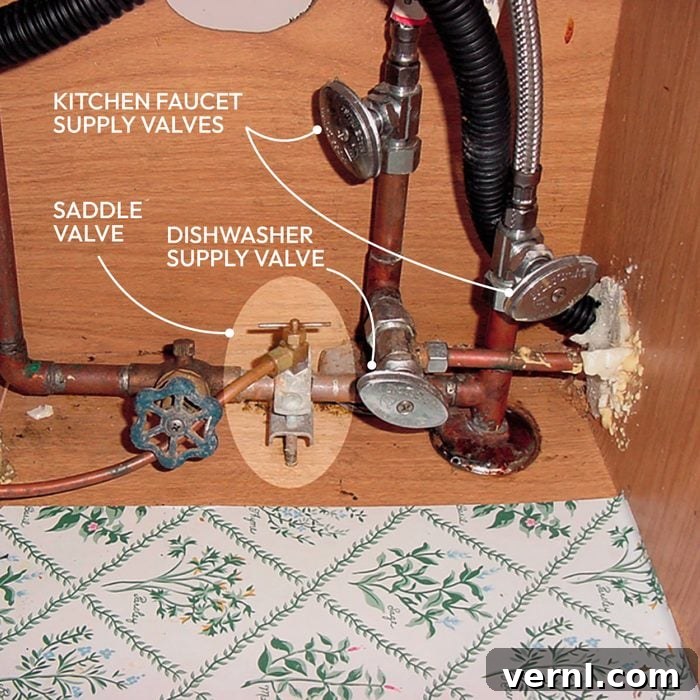
While fixture supply stops are invaluable, they can sometimes present their own set of challenges:
- Dripping After Use: Many water supply valves, especially those that have remained untouched for extended periods, may drip slightly when turned off and then back on. To remedy this, try gently tightening the packing nut (a small nut usually located just below the handle) with a wrench, or cycle the valve open and shut several times until the dripping ceases. If a supply valve persistently leaks, the only reliable solution is often to replace it entirely.
- Freezing Risks: In cold climates, homeowners are generally diligent about closing the indoor supply shutoff valves for outdoor spigots to prevent frozen pipes. However, a common oversight is forgetting to then open the outdoor spigot itself to drain any residual water trapped between the spigot and the indoor shutoff valve. This trapped water can freeze, expand, and burst that section of pipe. Since no water is flowing through this damaged segment, the leak won’t be apparent until the supply valve is reopened in the spring. When water pressure returns, the burst pipe will leak profusely, potentially causing significant water damage before it’s noticed. Always remember to drain outdoor spigots after shutting off their indoor supply.
The Dangers of Saddle Valves
Many older ice makers for refrigerators and furnace humidifiers are connected to larger copper pipes using small, flexible copper tubes fitted with a T-handled device known as a saddle valve. These valves operate by essentially “biting” into the main pipe to divert water into the smaller line. Saddle valves are notorious for failing and are a significant cause of residential water damage. Because of their unreliability, they are no longer compliant with plumbing codes in many areas. If you discover saddle valves in your home, it is strongly recommended to have them replaced with standard, more robust quarter-turn supply stops to prevent future leaks and potential damage.
Figure C: Typical Warm-Weather Water System
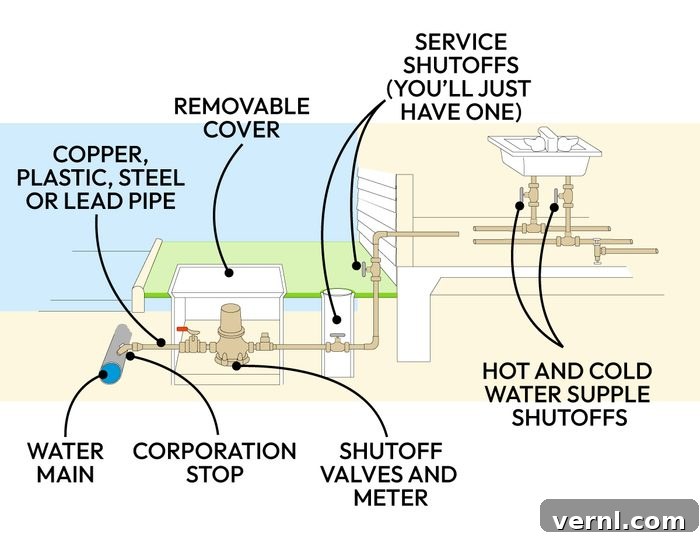
This illustration visually depicts how water is typically supplied to homes in warmer climates, often featuring an outdoor meter and main shutoff configuration. A larger, more detailed version of this image can be found in the “Additional Information” section for comprehensive understanding.
Figure D: Typical Cold-Weather Water System
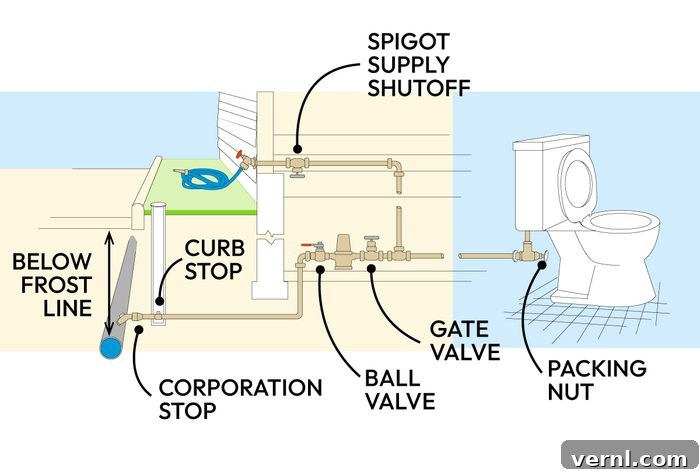
This illustration provides a visual representation of how water enters a house in cold climates, where meters and main shutoffs are usually located indoors to prevent freezing. Refer to the “Additional Information” section for a larger, more detailed version of this diagram.
Regular Maintenance and Testing of Shutoff Valves
Knowing where your shutoff valves are is only half the battle; ensuring they function when you need them most is equally important. “Every few months, I give each shutoff valve a gentle turn just to make sure it’s not stuck,” advises Randal Fuller. “Valves that sit for years without being touched can seize up or corrode, and when you actually need to use them, they won’t budge.”
This simple act of regular, gentle operation can prevent emergencies from escalating. For gate valves, turn the handle a quarter or half turn in both directions, then return it to its fully open position. For ball valves, a full quarter-turn cycle (open-close-open) is sufficient. If any valve feels stiff or difficult to turn, it’s a signal to investigate further or call a professional plumber. Proactive testing ensures your valves are always ready to perform their crucial role in protecting your home.
Additional Information
- Figure A: Typical Gas System Diagram
- Figure B: Gas System Inside the House Diagram
- Figure C: Water System for Warm Climates Diagram
- Figure D: Water System for Cold Climates Diagram
Frequently Asked Questions (FAQ)
Should I regularly test or inspect these valves?
Yes, absolutely. As expert Randal Fuller states, “Every few months, I give each shutoff valve a gentle turn just to make sure it’s not stuck. Valves that sit for years without being touched can seize up or corrode, and when you actually need to use them, they won’t budge.” Regular, gentle testing ensures that your valves remain operational and won’t fail you during an actual emergency.
Can I turn off the gas to individual appliances?
Yes, building codes require every gas appliance to have its own dedicated shutoff valve. These individual service valves allow you to isolate the gas supply to a specific appliance (like a stove, dryer, or water heater) for maintenance, repair, or replacement without cutting off gas to your entire home. If you have an older appliance that lacks an individual shutoff valve, you would unfortunately have to turn off the main gas supply for the entire house before servicing it, which is highly inconvenient and underscores the importance of having individual valves.
About the Expert
- Randal Fuller is a highly experienced contractor with over 40 years in the field. He is the owner of Fuller Services, a comprehensive HVAC, plumbing, and electrical company based in northern Alabama, renowned for its commitment to quality service and home safety.