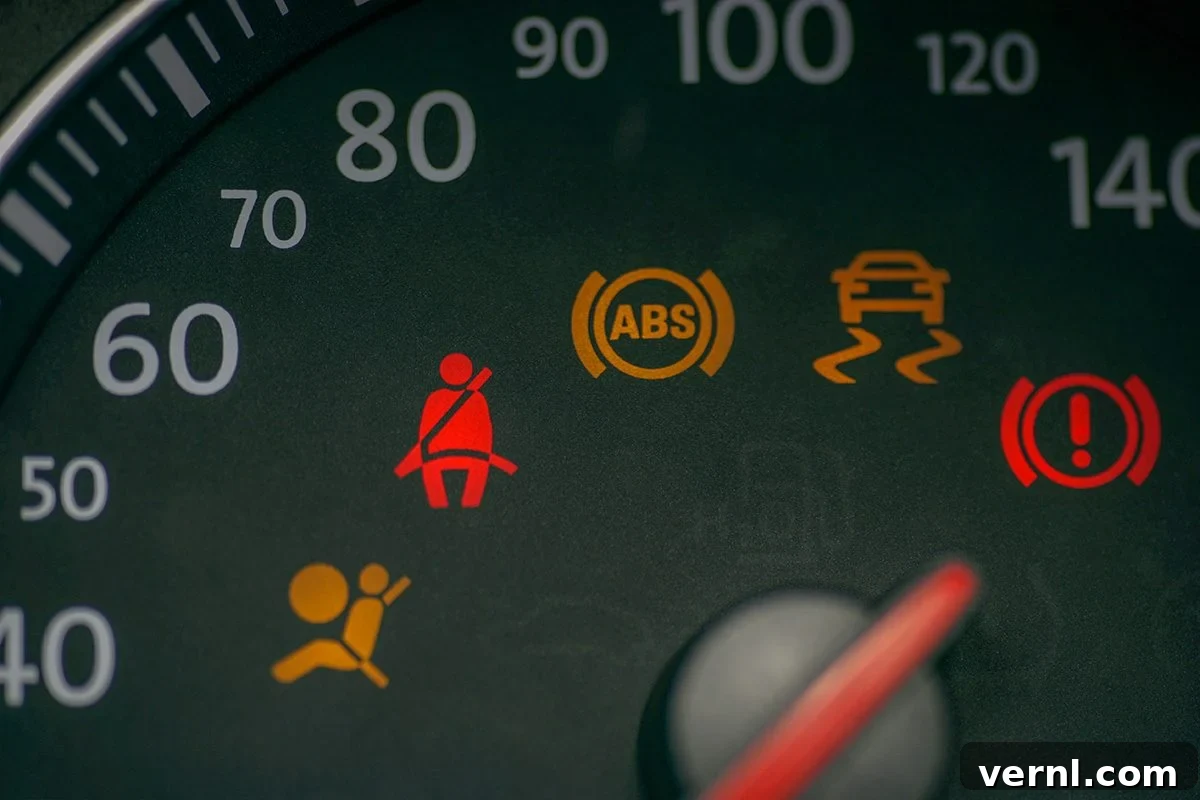
For decades, the humble dashboard warning light has served as a critical communicator between your vehicle and you, the driver. Fifty years ago, the array of symbols was limited to a few essential indicators: low oil pressure, an overheating engine, or a failing charging system. These were non-negotiable alerts, often dubbed “idiot lights,” because ignoring them almost certainly guaranteed a breakdown or costly damage.
Fast forward to today, and the landscape of automotive diagnostics has undergone a monumental transformation. Modern, high-tech vehicles can now feature over two dozen distinct warning lights, each signifying a specific condition or system status. While some of these contemporary alerts demand immediate attention – requiring you to pull over safely and seek professional assistance – others serve as less urgent notifications, advising that a system needs service but allowing you to continue your journey without exacerbating the issue.
Understanding the nuances of these dashboard symbols is more crucial than ever for maintaining your vehicle’s health, ensuring your safety, and avoiding potentially expensive repairs. In this comprehensive guide, we’ll delve into the intricate world of car warning lights. Drawing upon the expertise of veteran ASE Master Technician and Automotive Technology instructor, Tim Diamond, we’ll provide real-world insights and actionable tips to help you decipher which lights are critical emergencies and which merely call for routine inspection.
Deciphering Dashboard Symbol Categories: A Color-Coded Guide
“Automakers have thoughtfully categorized dashboard warning lights by color to offer drivers an immediate visual cue about the urgency and severity of an issue,” explains ASE Master Technician Tim Diamond. This color-coding system is an intuitive way to quickly grasp the implications of an illuminated symbol, helping you prioritize your response. These categories typically include:
- Red Dashboard Symbols: Immediate Action Required. These lights are the most critical alerts on your dashboard. A red symbol signifies a serious problem that could compromise your vehicle’s safety, lead to significant mechanical failure, or cause expensive damage if not addressed immediately. When a red light illuminates, you should stop driving as soon as it’s safe to do so, turn off the engine, and investigate the issue or seek professional help. Continued driving with a red warning light active is highly discouraged.
- Amber/Yellow Warning Lights: Caution and Prompt Attention. Amber or yellow lights serve as warnings or cautions. They indicate that a system requires attention soon, but generally, you can continue driving your vehicle without immediate danger. However, this is not an invitation to delay indefinitely. These lights often signal a developing problem that, if ignored, could escalate into a more severe and costly issue. Schedule a diagnostic check or service appointment at your earliest convenience.
- Blue/Green Lights: Informational Status Indicators. These lights are not warnings in the traditional sense. Instead, they provide informational status about various vehicle systems. For example, a green light might indicate that your headlights are on, or a blue light could signal high beams are active. They are designed to keep you informed about normal operations rather than alert you to faults.
- Red/Yellow/Gray/Green: Advanced Driver-Assistance Systems (ADAS). Modern vehicles are equipped with sophisticated ADAS features, such as lane keeping assist, adaptive cruise control, and collision avoidance systems. The symbols for these systems can appear in various colors (red, yellow, gray, green) depending on the manufacturer and the specific status of the system. For instance, green often indicates the system is active and functioning, yellow might suggest a temporary limitation or a need for calibration, and red could signal a critical malfunction or an immediate hazard detected by the system.
“Given the expanding complexity of dashboard symbols, particularly with the proliferation of ADAS features, it’s always wise to consult your vehicle’s owner’s manual if you encounter any warning, caution, informational, or ADAS light you don’t immediately recognize,” advises Diamond. Your owner’s manual is an invaluable resource, providing detailed explanations for every symbol specific to your car’s make and model.
Critical Red Emergency Dashboard Symbols: Stop Driving Immediately
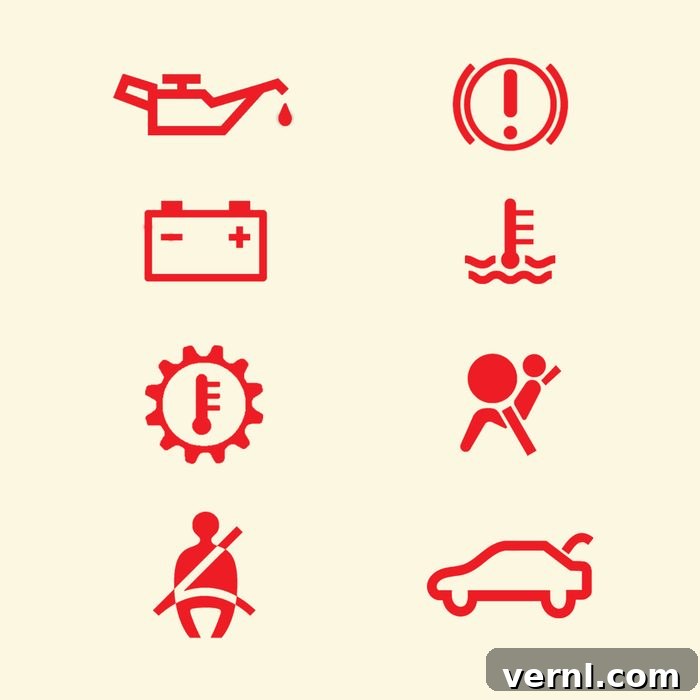
The following are the most common RED emergency dashboard symbols. When any of these illuminate, they demand your immediate attention and necessitate pulling over safely and ceasing driving to prevent severe damage or ensure your safety.
- Oil Pressure Warning (An oil can with a drop dripping from the spout): This light indicates critically low oil pressure within your engine. Engine oil is vital for lubrication and cooling; without adequate pressure, moving parts will quickly suffer severe friction and heat damage, leading to catastrophic engine failure. Action: Pull over immediately to a safe location, turn off the engine, and check your oil levels. If the level is low, add appropriate oil. If the level is fine, do not continue driving, as the issue could be a faulty oil pump or a serious leak. Call for a tow.
- Brake System Warning (A circle with an exclamation mark (!) inside, or the word “BRAKE”): This crucial light signifies a problem with your vehicle’s braking system, most commonly low brake fluid or a critical system malfunction. This could severely impair your ability to stop the vehicle, creating an extreme safety hazard. Action: Stop driving immediately and safely. Check your brake fluid reservoir. If low, top it up. If the light persists or if your brakes feel spongy or unresponsive, do not drive the vehicle. Have it towed to a mechanic.
- Battery Charge Warning (A battery icon with [+] and [-] symbols): This light indicates a problem with your vehicle’s charging system, which includes the alternator, battery, and voltage regulator. It means your battery is not being recharged, and the vehicle is running solely on battery power. Once the battery drains, the car will shut down. Action: If this light comes on, you might have limited time before your car loses power. Safely drive to the nearest service station if it’s very close, or pull over and call for assistance. Avoid using non-essential electrical components to conserve power.
- Engine Temperature Warning (A thermometer immersed in or sitting atop waves, resembling a boat): This highly critical light warns of an overheating engine. Overheating can cause severe and irreparable damage to engine components, such as the cylinder head gasket, engine block, or pistons. Action: Pull over immediately to a safe location, turn off the engine, and allow it to cool down completely (at least 30-60 minutes). WARNING: Never attempt to open the radiator cap or coolant reservoir cap when the engine is hot, as pressurized hot fluid can cause severe burns. Once cool, check the coolant level. If low, refill with appropriate coolant. If the light persists, do not drive.
- Transmission Temperature Warning (A gear icon with a thermometer inside): This indicator illuminates when the automatic transmission fluid (ATF) overheats or when there’s internal damage to the transmission. Overheated ATF loses its lubricating properties, leading to excessive wear and potential transmission failure, which is extremely costly to repair. Action: Stop driving immediately. Allow the transmission to cool down. Check your vehicle’s owner’s manual for specific instructions on checking ATF fluid levels (often requires the engine to be running and at operating temperature). If the light remains after cooling, or if the transmission feels abnormal (slipping, hard shifts), have the vehicle towed.
- Airbag Warning (A person in a sitting position with a rounded circle in their lap, representing an airbag): This light signifies a major failure within your vehicle’s supplemental restraint system (SRS), meaning the airbags may not deploy in the event of a crash. This compromises a critical safety feature. Action: While you can continue driving, it’s highly recommended to have your vehicle inspected by a qualified technician as soon as possible. Your safety is at risk in an accident.
- Seatbelt Reminder (A person sitting forward with a seatbelt outline, often flashing): This light, frequently accompanied by an annoying beeping sound in modern cars, means someone in your car – driver or passenger – has not buckled up. It’s a fundamental safety reminder. Action: Ensure all occupants are properly buckled. The light and sound will typically cease once everyone is secured. This is an essential safety measure for all journeys.
- Door/Hood/Trunk Open Warning (A car outline showing an open hood, door, or trunk lid): This symbol indicates that one of your vehicle’s access points is not securely latched. “This represents a significant safety hazard, particularly when driving at highway speeds,” emphasizes Diamond. “An unsecured hood could suddenly fly open, completely blocking your visibility, or even detach from the vehicle, posing a danger to you and other motorists.” Action: Pull over safely and immediately check all doors, the hood, and the trunk to ensure they are fully closed and latched.
Amber/Yellow Urgent Dashboard Symbols: Attention Required Soon
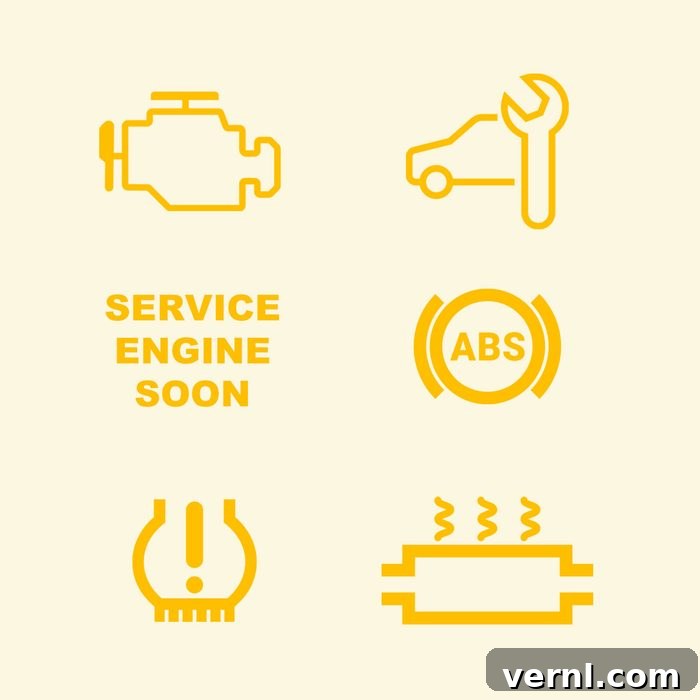
These amber or yellow dashboard symbols indicate that a system needs attention. While you can usually keep driving, it’s crucial not to ignore them, as they often signal a problem that could worsen over time or affect your vehicle’s performance and efficiency. Schedule an inspection or address the issue promptly.
- Check Engine Light (CEL) (A silhouette of an engine block): Perhaps the most common and often misunderstood warning light, the Check Engine Light is related to your vehicle’s emissions system or various engine sensors. Its illumination can signify anything from a minor issue like a loose gas cap to a more serious problem such as an engine misfire, catalytic converter issue, or faulty oxygen sensor. While it often doesn’t demand an immediate stop, it should be investigated promptly. Action: If the light is solid, you can typically drive to a service center. If it’s flashing, it indicates a severe misfire that could be damaging your catalytic converter, and you should reduce driving and seek immediate service. Use an OBD-II trouble code reader to get a diagnostic code, which can help determine if it’s a simple DIY fix or requires professional attention.
- Service Required Light (A silhouette of a car with a wrench in front): This light typically illuminates based on mileage or time elapsed since the last maintenance service reset. It doesn’t necessarily indicate a fault or failure but rather a reminder that your vehicle is due for routine scheduled maintenance, such as an oil change, tire rotation, or fluid check. Action: Schedule your vehicle’s regular maintenance soon. This is often a good opportunity for some DIY maintenance if you’re comfortable.
- Service Engine Soon (Words, no symbol): Similar to the Check Engine Light but often specific to certain manufacturers, this warning is typically linked to engine and emission control performance. It can be triggered by issues like minor misfires, poor fuel quality, worn spark plugs, or other minor engine performance discrepancies that affect emissions. Action: Have your vehicle inspected by a mechanic at your earliest convenience to diagnose the underlying cause and prevent potential escalation of the problem.
- ABS (Anti-lock Braking System) Warning (The letters “ABS” inside a yellow circle): This light indicates a fault within your vehicle’s ABS braking system. “While the base, standard brakes will still function, the Anti-lock Braking System will not engage, and most likely, neither will your traction control system,” explains Diamond. This means that during hard braking, your wheels could lock up, and your vehicle may skid, especially on slippery surfaces. Action: Drive cautiously, avoiding sudden stops. Have the system inspected by a professional soon, as ABS is a critical safety feature, especially in emergency braking situations.
- Tire Pressure Warning (A tire’s cross-section with an exclamation mark (!) inside): Also known as the TPMS (Tire Pressure Monitoring System) light, this activates when one or more of your tires are significantly underinflated, or in some cases, overinflated. Improper tire pressure reduces fuel efficiency, accelerates tire wear, and can compromise handling and safety, increasing the risk of a blowout. Action: Check all tire pressures with a gauge as soon as possible and inflate them to the manufacturer’s recommended PSI (found on a sticker inside the driver’s door jamb or in the owner’s manual). If the light persists after adjusting pressures, there might be a slow leak or a faulty TPMS sensor, requiring professional inspection.
- Catalytic Converter Warning (A rectangle with openings on both short sides and wavy lines on top): This symbol warns of a problem with your catalytic converter, a vital component of your vehicle’s exhaust system that reduces harmful emissions. An overheated or clogged converter can severely restrict exhaust flow, leading to significant power loss, reduced fuel economy, and potential damage to other engine components. In severe cases, the engine might enter a “limp home” mode. “A flashing light may restrict engine power to avert additional damage to the drivetrain,” says Diamond. Action: Have this checked immediately. Driving with a faulty catalytic converter not only harms the environment but can also lead to more expensive engine damage.
General Safety and Informational Dashboard Symbols
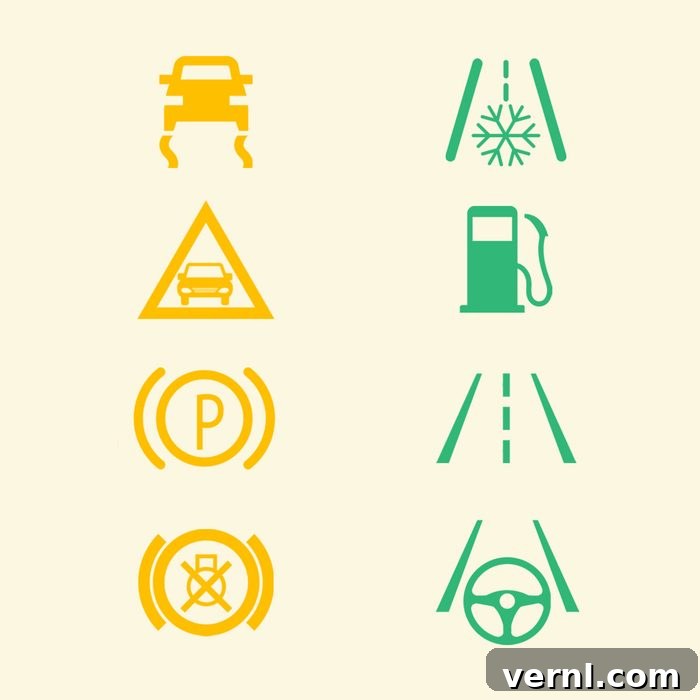
The following dashboard symbols generally serve as safety warnings or informational indicators, alerting you to anything from low fuel levels to challenging weather conditions or the status of your Advanced Driver-Assistance Systems. While not always critical, understanding them enhances your driving awareness and safety.
- Traction/Vehicle Stability Control (VCS) Warning (A yellow car tilted sideways with trailing tire marks): This light indicates that the VCS system has been disabled, is currently active (flashing), or may be malfunctioning. When flashing, it means the system is working to prevent wheel spin or a skid, indicating slippery conditions. If it’s solid, the system is off or faulty, meaning you’ll have less electronic assistance in maintaining control. Action: If flashing, exercise caution due to road conditions. If solid, ensure the system hasn’t been manually turned off. If it’s on due to a malfunction, have it checked by a technician.
- Frost (Yellow) or Winter Warning (Green lines showing a road with either a snowflake or icicle): This informational light serves as a reminder of possible severe winter road conditions, typically indicating outside temperatures are near or below freezing. It alerts you to the potential for black ice or slippery surfaces. Action: Drive with extra precautions, reduce speed, and consider engaging All-Wheel Drive (AWD) or 4-Wheel Drive (4WD) if available and conditions warrant it.
- Distance Warning (A yellow triangle with a silhouette of a car inside): Part of modern collision avoidance systems, this light informs you that you are getting too close to the vehicle in front of you, based on your current speed and following distance. It’s an important alert for maintaining safe driving habits. Action: Increase your following distance to the vehicle ahead. This system is designed to help prevent rear-end collisions.
- Low Fuel Warning (A green gas pump icon): This widely recognized light reminds you that your fuel tank is running low. While not an emergency, ignoring it will eventually lead to your vehicle stalling. Action: It’s time to stop for a fill-up at your earliest convenience to avoid running out of gas.
- Parking Brake Warning (A yellow circle with a “P” inside): This light illuminates when the parking brake is engaged. It’s a simple reminder that you forgot to release the parking brake before driving or that it is partially engaged. Driving with the parking brake on can cause excessive wear to brake components and pose a safety risk. Action: Ensure the parking brake is fully disengaged before driving. If the light remains after release, have the system checked.
- Brake Warning (Other) (A yellow circle with a bottle inside covered with an “X”): This variation of a brake warning can indicate several issues. It might suggest low brake fluid (though the red light is more critical for this), a burned-out brake light bulb, or even worn brake pads. Action: Check the brake fluid level first, then inspect your brake lights. If those are fine, it’s advisable to inspect brake pads and rotors. However, if this light is flashing, it signals a more serious system fault, and it’s time to take your car to a professional mechanic immediately.
- Lane Departure Warning (Two green solid outside lines with broken lane indicator lines in the center): This ADAS feature senses when your vehicle is unintentionally drifting from its lane into another or potentially into oncoming traffic. It’s a helpful safety feature to prevent accidents due to driver distraction or fatigue. Action: Pay closer attention to your driving and maintain your lane. The system is providing a gentle nudge to stay focused.
- Lane Keep Assist (LKA) (A green road line with a steering wheel between them): An advancement of lane departure warning, LKA not only detects unintentional lane drift but also actively notifies you via a dashboard alert or steering wheel vibration. Furthermore, it may gradually provide corrective steering input to guide you back into your lane if you don’t correct it yourself. Action: This indicates the system is active and functioning. Remain attentive and be prepared to take over steering. It’s a supportive, not a replacement, driving aid.
Navigating the increasingly complex array of dashboard warning lights can seem daunting, but armed with this knowledge, you are better prepared to understand your vehicle’s silent language. Remembering the color categories – red for immediate danger, yellow for caution and prompt service, and green/blue for information – is your first line of defense. Always consult your owner’s manual for specific details unique to your vehicle, and never hesitate to seek professional assistance from a certified mechanic when in doubt. Your proactive approach to these warnings can ensure your safety on the road and extend the life of your vehicle.
About the Experts
Tim Diamond brings over 35 years of unparalleled experience in the automotive repair industry. His extensive career includes roles as a highly skilled technician, a certified original equipment manufacturer (Mazda) trainer, and a shop supervisor. Currently, he shares his vast knowledge and practical expertise as an instructor at the Father Judge High School/Faulkner Institute Automotive Technology Program. Diamond has maintained his status as an ASE Master Technician for over 25 years, a testament to his enduring commitment to automotive excellence. His qualifications further include an ASE L1 advanced automotive engine performance certification, PennDoT certified state safety, emissions, and reconstructed vehicle inspector credentials, and certification as a welder. This expert insight was gathered from an email interview conducted on July 14, 2025.
Resources
- 2020 GMC Acadia Owner’s Manual: “Symbols”
- Dashboard Symbols: “All Dashboard Symbols and Warning Lights by Color” (July 12, 2025)
- The Wall Street Journal: “The High-School Juniors With $70,000-a-Year Job Offers” (May 7, 2025)
Related Articles
- Do You Know What That Little Button on Your Seat Belt Is For?
- What Those Lines on Your Backup Camera Really Tell You
- Here’s What The Small Panel On Your Car’s Front Bumper Is For