
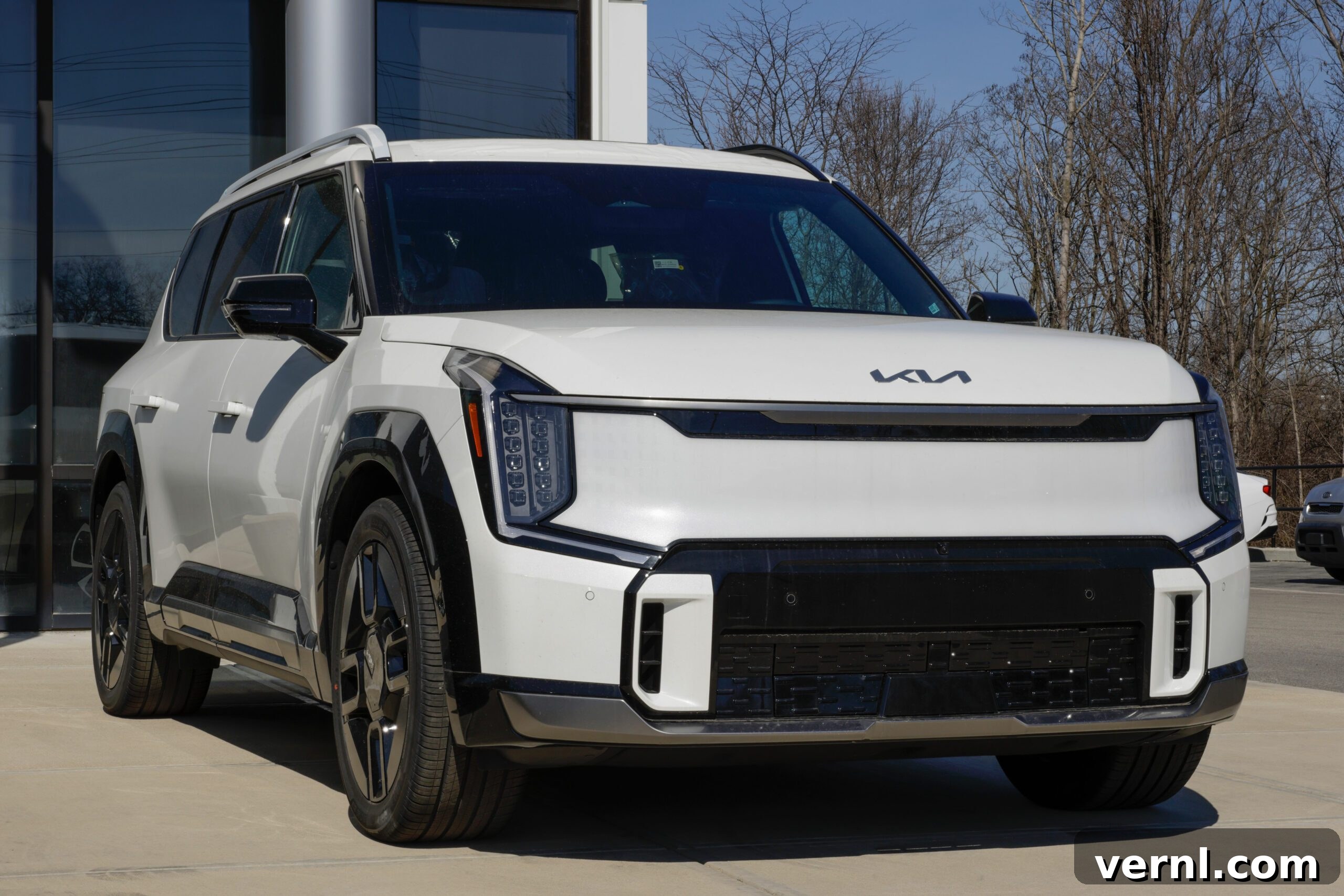
Urgent Recall: Thousands of Kia EV9s Affected by Critical Instrument Panel Failure
In the complex world of modern automobiles, few things are as unsettling as an electrical malfunction, especially one that impacts your vehicle’s most vital communication hub: the instrument panel. For drivers, this panel is more than just a cluster of lights and gauges; it’s a crucial lifeline, providing real-time data on speed, fuel or battery charge levels, engine health, and critical safety warnings. Without this essential information, even a short drive can become fraught with uncertainty and danger, potentially leading to serious accidents or unexpected breakdowns.
While electrical gremlins might be a common nuisance in aging vehicles, their occurrence in brand-new models is particularly frustrating and alarming. This is precisely the situation currently facing thousands of owners of the 2024-2025 Kia EV9, Kia’s highly anticipated all-electric SUV. A widespread recall has been issued due to a significant software error that can render the instrument panel screen completely non-functional. This isn’t just an inconvenience; it’s a serious safety hazard that demands immediate attention. We’ve delved into the specifics of this recall to provide you with a comprehensive understanding of the problem, identify the affected vehicles, and outline the necessary steps you need to take to ensure your safety and comply with federal regulations.
Which Kia EV9 Vehicles Are Being Recalled?
According to official documentation from the National Highway Traffic Safety Administration (NHTSA), this critical safety recall encompasses a significant number of vehicles. Specifically, the recall impacts over 14,000 units of the 2024-2025 Kia EV9. The EV9, being one of Kia’s newest and most advanced electric vehicles, represents a leap forward in automotive technology, making this particular issue all the more concerning for early adopters and the brand alike. Owners of these specific model years should be acutely aware of the potential for this electrical system failure, which directly leads to parts of the vehicle’s vital display components becoming inoperable.
Kia began the process of notifying affected owners through mail on October 25, 2024, sending out formal recall letters detailing the issue and outlining the necessary corrective actions. However, if you own a 2024 or 2025 Kia EV9 and have not yet received a letter, or if you simply wish to verify your vehicle’s status, there are proactive steps you can take. You can reach out directly to Kia customer service at 1-800-333-4542. When contacting them, it is crucial to mention that you are inquiring about Recall SC326 to ensure you receive the most accurate and relevant information. Furthermore, the NHTSA provides an invaluable online tool where you can enter your Vehicle Identification Number (VIN) to instantly check if your specific vehicle is part of any active recalls. This service is available on the official NHTSA website and is highly recommended for all vehicle owners, regardless of whether they have received a physical recall notice.
Why Are These Kia EV9 Vehicles Being Recalled? The Critical Software Error Explained
The core of the problem plaguing the impacted Kia EV9s stems from a software error within the vehicle’s electrical system, specifically affecting the instrument panel. The recall brief explicitly states, “Due to a software error, the instrument panel screen may fail.” This isn’t a minor glitch; a malfunctioning instrument panel renders the vehicle non-compliant with stringent safety standards designed to protect drivers and passengers. More precisely, these vehicles fail to meet the requirements of Federal Motor Vehicle Safety Standard (FMVSS) number 101, which governs “Controls and Displays.”
FMVSS 101 is a cornerstone of automotive safety regulations, established to ensure that vehicle controls and displays are designed and placed in a manner that allows drivers to easily and safely operate their vehicles and receive essential information. This standard dictates aspects such as the visibility, legibility, and location of critical information like the speedometer, odometer, fuel gauge, and an array of warning lights. When a software error causes the instrument panel screen to go blank or display incorrect information, it directly violates the fundamental principles of this standard, posing significant risks to anyone behind the wheel.
The implications of driving a vehicle with a non-functional instrument panel are severe. Imagine driving at night without knowing your current speed, or embarking on a long journey without an accurate reading of your battery charge level. These scenarios are not just inconvenient; they are genuinely dangerous. The NHTSA explicitly warns that “an instrument panel screen that fails to display critical safety information, such as the speedometer or warning lights, can increase the risk of a crash.” Key dangers include:
- Loss of Speedometer Reading: Without a working speedometer, drivers cannot accurately gauge their speed, leading to unintentional speeding, which significantly increases the risk of collisions and traffic violations.
- Inaccurate or Missing Battery/Fuel Gauge: For an EV like the EV9, knowing your remaining range is paramount. A faulty gauge could leave drivers stranded with a depleted battery in unsafe locations, or cause anxiety and unnecessary stops.
- Absence of Critical Warning Lights: The instrument panel houses vital warning indicators for issues such as brake system malfunctions, low tire pressure, engine problems, airbag system failures, and charging system alerts. A blank screen means these crucial warnings go unnoticed, allowing potentially catastrophic mechanical failures to progress unchecked until it’s too late.
- Compromised Driver Awareness: Indicators for turn signals, high beams, and other operational statuses are also displayed on the instrument panel. Their absence reduces a driver’s awareness of their vehicle’s status and actions, potentially confusing other road users.
Given these profound safety risks, repairing impacted vehicles quickly is not just recommended; it is imperative. If you own an affected Kia EV9, contacting your authorized dealership without delay is a critical step to mitigate these dangers and restore your vehicle to its intended safe operating condition.
What Do I Do If My Vehicle Is on the Recall List? Understanding Your Options
If your 2024-2025 Kia EV9 is identified as one of the vehicles impacted by this instrument panel recall, rest assured that Kia has provided clear pathways for remediation, and importantly, the repair will be conducted at no cost to you. You essentially have two primary options for receiving the necessary software patch: having the fix performed at an authorized Kia dealership or, for eligible vehicles, receiving an over-the-air (OTA) update.
Option 1: Dealership Service for Software Patch
The traditional and often most reliable method for recall repairs involves taking your vehicle to a certified Kia dealership. Upon your visit, trained technicians will perform a diagnostic check and then apply a software patch or update directly to your vehicle’s systems. This process typically involves flashing new firmware to the instrument panel control module, correcting the underlying software error that causes the display failure. Dealerships are fully equipped with the specialized tools and updated software required for this procedure. It’s advisable to schedule an appointment in advance by contacting your preferred Kia service center. When scheduling, be prepared to provide your Vehicle Identification Number (VIN) so they can confirm your vehicle’s recall status and prepare for your arrival. The time required for this repair can vary, but dealerships strive to complete recall fixes efficiently to minimize inconvenience to owners.
Option 2: Over-the-Air (OTA) Update
As modern vehicles become increasingly connected, over-the-air (OTA) updates are emerging as a convenient and efficient solution for software-related issues, much like how you update your smartphone. For this specific EV9 recall, Kia has indicated that an OTA update may be available for certain vehicles. An OTA update allows your vehicle to download and install the software patch remotely, without the need for a physical dealership visit. This offers unparalleled convenience, allowing you to update your car from the comfort of your home or any location with a stable internet connection. If your EV9 is eligible for an OTA update for this recall, Kia will likely provide instructions on how to initiate and complete the process safely. Typically, the vehicle needs to be parked in a safe location with good connectivity, and the update process might take some time, during which the vehicle should not be driven. It is crucial to follow all manufacturer instructions carefully to ensure the update is installed correctly.
Key Considerations and Next Steps:
- No Cost to You: Regardless of which option you choose, the repair for this recall will be completely free of charge. Federal law mandates that manufacturers cover the full cost of recall repairs, including parts and labor.
- Act Promptly: Given the severe safety risks associated with a malfunctioning instrument panel, it is paramount to address this recall as soon as possible. Do not delay in contacting Kia or your dealership.
- Contact Kia Customer Service: For specific guidance on whether your vehicle is eligible for an OTA update or to schedule a dealership appointment, your first point of contact should be Kia customer service at 1-800-333-4542. Remember to reference Recall SC326.
- Verify Your VIN: Even if you receive a letter, it’s always a good practice to use the NHTSA’s VIN lookup tool to confirm the active recall status for your specific vehicle.
Broader Implications: Trust, Technology, and Driver Safety
This recall for the Kia EV9 highlights a growing challenge in the automotive industry, particularly with the rapid proliferation of electric vehicles and sophisticated in-car technology. As cars evolve into complex networks of software and electronic systems, the potential for software-related glitches increases. Such recalls, while necessary for safety, underscore the critical importance of robust software development and rigorous testing protocols before vehicles reach consumers. For Kia, a brand that has invested heavily in its EV lineup, addressing this issue swiftly and effectively is crucial for maintaining consumer trust and solidifying its reputation in the highly competitive electric vehicle market.
Ultimately, the role of regulatory bodies like the NHTSA remains indispensable in ensuring that vehicle manufacturers adhere to the highest safety standards. The FMVSS 101 standard, which this recall directly addresses, serves as a vital safeguard, ensuring that drivers always have access to the information they need to operate their vehicles safely. For owners of the affected Kia EV9s, taking immediate action on this recall is not just about complying with a notice; it’s about prioritizing personal safety and the safety of everyone on the road. Don’t underestimate the significance of a fully functional instrument panel – it could be the difference between a safe journey and a hazardous situation.