
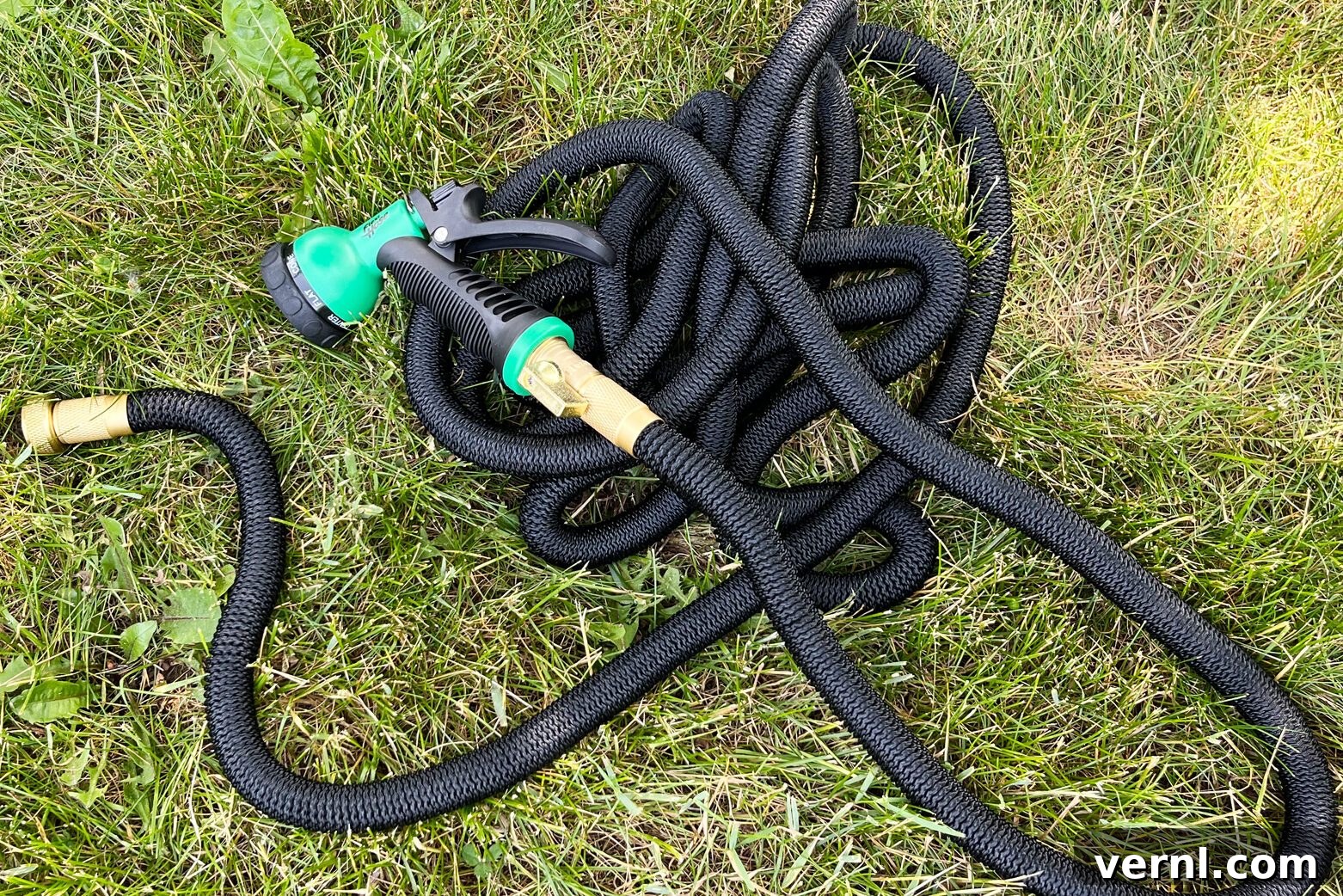
Flexi Hose Review: Is This Expandable Garden Hose a Winner?
Are you searching for a convenient and space-saving solution for your gardening and watering needs? The Flexi Hose has gained considerable popularity in recent years, promising a lightweight and expandable design that simplifies your outdoor tasks. But does it live up to the hype? This comprehensive Flexi Hose review dives deep into the features, benefits, and drawbacks of this expandable garden hose, offering an honest assessment to help you decide if it’s the right choice for your home.
In this in-depth review, we’ll explore the real-world performance of the Flexi Hose, examining its durability, ease of use, and overall value. We’ll compare it against traditional garden hoses, highlighting the key differences and advantages. Our goal is to provide you with the information you need to make an informed decision and choose the best garden hose for your specific requirements. We’ll cover everything from setup and storage to its performance under various conditions.
Watch Our Flexi Hose Review Video
To get a visual understanding of the Flexi Hose and see it in action, check out our review video below. We demonstrate its expansion and contraction, showcasing its ease of use and highlighting its key features.
What is a Flexi Hose?
The Flexi Hose, also known as an expandable garden hose, is designed to expand and contract as water flows through it. When the water is turned on, the hose extends to its full length, providing ample reach for your watering needs. When the water is turned off, the hose shrinks back to a compact size, making it easy to store and maneuver. This unique design offers several advantages over traditional rubber hoses, including reduced weight and improved storage capabilities.
Key Features and Benefits of the Flexi Hose
The Flexi Hose boasts a variety of features that contribute to its popularity. These features often include:
- Expandable Design: The most notable feature, allowing the hose to expand up to three times its original length.
- Lightweight Construction: Typically made from lightweight materials, making it easier to handle and move around the yard.
- Compact Storage: Shrinks down for easy storage, taking up minimal space in your shed or garage.
- Durable Materials: Often constructed with a combination of latex or rubber inner tubes and a durable outer fabric cover to prevent leaks and abrasions.
- Various Sizes: Available in a range of lengths to accommodate different yard sizes and watering needs.
- Nozzle Compatibility: Designed to work with standard spray nozzles and attachments.
These features combine to offer several benefits, including:
- Ease of Use: The lightweight design and expandable feature make it easier to handle and maneuver, reducing strain during watering tasks.
- Space-Saving: The compact storage allows you to neatly store the hose, eliminating the need for bulky hose reels.
- Convenience: Quickly expands and contracts, providing a convenient solution for watering your garden, washing your car, or other outdoor chores.
- Reduced Kinking and Tangling: The flexible design minimizes the risk of kinking and tangling, ensuring a consistent water flow.
Pros and Cons of the Flexi Hose: A Balanced View
While the Flexi Hose offers numerous advantages, it’s essential to consider its potential drawbacks. We’ve compiled a balanced view of the pros and cons based on our testing and research:
Pros
- Lightweight and Easy to Handle: The lightweight construction makes it significantly easier to handle than traditional rubber hoses, reducing strain and fatigue.
- Space-Saving Design: The compact design allows for easy storage, freeing up valuable space in your garage or shed.
- Expands and Contracts Quickly: The expanding and contracting feature is convenient and efficient, allowing for quick setup and takedown.
- Reduces Kinking and Tangling: The flexible design minimizes kinking and tangling, ensuring a consistent water flow.
- Available in Various Lengths: Offers flexibility in choosing the appropriate length for your specific watering needs.
Cons
- Durability Concerns: Some users report that the inner tubing is susceptible to punctures or leaks over time, especially with rough surfaces.
- Potential for Bursting: While less common, the hose can burst if water pressure exceeds its limits.
- Water Pressure Sensitivity: Some models may struggle with high water pressure, leading to expansion issues or reduced water flow.
- Not Ideal for Heavy-Duty Use: May not be suitable for demanding tasks like power washing or heavy construction site use.
- May Require Careful Handling: More prone to damage from sharp objects or rough handling compared to a traditional rubber hose.
Real-World Performance and Testing
To provide a fair and accurate assessment, we put the Flexi Hose through a series of rigorous tests. These tests included:
- Durability Test: We evaluated the hose’s ability to withstand punctures and abrasions by dragging it across various surfaces, including concrete and gravel.
- Water Pressure Test: We measured the water flow rate at different water pressure levels to assess its performance under varying conditions.
- Ease of Use Test: We assessed how easy it was to connect the hose to a spigot, maneuver around the yard, and store after use.
- Expansion and Contraction Test: We timed how long it took the hose to expand and contract, noting any issues with its performance.
- Leakage Test: We examined the hose for any signs of leakage at the connections or along its length.
Our findings revealed that the Flexi Hose performed well in terms of its ease of use and space-saving design. However, we found that its durability could be a concern, particularly with prolonged exposure to rough surfaces. The water pressure test showed that the hose performed optimally within the recommended water pressure range, but its performance declined at higher pressures. Overall, the hose is best suited for general gardening and watering tasks, where durability and pressure requirements are moderate.
Flexi Hose vs. Traditional Garden Hoses: Which is Better?
The choice between a Flexi Hose and a traditional rubber hose depends on your individual needs and preferences. Here’s a comparison to help you decide:
| Feature | Flexi Hose | Traditional Rubber Hose |
|---|---|---|
| Weight | Lightweight | Heavy |
| Storage | Compact, easy to store | Bulky, requires a hose reel |
| Durability | May be less durable; susceptible to punctures | Generally more durable and abrasion-resistant |
| Ease of Use | Easy to handle and maneuver | Can be cumbersome to move around |
| Price | Typically affordable | Price varies, often more expensive |
| Kinking/Tangling | Less prone to kinking and tangling | Prone to kinking and tangling |
| Ideal for | General gardening, watering plants, car washing | Heavy-duty tasks, construction, power washing |
If you prioritize ease of use, space-saving storage, and a lightweight design for general gardening tasks, the Flexi Hose is a compelling option. However, if you require a hose for heavy-duty use or if durability is a primary concern, a traditional rubber hose might be a better choice.
How to Choose the Right Flexi Hose
Choosing the right Flexi Hose involves considering several factors:
- Length: Determine the length you need based on the size of your yard and the distance from your water source.
- Material: Look for a hose with durable materials, such as a high-quality latex or rubber inner tube and a robust outer fabric cover.
- Pressure Rating: Ensure the hose can handle your water pressure. Check the manufacturer’s specifications for the recommended pressure range.
- Connectors: Check for solid brass or durable plastic connectors for a secure and leak-free connection.
- Reviews: Read online reviews from other users to get insights into the hose’s performance and reliability.
- Warranty: Consider a hose that comes with a warranty for added peace of mind.
Flexi Hose Maintenance and Care Tips
Proper maintenance can extend the lifespan of your Flexi Hose. Here are some care tips:
- Drain After Use: Always drain the hose completely after each use to prevent damage from freezing temperatures.
- Store Properly: Store the hose in a shaded area or indoors when not in use. Avoid direct sunlight.
- Avoid Sharp Objects: Be careful to avoid dragging the hose across sharp objects that could puncture the outer cover.
- Inspect Regularly: Regularly inspect the hose for any signs of wear and tear, such as leaks, cracks, or abrasions.
- Clean as Needed: Clean the hose as needed with mild soap and water to remove any dirt or debris.
Conclusion: Is the Flexi Hose Right for You?
The Flexi Hose offers a convenient and space-saving solution for many gardening and watering needs. Its lightweight design and expandable capabilities make it easy to use and store. While its durability might be a concern for some users, particularly those with rough surfaces or high-pressure water systems, the Flexi Hose remains a compelling option for those seeking a more user-friendly alternative to traditional garden hoses.
Consider your specific requirements, including your watering needs, yard size, and the level of durability you require. If you value ease of use, convenience, and compact storage, the Flexi Hose could be the perfect addition to your gardening toolkit. For a more in-depth comparison and further details about the Flexi Hose and similar products, we encourage you to explore resources like Family Handyman’s Flexi Hose Review.