
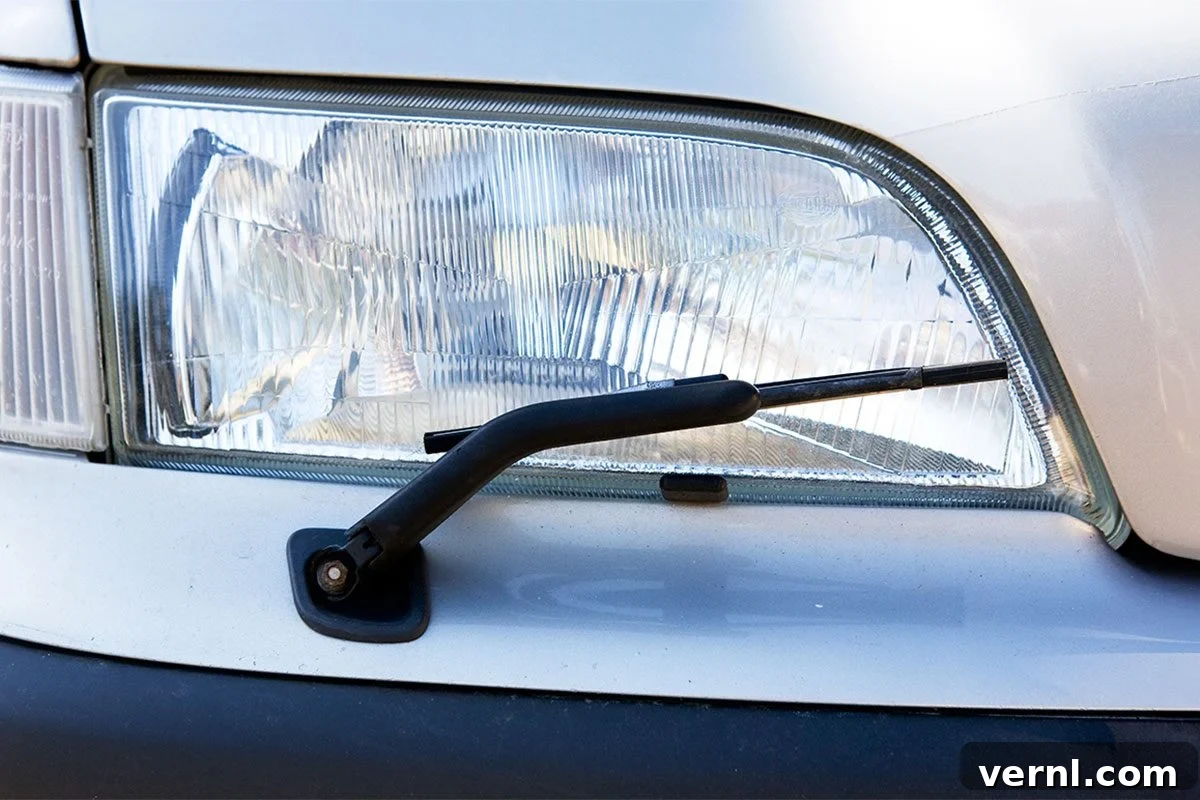
You’ve likely encountered unusual car features that immediately capture your attention, leaving you to ponder their purpose. Sometimes these distinctive elements enhance the vehicle’s aesthetic, making it stand out from the crowd. Other times, their function seems more apparent, yet they still present an intriguing design choice. A prime example of such a feature, which once graced the front of many vehicles, is car headlight wipers.
Unveiling the Purpose: Why Did Some Car Headlights Have Wipers?
The core purpose behind equipping car headlights with wipers was remarkably straightforward: to ensure optimal visibility for drivers, especially in challenging weather conditions. As Volvo explains, these systems, often integrated with windshield washers, were “designed to clean the windshield and headlights.” In regions prone to heavy rain, snow, slush, mud, or even just persistent road grime, maintaining clear headlights is not merely a convenience but a critical safety measure. Impaired headlights significantly reduce a driver’s ability to see the road ahead and for other road users to see the vehicle, dramatically increasing accident risks. Wipers provided a mechanical solution to this age-old problem, diligently sweeping away accumulated debris that would otherwise obscure the light beam.
Beyond simple dirt, the threat of reduced visibility from environmental factors like freezing rain, compacted snow, and road salt spray posed a severe challenge. Traditional headlights, particularly older halogen units, might generate some heat, but often not enough to effectively clear heavy accumulations. Headlight wipers offered a proactive, on-demand solution, allowing drivers to maintain their forward illumination without having to stop and manually clean the lenses, a particularly valuable feature during long journeys through inclement weather. This focus on driver safety and functionality made headlight wipers a highly sought-after, and in some regions, a mandated feature during their peak.
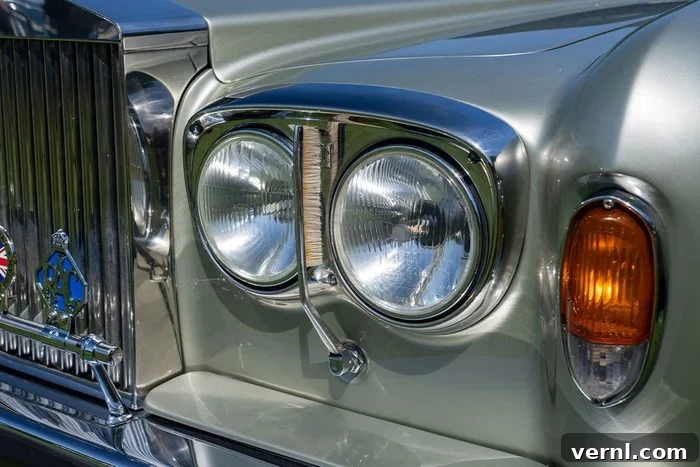
A Journey Through Time: Which Cars Pioneered Headlight Wipers?
The story of headlight wipers is deeply intertwined with a few pioneering automotive manufacturers renowned for their commitment to safety and innovation. According to Saab Planet, these wipers stand as yet another testament to the “pioneering innovations of Saab in its long history.” The Swedish automaker introduced this groundbreaking feature in 1970 on their iconic SAAB 99 model. Saab strategically marketed them as a crucial safety enhancement, emphasizing their role in preserving driver visibility under all conditions. This campaign was not only successful in terms of public perception but also influenced regulatory bodies. In fact, these headlamp washers and wipers became “mandatory in Sweden and other Scandinavian countries” starting in the 1970s, a clear indication of their recognized safety value in regions with notoriously harsh winters and extended periods of darkness.
Beyond Saab: The Era of Headlight Wipers
While Saab might have been the trailblazer, the utility and effectiveness of headlight wipers quickly caught the attention of other luxury car manufacturers. Brands synonymous with safety and engineering excellence, such as Mercedes-Benz, BMW, and Volvo, soon followed suit, integrating headlight wipers into their own premium models. Each manufacturer often put its unique spin on the design, with variations in wiper size, sweep pattern, and integration with the vehicle’s aesthetic. These systems typically consisted of small electric motors driving miniature wiper arms and blades directly onto the headlight lens, often accompanied by washer nozzles that sprayed cleaning fluid onto the surface.
For decades, these mechanical cleaning systems were a common sight on many European luxury vehicles, symbolizing a dedication to robust functionality and driver confidence in adverse conditions. They were particularly prevalent in markets where rigorous winter driving was a norm, and where regulations prioritized active safety features. The sight of these miniature wipers diligently clearing headlamps became a familiar, almost charming, detail on vehicles from that era, distinguishing them from their counterparts lacking such a feature.
The Evolution: From Wipers to High-Pressure Washers
However, as automotive design evolved, so did headlight technology and cleaning methods. The flat, rectangular, or round headlamp shapes of the 1970s and 80s gradually gave way to more aerodynamic, complex, and integrated designs. This shift presented significant challenges for the traditional wiper system. As headlight lenses became more curved and irregularly shaped, mechanical wipers struggled to effectively cover the entire surface without complex and bulky mechanisms. The aesthetic integration also became harder to achieve without compromising the sleek new vehicle profiles.
It was in the early 1990s that “the high-pressure washers started to replace the wipers.” This transition marked a significant technological leap. Instead of physical blades, these systems utilized powerful jets of cleaning fluid, often propelled by high-pressure pumps, to blast away dirt and grime from the headlamp surface. This method offered several advantages: it allowed for cleaner integration into the vehicle’s bumper or bodywork, worked effectively on more complex lens shapes, and eliminated moving parts on the exterior of the headlamp, reducing potential wear and tear. While the fundamental goal of maintaining clear headlights remained, the ‘how’ had undergone a substantial transformation.
Modern Relevance: The Headlight Cleaners of Today
These days, encountering actual mechanical headlight wipers on new vehicles is highly unlikely. Unless you reside in an area where well-preserved older luxury cars are still a common sight, the distinctive feature has largely faded into automotive history. Modern headlight systems, especially those utilizing advanced LED or Xenon technologies, generate less heat than their predecessors, making effective cleaning even more crucial to prevent light output reduction from accumulated debris. Consequently, while the wipers are gone, the underlying need for clean headlights persists.
What you are likely to see on many contemporary luxury and premium vehicles are updated versions of headlight cleaners, almost exclusively in the form of high-pressure washing systems. These systems are often discreetly integrated, with nozzles that pop out from the bumper or are subtly visible near the headlights, activating automatically or upon driver command to spray a powerful jet of cleaning fluid. They represent the continuing evolution of a safety feature that started with simple wipers but has adapted to modern design and technological advancements, ensuring that drivers still benefit from optimal illumination regardless of the driving conditions.
DIY Dreams or Engineering Reality? Can You Install Wipers on Your Car Headlights?
For enthusiasts nostalgic for the classic look of headlight wipers or those simply seeking to enhance their car’s visibility in challenging conditions, the idea of retrofitting wipers onto modern headlights might seem appealing. Unfortunately, the reality is far more complex than a simple aftermarket addition. If you desire car headlights with wipers, your most practical option remains to purchase a vehicle that was originally equipped with them. The reason for this limitation lies in the intricate integration of these systems within the vehicle’s design and electrical architecture.
Headlight wipers are not standalone accessories; they are deeply integrated into the car’s electrical and mechanical systems. For instance, in many older Volvo models, the headlight washers and wipers are controlled by the same lever as the regular windshield wipers. Activating the windshield washers when the headlights are on would also trigger the headlight cleaning cycle at predefined intervals. This coordination requires sophisticated electrical routing, specific relays, dedicated motors, and often, intricate sensor feedback loops to ensure proper operation.
Attempting to implement such an upgrade yourself would be an absolute engineering nightmare. It would involve not just mechanically attaching wiper arms and motors to your headlights – a feat already challenging given modern headlight shapes and materials – but also cutting into your vehicle’s complex wiring harness, installing a separate electrical circuit, potentially adding a dedicated fluid reservoir and pump, and somehow integrating it with existing controls without causing electrical faults or interfering with other vital vehicle systems. The complexity extends to ensuring weatherproofing, proper alignment, and reliable operation over time. Beyond the sheer difficulty, such a modification could void your vehicle’s warranty, create safety hazards, and potentially lead to costly electrical issues.
Furthermore, the physical design of modern headlights, with their complex curves and integrated aerodynamics, is simply not conducive to the effective operation of mechanical wipers. The blades would struggle to cover the entire surface, leading to uneven cleaning and potential damage to the delicate lens materials. Thus, for both practical and technical reasons, installing wipers on a car not originally designed for them is generally considered an unfeasible and ill-advised undertaking. Modern high-pressure washer systems are a more practical and effective solution for contemporary vehicles, where headlight cleaning remains a crucial aspect of driving safety.
Sources
- Using the windshield and headlight washers, Volvo Cars.
- How it works: Saab 99 Headlamp Wipers, Saab Planet, 2017.