Our smartphones have become indispensable tools, connecting us to the world and serving as vital communication hubs. With constant daily use, it’s no surprise that their screens accumulate a collection of fingerprints, smudges, and unseen grime. While their sleek, glass-like appearance might suggest that conventional glass cleaners are the ideal solution for sparkling results, this common misconception can lead to irreversible damage. Many users unknowingly risk compromising their device’s functionality and aesthetic appeal by applying harsh chemical solutions designed for household windows to sensitive touchscreen technology.
“The sneaky part is that it is invisible,” says Fergal Glynn of Mindgard. “You won’t even know that it was there, until it is gone and your screen is left permanently dull and smeared.” This invisible layer he refers to is a specialized coating, meticulously engineered to protect your device and enhance your user experience. Understanding these intricate layers and the potential harm traditional cleaners can inflict is crucial for maintaining your smartphone in pristine condition. This comprehensive guide will delve into the detrimental effects of inappropriate cleaning agents and provide you with expert-backed tips on how to safely and effectively clean your phone without causing lasting damage.
Can You Use Glass Cleaner to Clean Your Cell Phone Screen? An Unequivocal No
In short, using glass cleaner on your cell phone screen is a definitive mistake that can have serious, long-term repercussions for your device. Despite the transparent, glassy appearance of modern smartphone screens, they are far more complex than a typical windowpane. These screens are engineered with multiple layers, including a crucial top coating designed to enhance durability, improve touch responsiveness, and repel contaminants. Household glass cleaners, while effective for windows and mirrors, are formulated with powerful chemicals that are incompatible with these delicate smartphone screen technologies.
The primary culprits in most glass cleaners are ammonia and high concentrations of alcohol. Both of these chemicals are highly corrosive to the specialized protective layers found on your smartphone screen. Ammonia, a strong alkaline compound, can aggressively strip away vital coatings, while concentrated alcohol acts as a powerful solvent. These harsh agents are not only damaging to the screen’s surface but can also seep into the tiny, often imperceptible, openings of your phone, such as speaker grilles, microphone ports, and charging ports. Once inside, they can lead to internal corrosion, short circuits, and a host of other electronic malfunctions that are costly to repair and often not covered under warranty. Therefore, for the longevity and optimal performance of your smartphone, it’s paramount to avoid glass cleaners altogether.
Why Does Glass Cleaner Damage Cell Phone Screens So Severely?
The damage inflicted by glass cleaner on smartphone screens stems from its ability to strip away two critical protective layers: the anti-glare coating and the oleophobic coating. These specialized coatings are not merely cosmetic; they play a fundamental role in your phone’s functionality and user experience. The anti-glare coating helps to reduce reflections, making your screen more legible in various lighting conditions, while the oleophobic (oil-repelling) coating is designed to prevent fingerprints, smudges, and natural skin oils from adhering to the screen’s surface. This keeps your screen looking cleaner for longer and makes it significantly easier to wipe away any residue.
“Once they’re gone, your screen actually gets dirtier faster and becomes harder to clean,” says Marcos De Andrade of Green Planet Cleaning Services. Without these protective barriers, your screen becomes a magnet for grime. Fingerprints become more prominent and more stubbornly cling to the surface, requiring more effort to clean, which in turn increases the risk of micro-scratches. The absence of the oleophobic layer can also make the screen feel less smooth to the touch, potentially impacting the fluidity of gestures and overall touch sensitivity. This degradation in tactile feedback can diminish the premium feel of your device and hinder its responsive performance.
Beyond the surface, the chemical components in glass cleaners pose a significant risk of internal damage. Emily Stallings of Casely explains, “That also makes it easier for moisture to seep into ports and speakers, potentially causing corrosion, muffled sound or charging issues.” The protective seals around these vulnerable areas are not designed to withstand harsh chemicals. When these chemicals penetrate, they can corrode the delicate metal contacts, circuits, and components within the device. This corrosion can manifest as erratic charging behavior, distorted audio output from speakers or headphones, or even complete system failures. Furthermore, wiping with abrasive materials often used with glass cleaner, such as paper towels or rough cloths, can exacerbate the problem. Stallings notes, “Wiping with glass cleaner, especially with rough materials, can also create micro-scratches and reduce touch sensitivity over time.” These microscopic scratches accumulate over time, degrading the screen’s clarity and resilience, ultimately leading to a duller, less vibrant display that is more susceptible to further damage.
What Products Around the Home Can You Use to Safely Clean Your Cell Phone Screen?
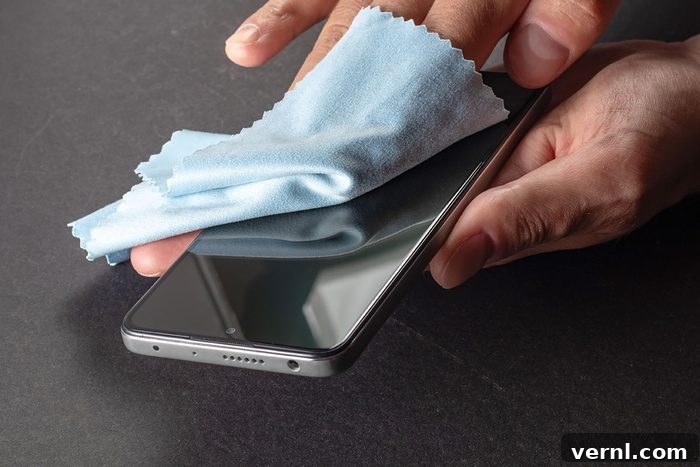
Fortunately, you don’t need harsh chemicals to keep your smartphone screen spotless and hygienic. For daily or routine cleaning, the best and safest tool is a high-quality dry microfiber cloth. Microfiber cloths are specifically designed with tiny, interlocking fibers that effectively trap dust, oils, and smudges without scratching delicate surfaces. They are incredibly soft and non-abrasive, making them perfect for sensitive electronics. Always opt for a clean, dry microfiber cloth, as dirt or debris embedded in the cloth can inadvertently scratch the screen.
For a deeper clean or to remove more stubborn grime, you can slightly dampen a corner of your microfiber cloth with distilled water. “The water being distilled is the most important factor,” emphasizes Glynn. Tap water contains various minerals and impurities, such as calcium and magnesium, which, with repeated use, can leave behind microscopic deposits on your screen. These mineral residues can accumulate over time, creating a hazy film or even micro-etching on the screen’s surface, impacting its clarity and responsiveness. Distilled water, being free of these minerals, ensures a residue-free clean, leaving your screen sparkling without any unwanted film. Remember, the key is to dampen the cloth, not soak it, and never apply liquid directly to the phone screen.
While DIY solutions are often sufficient, there are also commercially available screen-safe wipes and sprays specifically formulated for electronics. When purchasing these products, it’s vital to be discerning. Look for labels that explicitly state they are safe for smartphones, tablets, and other electronic screens. However, as Glynn wisely cautions, “‘screen-safe’ labels are not regulated by any authority, so look for pH-neutral formulas, as they are a better indication over any marketing language.” A pH-neutral formula ensures that the product is neither overly acidic nor overly alkaline, preventing any chemical reactions that could harm your screen’s coatings. Always check the ingredients list to avoid products containing ammonia, alcohol (especially isopropyl alcohol in high concentrations), bleach, or other abrasive solvents. These specialized cleaning solutions can offer convenience, especially when on the go, but their effectiveness still relies on proper application using a clean microfiber cloth.
What is the Proper Way to Clean a Cell Phone Screen? A Step-by-Step Guide
Maintaining a clean smartphone screen not only enhances its appearance but also contributes to better hygiene and extends the device’s lifespan. Follow these detailed steps for a safe and effective cleaning process:
- Prepare Your Device: Before you begin, always turn off your phone completely. This prevents accidental touches and interactions with the screen during cleaning, ensures safety, and allows you to clearly see any smudges or dirt. Unplug any cables, headphones, or external accessories connected to your device.
- Remove and Clean the Case: Carefully remove your phone from its case. “Case hygiene matters too, as dirt trapped under the case can scratch your phone,” says Stallings. Over time, dust, lint, and debris can accumulate between the phone and the case, acting as abrasive agents. Wash your phone case separately with mild soap and water, rinse thoroughly, and allow it to air-dry completely before reattaching it. This ensures that no hidden dirt is transferred back to your freshly cleaned phone.
- Gently Wipe the Screen: Take a clean, dry microfiber cloth. Using light, circular motions, gently wipe away smudges, fingerprints, and surface dust from your screen. “Don’t use pressure, as it is bad for your screen,” advises Glynn. “People sometimes wipe too hard, thinking that effort equals cleanliness, but gentle and consistent work is much better.” Excessive pressure can damage the screen’s internal components or distort pixels. Fold your microfiber cloth to ensure you are always using a clean section, preventing the redistribution of dirt.
- Avoid Abrasive Materials: Never use abrasive materials such as paper towels, tissues, rough cloths, or clothing to clean your screen. These materials, while seemingly soft, contain wood fibers that are coarse at a microscopic level and can leave tiny scratches on your screen’s delicate surface over time. These micro-scratches degrade the screen’s clarity and make it more susceptible to further damage.
- For a Deeper Clean (Using Distilled Water): If dry wiping isn’t sufficient for stubborn grime, dampen a very small section of your microfiber cloth with distilled water. Crucially, never spray or apply liquid directly onto your phone screen. The liquid can seep into ports and openings, causing internal damage. Lightly wipe the screen with the dampened cloth, focusing on the affected areas. Immediately follow up with a dry section of the microfiber cloth to remove any moisture.
- Address Edges and Ports with Care: Pay special attention to the edges of your screen and around the ports (charging port, speaker grilles, microphone holes). These areas often accumulate dirt and can be entry points for liquid. Use a dry, very lightly dampened cotton swab or the corner of your microfiber cloth to gently clean these areas, ensuring no liquid enters the openings. For stubborn dry debris in ports, a soft-bristled, clean toothbrush or a toothpick (used very gently) can carefully dislodge particles, but extreme caution is advised to avoid damaging internal contacts.
- Allow Complete Air-Drying: After cleaning, allow your device to air-dry completely for several minutes before turning it back on or placing it back in its case. Even minute amounts of residual moisture can cause electrical issues if the phone is powered on too soon. Ensuring complete dryness is a critical step in preventing moisture-related damage.
“Remember, water resistance does not protect against cleaning sprays, abrasive wipes or household cleaners; and pressing too hard on the edges can damage touch sensitivity,” reminds Stallings. Modern smartphones often boast water resistance, but this typically refers to protection against splashes or brief immersion in clean water, not against chemical degradation or high-pressure liquid application. She also strongly recommends using a quality screen protector to provide an additional sacrificial layer against scratches and everyday wear, significantly prolonging the pristine condition of your original screen.
What if I’ve Been Cleaning My Screen with Glass Cleaner? Assessing and Addressing the Damage
If you’ve discovered this information after occasionally cleaning your smartphone screen with glass cleaner, don’t panic immediately. If you’ve only used it a few times and sparingly, it’s possible that the damage to your screen’s protective coatings is minimal or not yet noticeable. However, continued or frequent use will almost certainly compromise these layers. The key is to recognize the signs of damage and take appropriate action.
The most common indicators that your screen’s protective coatings have been compromised include a noticeable change in its tactile feel—it might feel less smooth or more “grabby” to the touch. You’ll likely observe that your screen gets dirtier much faster than it used to, accumulating fingerprints and smudges with alarming ease, and becomes significantly harder to wipe clean. “The screen will still function fine, but it will smudge more easily,” says Andrade, highlighting that the primary impact is often on the user experience and aesthetics rather than immediate functionality.
If you suspect or confirm that your screen’s oleophobic coating has been stripped, there are a few options. First, consider trying a matte screen protector as an affordable and effective workaround. Matte protectors not only provide a new layer of physical protection against scratches but also have a slightly textured finish that helps to disguise existing smudges and reduces glare, partially restoring the visual and tactile experience you might have lost. While it won’t magically restore the original coating, it can significantly improve the daily usability of your device.
However, if the damage is more extensive, beyond cosmetic imperfections you can live with, or if there is functional damage, professional repair might be necessary. This includes issues such as significantly reduced touch sensitivity, persistent greasiness that even a screen protector can’t alleviate, or clear signs of liquid ingress into ports leading to charging issues, muffled audio, or unresponsive buttons. In such cases, the phone may require a screen replacement, internal cleaning, or component repair. Consulting a certified technician is recommended to assess the full extent of the damage and determine the most viable repair solution. Prevention remains the best strategy, but knowing how to react to accidental damage is equally important for preserving your device.
About the Experts
- Emily Stallings is co-founder of Casely, an online retailer specializing in phone cases, power pods and accessories, with a focus on self-expression and style.
- Fergal Glynn is chief marketing officer and AI security advocate at Mindgard, an AI consulting and security company.
- Marcos De Andrade is founder of Green Planet Cleaning Services, an eco-luxury residential and commercial cleaning company in Marin County, California.
RELATED: Essential Smartphone Care and Digital Safety
- See a Green Dot on Your Android Phone? Here’s What It Means
- If You Get a USPS Scam Text, You Need To Do This Immediately
- This Is How Often You Should Restart Your Phone