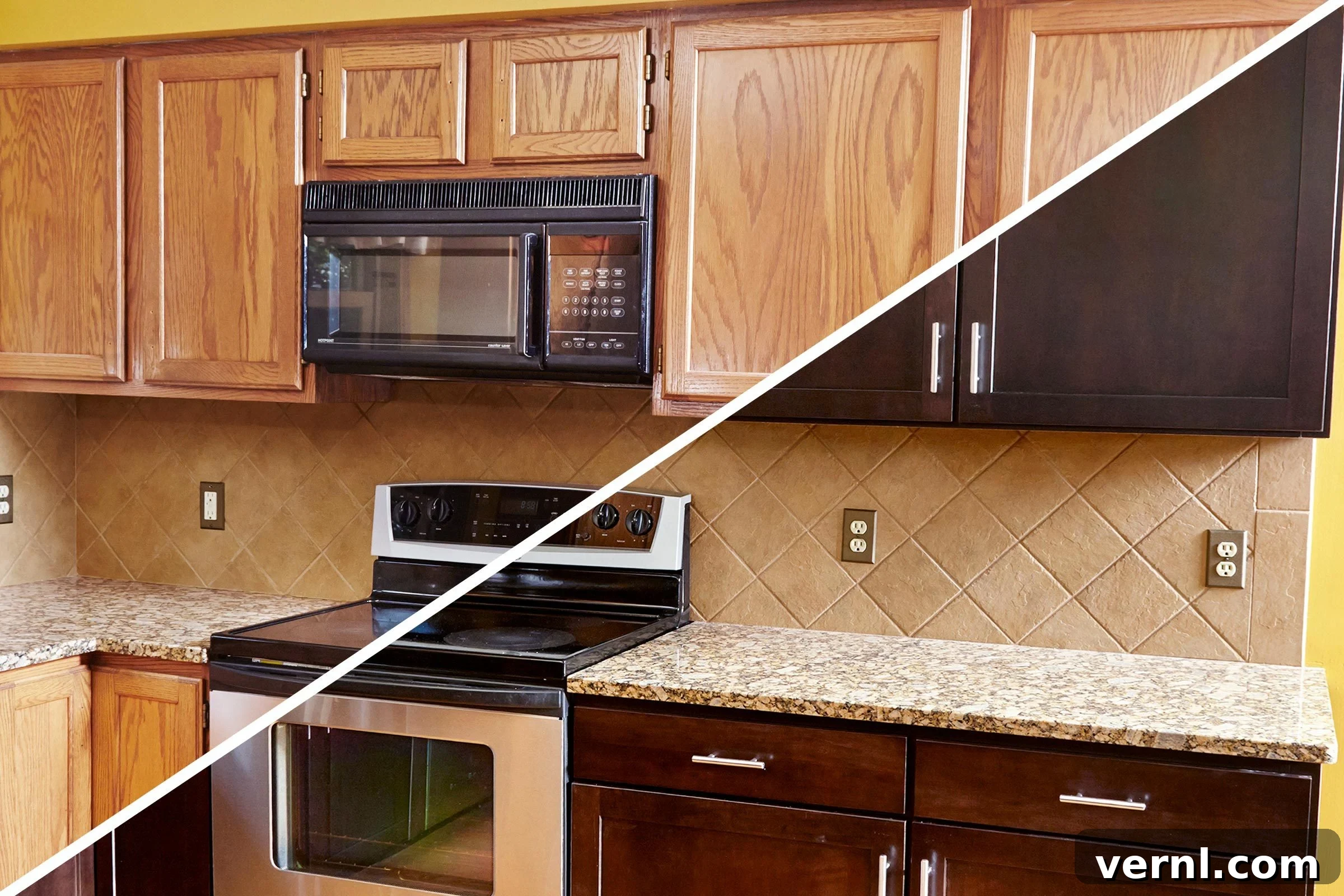
Embarking on a kitchen remodel is an exciting prospect, promising a refreshed space that enhances both your home’s aesthetics and its market value. However, the hefty price tag associated with a full kitchen renovation, especially when it comes to replacing cabinets, can often be a daunting hurdle. Industry averages suggest that new kitchen cabinets alone can account for a significant portion of the budget, often soaring into the five-figure range. Imagine the possibilities if a substantial part of that cost could be reallocated to premium appliances, luxurious countertops, bespoke flooring, or those unique custom touches that truly make a kitchen yours.
This dream can indeed become a reality when you choose the smart, cost-effective, and increasingly popular alternative of refacing your kitchen cabinets instead of opting for their complete replacement. Cabinet refacing offers an ingenious way to revitalize your kitchen’s focal point without the extensive demolition, disruption, and expense typically associated with a full cabinet overhaul. It’s a transformative process that breathes new life into your existing cabinetry, delivering a high-end look and feel at a fraction of the cost. In this comprehensive guide, we’ll delve deep into everything you need to know about kitchen cabinet refacing, helping you determine if this innovative renovation solution is the perfect fit for your home and budget.
What Exactly Is Kitchen Cabinet Refacing?
Cabinet refacing, at its core, is a sophisticated form of kitchen cabinet makeover. It involves taking your existing, structurally sound cabinet boxes and giving them a complete aesthetic overhaul. Unlike painting, which merely changes the surface color, or full replacement, which involves ripping out and installing entirely new units, refacing strikes a perfect balance. The process strategically preserves the original cabinet frames, which are often the most stable and costly part of the cabinetry, while dramatically updating their visible elements. This not only saves you money but also significantly reduces the environmental impact of your renovation.
The transformation begins by covering the exposed front and side surfaces of your old cabinet boxes – also known as the face frames and end panels – with new, high-quality material. This new material can be either a durable laminate or a beautiful hardwood veneer, meticulously chosen to match your desired aesthetic. These materials are precisely cut to size and expertly attached using a long-lasting, industrial-grade contact cement, ensuring a seamless and permanent bond. The goal is to make these original structures appear as if they were constructed from entirely new cabinet material, completely concealing their age and previous finish.
Given that most cabinet doors feature intricate designs, such as inset panels or raised profiles, simply covering them with veneer or laminate isn’t practical or aesthetically pleasing. Therefore, a crucial step in the refacing process is the replacement of all existing cabinet doors and drawer fronts. These are typically custom-ordered from a manufacturer that specializes in producing doors and drawer fronts to complement the chosen veneer or laminate. This ensures a perfect match in material, color, and grain pattern, creating a cohesive and brand-new look. The same principle applies to any existing moldings or decorative trim around the cabinets; these are also replaced with new pieces that perfectly integrate with the updated design.
One of the appealing aspects of cabinet refacing is its accessibility. While professional installation guarantees a polished finish, many aspects of cabinet refacing are entirely within the realm of a dedicated DIY enthusiast. With meticulous preparation, a keen eye for detail, the right tools, and quality products, homeowners can achieve a stunning kitchen transformation for significantly less than the cost of purchasing and installing new cabinets. This makes refacing an empowering project for those looking to inject fresh style into their kitchen while maintaining control over their budget and enjoying the satisfaction of a hands-on renovation.
Pros and Cons of Kitchen Cabinet Refacing: A Balanced Perspective
Like any significant home improvement project, kitchen cabinet refacing comes with its unique set of advantages and disadvantages. Understanding both sides of the coin is crucial for making an informed decision that aligns with your renovation goals, budget, and expectations.
Pros of Cabinet Refacing
-
Substantial Cost Savings: This is arguably the most significant benefit. Cabinet refacing is almost always considerably less expensive than a full cabinet replacement. By reusing the existing cabinet boxes, you save on material costs, manufacturing, and the intensive labor involved in demolition and installing entirely new units. These savings can be channeled into other kitchen upgrades or simply kept in your pocket.
-
Significantly Faster Completion Time: Refacing projects generally take far less time to complete compared to removing old cabinets and installing new ones. A typical refacing job might span a few days to a week, whereas a full replacement could extend for several weeks, if not longer, especially with custom cabinetry. This reduced timeline means less disruption to your daily life.
-
Minimal Disruption and Less Invasive: Since the core cabinet boxes remain in place, the refacing process is much cleaner and less disruptive. There’s minimal demolition, which translates to less dust, debris, and noise. In many instances, you might even be able to leave your dishes and cookware on the shelves inside the cabinet boxes while the refacing work is underway, allowing your kitchen to remain partially functional throughout the project.
-
Eco-Friendly and Sustainable Choice: Beyond disposing of a few old cabinet doors and some outdated hardware, there is very little waste generated during refacing. This makes it a much greener and more eco-conscious option than sending entire sets of old cabinets to the landfill. By giving existing materials a second life, you contribute to reducing waste and conserving resources.
-
Design Versatility and Aesthetic Transformation: Refacing offers an incredible array of aesthetic possibilities. With a vast selection of laminates, wood veneers, and new door styles, colors, and finishes, you can achieve virtually any desired look, from modern minimalist to classic farmhouse. It’s a powerful tool for a complete design overhaul without structural changes.
-
Potential for Increased Home Value: An updated, stylish kitchen is a major selling point for any home. Refacing can significantly boost your kitchen’s appeal and functionality, offering a strong return on investment by making your home more attractive to potential buyers.
Cons of Cabinet Refacing
-
Doesn’t Solve Structural Problems: This is a critical limitation. Cabinet refacing is only suitable for cabinets that are structurally sound and in good condition. If your existing cabinet boxes suffer from severe water damage, rot, warped frames, or if the face frames are broken or separating from the sides, refacing is not the solution. In such cases, replacing the damaged units or the entire set is the more appropriate and durable option.
-
Requires Meticulous Work and Patience (for DIYers): While DIY-friendly, refacing demands several days of painstaking, precise work. Achieving a professional-looking finish requires careful measurements, accurate cuts, flawless application of veneers, and meticulous installation of new doors and hardware. For some DIYers, this level of commitment and attention to detail might be overwhelming. Alternatives like painting cabinets are also big projects but might involve different skill sets.
-
Interior and Underside Remain Unchanged: Refacing primarily focuses on the exterior visible surfaces. It won’t improve the interior condition of the cabinet boxes, address worn shelf liners, or update the undersides of upper cabinets. If these areas are also a concern, you may need to add painting or lining the interiors to your project list, or consider adding under-cabinet lighting separately.
-
Limited to Existing Layout: If your current kitchen layout is dysfunctional, inefficient, or simply doesn’t meet your needs, refacing will not solve these fundamental problems. Refacing preserves the existing footprint. A new layout typically necessitates removing the old cabinets and installing entirely new ones to reconfigure the space. Investing in refacing when a layout change is truly desired could be a waste of time and money.
-
Can Still Be Costly (Professionally Installed High-End Materials): While generally cheaper than replacement, opting for premium solid wood veneers, custom-built doors, and professional installation can still result in a significant investment. In some high-end scenarios, the cost of refacing can approach that of entry-level new cabinets, making careful budgeting and material selection crucial.
Understanding Kitchen Cabinet Refacing Costs
The cost to reface kitchen cabinets can vary widely, but it remains a consistently more budget-friendly option than full replacement. Generally, homeowners can expect to pay anywhere between $4,000 and $8,000 for a professionally refaced kitchen. For smaller kitchens, the costs could be as low as $1,000 to $3,000 for materials if doing it yourself, or up to $5,000 for professional work. An average-sized kitchen typically falls into the $6,500 range when handled by professionals.
Several key factors influence the final price tag:
-
Size of Your Kitchen: The number of linear feet of cabinetry to be refaced is the primary determinant. More cabinets mean more material and labor.
-
Material Choice: Laminate veneers are the most economical option. Rigid thermofoil (RTF) offers a wider range of colors and styles at a mid-range price. Real wood veneers, especially exotic species, will be the most expensive, offering a natural and luxurious finish.
-
Cabinet Door and Drawer Fronts: The style, material, and finish of your new doors and drawer fronts significantly impact cost. Basic flat panel laminate doors are cheaper than solid wood shaker-style or raised-panel doors with intricate detailing.
-
Hardware: New hinges, knobs, and pulls are essential for a complete refresh. The cost can range from inexpensive standard options to high-end designer pieces.
-
Professional vs. DIY: Hiring a professional refacing company will include labor costs, which can represent a significant portion of the total. A DIY approach will save on labor but requires careful budgeting for materials and tools.
-
Geographic Location: Labor costs for professional installers can vary significantly depending on your region and local market rates.
Choosing the Right Materials for Cabinet Refacing
The success and longevity of your cabinet refacing project heavily depend on the quality and type of materials you select. Each option offers distinct aesthetic and practical benefits.
-
Veneers:
-
Wood Veneer: Thin slices of real wood (e.g., maple, oak, cherry, walnut). They offer the authentic look and feel of solid wood, allowing for natural grain patterns and staining options. Wood veneers can be more delicate during installation and often cost more.
-
Laminate (Plastic Laminate): A synthetic material made by bonding layers of paper or fabric with resin. Laminates are highly durable, resistant to moisture and scratches, and available in a vast array of colors and patterns, including convincing wood grain simulations. They are typically the most budget-friendly option.
-
Rigid Thermofoil (RTF): A vinyl film heat-applied to an MDF (medium-density fiberboard) core. RTF offers a smooth, seamless finish that is easy to clean and highly durable. It’s popular for its consistent color and can mimic painted wood or modern sleek finishes. It’s often a good mid-range option.
-
-
Matching Doors and Drawer Fronts: These are crucial for the overall aesthetic. They should be ordered from a manufacturer that can match the chosen veneer or laminate perfectly. Options include solid wood, MDF, or particleboard with an RTF or laminate finish. Styles range from simple slab to shaker, recessed panel, or raised panel.
-
Thin Plywood or Veneer Blanks for Cabinet Ends: For the exposed side panels of your cabinets, thicker, more durable materials like thin plywood (often 1/4 inch) or specialized veneer panels are used to create a truly finished look and add extra durability.
-
Hardware: New hinges (concealed European-style hinges are popular for a sleek look), door pulls, and knobs are essential. Choose hardware that complements your new cabinet style and finish, as it significantly contributes to the overall aesthetic.
-
Adhesives: High-quality, water-based contact cement is vital for a secure and long-lasting bond between the veneer/laminate and the cabinet boxes.
Essential Kitchen Cabinet Refacing Tools and Materials
Before you embark on your cabinet refacing journey, gathering the correct tools and materials is paramount for a smooth and successful project. Here’s a comprehensive list:
- Sandpaper: Various grits (100-150 for roughing, 180-220 for finishing) to properly prepare the cabinet surfaces for adhesion.
- Denatured Alcohol or Degreaser: For thoroughly cleaning and degreasing cabinet surfaces before applying veneer.
- Veneer (in sheets or strips): Your chosen material, cut to specifications for face frames and end panels.
- Matching Doors and Drawer Fronts: Custom-ordered to fit your cabinet openings.
- Thin Plywood or Veneer Blanks for Cabinet Ends: For exposed side panels.
- Laminate Cutter or Utility Knife and Straight Edge: For precise, clean cuts of veneer/laminate sheets.
- Veneer Roller: Essential for applying even pressure and ensuring a strong bond with no air bubbles.
- Water-Based Contact Cement: The adhesive that secures the veneer to the cabinet boxes.
- Door Hinges: New hinges, often concealed, to match your new doors.
- Door Pulls and Knobs: Hardware to complete the look of your new doors and drawers.
- Measuring Tape and Pencil: For accurate measurements and markings.
- Clamps: To hold materials in place during adhesion or while drying.
- Router with Flush Trim Bit: For perfectly trimming veneer edges (especially for wood veneers).
- Safety Glasses and Gloves: Essential personal protective equipment.
- Putty Knife/Scraper: For applying contact cement and smoothing.
- Drill: For installing new hinges and hardware.
- Saw (Circular or Table Saw): For cutting plywood or larger veneer panels if needed.
Is Kitchen Cabinet Refacing Truly Worth It?
The question of whether kitchen cabinet refacing is a worthwhile investment ultimately boils down to your specific circumstances, goals, and the current condition of your kitchen. It’s not a one-size-fits-all solution, but for many homeowners, it presents an incredibly appealing and practical path to a stunning kitchen transformation.
Refacing is undeniably worth it if:
-
You are satisfied with the existing layout and functionality of your kitchen. If the current arrangement works for your lifestyle, refacing allows you to update the aesthetics without undertaking a more invasive and costly structural renovation.
-
Your current cabinet boxes are structurally sound, well-built, and free from significant damage like water rot, severe warping, or broken frames. Refacing builds upon a solid foundation, so the integrity of the existing boxes is paramount.
-
You’re looking to achieve a completely new look – a modern update, a classic refresh, or a different color scheme – at a significantly lower cost and with less disruption than a full replacement.
-
You appreciate the eco-friendly aspect of reusing existing materials and reducing landfill waste.
-
You have the patience and precision for a DIY project, or you’re willing to invest in professional installation for a flawless finish.
Conversely, refacing may not be the best option if:
-
Your existing cabinets are severely damaged, water-logged, or structurally compromised. As mentioned, refacing doesn’t fix broken cabinets; it only covers them. In such cases, addressing the underlying issues or replacing the damaged units is necessary.
-
You are unhappy with the current kitchen layout and desperately want to change the placement of appliances, add an island, or reconfigure the flow of your workspace. Refacing is a cosmetic update, not a spatial redesign.
-
You’re seeking interior upgrades to your cabinets, such as new organizational systems, soft-close drawers, or deeper storage, which are often easier to implement with entirely new cabinetry.
In either scenario, it’s crucial to carefully consider the total cost of refacing, the potential savings compared to replacement, and the amount of work it entails – whether you plan to DIY or hire a professional. There might even be a hybrid approach, where it makes sense to replace one or two severely damaged cabinets while refacing the rest of the functional units. Given the precision and potential complexity involved in achieving a truly professional result, particularly with certain materials, hiring a skilled contractor or specialist for the job can often be the most prudent decision, ensuring a high-quality finish and peace of mind.
Ultimately, cabinet refacing offers an intelligent, stylish, and budget-conscious pathway to a revitalized kitchen. By carefully assessing your needs, evaluating the condition of your existing cabinetry, and weighing the pros and cons, you can decide if this transformative home improvement project is the right choice to achieve the kitchen of your dreams.