The Ultimate Guide to Washing Bath Mats: Keep Your Bathroom Fresh and Hygienic
Think about it: your bath mats, whether positioned in front of your sink or right next to your shower, are constantly exposed to moisture, foot traffic, and the unique environment of your bathroom. This combination makes them prime breeding grounds for germs, mold, and mildew. In fact, bath mats are such a high-traffic germ hotspot that experts recommend cleaning them at least once a week to maintain optimal bathroom hygiene.
The good news? Keeping your bath mats sparkling clean and free of unsightly messes and unwanted bacteria is much simpler than you might think. Even if you don’t have immediate access to a washing machine, there are effective methods to ensure your mats are fresh. This comprehensive guide will walk you through the easiest and most efficient ways to wash your bath mats, covering both hand washing and machine washing techniques, along with essential care tips to extend their lifespan.
Why Regular Bath Mat Cleaning is Essential for Your Home
Beyond aesthetic appeal, regularly cleaning your bath mats plays a crucial role in maintaining a healthy and safe home environment. Here’s why it’s a non-negotiable part of your cleaning routine:
- Battling Germs and Bacteria: Bathrooms are inherently moist environments, providing ideal conditions for bacteria, fungi, and mold to thrive. Your bath mat absorbs water and skin cells, becoming a perfect host for these unwelcome guests. Regular washing significantly reduces their presence, preventing potential health issues.
- Preventing Mold and Mildew: Constant dampness leads to mold and mildew growth, which not only looks unsightly and creates unpleasant odors but can also trigger allergies and respiratory problems for sensitive individuals. Thorough washing and drying are key preventative measures.
- Eliminating Unpleasant Odors: A musty smell in your bathroom often originates from damp bath mats. Cleaning them frequently removes trapped moisture and odor-causing bacteria, leaving your bathroom smelling fresh.
- Extending Mat Lifespan: Dirt, grime, and cleaning product residues can break down the fibers of your bath mat over time. Regular and proper cleaning preserves the material, color, and texture of your mats, helping them last longer and look better.
- Maintaining Hygiene and Appearance: A clean bath mat contributes to the overall cleanliness and inviting atmosphere of your bathroom, making it a more pleasant space for everyone.
Understanding Your Bath Mat Type for Optimal Cleaning
Before you begin the cleaning process, it’s vital to identify the material of your bath mat. Different materials require different care, and understanding this will help you choose the best washing method and avoid damaging your mat. Always check the care label first, as it provides the manufacturer’s specific recommendations.
- Cotton Bath Mats: These are very common, highly absorbent, and generally durable. Most cotton mats are machine washable and can withstand regular cycles.
- Microfiber and Chenille Bath Mats: Known for their softness, quick-drying properties, and excellent absorbency, these mats are usually machine washable on a gentle cycle. They can sometimes be machine-dried on low heat.
- Memory Foam Bath Mats: These offer superior comfort but are often more delicate. Many memory foam mats are not suitable for machine washing as the foam can break down. Spot cleaning or gentle hand washing is typically recommended.
- Rubber-Backed or Latex-Backed Bath Mats: The rubber or latex backing prevents slipping but is sensitive to heat. These mats must be washed in cold water and air-dried to prevent the backing from cracking, peeling, or degrading.
- PVC or Vinyl Bath Mats: Often used inside showers or tubs, these are usually easy to wipe clean or can be hand-washed with mild soap and water.
- Natural Fiber Bath Mats (e.g., Bamboo, Jute): These offer an eco-friendly aesthetic but are typically not machine washable. Spot cleaning or very gentle hand washing is often the only option, with thorough air drying.
How to Wash Bath Mats By Hand: A Gentle Yet Effective Approach
Hand washing is an excellent choice for bath mats made from delicate materials that wouldn’t survive a machine wash, or when you simply don’t have a washing machine readily available. This method ensures a thorough clean while being gentle on the fabric.
What You’ll Need:
- A sturdy spray bottle
- White vinegar
- Mild dish soap
- A clean microfiber cloth or sponge
- A soft-bristle brush (optional, for tougher stains)
- Gentle laundry detergent
- A bathtub or large basin
Step-by-Step Hand Washing Instructions:
- Preliminary Shake-Out: Begin by taking your bath mat outside. Vigorously shake it to dislodge any loose dirt, dust, hair, or debris that may be clinging to the fibers. This step prevents these particles from clogging your drain or redepositing during washing. For an even deeper clean, you can also give it a quick vacuum.
- Prepare Your Stain Treatment Solution: In your spray bottle, mix a powerful yet gentle cleaning solution. Combine one part water, one part white vinegar, and add one to three tablespoons of mild dish soap. White vinegar is a natural disinfectant and deodorizer, while dish soap helps break down grease and grime. Shake the bottle gently to mix the ingredients thoroughly.
- Target Stains and Discolored Areas: Carefully inspect your bath mat for any noticeable stains, particularly dirty spots, or areas of discoloration. Spray your homemade cleaning solution directly onto these problem areas, ensuring they are well saturated.
- Allow the Solution to Penetrate: Let the cleaning solution sit on the targeted spots for about a minute. This allows the vinegar and soap to penetrate the fibers and start breaking down the dirt and grime, making them easier to remove.
- Scrub Away Stains: Using your microfiber cloth, sponge, or soft-bristle brush, gently but firmly scrub the treated areas. Work in small circular motions. For tougher stains, apply a bit more pressure, but be careful not to damage the mat’s fibers, especially if it’s a delicate material.
- Prepare the Bathing Area: Once the stains are pre-treated, prepare your bathtub or a large basin. Fill it with at least half a foot of lukewarm water. Avoid hot water, especially for mats with rubber backing, as it can cause damage.
- Add Detergent to Water: Pour a few tablespoons of your gentle laundry detergent into the water. Swish the water around to create some suds and ensure the detergent is evenly distributed.
- Immerse and Scrub the Mat: Place your bath mat into the tub or basin, ensuring it is fully submerged. Using your sponge or hands, gently scrub the entire surface of the mat. Pay attention to areas that still appear dirty or discolored. You can use your feet to gently agitate the mat if it’s large and sturdy.
- Thorough Rinsing: Drain the dirty water from the tub. Rinse the bath mat under cool, running water until all traces of soap residue are gone. This is crucial; any leftover soap can attract new dirt and make the mat stiff or sticky. Squeeze out as much excess water as you can.
- Hang to Dry Completely: The most important step for preventing mold and mildew is proper drying. Hang your bath mat outside in a sunny, well-ventilated area. If drying indoors, ensure it’s in a spot with good airflow, perhaps near a fan or open window. Make sure the mat is completely dry before returning it to your bathroom to prevent moisture retention and subsequent germ growth.
Bonus Tip: If you’re looking for an alternative that requires less frequent washing, consider a stone bath mat. These innovative mats are highly absorbent and quick-drying, often only requiring a simple wipe-down or light sanding.
How to Clean a Bath Mat In Your Washing Machine: Convenience Meets Clean
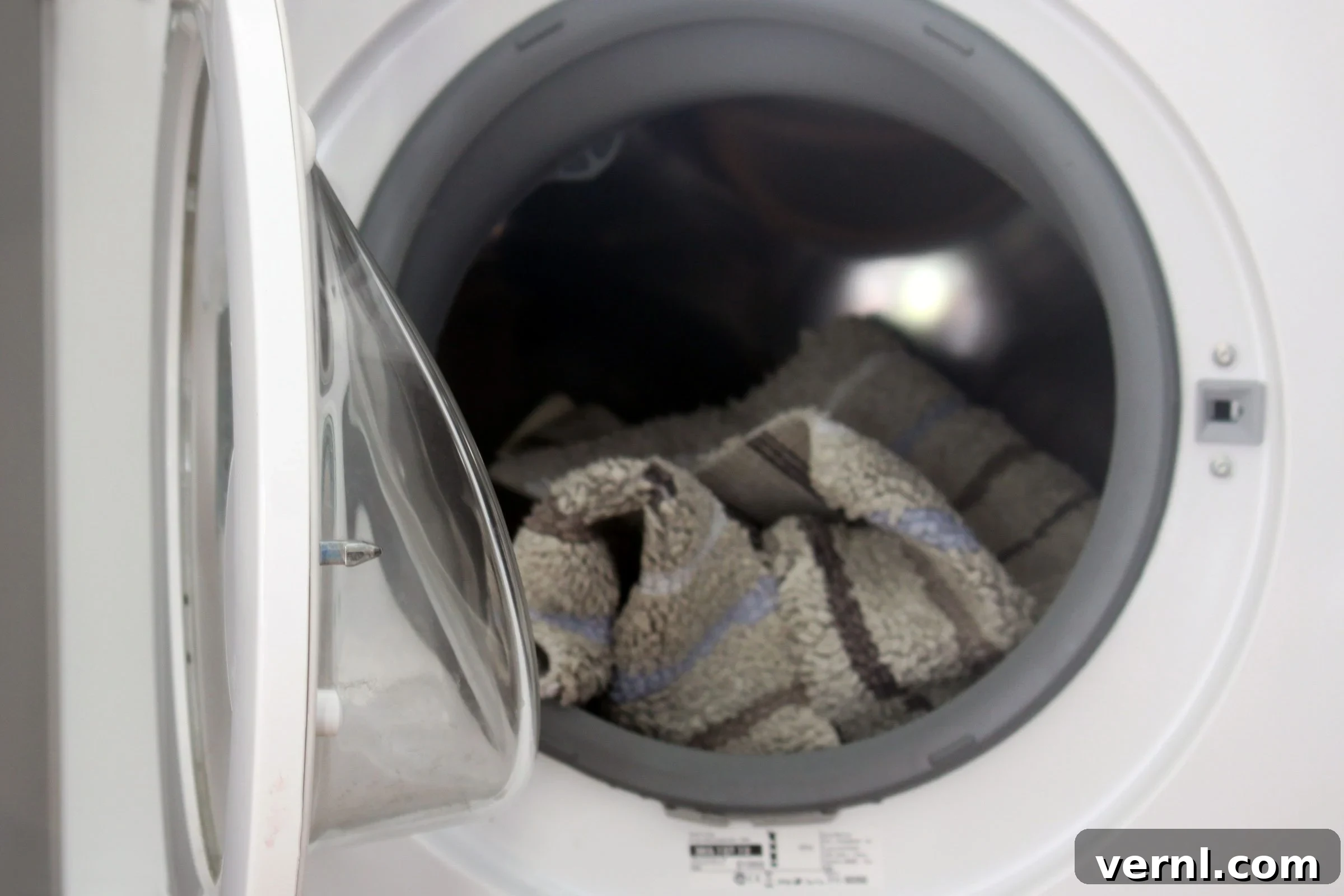
For bath mats made from more durable materials like cotton, microfiber, or chenille (without delicate backings), your washing machine is a convenient and effective cleaning tool. However, a few considerations ensure a proper wash and protect your mat.
Before You Begin: Important Considerations
- Check Care Label: Always confirm that your bath mat is machine washable.
- Material Durability: This method is suitable for semi-durable materials. Avoid machine washing delicate mats, memory foam, or those with highly fragile rubber backings.
- Load Balance: Depending on your washing machine (especially top-loaders), you might need to wash the mat by itself or with a few other items of similar bulk (like towels). The main thing is that the load needs to be balanced. An unbalanced load can cause the machine to shake violently or fail to spin dry properly, potentially damaging both the mat and the machine. Refer to your owner’s manual for specific recommendations on washing bulky items.
Step-by-Step Machine Washing Instructions:
- Pre-Wash Prep: Just like with hand washing, take your bath mat outside and give it a good shake to remove any loose dust, hair, or debris. This prevents these particles from accumulating in your washing machine or drain.
- Load the Machine: Place the bath mat into the washing machine. If washing with other items, choose similar-colored towels or sturdy linens to balance the load. Add a gentle, high-efficiency (HE) laundry detergent. Avoid using excessive amounts of detergent, as it can leave residue in the mat fibers.
- Select Cold Water Cycle: Always wash bath mats on a cold water setting. Cold water is effective enough for cleaning and is crucial for preserving the integrity of rubber or latex backings, preventing them from cracking or deteriorating due to heat.
- Choose the Right Cycle: Opt for a gentle or delicate cycle to protect the mat’s fibers and backing. For sturdier cotton mats, a normal cycle might be acceptable, but gentle is always a safer bet.
- Run an Extra Rinse Cycle (Optional but Recommended): If your machine has the option, consider adding an extra rinse cycle. This helps ensure all detergent residue is completely washed out, preventing stiffness and stickiness.
Drying Your Bath Mats Properly: The Final Crucial Step
Proper drying is arguably the most critical step in preventing mold, mildew, and unpleasant odors, and in extending the life of your bath mats.
- Air Drying is Preferred for Most Mats: In most cases, air drying is the best method for bath mats, especially those with any sort of plastic, rubber, or latex backing. High heat from a machine dryer can cause these backings to crack, melt, or peel, significantly shortening the mat’s lifespan and compromising its non-slip properties. Hang your mats over a clothesline, shower rod, or sturdy drying rack in a well-ventilated area. Sunlight is an excellent natural disinfectant and helps speed up drying. Ensure the mat is completely dry to the touch, on both sides, before placing it back in the bathroom.
- Machine Drying for Specific Materials: If you’re in a rush and your bath mat is made exclusively of microfiber or chenille (without a rubber backing), you can machine dry it. Always use the lowest heat setting or an air-fluff cycle. Remove the mat as soon as it’s dry to prevent shrinking or damage to the fibers. Avoid over-drying.
General Tips for Bath Mat Maintenance and Longevity
Beyond regular washing, a few simple habits can keep your bath mats in top condition and your bathroom consistently fresh:
- Shake or Vacuum Regularly: Between washes, give your bath mats a quick shake outdoors or a vacuum to remove loose dirt and dust. This reduces the amount of grime that builds up over time.
- Promote Air Circulation: After showers or baths, hang your bath mat over the side of the tub or shower rod to allow it to air dry more thoroughly. This prevents moisture from lingering underneath, which can lead to mold and mildew. Ensure your bathroom is well-ventilated, perhaps by using an exhaust fan or opening a window.
- Rotate Your Mats: If you have multiple bath mats, rotating them can help distribute wear and tear, allowing each mat to fully dry out between uses.
- Spot Clean Spills Immediately: Address any spills or stains on your bath mat as soon as they occur. A quick spot clean can prevent the stain from setting and becoming harder to remove later.
- Avoid Harsh Chemicals: While bleach can be powerful, it can also damage certain mat materials and cause discoloration. Stick to mild detergents and natural cleaners like white vinegar for most cleaning tasks.
Common Mistakes to Avoid When Washing Bath Mats
Being aware of these common pitfalls can save your bath mats from damage and ensure a more effective clean:
- Using Hot Water on Rubber-Backed Mats: This is perhaps the most significant mistake. Hot water can melt, crack, or cause the rubber or latex backing to peel, rendering the mat unsafe and unsightly. Always use cold water.
- Overloading the Washing Machine: Stuffing too many items into the washer prevents proper agitation and rinsing, leading to a less effective clean and potential machine imbalance.
- Using Too Much Detergent: Excess detergent can leave residue on your mats, making them stiff, attracting more dirt, and potentially causing skin irritation. Stick to the recommended amount.
- Not Drying Completely: Putting a damp bath mat back in the bathroom is an open invitation for mold, mildew, and unpleasant odors. Always ensure it’s bone dry.
- Using Fabric Softener: Fabric softeners can reduce the absorbency of bath mats by coating their fibers. It’s best to skip them for these items.
When Is It Time to Replace Your Bath Mat?
Even with the best care, bath mats don’t last forever. Here are signs it might be time to invest in a new one:
- Persistent Odors: If your mat still smells musty or unpleasant even after a thorough wash, it might be harboring deep-seated mold or bacteria.
- Loss of Absorbency: If the mat no longer soaks up water effectively, its fibers may be worn out or coated with detergent residue that won’t rinse away.
- Frayed Edges or Holes: Visible signs of wear and tear indicate the mat’s structural integrity is compromised.
- Damaged Backing: If the non-slip backing is cracked, peeling, or no longer gripping the floor, the mat poses a slipping hazard and should be replaced.
- Discoloration or Fading: While sometimes just a sign of age, severe discoloration that doesn’t wash out can indicate deep-set grime or mildew.
Conclusion: A Clean Bath Mat for a Healthier Bathroom
Washing your bath mats regularly is a small effort that yields significant rewards, contributing to a cleaner, safer, and more hygienic bathroom environment. Whether you opt for the gentle touch of hand washing or the convenience of a machine cycle, understanding the proper techniques and material considerations is key.
By integrating weekly bath mat cleaning into your routine and following these expert tips for washing and maintenance, you’ll not only prolong the life of your mats but also ensure your bathroom remains a fresh and welcoming sanctuary. Say goodbye to hidden germs and hello to pristine, fresh-smelling bath mats!