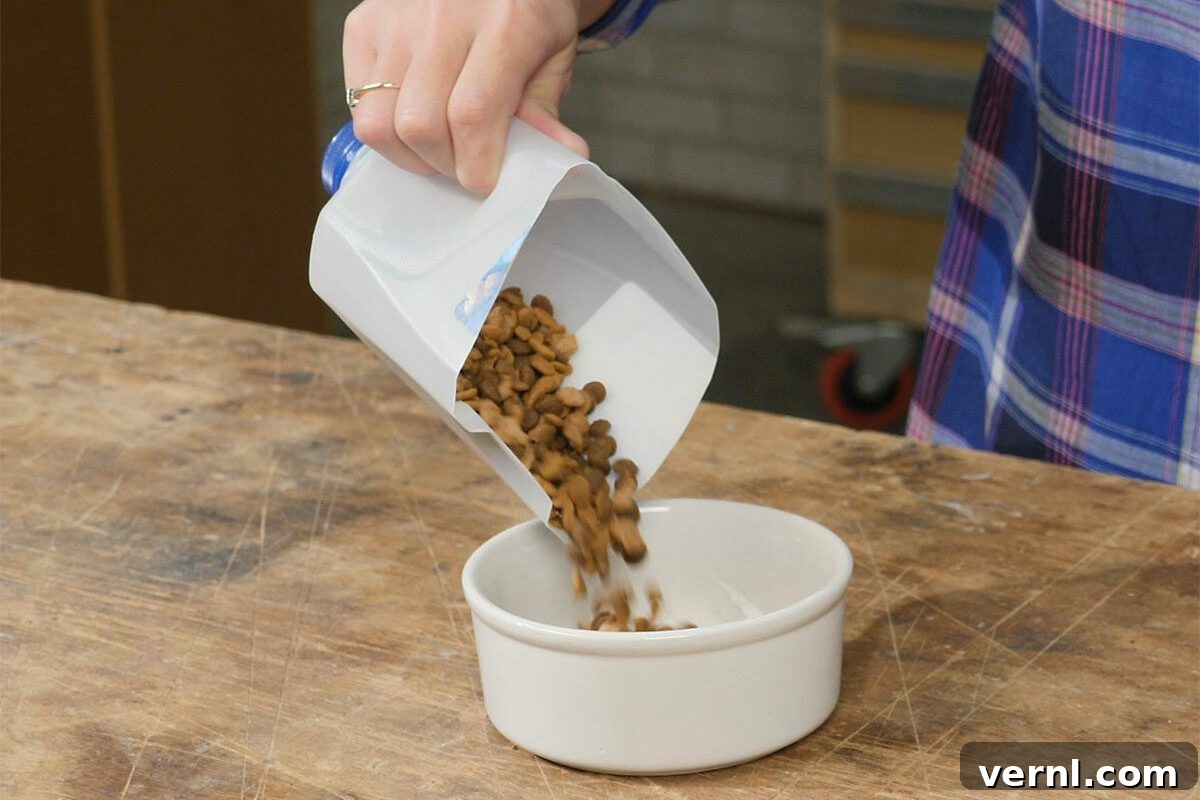

In an age where environmental consciousness is paramount and the desire to reduce waste grows stronger, discovering simple yet effective ways to repurpose everyday items can be incredibly rewarding. One such item, often discarded without a second thought, is the humble plastic milk jug. While many resourceful individuals have long advocated for transforming the tops of these jugs into convenient funnels, a truly ingenious twist on this idea unlocks even greater utility: converting them into versatile, multi-purpose scoops. As Ray Dean wisely pointed out, by simply retaining the cap after an initial cut, your ordinary milk jug can transcend its original purpose to become an indispensable tool for a myriad of tasks around the home, garden, and even on the water.
This brilliant hack offers a sustainable solution to common household and gardening needs, embodying the spirit of upcycling and practical resourcefulness. Imagine effortlessly scooping potting soil for your new plants, transferring granular fertilizer to nourish your garden beds, or dishing out pet food with a custom-made tool that’s both ergonomic and eco-friendly. Furthermore, the inherent no-scratch property of the plastic makes these DIY scoops ideal for more specialized tasks, such as bailing water from a boat without fear of marring its surfaces. It’s a testament to how a little creativity can transform potential waste into a valuable asset, saving you money and contributing to a greener planet.
Unlock Versatility: The Profound Benefits of a DIY Milk Jug Scoop
The decision to repurpose a plastic milk jug into a scoop offers a cascade of benefits, extending far beyond mere convenience. This simple DIY project champions sustainable living, providing an accessible entry point into the world of upcycling for everyone. Each milk jug transformed means one less piece of plastic destined for a landfill, directly contributing to waste reduction and a healthier environment. In an age dominated by disposable culture, embracing such sustainable practices is not just a trend but a necessity for our planet’s future, aligning perfectly with zero-waste initiatives and the circular economy.
Economically, creating your own scoop is a brilliant move. Why purchase specialized scoops for gardening, pet care, or household chores when you have a perfectly capable raw material readily available? This cost-free alternative allows you to save money that can be allocated to other necessities or even invested in more ambitious eco-friendly projects. It’s a small step that yields tangible financial benefits over time, making it an excellent example of resourceful budgeting and smart household management.
From a practical standpoint, these homemade scoops are surprisingly robust and incredibly versatile. Made from durable, lightweight plastic, they are easy to clean, resistant to rust and corrosion, and perfectly safe for a range of materials, from granular fertilizers to delicate pet kibble. Their ergonomic design, leveraging the jug’s natural handle, ensures comfortable use, making tasks like gardening or feeding pets less cumbersome. Furthermore, the sheer accessibility of milk jugs means you can create multiple scoops for different purposes, avoiding cross-contamination and enhancing efficiency. Keep one in the garden shed, another in the pantry, and perhaps a dedicated one for your boat – all without spending a dime and promoting superior organization.
Beyond the immediate utility, this project also serves as an excellent educational tool. It’s a wonderful activity to undertake with children, fostering an understanding of recycling, creativity, and the value of giving objects a second life. It encourages problem-solving skills and instills a sense of accomplishment in creating something useful from scratch. This simple act of transformation truly embodies the spirit of resourcefulness and ingenuity, teaching valuable lessons about sustainability and the impact of our everyday choices.
How to Craft Your Own Ingenious Milk Jug Scoop: A Detailed Step-by-Step Guide
Creating your own milk jug scoop is a straightforward process that requires minimal tools and effort, transforming a common household item into a practical and sustainable utility. For optimal results, we recommend using an empty half-gallon or gallon milk jug, as their larger capacity and sturdy construction lend themselves exceptionally well to this particular application. The key to transforming it into an effective scoop lies in angling your cut strategically, ensuring the side opposite the handle is slightly longer. This deliberate design choice mimics the traditional scoop shape, making it far more efficient for gathering and transferring materials than a simple straight cut.
-
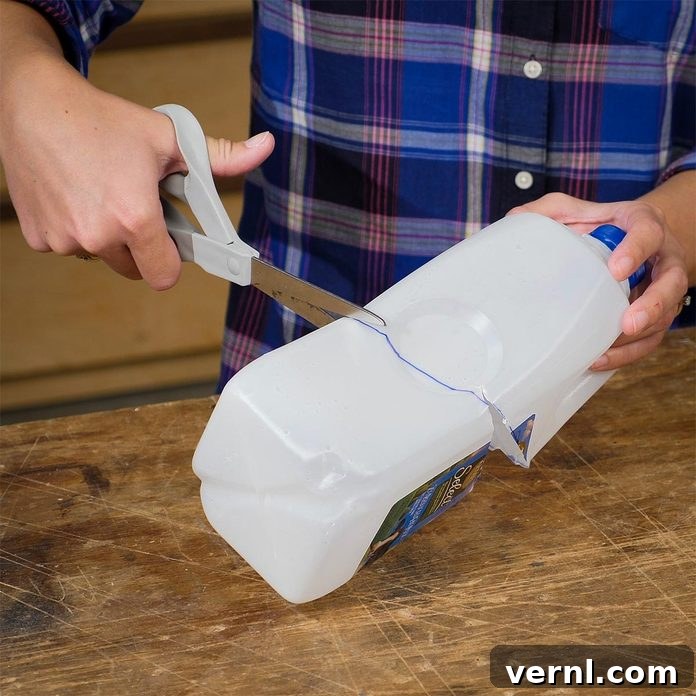
Prepare and Plan Your Cut Line with Precision: Begin by thoroughly rinsing and drying your empty milk jug. Any residual milk could lead to odors or stickiness over time, so ensure it’s impeccably clean. Once dry, place the jug on a stable, flat work surface. Using a permanent marker, carefully draw your desired cut line. For an effective scoop, envision a diagonal line starting from just below the jug’s cap on the side with the handle, sweeping downwards and extending towards the bottom on the opposite side. The longer this opposite side, the deeper and more voluminous your scoop will be, allowing for greater capacity. Experiment with the angle to suit your specific needs – a shallower angle might be better for wider, flatter scoops suitable for spreading thin layers, while a steeper angle creates a deeper scoop perfect for granular materials or larger volumes. Remember, this line is your precise guide, so take your time to ensure it’s exactly where you want it for optimal function and aesthetics.
-
Execute the Cut with Care and Precision: With your cut line clearly marked and reviewed, it’s time to transform your jug. For the cleanest, safest, and most efficient cut, always use sharp, heavy-duty scissors or a utility knife with extreme caution. If opting for scissors, position them firmly on the marked line and make steady, continuous cuts, striving for a smooth path. For a utility knife, it’s advisable to make a small pilot hole with the tip, then carefully follow your marked line, making sure to cut away from your body and using multiple shallow passes rather than one deep cut. Always work on a cut-proof surface (like a cutting mat or thick cardboard) and consider wearing protective gloves to prevent accidental nicks or slips. Take meticulous care to maintain a smooth line; ragged edges at this stage will require more extensive trimming and sanding later, adding extra steps to your DIY project.
-
Refine Edges and Ensure Safety: Once the main cut is complete and the scoop shape is evident, meticulously inspect all edges of your newly formed scoop. Plastic, when cut, often leaves behind sharp burrs or rough patches that can be unpleasant to handle and potentially cause scratches or cuts. Use your sharp scissors to carefully trim away any prominent jagged bits or hanging plastic fragments. For a truly smooth and safe finish, particularly if the scoop will be handled frequently, used for pet food, or by children, consider sanding the edges. Fine-grit sandpaper (around 120-220 grit) or even a sturdy nail file can be remarkably effective. Gently rub the sandpaper along all the cut edges until they are perfectly smooth to the touch, ensuring no sharp points remain. Once satisfied with the smoothness and safety, give your scoop another quick rinse to remove any plastic dust before putting it to its inaugural use.
Unleashing the Full Potential: More Than Just a Scoop – A Multi-Functional Marvel
The true beauty of this simple milk jug scoop lies not only in its ease of creation but also in its remarkable versatility and multi-functional design. Its uses span across numerous domains, proving itself an indispensable tool once you’ve embraced its potential. As Ray notes, the fundamental design allows for a quick and seamless transformation into a highly effective funnel by simply removing the milk jug cap, adding another layer of incredible functionality to this already outstanding DIY tool.
In the Garden: Your Green Thumb’s Most Reliable Companion
- Potting Soil and Compost: Effortlessly transfer potting mix into containers, raised garden beds, or delicate seed-starting trays. The scoop’s design allows for precision, minimizing mess and ensuring even distribution. It’s equally adept at handling nutrient-rich compost, ensuring your plants receive the best possible start and ongoing nourishment.
- Fertilizer Application: Granular fertilizers can be notoriously difficult to apply evenly, often leading to uneven growth or plant burn. Your milk jug scoop provides a controlled and measured way to spread fertilizer precisely around the base of plants or across larger garden areas, promoting healthy, balanced growth without wasteful over-application.
- Birdseed Dispenser: Easily fill outdoor bird feeders without spills or waste. The deep scoop can hold a substantial amount of various birdseeds, making quick work of a routine chore and attracting a wider array of feathered friends to your yard.
- Small Mulch Spreader: For delicate flower beds, intricate landscaping, or specific areas requiring targeted ground cover, the scoop helps distribute smaller quantities of mulch precisely where needed, improving aesthetics, suppressing weeds, and enhancing soil moisture retention.
For Your Beloved Pets: Practical, Hygienic, and Efficient Care
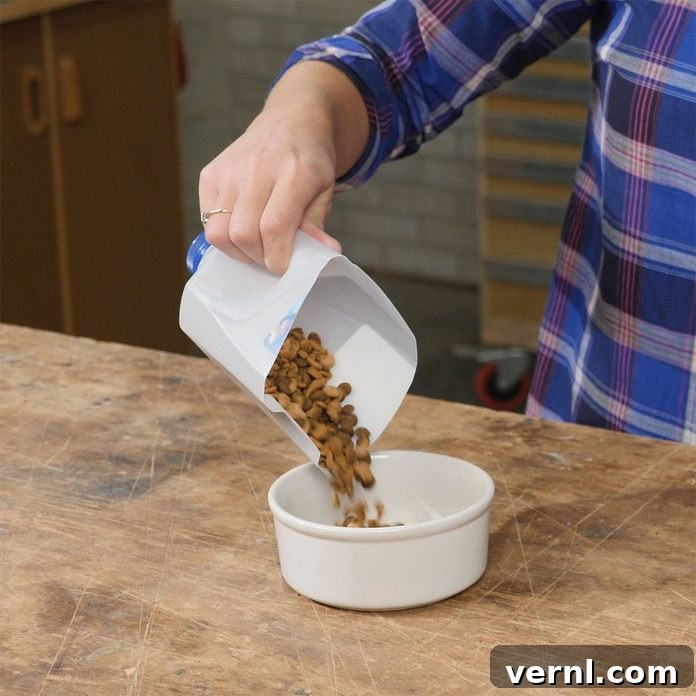
- Dry Pet Food Dispenser: This is perhaps one of the most common and appreciated uses. Scoop dry dog food, cat kibble, or even bird and rodent feed with unparalleled ease and portion control. The integrated handle provides a comfortable and secure grip, and the plastic material is food-safe, non-reactive, and exceptionally easy to clean, ensuring optimal hygiene for your furry or feathered family members.
- Cat Litter Management: While not designed as a primary litter scoop, it’s perfect for transferring fresh cat litter from large bags into the litter box, minimizing spillage. It can also be used for spot-cleaning small messes or adding top-offs between full changes.
- Fish Food Dispenser: For larger aquariums or ponds, the scoop can help transfer fish flakes or pellets from bulk containers into smaller daily dispensers, or directly into the water, ensuring accurate feeding amounts.
Around the House and Beyond: Unexpected Utility and Clever Hacks
- Emergency Bailing Tool: As expertly highlighted by Ray Dean, the no-scratch plastic properties make this scoop an invaluable tool for bailing water out of boats, canoes, kayaks, or even flooded basements and garages without fear of damaging delicate surfaces. It’s a rapid and effective solution for quickly dealing with minor leaks or spills.
- Bulk Dry Goods Transfer: From large bags of rice, flour, sugar, or beans to pet food stored in large bins, the scoop facilitates easy and mess-free transfer into smaller, everyday containers, promoting better pantry organization and reducing spillage.
- Craft Supply Organizer and Dispenser: While primarily a scoop, the cut-off bottom portion can serve as a temporary holder or dispenser for beads, buttons, glitter, or other small craft supplies during a project, keeping your workspace tidy.
- Car Wash Aid: Use it to scoop concentrated car wash soap from its container into a wash bucket, ensuring accurate measurements and preventing wasteful spills or direct contact with harsh chemicals.
The Ingenious Funnel Reimagined: Dual Functionality at Its Best
Revisiting its original inspiration, the milk jug’s top half, when detached and configured as a scoop, effortlessly transforms back into a highly functional funnel simply by removing the cap. This incredible dual functionality is what truly elevates the milk jug hack from a simple craft to an indispensable household tool. Need to pour motor oil into your car without a mess, transfer garden chemicals safely and precisely without spillage, or funnel liquids into narrow-necked bottles for crafting or storage? Just pop off the cap, and your scoop becomes an instant, drip-free funnel. This remarkable adaptability minimizes the need for multiple specialized tools, further cementing its place as an eco-conscious, space-saving, and highly practical item in any home, garage, or workshop.
Maintenance and Longevity of Your DIY Repurposed Scoop
To ensure your milk jug scoop remains a valuable and hygienic tool for years to come, proper care and attention are essential. Since it will likely come into contact with various substances—from potting soil and fertilizers to pet food and even water—regular cleaning is highly recommended. A simple wash with warm, soapy water after each use is usually sufficient to keep it clean and odor-free. For tougher residues, a scrub brush or sponge can be employed. The plastic is durable, but avoid harsh abrasive cleaners or scouring pads that could scratch the surface, creating nooks where bacteria might harbor. Ensure it’s thoroughly dried before storing to prevent mildew, mold, or unpleasant odors, especially if used for organic materials. While incredibly resilient and designed for practical use, these homemade scoops are not indestructible. Over time, plastic can become brittle from prolonged UV exposure, develop minor cracks from heavy impacts, or show signs of significant wear and tear from constant friction. When you notice substantial degradation, or if the edges become too rough to safely manage even after sanding, it’s a clear sign that it’s time to retire your old scoop and craft a new one from another recycled milk jug. This allows you to continually benefit from fresh, clean, and effective tools while maintaining your steadfast commitment to reducing waste and promoting sustainable living.
Embrace the Power of Repurposing: A Call to Action for Sustainable Living
The transformation of a simple plastic milk jug into a multi-purpose scoop and funnel is more than just a clever household hack; it’s a powerful statement about sustainable living, human creativity, and the immense value that can be found in everyday “waste.” This ingenious project, championed by resourceful individuals like Ray Dean, serves as a fantastic reminder that resourcefulness, coupled with a conscious effort to minimize environmental impact, is a key component of an eco-conscious and fulfilling lifestyle. By choosing to upcycle, we not only save money and acquire incredibly useful tools, but we also actively participate in reducing our collective environmental footprint, diverting plastic from landfills and oceans.
So, the next time you finish a gallon or half-gallon of milk, resist the urge to toss that jug into the recycling bin immediately. Instead, grab your sharp scissors and a marker, and embark on a simple yet incredibly rewarding DIY adventure. In just a few minutes, you will yield a surprisingly versatile and undeniably useful tool that will serve you well in the garden, with your pets, and throughout your home. Join the growing movement of mindful consumption, embrace the joy of creation, and discover the endless possibilities hidden within objects often deemed disposable. Your planet, your wallet, and your organized home will thank you.