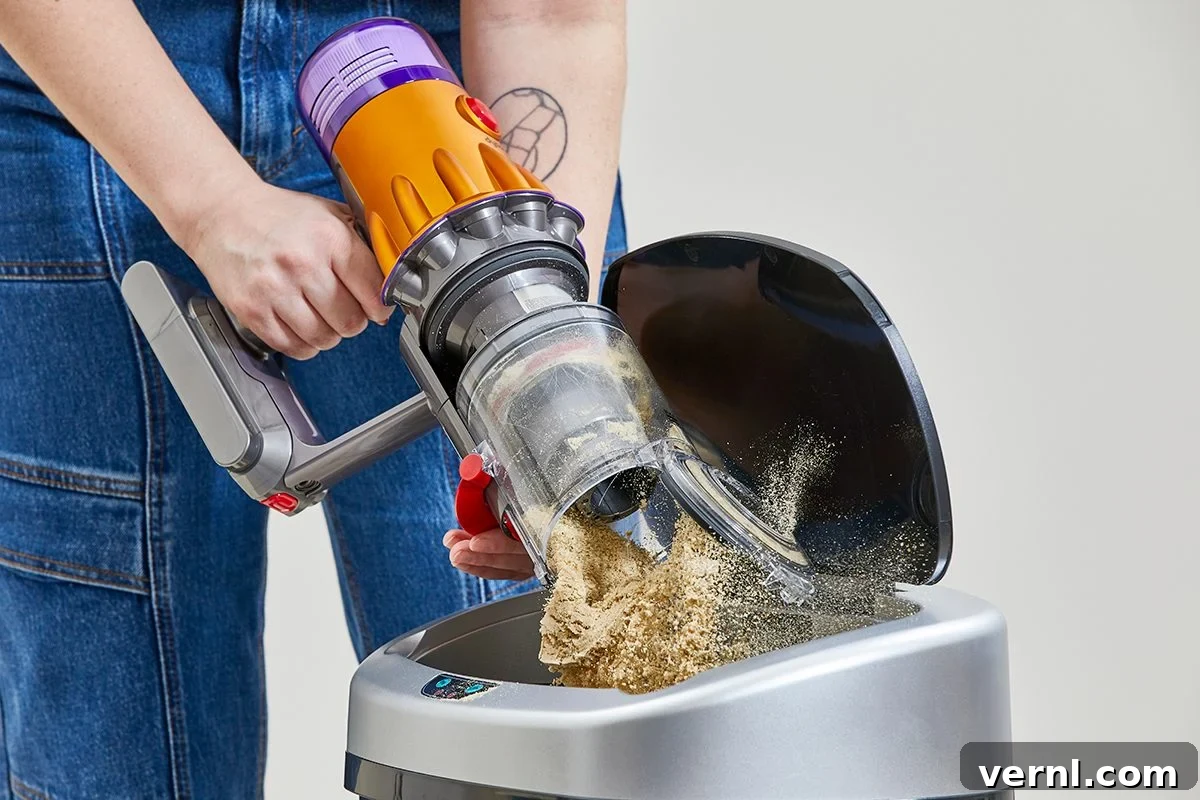
For many of us, our homes are more than just living spaces; they’re shared with beloved furry companions. If you’re a pet owner, you know the daily challenge of keeping your home clean and free from pet hair, dander, and general household dust. This is where a truly powerful vacuum cleaner becomes an indispensable tool. Dyson vacuums, renowned for their exceptional suction power, cutting-edge technology, and versatile design, are often the go-to choice for tackling these demanding cleaning tasks. However, to ensure your Dyson continues to deliver peak performance and maintain that famous suction, understanding how to properly clean its filters is paramount. It’s a surprisingly simple process, but doing it correctly is crucial. Mishandling your Dyson filter can lead to diminished effectiveness, unpleasant odors, or even costly damage to your vacuum’s motor. Beyond filter care, understanding how often you should vacuum can further enhance your home’s cleanliness.
We’ve consulted with leading experts in the field – a Dyson engineer and a seasoned cleaning professional – to bring you definitive guidance. Their invaluable insights will help you prevent common issues like filter clogging, maintain optimal suction, and eliminate those pesky funky odors that can sometimes develop.
The Dyson Advantage: Engineering for a Cleaner Home
Dyson vacuum cleaners stand apart in the market, largely due to their relentless pursuit of advanced engineering and user-centric design. Nathan Lawson McLean, a Senior Design Manager at Dyson, highlights the company’s long-standing commitment to refining its vacuum filtration systems. “Dyson’s engineers have dedicated over three decades to perfecting our filtration technologies,” he explains. “Our latest generation of vacuums integrates our most sophisticated, multi-stage filtration systems to date, designed to capture even the finest particles.”
The primary function of your vacuum’s filter is to trap microscopic particles, preventing them from being recirculated into the air you breathe. This significantly contributes to a healthier indoor environment, often reducing the need for additional investments like a home air purifier. Lawson McLean details the innovative heart of Dyson’s filtration: its unique multi-cyclone technology. “Our vacuums are equipped with up to 18 precisely configured cyclones, working in harmony to deliver optimal performance,” he states. “Each cyclone’s diameter is meticulously balanced with the spacing between them, ensuring the consistent velocity required to efficiently separate and remove fine dust and allergens from the airflow.” This sophisticated design is what allows Dyson vacuums to maintain powerful, fade-free suction, even as the dustbin fills.
Understanding this intricate engineering underscores why proper filter maintenance isn’t just about cleaning; it’s about preserving the core functionality and advanced technology that makes your Dyson a superior cleaning machine. Neglecting filter care directly compromises this innovative system, leading to a noticeable drop in performance and a potentially shorter lifespan for your valuable appliance.
Mastering Dyson Filter Maintenance: A Step-by-Step Guide
Despite the visual differences between filters in a Dyson cordless vacuum and a Dyson corded vacuum, the fundamental approach to their care and maintenance remains consistent. Lawson McLean assures us, “Whether you own a lightweight stick vacuum or a powerful upright, the cleaning principles are the same.” Learning how to clean your Dyson vacuum filter is a straightforward and quick process that requires no specialized tools or cleaning solutions. “All you truly need is access to clean, running water,” Lawson McLean confirms, emphasizing the simplicity and accessibility of this essential maintenance task.
1. Safely Remove the Filter from Your Dyson Vacuum
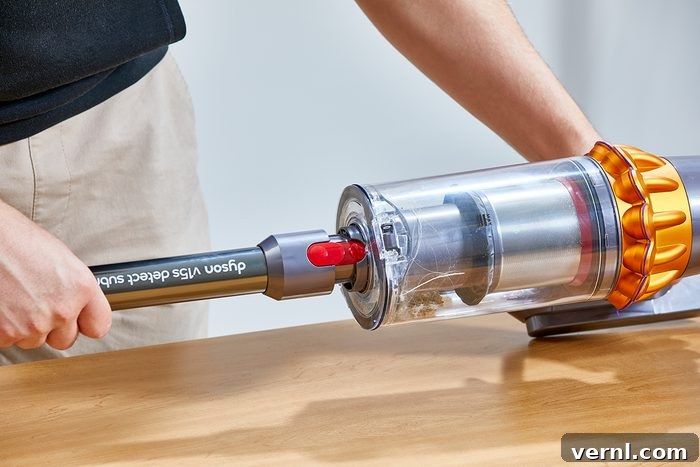
Before you begin, always ensure your vacuum is unplugged (for corded models) or the battery pack is removed (for cordless models) to prevent any accidental activation. Dyson vacuums are intuitively designed for easy filter access, but the exact location, size, and removal technique can vary by model. Filters are typically found either at the top of the cyclone assembly, on the side of the main body, or integrated near the dustbin. If you’re unsure or find it challenging to locate, always consult your vacuum’s user manual. It will provide model-specific instructions and diagrams, ensuring you remove the filter correctly and without damage.
2. Dislodge Excess Debris
Once the filter is removed, the next step is to remove any loose, superficial debris before washing. This pre-cleaning step is important to prevent clogging your sink or drain. Gently tap the filter against the edge of a trash can or a sturdy surface. You’ll see visible dust, lint, and hair fall away. For larger filters, you might gently shake it over a bin. This initial removal of dry dirt makes the subsequent rinsing process much more effective and efficient.
3. Rinse the Filter Thoroughly
With the loose debris gone, take your filter to a sink. “Run the vacuum filter under warm water to effectively wash away ingrained dust and fine debris,” advises Lawson McLean. Position the filter so that the water flows through it, from the outside in (or as indicated in your manual). You can gently rub the filter with your hands, using your fingers to work the water through the pleats or mesh of the filter material. Continue rinsing until the water running off the filter appears completely clear, indicating that most of the dirt has been flushed out.
4. Fill and Shake for Stubborn Dirt
For any particularly stubborn debris or deeply embedded dust, this step provides an extra level of cleaning. Fill the filter with warm tap water, then cup your hands over the open ends to seal it. Gently shake the filter vigorously for a few seconds. This agitation, combined with the water pressure, helps to dislodge any remaining particles. Repeat this process – filling, sealing, and shaking – until you can see that the water being expelled from the filter is absolutely clear, with no discoloration or suspended particles. This ensures a truly clean filter.
5. Crucial Drying: The Key to Performance and Longevity
This is arguably the most critical step in the entire process, and one that should never be rushed. After the final rinse, shake the filter vigorously to expel as much excess water as possible. Then, place the filter in a well-ventilated area to dry completely. A windowsill, a countertop, or an open-air space where air can circulate freely around it are ideal locations. It is imperative that the filter dries for a minimum of 24 hours. In humid climates or for larger filters, 48 hours might be necessary. “This step is paramount to safeguard your vacuum,” Lawson McLean stresses. “Ensuring no moisture remains prevents water from entering the machine and causing irreparable damage to the motor.” An incompletely dried filter not only poses a risk to the vacuum’s mechanics but also becomes a breeding ground for mold and mildew, leading to unpleasant, musty odors and potentially releasing allergens back into your home.
What NOT To Do When Cleaning Your Dyson Vacuum Filter
While learning how to clean Dyson vacuum filters is straightforward, knowing what to avoid is equally important for maintaining the filter’s effectiveness and your vacuum’s integrity. Missteps during cleaning can severely impact performance or cause irreversible damage.
- Avoid Soaps and Cleaning Solutions: “You should never use soap, detergents, or any cleaning solution on your Dyson filter,” warns Lawson McLean. “These chemicals can leave a residue that clogs the microscopic pores of the filter material, reducing its air permeability and ultimately damaging the filter or the machine.” The residues can also react with the filter material, degrading its structure over time.
- Ensure Complete Drying: Galia Ivanova, founder and CEO of Cleaning Estimate, highlights a common error. “One of the biggest issues I encounter is when people fail to allow the filter to dry completely,” she states. “I’ve received numerous calls about ‘mildewy’ smells emanating from vacuums, only to discover the culprit was a damp filter.” A wet filter, when reinserted, can introduce moisture into the vacuum’s delicate electronic components and motor, leading to catastrophic failure and voiding your warranty.
- Never Use Artificial Heat Sources: Resist the temptation to speed up the drying process by placing your Dyson filter in a tumble dryer, microwave, or near a direct heat source like a radiator. The intense heat can deform the filter material, melt plastic components, or even pose a fire hazard. Natural air drying is the only recommended method.
- Avoid Abrasive Cleaning Tools: Do not use brushes, scrub pads, or any abrasive materials to clean your filter. These can damage the delicate mesh or pleated structure, compromising its filtration efficiency. Gentle hand-rubbing with water is sufficient.
- Consider a Spare Filter: For those who rely heavily on their Dyson or simply want uninterrupted cleaning, investing in a spare filter is a smart solution. This allows you to use your vacuum immediately while your primary filter is undergoing its essential drying period, ensuring no downtime in your cleaning routine.
Frequently Asked Questions About Dyson Filter Care
Can you wash a Dyson vacuum filter in a dishwasher?
Lawson McLean explicitly advises against placing a Dyson vacuum filter in a dishwasher. “The high temperatures used in dishwashers, along with harsh detergents, can severely damage the delicate filter material,” he explains. “This can lead to warping, degradation of filtration performance, and even release harmful chemicals into your vacuum.” Stick to the recommended method of rinsing with warm water by hand.
How often should you clean and change a Dyson vacuum filter?
Many modern Dyson vacuum models feature intelligent alerts, notifying you via a digital message or indicator light when the filter requires cleaning. Both Lawson McLean and Galia Ivanova recommend cleaning your Dyson filter at least once a month under normal usage conditions. Ivanova emphasizes this, especially for pet owners: “Pet hair, dander, and dust bunnies can quickly accumulate and hide within the filter’s folds, significantly impeding the vacuum’s suction power.”
For homes with pets, young children, allergy sufferers, or high levels of dust and traffic, a bi-weekly cleaning schedule might be more appropriate. Signs that your filter needs cleaning sooner include a noticeable drop in suction power, an unusual or louder motor sound, or the aforementioned musty odor. While Dyson filters are designed for long-term washability, they are not eternal. After many years of use, or if you notice any physical damage (tears, holes, permanent discoloration), it may be time to replace the filter entirely. Genuine Dyson replacement filters are readily available to ensure continued optimal performance.
How do I know if my Dyson filter needs cleaning?
Beyond the monthly recommendation, there are clear indicators that your Dyson filter is due for a clean:
- Reduced Suction Power: This is the most obvious sign. If your vacuum isn’t picking up dirt as effectively as it once did, a clogged filter is often the culprit.
- Unusual Motor Noise: A struggling vacuum motor might sound louder or different as it works harder to pull air through a restricted filter.
- Warning Lights/Indicators: Many newer Dyson models feature digital displays or LED indicators that illuminate when filter maintenance is required. Always refer to your manual for specific alerts.
- Visible Dirt or Odor: If the filter visibly appears caked with dust, or if you notice a stale or musty smell emanating from the vacuum during use, it’s definitely time for a wash.
What if my Dyson filter is damaged?
If your filter is torn, warped, or shows any signs of damage that cannot be rectified by cleaning, it’s essential to replace it immediately. A damaged filter cannot effectively trap particles and could lead to dirt entering and damaging your vacuum’s motor. Always purchase genuine Dyson replacement filters directly from Dyson or authorized retailers to ensure compatibility and optimal performance. Using non-genuine parts can compromise your vacuum’s efficiency and potentially void its warranty.
Can I use my Dyson vacuum without a filter?
Absolutely not. Operating your Dyson vacuum without a filter can cause severe and irreversible damage to the motor by allowing dust and debris to enter the internal components. Furthermore, it defeats the primary purpose of the vacuum, as all the collected dust and allergens would be expelled directly back into your home’s air, making your indoor environment significantly worse.
Conclusion: The Simple Secret to Sustained Dyson Performance
Your Dyson vacuum represents a significant investment in home cleanliness and air quality. Protecting that investment and ensuring it continues to deliver unparalleled performance hinges on one simple, yet crucial, task: consistent and correct filter maintenance. By dedicating a few minutes once a month to properly wash and thoroughly dry your Dyson filter, you’re not just cleaning a part; you’re preserving powerful suction, extending your vacuum’s lifespan, preventing unpleasant odors, and contributing to a healthier living environment for you and your family.
The process is straightforward, requires only water, and with the insights from our experts, you now have all the knowledge needed to keep your Dyson running like new. Embrace this simple maintenance routine, and enjoy the lasting benefits of a truly clean home.
About the Experts
-
Nathan Lawson McLean is a Senior Design Manager at Dyson, where he has dedicated over 8 years to advancing vacuum technology; insights gathered from an email interview on Jan. 7, 2025.
-
Galia Ivanova is the visionary founder and CEO of Cleaning Estimate, a leading company renowned for delivering exceptional cleaning services to both residential and commercial clients across the greater London area; insights gathered from an email interview on Dec. 30, 2025.