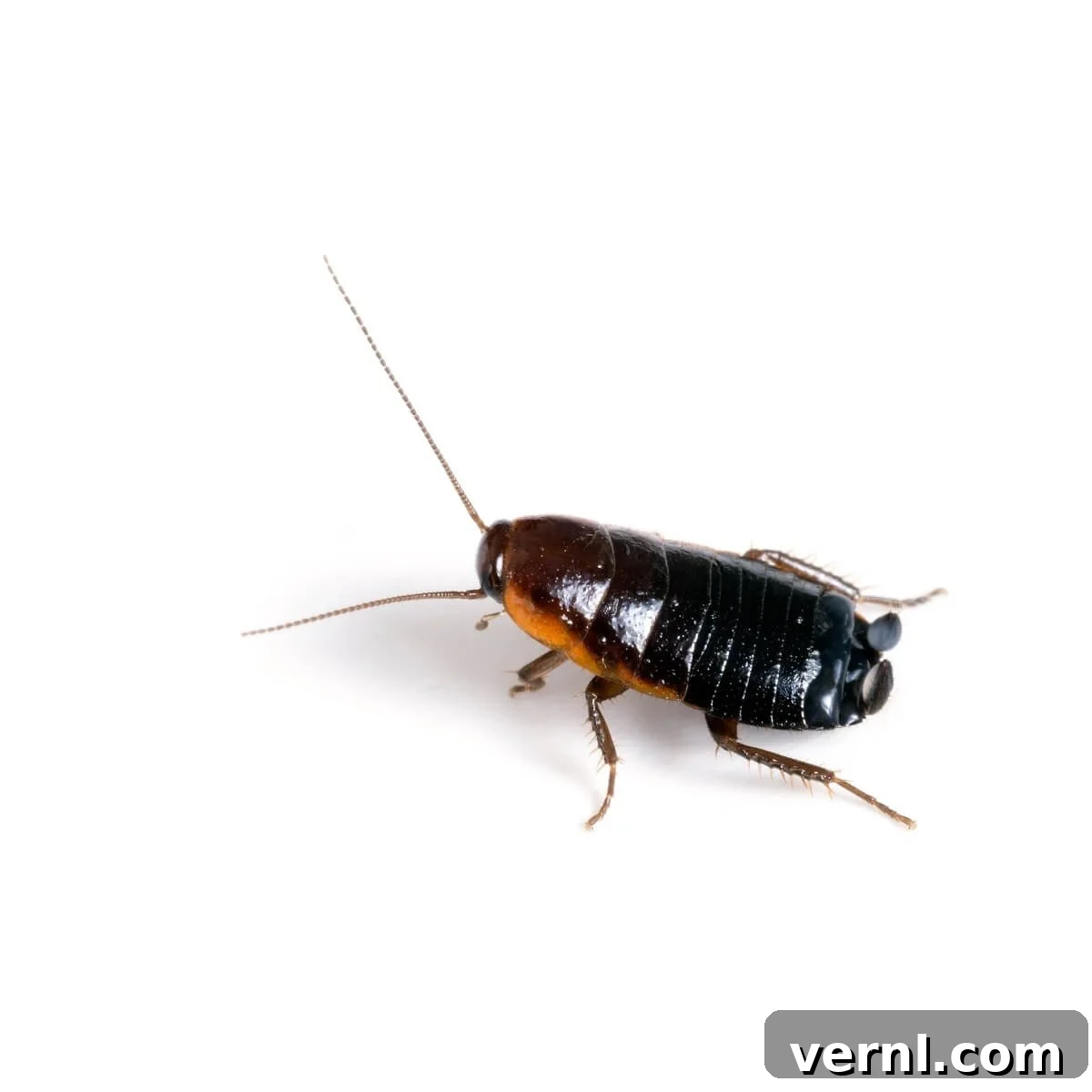
Good at hiding and fitting into tight locations, the Oriental cockroach (Blatta orientalis) is excellent at reproducing, nesting, and infesting inside and outside the home. Often a significant nuisance and a potential health hazard, these resilient pests can be particularly challenging to eradicate. Their secretive nature and rapid reproductive cycle make effective pest control efforts demanding, requiring a thorough and persistent approach to ensure your home remains free from their presence.
Understanding Oriental Cockroaches: A Comprehensive Guide
Often dubbed the “black beetle cockroach” due to its dark, robust appearance, the Oriental cockroach (Blatta orientalis) stands out as one of the larger and more distinguishable species of roach encountered in homes and businesses. These insects are characterized by their smooth, glossy exoskeleton, which ranges in color from dark reddish-brown to a nearly uniform black. Unlike some of their swifter counterparts, Oriental cockroaches are known for their relatively slow movement, though this doesn’t diminish their ability to quickly find refuge in hidden, damp environments. They exhibit a strong preference for cool, moist, and dark locations, making them primarily active outdoors and during nighttime hours as they forage for food and seek shelter. Their global distribution is widespread, thriving particularly in temperate climates, where they are commonly found in sewers, drains, basements, and other subterranean areas.
What Do Oriental Cockroaches Look Like? Key Identification Features
While not reaching the imposing size of the American cockroach, Oriental cockroaches are still substantial pests, averaging about one inch (2.5 cm) in length. A key aspect of their identification lies in the noticeable physical differences between males and females, which can be crucial for distinguishing them from other species. Both genders share the characteristic dark reddish-brown to nearly black coloration and a smooth, shiny body texture.
- Male Oriental Cockroaches: Males are typically slightly shorter, measuring approximately one inch. They possess short, stubby wings that cover about two-thirds of their abdomen. Despite having wings, male Oriental cockroaches are incapable of sustained flight, primarily using them for balance or short, uncontrolled glides.
- Female Oriental Cockroaches: Females are generally longer and appear more robust, reaching lengths of up to 1-1/4 inches (3.2 cm). A distinctive feature of the female is the complete absence of functional wings; instead, they have two small, rudimentary wing pads located behind their head. This lack of full wings makes them appear more beetle-like, further contributing to their “black beetle” nickname.
Beyond size and wings, both sexes have segmented bodies, prominent antennae that are almost as long as their bodies, and a pair of sensory appendages called cerci at the rear of their abdomen. Their robust legs are adapted for scurrying across various surfaces, even if at a slower pace than some other roaches. Recognizing these specific visual cues is the first step in confirming an Oriental cockroach infestation.
Understanding Oriental Cockroach Behaviors and Habitat
Oriental cockroaches display distinct behaviors that differentiate them from many other common indoor pests. Unlike some of their counterparts, such as German cockroaches, Oriental cockroaches primarily thrive outdoors and are well-adapted to cooler environments. They are often referred to as “water bugs” because of their strong affinity for moisture and damp conditions.
Their preferred outdoor habitats include:
- Underneath leaf litter, mulch, garden debris, and compost piles.
- Beneath stones, woodpiles, and decaying vegetation.
- In crawl spaces, sewer systems, storm drains, and utility tunnels.
- Around leaky outdoor faucets, water meters, and damp flower beds.
Similar to other moisture-loving pests like earwigs, centipedes, and ants, these roaches seek out dark, protected environments that offer both shelter and a consistent source of moisture. Their nocturnal nature means they are most active after dark, emerging from their hiding spots to forage for food and water. This makes daytime sightings a strong indicator of a significant infestation, as they are usually forced out of their harborage due to overcrowding or lack of resources.
While male Oriental cockroaches possess wings, they are non-functional for flight, serving merely as remnants of a flying ancestor. Neither gender can truly fly, instead relying on crawling to navigate their environment. Both male and female Oriental cockroaches are omnivores, possessing a broad and unpicky diet. They will consume nearly any type of organic matter, including decaying plants, rotting garbage, pet food, and even starchy substances like book bindings or soiled fabrics. In indoor settings, they are attracted to leftover crumbs, food spills, and unsealed food items. Their preference for decaying matter makes them efficient scavengers but also potent vectors for bacteria and pathogens, as they often move between unsanitary areas and human living spaces.
Their movement indoors is typically opportunistic. They enter homes through cracks in foundations, gaps under doors, openings around pipes and utility lines, or even directly through sewer and drain systems. Once inside, they gravitate towards basements, crawl spaces, utility rooms, and other areas with high humidity and limited light, such as beneath sinks, behind appliances, and in wall voids. Understanding these behaviors is critical for implementing effective prevention and control strategies.
The Oriental Cockroach Life Cycle: From Egg to Adult
The Oriental cockroach undergoes an incomplete metamorphosis, progressing through three distinct life stages: egg, nymph, and adult. The duration of each stage and the overall lifespan can vary depending on environmental factors such as temperature, humidity, and food availability, but a general pattern exists.
- Egg Stage (Ootheca): The life cycle begins with the egg, encased within a protective structure known as an ootheca, or egg case. The female Oriental cockroach produces these dark reddish-brown to black, purse-shaped oothecae, which are quite rigid and robust. Each ootheca typically contains about 16 eggs, arranged in two rows. Females will carry the ootheca for a short period, sometimes up to 30 hours, before depositing it in a secluded, protected area, often glued to a surface near a food source. These sites are usually dark, damp, and warm, providing ideal conditions for incubation. The incubation period typically lasts around 60 days, but can range from 42 to 80 days depending on environmental conditions. A single female can produce an average of 8 oothecae in her lifetime, equating to approximately 128 offspring.
- Nymph Stage: Once hatched, the eggs emerge as nymphs. These immature cockroaches resemble smaller versions of the adult Oriental cockroach but lack wings and are generally lighter in color. Nymphs grow by molting, shedding their exoskeleton multiple times as they increase in size. The nymphal stage is the longest part of their development, lasting between 10 to 12 months, though it can extend to up to 18 months under suboptimal conditions. During this stage, nymphs undergo 7 to 10 molts before reaching adulthood. They share the same feeding habits and preferred habitats as the adults, making them equally problematic.
- Adult Stage: Upon reaching their final molt, nymphs transform into winged adults. Adult Oriental cockroaches have a relatively short but productive lifespan, typically living for one to six months. During this period, they are capable of mating numerous times, especially in favorable conditions. Their reproduction is often seasonal, with a peak in egg production and nymph development observed during the warmer months of spring and summer. The entire life cycle, from egg to adult, can take anywhere from 12 to 18 months, or even longer in cooler environments. Understanding this life cycle is crucial for implementing effective long-term pest management, as treating all stages is essential for complete eradication.
Recognizing the Signs of Oriental Cockroaches
Detecting an Oriental cockroach infestation early is key to effective control. Because of their nocturnal nature and preference for secluded, damp environments, these pests can often go unnoticed until their population has significantly increased. However, there are several tell-tale signs that indicate Oriental cockroaches are inhabiting your home:
- Seeing Them Outright: This is often the most direct and alarming sign. While they are primarily nocturnal, seeing an Oriental cockroach during the day suggests a large infestation where competition for food and harborage has forced them out. They are typically spotted scurrying away when lights are suddenly turned on in damp areas like kitchens, bathrooms, basements, or laundry rooms. Their slow movement makes them somewhat easier to observe than other species.
- Egg Cases (Oothecae) Left Around the House: Finding egg cases is a definitive sign of an active breeding population. Oriental cockroach oothecae are dark, purse-shaped capsules, about 8-10 mm long. Females will deposit these in hidden, protected areas, often glued to surfaces near food sources or in damp, secluded cracks and crevices. Common locations include behind appliances, under sinks, in crawl spaces, or within stacks of rarely moved items.
- A Wet or Musty Smell: Oriental cockroaches produce a distinct, unpleasant odor. This smell is often described as musty, greasy, or stale, and can become quite strong in areas of heavy infestation. The odor is a result of chemical secretions (pheromones) released by the cockroaches, their droppings, and decaying bodies. This smell can permeate infested food items and linger in enclosed spaces.
- Cockroach Droppings or Fecal Smears: As they move and feed, Oriental cockroaches leave behind fecal matter. These droppings appear as small, dark pellets, resembling coffee grounds or black pepper, depending on their diet. In areas with high moisture or heavy infestations, they may leave behind dark, irregular smear marks along walls, baseboards, counters, or in cabinets, similar to ink stains. Finding these droppings indicates active foraging and harborage.
- Shed Skins (Exuviae): As nymphs grow, they shed their exoskeletons multiple times. Finding these translucent, shell-like castings in hidden areas is another clear sign of cockroach activity and growth within the population.
- Damage to Food or Packaging: While not as destructive as some other pests, Oriental cockroaches can contaminate food items and their packaging. You might notice gnaw marks on cardboard boxes or plastic containers, or find small fecal pellets inside food storage areas, indicating they have been feeding.
If you observe any of these signs, it’s crucial to take prompt action to prevent the infestation from growing and to mitigate potential health risks.
Effective Strategies: How to Get Rid of Oriental Cockroaches
Successfully eliminating Oriental cockroaches requires a comprehensive and persistent approach, combining sanitation, exclusion, and targeted treatments. As with most cockroaches, the first and most crucial step is to remove or alter their ideal environment, making your home less hospitable to them.
Prevention and Sanitation: Removing Their Ideal Environment
Oriental cockroaches thrive in damp, dark, and dirty conditions. By focusing on cleanliness and moisture control, you can significantly reduce their attractiveness to your home.
- Moisture Control:
- Fix any leaky pipes, faucets, or drains immediately, both indoors and outdoors.
- Ensure proper ventilation in basements, crawl spaces, and bathrooms using fans or dehumidifiers to reduce humidity levels.
- Ensure gutters and downspouts direct water away from the foundation of your house.
- Eliminate standing water sources around the perimeter of your home.
- Thorough Cleaning and Sanitation:
- Keep your home impeccably clean, especially in wet locations such as kitchens, bathrooms, basements, and laundry rooms.
- Wipe up food spills and clean crumbs immediately.
- Store all food in airtight containers.
- Do not leave pet food out overnight.
- Regularly empty garbage cans and use bins with tight-fitting lids.
- Clean under and behind appliances (refrigerators, stoves, dishwashers) where food debris and moisture can accumulate.
- Reduce clutter, especially in basements and storage areas, as it provides hiding spots.
Exclusion: Sealing Entry Points
Oriental cockroaches often enter homes from outdoors. Sealing potential entry points is vital to prevent them from getting inside.
- Seal Cracks and Gaps:
- Inspect your home’s foundation, exterior walls, and around windows and doors for cracks, holes, or gaps. Seal these with caulk, mortar, or expanding foam.
- Pay particular attention to areas where utility lines (pipes, wires) enter the home, as these often have small gaps.
- Door and Window Integrity:
- Install or repair weatherstripping around all doors and windows to ensure a tight seal.
- Repair any torn window screens.
- Consider installing door sweeps on exterior doors.
- Outdoor Environment Management:
- Remove piles of leaves, mulch, firewood, and other organic debris from around your home’s foundation. These provide ideal hiding and breeding spots.
- Trim shrubs and other vegetation away from the house to reduce moisture and hiding spots near entry points.
Targeted Treatments and Professional Assistance
If eliminating entryways and water sources doesn’t fully solve the problem, or if you are dealing with a significant infestation, more advanced solutions may be necessary:
- Baits: Roach baits are highly effective. Place them in cracks, crevices, and other hidden areas where you’ve seen activity, but away from children and pets. The cockroaches eat the bait and carry it back to their colony, effectively eliminating others.
- Insecticide Dusts: Apply boric acid or diatomaceous earth in wall voids, under appliances, and in other inaccessible areas. These dusts are effective when applied correctly but require careful handling.
- Insecticide Sprays: Use targeted liquid insecticides in cracks and crevices, paying attention to areas where cockroaches hide. Always follow product label instructions meticulously.
- Traps: Sticky traps can be useful for monitoring the extent of an infestation and catching individual roaches, but they are not a standalone solution for widespread problems.
For persistent or severe infestations, it is highly recommended to contact a professional exterminator. Pest control professionals have the expertise, specialized tools, and more potent products to effectively locate and eliminate cockroach harborage points. They can develop an integrated pest management (IPM) plan tailored to your specific situation, addressing the infestation safely and efficiently. An expert can also identify areas you might have overlooked and provide long-term prevention advice.
Oriental Cockroach Safety and Health Risks
Beyond being a mere nuisance, Oriental cockroaches pose significant health risks and can cause additional problems for human inhabitants. Their foraging habits, which involve moving between unsanitary environments like sewers and decaying organic matter to clean indoor spaces, make them efficient carriers and transmitters of various pathogens.
- Transmission of Bacteria and Pathogens: Oriental cockroaches are known to transmit bacteria such as E. coli and Salmonella. These bacteria can cause severe food poisoning, gastrointestinal distress, and other infections. They pick up these pathogens on their legs and bodies as they crawl through contaminated areas and then deposit them onto food preparation surfaces, utensils, and directly onto uncovered food items. This mechanical transmission poses a direct threat to human health, leading to a range of illnesses from mild stomach upset to serious infections. Beyond bacteria, they can also carry viruses, fungi, and parasitic worms.
- Food Contamination: The presence of Oriental cockroaches directly contaminates food with pathogens and their own waste. They excrete droppings, regurgitate digestive fluids, and shed skin, all of which can render food unsafe for consumption. This contamination leads to wasted food, potential economic loss, and the risk of foodborne illnesses.
- Allergies and Asthma Triggers: Oriental cockroaches excrete odors and leave behind allergens that are particularly problematic for people with allergies and asthma. Their feces, saliva, and shed exoskeletons contain proteins that act as potent allergens. When these particles become airborne, they can be inhaled, triggering allergic reactions, skin rashes, watery eyes, sneezing, and severe asthma attacks, especially in children and individuals with pre-existing respiratory conditions. Chronic exposure to cockroach allergens can exacerbate asthma symptoms and even contribute to the development of asthma in susceptible individuals.
- Unpleasant Odor: As mentioned, heavy infestations produce a distinct, lingering musty or greasy odor that can permeate homes and taint food. This unpleasant smell is not only a sign of infestation but also contributes to an unhealthy living environment.
- Psychological Distress: The sight of cockroaches can cause significant psychological stress, anxiety, and embarrassment for homeowners. The knowledge that these unsanitary pests are sharing living spaces can severely impact quality of life and peace of mind.
Given these substantial health and safety concerns, taking quick and decisive action to get rid of and keep these pests out is not merely about comfort but about protecting the health and well-being of everyone in the home or business. Early detection and proactive pest management are essential to prevent Oriental cockroach infestations from escalating into serious health hazards.
Cockroach Resources
For more information about cockroaches and what it means when you find this pest in your home or business, check out these pest control articles.
- Types of Cockroaches
- American Cockroach
- German Cockroach
- Oriental Cockroach
- Smokybrown Cockroach
- Brown-Banded Cockroach
- Florida Woods Cockroach
- Pennsylvania Wood Cockroach
- Asian Cockroach
- Australian Cockroach
- Madagascar Hissing Cockroach
- Flying Cockroaches
Sources
- https://extension.umn.edu/insects-infest-homes/cockroaches#oriental-cockroach-137712
- https://www.who.int/water_sanitation_health/resources/vector288to301.pdf