

The Ultimate Guide to Garage Door Costs: Installation, Types, and Materials
A garage door is more than just a functional entry point to your home; it’s a significant architectural feature that profoundly impacts your property’s overall aesthetic and curb appeal. Whether you’re considering sliding garage doors, elegant glass garage doors, or classic wood garage doors, the right choice can elevate your home’s exterior and even boost its resale value. Just a few years ago, when I decided to replace my aging garage doors, I was astonished by the sheer variety available. I ultimately chose wood to complement my property’s rustic charm, investing a bit more for professional removal and installation to ensure a perfect fit and finish.
For most homeowners, the cost of garage door installation typically ranges from $500 to $2,000. However, this is merely an average, and the actual price can fluctuate wildly, anywhere from an affordable $250 to a premium $10,000, depending on a multitude of factors. This guide will help you navigate these costs, understand the variables, and make an informed decision for your home.
Beyond the door itself, consider enhancing your garage’s functionality with modern conveniences. If you’re looking to upgrade your existing opener, explore the best Wi-Fi garage door openers for smart home integration. While you’re at it, delve into essential maintenance and troubleshooting: learn about repairing your garage door opener, winterizing your garage door, creating a self-closing garage service door, and even preventing your garage door opener from becoming a lightning rod.
Key Factors Influencing Your Garage Door Investment
When planning for a new garage door, numerous elements contribute to the final price. Understanding these factors is crucial for budgeting and making the best choice for your home. These considerations go beyond the initial purchase, impacting installation complexity and long-term maintenance. For a deeper dive into what to consider before buying, check out these things to know before buying a garage door.
Materials: Durability, Aesthetics, and Maintenance
The material of your garage door is perhaps the most significant determinant of its cost, appearance, durability, and maintenance requirements. Different materials offer unique advantages and disadvantages, influencing both the upfront price and long-term expenses.
Design and Style: Elevating Your Home’s Aesthetic
The design and style you choose can dramatically influence the cost. Basic, stock models without additional features might range from $800 to $1,500. However, specialty doors featuring unique designs, custom finishes, or integrated windows can easily cost two to three times more. For instance, doors with decorative windows can be up to 70% more expensive than their solid counterparts, reflecting the added craftsmanship and material complexity. Architectural styles, such as carriage house or modern designs, often require specialized manufacturing, further impacting the price.
Size: Customization and Configuration
The dimensions and configuration of your garage opening directly impact the material and labor costs. Larger doors naturally require more material and often more robust hardware, increasing both the product and installation price. Here’s a general breakdown of typical garage door prices by size:
- One-car garage: $500 to $3,000
- Two-car garage with double door: $800 to $5,000
- Two-car garage with two single doors: $1,200 to $4,900
- Three-car garage with a single and extra door: $1,400 to $7,000
- Three-car garage with three single doors: $1,700 to $7,200
Custom sizes for non-standard openings will almost always incur higher costs due to specialized manufacturing.
Insulation: Energy Efficiency and Comfort
An insulated garage door plays a crucial role in regulating the temperature within your garage, which can have a ripple effect on your home’s energy efficiency. These doors typically cost more than standard, non-insulated options, ranging from $600 to $3,000. The R-value, a measure of thermal resistance, is a key factor here; higher R-values indicate better insulation and generally a higher price. Investing in insulation can lead to significant energy savings, especially if your garage is attached to your home or used as a workspace.
Labor and Professional Installation
While the door itself is a major expense, the cost of professional installation is another critical factor. This includes the labor involved in removing your old door, preparing the opening, assembling and installing the new door, and often connecting it to an existing or new opener. Complex installations, custom fittings, or the need for structural modifications can drive labor costs higher. Professional installers bring expertise, specialized tools, and safety protocols, ensuring the door operates correctly and safely, which is particularly important given the weight and tension of garage door components.
Exploring Garage Door Types and Their Costs
The type of garage door you select is just as influential as the material in determining overall cost and aesthetic appeal. Each style offers distinct operational mechanisms and visual characteristics. For my double garage, I chose elegant French doors in beautiful oak, knowing they’d require more maintenance but provide a unique, long-lasting charm.
Sectional Garage Door
The most common type found in residential neighborhoods, sectional garage doors are composed of several horizontal panels hinged together. These panels glide on tracks as the door opens, curving upwards and resting parallel to the ceiling. They are highly versatile in terms of materials and designs.
- Description: Consists of multiple small panels hinged together, offering smooth, quiet operation.
- Aesthetic: Available in various styles, from traditional raised panel to modern flush designs.
- Price: $500 to $1,800
Tilt-Up Garage Door (Up-and-Over)
A classic design, tilt-up garage doors are a solid, single piece that pivots upwards and back into the garage. They require significant clearance outside the garage for their outward swing.
- Description: A solid, single piece door that swings out and then up to open.
- Aesthetic: Can provide a retro or minimalist look.
- Price: $400 to $1,600
Carriage House Garage Door
Evoking a bygone era, carriage house doors offer a traditional, upscale appearance, often featuring an arched top, decorative hardware, and a rustic charm. They can operate as swing-out doors or modern overhead-lifting doors designed to look like swing-outs.
- Description: Traditional, upscale door, often with an arched top and decorative hardware, mimicking old-fashioned barn doors.
- Aesthetic: Adds historical character and significant curb appeal.
- Price: $1,200 to $8,000
Roll-Up Garage Door
Primarily used in commercial or industrial settings due to their robust construction and space-saving design, roll-up doors consist of slats that coil around a drum above the door opening. Residential versions are also available, often for larger openings or specific modern designs.
- Description: A durable option consisting of multiple slats that roll up into a compact coil above the opening.
- Aesthetic: Industrial or contemporary, highly functional.
- Price: $600 to nearly $3,000
Glass Roll-Up Garage Door
Also known as full-view garage doors, these are a high-style option popular in commercial spaces, modern homes, or as a unique transition between indoor and outdoor living areas. They offer maximum light and visibility.
- Description: Features full-view glass panels within an aluminum frame, rolling up like a standard roll-up door.
- Aesthetic: Sleek, modern, and allows for abundant natural light.
- Price: $1,000 to $7,000
French Garage Doors
Inspired by classic French architecture, these doors typically feature two individual sections that swing outwards, similar to traditional French doors. They are particularly well-suited for country-inspired or elegant architectural styles and are often customized.
- Description: Consists of two doors that open outwards from the center, often with glass panels.
- Aesthetic: Elegant, classic, and adds a touch of sophistication.
- Price: $2,000 to $6,000
Walk-Through Garage Doors
A walk-through or “man-door” garage door integrates a standard-sized pedestrian door directly into a larger garage door panel. This allows for convenient access without having to open the entire garage door, useful for quick entries and exits.
- Description: Features a standard-sized pedestrian door embedded within the main garage door panel.
- Aesthetic: Functional and practical, offering convenience.
- Price: $700 to $6,000
Choosing the Right Material: A Detailed Cost Breakdown
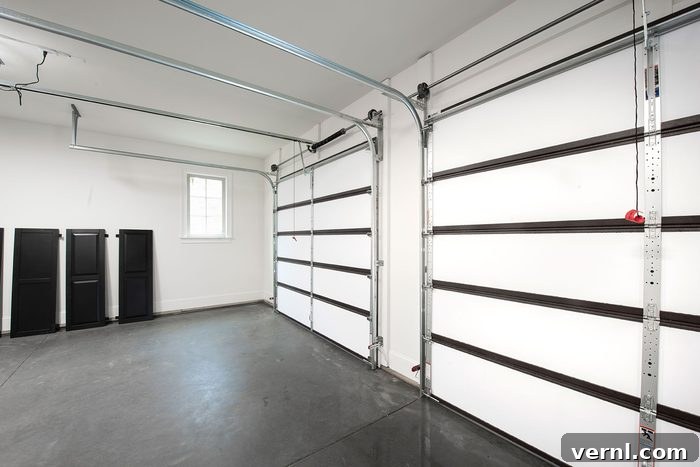
The material you choose for your garage door is one of the most crucial decisions, influencing not only its initial cost but also its long-term appearance, durability, and maintenance needs. Each material offers distinct advantages and drawbacks, making it essential to consider your climate, desired aesthetic, and budget.
Aluminum Garage Doors
Aluminum is an excellent choice for modern homes and humid climates due to its inherent resistance to rust. Its lightweight nature makes it easy to operate and suitable for wider openings, often used in full-view glass garage doors for a contemporary look.
- Pros: Lightweight, rust-resistant, modern appearance, ideal for contemporary designs.
- Cons: Dents easily upon impact, can be less insulated than other materials without added features.
- Price: $600 to $2,900
Wood Garage Doors
Wooden garage doors exude a timeless charm and can be extensively customized with various finishes, stains, and designs to match any architectural style. They offer a warm, natural aesthetic but require diligent maintenance to prevent issues like rotting, warping, or insect infestation.
- Pros: Exceptional aesthetic appeal, highly customizable, natural insulator.
- Cons: Requires regular maintenance (painting, staining, sealing), susceptible to rot and warping, can be expensive.
- Price: $900 to $4,500
Steel Garage Doors
Steel doors are renowned for their durability, strength, and security. They are a popular choice due to their versatility in design and relatively low maintenance. Steel doors can be insulated, embossed with wood grain patterns, and painted in a wide array of colors. While highly durable, they can be prone to rust in very humid or coastal environments if not properly treated or maintained.
- Pros: Highly durable, low maintenance, versatile in design and color, excellent security.
- Cons: Can rust in humid climates (especially if scratched), dents can be difficult to repair.
- Price: $650–$3,200
Composite (Faux Wood) Garage Doors
Composite doors offer the best of both worlds, mimicking the rich appearance of wood without its extensive maintenance requirements. Made from recycled materials like wood fibers and resins, they are more environmentally friendly and resistant to rot, warping, and insects. They are an excellent option for homeowners seeking the aesthetic of wood with enhanced durability and ease of care.
- Pros: Eco-friendly, replicates wood appearance beautifully, low maintenance, durable.
- Cons: Can be more expensive than real wood or steel, limited customization compared to natural wood.
- Price: $650 to $4,800
Vinyl Garage Doors
Vinyl garage doors are celebrated for their lightweight nature, exceptional durability, and resistance to dents and rust. They are a practical, low-maintenance choice that can withstand harsh weather conditions. While they come in various designs, color options might be more limited compared to steel or wood.
- Pros: Extremely durable, dent-resistant, rust-proof, low maintenance, ideal for families with active kids or pets.
- Cons: Limited color and design options, can sometimes look less premium than other materials.
- Price: $800 to $2,500
Fiberglass Garage Doors
Fiberglass doors are lightweight and possess the unique ability to mimic the texture and grain of wood, offering an attractive, low-maintenance alternative. They are resistant to denting and corrosion, making them suitable for various climates. However, prolonged exposure to UV rays can cause them to fade over time.
- Pros: Lightweight, can convincingly mimic wood texture, dent-resistant, good insulation properties.
- Cons: Can fade or yellow over time due to UV exposure, can crack in extreme cold.
- Price: $800 to $2,700
Understanding Garage Door Installation & Labor Costs
The total cost of your new garage door project isn’t just about the door itself; labor and installation play a significant role. On average, labor costs for installing a single garage door can be around $350, excluding the cost of materials. This can fluctuate based on the complexity of the installation, the type of door, and any additional services required, such as the removal of your old door or custom modifications.
Professional Installation: Safety and Expertise
For most homeowners, professional installation is the recommended route. Skilled technicians ensure the door is properly balanced, the tracks are aligned, and all safety features are functioning correctly. This typically involves assembling the door panels, installing the tracks, connecting the spring system, and integrating it with your garage door opener. The hourly rate for professional installation typically ranges from $65 to $85, or a flat fee between $100 to $700 depending on the project’s scope.
If your project includes the removal and disposal of your old garage door, anticipate an additional charge, usually around $100. This service ensures safe and responsible disposal, saving you the hassle.
Considering DIY Installation: Risks and Challenges
DIY installation might seem like a cost-saving option, but it comes with substantial risks and challenges. Garage doors are heavy, complex mechanical systems, often under extreme tension, particularly with their spring mechanisms. Improper installation can lead to serious injury, damage to the door or property, and may void warranties.
Jon Russell of Precision Garage Door Service sternly warns, “Most of the injuries [with DIY garage door installation] occur when homeowners try using the wrong tools, like long screwdrivers or one-half-inch-drive socket extensions, to wind or unwind the springs. Garage doors can weigh over 400 pounds depending on the material, thickness, door size and added windows, and they are highly dangerous when homeowners try to adjust or remove any parts that can be essential.”
Furthermore, DIY installation doesn’t typically include running new electrical lines or installing automatic openers, which often require specialized electrical knowledge. If you need to hire an electrician for these tasks, your overall costs will increase, potentially negating any savings from self-installation. For peace of mind and safety, entrusting this task to professionals is almost always the smarter choice.
Additional Costs and Considerations for Your Garage Door
Beyond the primary expenses of the door and installation, several other factors can influence your total investment in a new garage door system. Being aware of these additional costs can help you budget more accurately and avoid unexpected surprises.
Garage Door Openers and Smart Technology
While often sold separately from the door itself, a new garage door opener is a crucial component for modern convenience. Costs for openers vary based on type (chain-drive, belt-drive, screw-drive, direct-drive), horsepower, and smart features like Wi-Fi connectivity, battery backup, and security enhancements. High-tech smart openers that integrate with home automation systems will naturally be more expensive, ranging from $150 to $500 for the unit alone, plus installation if you’re not doing it yourself.
Maintenance and Longevity
To extend the life of your garage door and ensure its smooth operation, regular maintenance is essential. This includes lubricating moving parts, checking spring tension, and ensuring sensors are clear. While these are often minor costs, neglecting them can lead to more expensive repairs down the line. Materials like wood will require more frequent and costly maintenance (e.g., repainting or resealing) compared to steel or vinyl.
Permits and Local Regulations
Depending on your locality, replacing a garage door might require a building permit. These permits ensure that the installation adheres to local building codes and safety standards. Permit fees are typically modest, but failing to obtain one can result in fines or demands to redo the work. Always check with your local municipal office before beginning your project.
Customization and Upgrades
If you desire a highly personalized garage door, expect to pay more for customization options. This can include unique window inserts, specialized paint or stain finishes, decorative hardware (hinges, handles), enhanced security features, or even unique panel configurations. These upgrades can significantly enhance curb appeal but will add to the overall cost.
Making an Informed Decision for Your Home
Investing in a new garage door is a significant decision that impacts your home’s security, energy efficiency, and aesthetic appeal. By carefully considering the various factors—from material and type to size and installation—you can make a choice that aligns with your budget and vision.
Remember to gather multiple quotes from reputable local installers, compare their offerings, and ask detailed questions about warranties and maintenance. Prioritize safety and quality, as a well-installed, durable garage door is an investment that will provide value and peace of mind for years to come. Ultimately, a new garage door is more than just an entryway; it’s an opportunity to significantly enhance your home’s curb appeal and functionality.
Next: Explore what to do if the garage door opens by itself, a common issue with surprisingly simple solutions.