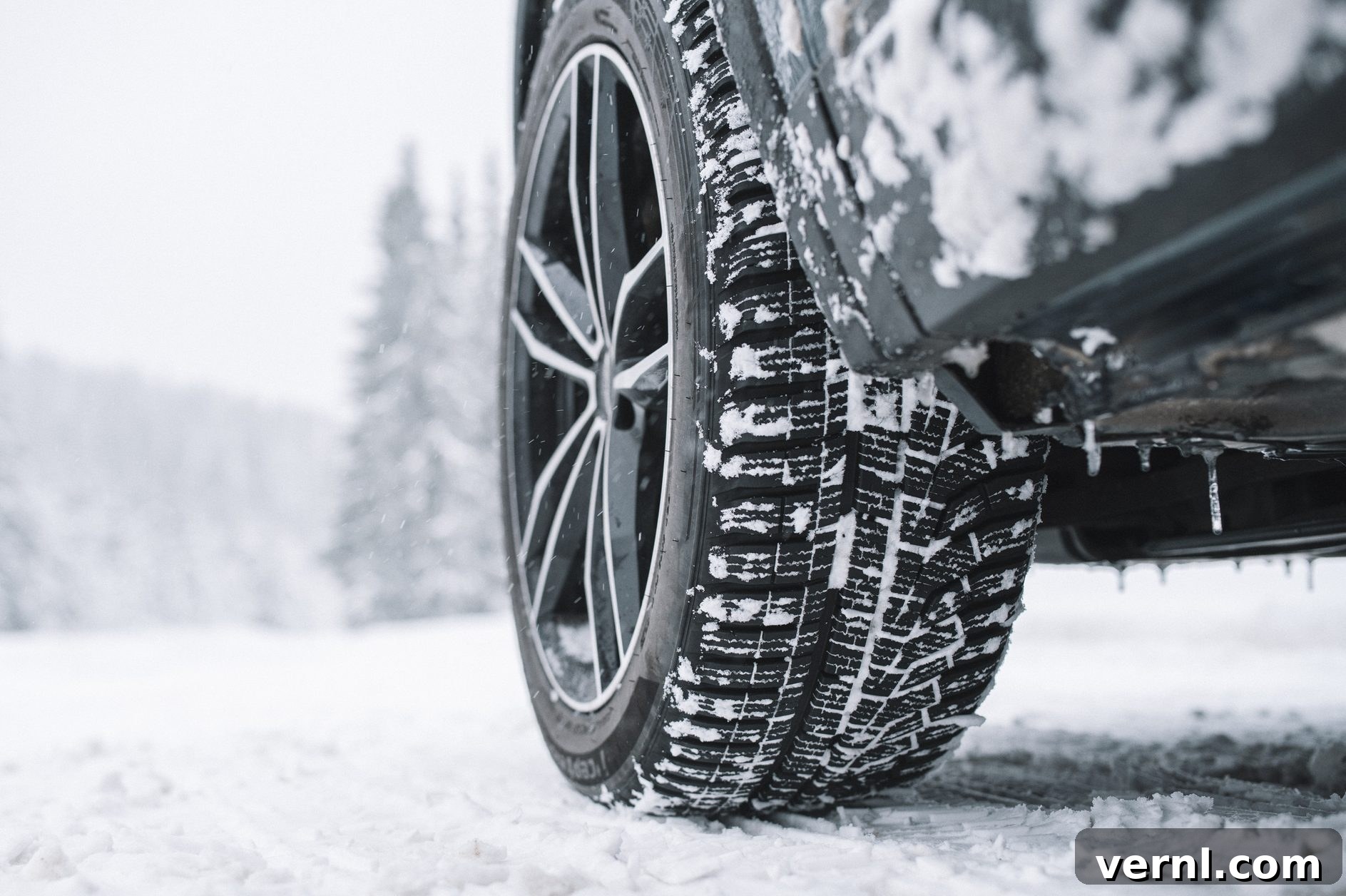
As an automotive enthusiast and a professional in the industry for half a century, I’ve developed a discerning eye for vehicle components, especially tires. It’s a conviction born from years of experience and living in the Northeastern United States, specifically within the I-95 corridor, where annual snowfall frequently averages 20 inches or more. For me, the choice has become clear: all-weather tires are not just a preference, but a necessity for navigating these challenging conditions with confidence and safety.
This preference isn’t merely anecdotal; it’s a decision validated by expert opinion. Charmaine Creer, a technical support specialist at Goodyear Tire, affirms this perspective. She states, “While all-season tires are perfectly acceptable for navigating light snow conditions, all-weather tires truly excel when faced with heavy snowfall and more challenging winter environments.” Her insights underscore the significant performance advantage all-weather tires offer in severe conditions, making them a superior choice for regions with demanding winters.
The journey of tire technology has been remarkable. Back in the 1960s, drivers had a simpler choice: “regular” tires (which we now call summer or all-season tires) or dedicated snow tires. Today, the landscape is far more complex, with an array of specialized options that can make determining the right tires for your vehicle a genuinely confusing task. Over my five decades in the automotive service industry, I’ve had a front-row seat to the constant evolution of tire design – witnessing the introduction of countless new types, shapes, and innovative tread patterns. Modern tire manufacturing is a testament to scientific advancement, with up to 200 distinct ingredients now going into the creation of a single tire. These sophisticated and unique rubber compounds, along with advanced construction techniques, have dramatically extended tire life, substantially reducing the risk of blowouts and contributing to a safer, more enjoyable driving experience for everyone.
Tires are, without exaggeration, one of the most critical safety and performance systems on your vehicle. They are the sole point of contact between your car and the road, constantly enduring immense stress and impact from varying road surfaces and weather. Therefore, making an informed decision between all-season and all-weather tires isn’t just about comfort or convenience; it’s fundamentally about maximizing safety, maintaining vehicle control, and optimizing performance based on your specific driving needs and the prevailing weather conditions in your geographical area. This comprehensive guide aims to equip you with the essential knowledge to navigate this crucial choice with confidence, ensuring you select the best tires for your vehicle and lifestyle.
All-Season vs. All-Weather Tires: Unpacking the Core Differences
The distinction between all-season and all-weather tires lies fundamentally in their design, the composition of their rubber, and their intended performance characteristics across varying climates and road conditions. While both aim to offer versatility for year-round driving, they achieve this through different engineering compromises and deliver varying levels of performance, particularly in extreme weather.
All-Season Tires: The Everyday Performer for Moderate Climates
All-season tires are engineered to provide reliable performance across a broad spectrum of conditions, making them a popular and practical choice for many drivers in regions with mild winters and warm summers. They perform commendably in warm, dry, and wet weather, offering a comfortable ride, predictable handling, and excellent tread life. Their rubber compounds are designed to remain firm enough for precise handling and stability in summer heat, while also offering sufficient flexibility for light rain and moderately cooler temperatures. The tread patterns typically feature a blend of circumferential grooves to efficiently evacuate water and moderate siping (small, thin slits in the tread blocks) to provide light traction on damp surfaces.
However, their inherent versatility comes with specific limitations that become apparent in more demanding conditions. The primary drawback of all-season tires emerges when temperatures consistently drop below freezing (approximately 7°C or 45°F). Below this critical threshold, the rubber compounds used in all-season tires begin to harden significantly. This rigidity drastically reduces their ability to grip the road surface effectively, as the rubber loses its pliability and cannot conform as well to the road’s micro-texture. The resulting loss of traction profoundly compromises critical aspects of vehicle control, including steering responsiveness, overall handling, and crucially, braking distance. This makes them suboptimal and potentially unsafe for use in heavy snow, on ice-covered roads, or in genuinely cold, wintry climates where temperatures remain frigid for extended periods. In such conditions, their ability to provide confident control diminishes considerably.
All-Weather Tires: The Four-Season Specialist for Challenging Climates
In contrast, all-weather tires represent a more specialized and robust solution, designed to bridge the significant gap between traditional all-season and dedicated winter tires. They are constructed using softer, more advanced rubber compounds – often incorporating a higher silica content and specialized polymers – that are specifically formulated to resist hardening in sub-freezing temperatures. This crucial characteristic ensures they remain flexible and pliable, maintaining superior grip even on cold asphalt and icy patches. Furthermore, all-weather tires feature more aggressive, often directional, tread patterns. These designs commonly include deep sipes (small, intricate cuts that create biting edges), wider grooves for enhanced slush and water evacuation, and specialized shoulder blocks engineered to enhance traction by biting into snow and efficiently clearing away slush and water. This sophisticated combination of specialized rubber compounds and advanced tread design provides significantly improved handling, enhanced maneuverability, and notably shorter braking distances on wet, snowy, and ice-covered roads. This offers drivers substantially greater confidence and safety in challenging winter conditions, eliminating the need for seasonal tire changes.
Are All-Season and All-Weather Tires Interchangeable? Absolutely Not.
It’s a common misconception that all-season and all-weather tires are simply different names for the same product, or that their performance differences are negligible. This is incorrect and can lead to dangerous situations. All-weather tires are distinct, representing a sophisticated hybrid option that successfully combines many of the positive attributes of both all-season and dedicated winter tires. What makes them particularly appealing is their capability to be driven safely and effectively year-round, even as temperatures rise well above 40 degrees Fahrenheit (4°C), thereby eliminating the logistical hassle and cost associated with seasonal tire changes.
The most significant differentiation between all-season and all-weather tires lies in their overall performance under more severe winter weather driving and challenging road conditions. While all-weather tires share many of the excellent features and qualities found in a good all-season tire – such as reliable traction under typical wet and dry driving conditions, and often providing a smooth, quiet, and comfortable ride – they fundamentally outperform all-season tires when the snow falls, ice forms, and temperatures plunge. This superior winter performance is primarily due to their unique rubber compounds, which remain flexible in cold, and their aggressive, multi-directional tread designs. These features are specifically engineered to maintain flexibility and grip in icy and snowy environments, giving them the coveted Three-Peak Mountain Snowflake (3PMSF) symbol. This makes all-weather tires a true “four-season” solution for many drivers, offering enhanced safety and peace of mind without the annual inconvenience of tire swaps.
Is Investing in All-Weather Tires Worthwhile? A Critical Assessment
The decision to opt for all-weather tires is a strategic one, representing an investment in safety and convenience. Its worth is highly dependent on your geographical location, the typical weather patterns you encounter, and your individual driving habits. For many, particularly those in regions with significant winter weather, the added cost is a thoroughly justified investment in year-round driving confidence.
Marc Hood, the experienced owner/operator of K & R Tire Service Center in Glenside, Pennsylvania, frequently advises his clients on this very topic. According to Hood, all-weather tires are an exceptional choice if your primary concern is “needing to get around reliably in snowy weather.” He acknowledges that all-weather tires typically command a premium, costing “15 to 20 percent more than highway or all-season tires.” However, Hood emphasizes a crucial point that often sways his customers: “the newest models wear as well as all-season tires,” often justifying the initial extra expense through comparable longevity and significantly superior year-round performance, particularly in demanding winter conditions. This means the higher upfront cost is often offset by not needing a separate set of winter tires and offering similar durability to all-seasons.
Geographical Considerations: Where You Live Matters Most
All-weather tires are highly recommended if you reside in regions that frequently experience significant snowfall, prolonged periods of freezing temperatures, or generally cold, wintry climates. This includes areas with unpredictable shoulder seasons (fall and spring) that can transition rapidly between mild and severe winter conditions, making seasonal tire changes difficult to time. The enhanced grip, consistent flexibility, and superior braking performance offered by all-weather tires in these environments provide a substantial safety advantage, drastically reducing the risk of accidents related to poor traction on snow and ice.
A key indicator of an all-weather tire’s robust winter capability is the Mountain Snowflake Symbol, also known as the 3PMSF (Three-Peak Mountain Snowflake) symbol. This distinctive mark, a six-pointed snowflake set within a three-peak mountain, is prominently displayed on the tire’s sidewall. It signifies that the tire has undergone rigorous, standardized testing and meets specific industry performance criteria for acceleration on medium-packed snow, making it certified for severe snow service. It’s important to note, however, that while 3PMSF testing primarily assesses acceleration, tires with this symbol inherently offer significantly improved braking and cornering capabilities on snow and ice compared to standard all-season tires, providing a much higher level of winter safety.
Conversely, for drivers in regions characterized by extended, extremely hot, and dry summers, where winter conditions are rare or very mild, all-weather tires are generally not the optimal choice. Their softer rubber compounds and more aggressive tread designs, while undeniably beneficial for winter grip, can lead to several compromises in hot conditions. These include diminished steering response, accelerated wear due to softer compounds being abraded by hot pavement, and potentially reduced fuel efficiency on scorching road surfaces due to higher rolling resistance. In such climates, a high-quality all-season tire or even a dedicated summer tire would typically offer a better balance of performance, longevity, and economy, making it a more suitable choice for year-round driving.
Driving Habits and Vehicle Type: Tailoring Your Tire Choice
Your personal driving habits and the type of vehicle you own also play a significant role in determining the suitability of all-weather tires. While they perform admirably across a wide range of typical on-road driving conditions, including highway cruising and urban commutes, they are not designed for extreme applications such as dedicated off-roading. For adventurous drivers who frequently venture off paved surfaces onto rugged terrains, robust all-terrain tires remain the superior choice, offering far greater durability, puncture resistance, and extreme traction capabilities compared to all-weather tires, which are primarily optimized for varied on-road conditions.
Electric Vehicles (EVs) and Tire Compatibility: A New Frontier
The rise of electric vehicles has introduced new and important considerations for tire selection. Many all-weather tires are now marketed as “EV ready” or specifically designed for EVs, but discerning research is crucial for EV owners. Electric vehicles have unique demands: they deliver instant and high torque, often carry heavier battery packs, and place a premium on maximizing range and minimizing cabin noise. While all-weather tires can offer excellent winter grip for EVs, their often more aggressive tread patterns and softer compounds typically result in higher rolling resistance compared to many low-rolling-resistance all-season tires designed for EVs. Higher rolling resistance directly translates to reduced energy efficiency, meaning an EV equipped with certain all-weather tires might achieve fewer miles per charge than it would with specifically optimized low-rolling-resistance all-season tires, potentially impacting the vehicle’s range. Conversely, innovative EV-specific all-weather tires are emerging that are engineered to mitigate these trade-offs, balancing winter performance with range optimization, making diligent research paramount for EV drivers to ensure their tire choice aligns with their vehicle’s unique requirements and performance goals.
Understanding the Trade-offs: What Are the Downsides to All-Weather Tires?
Despite their undeniable advantages, particularly for drivers in varied climates, it’s important to acknowledge that no single tire design can perfectly address every conceivable driving situation or weather condition. All-weather tires, while an excellent and versatile compromise between all-season and dedicated winter tires, do come with certain trade-offs that potential buyers should be aware of, especially in climates with extreme temperature fluctuations or predominantly mild winters. Understanding these compromises is key to making a truly informed decision.
- Accelerated Wear in Warmer Climates: One of the most significant drawbacks of all-weather tires is their potential for a shorter lifespan in consistently warm conditions. The softer rubber compounds that are crucial for maintaining superior grip and flexibility in cold weather also tend to wear out quicker than the harder compounds found in all-season tires, especially when driven extensively on hot asphalt. This means that while they offer year-round performance, drivers in regions with extended warm seasons might find themselves replacing all-weather tires more frequently than they would all-season alternatives, impacting the long-term cost of ownership.
- Higher Initial Cost: As previously mentioned, all-weather tires generally carry a higher price tag compared to standard all-season tires. This premium is a direct reflection of their more complex rubber formulations, specialized tread designs, and advanced manufacturing processes that enable their broader performance envelope. While the added safety, superior winter performance, and convenience of not needing tire swaps might justify this cost for many, it’s an important factor to consider in your initial budget. They can also be more expensive than some entry-level dedicated winter tires.
- Impact on Fuel Economy: The very features that enhance an all-weather tire’s winter performance – such as more aggressive tread patterns with deeper sipes, and softer rubber compounds – also contribute to increased rolling resistance. Rolling resistance is the force opposing motion when a tire rolls on a surface. Higher rolling resistance means the engine (or electric motor) has to work harder to maintain speed, which directly translates to a slight but measurable reduction in fuel economy for gasoline vehicles and potentially reduced range for electric vehicles. While the impact might be marginal for individual trips, it can accumulate significantly over the lifespan of the tires.
- Potential for Increased Road Noise: While many modern all-weather tires are engineered with advanced noise reduction technologies for a comfortable ride, the more aggressive tread patterns necessary for optimal winter traction can sometimes generate slightly more road noise compared to the quieter, smoother-running designs of many basic all-season tires. This can be a minor consideration for some drivers who prioritize the quietest possible cabin environment above all else.
- Diminished Extreme Summer Performance: Although all-weather tires are rated for year-round use and perform well in typical summer conditions, their performance in very hot, aggressive, high-speed summer driving scenarios may not quite match that of a dedicated high-performance summer tire or even some premium all-season tires. The softer rubber might lead to a slightly less precise steering feel, reduced cornering grip at the limit, and diminished responsiveness during spirited driving on dry, extremely hot pavement compared to tires specifically designed for such conditions.
CRITICAL NOTE ON TIRE MIXING: Never, under any circumstances, mix different types of tires on the same vehicle. This includes mixing all-weather and all-season tires, or any combination of tire sizes, tread patterns, weather capabilities, or rubber compositions. Doing so can severely compromise driving safety and significantly reduce the lifespan of your tires. Uneven traction levels across the axles, unpredictable handling characteristics, and interference with modern vehicle safety systems (like Anti-lock Braking Systems – ABS, Traction Control Systems – TCS, and Electronic Stability Control – ESC) can lead to dangerous and uncontrollable situations, especially in emergency maneuvers. Always ensure all four tires on your vehicle are of the same make, model, and size, with identical load index, tread design, speed rating, temperature rating, and weather capabilities. This consistency is paramount for maintaining optimal vehicle performance, stability, and safety, providing you with the reliable control you need on the road.
About the Expert
Mark Hood brings a wealth of hands-on experience and invaluable industry knowledge to the automotive sector. For 36 years, he has successfully owned and operated K & R Tire Service Center in Glenside, Pennsylvania, establishing it as a trusted resource for tire sales and service. Beyond his entrepreneurial endeavors, Mark has a strong background in education, having served as an automotive technology instructor at a local vocational high school. His commitment to automotive education and professional development extends to his extensive volunteer work as a judge and exam evaluator at various technical schools. In these roles, he contributes to the rigorous assessment processes for NOCTI certifications and actively participates in SkillsUSA competitions, helping to shape and mentor the next generation of skilled automotive technicians. His deep expertise and practical experience make his insights exceptionally valuable for consumers seeking reliable and trustworthy advice on tire selection and automotive care.