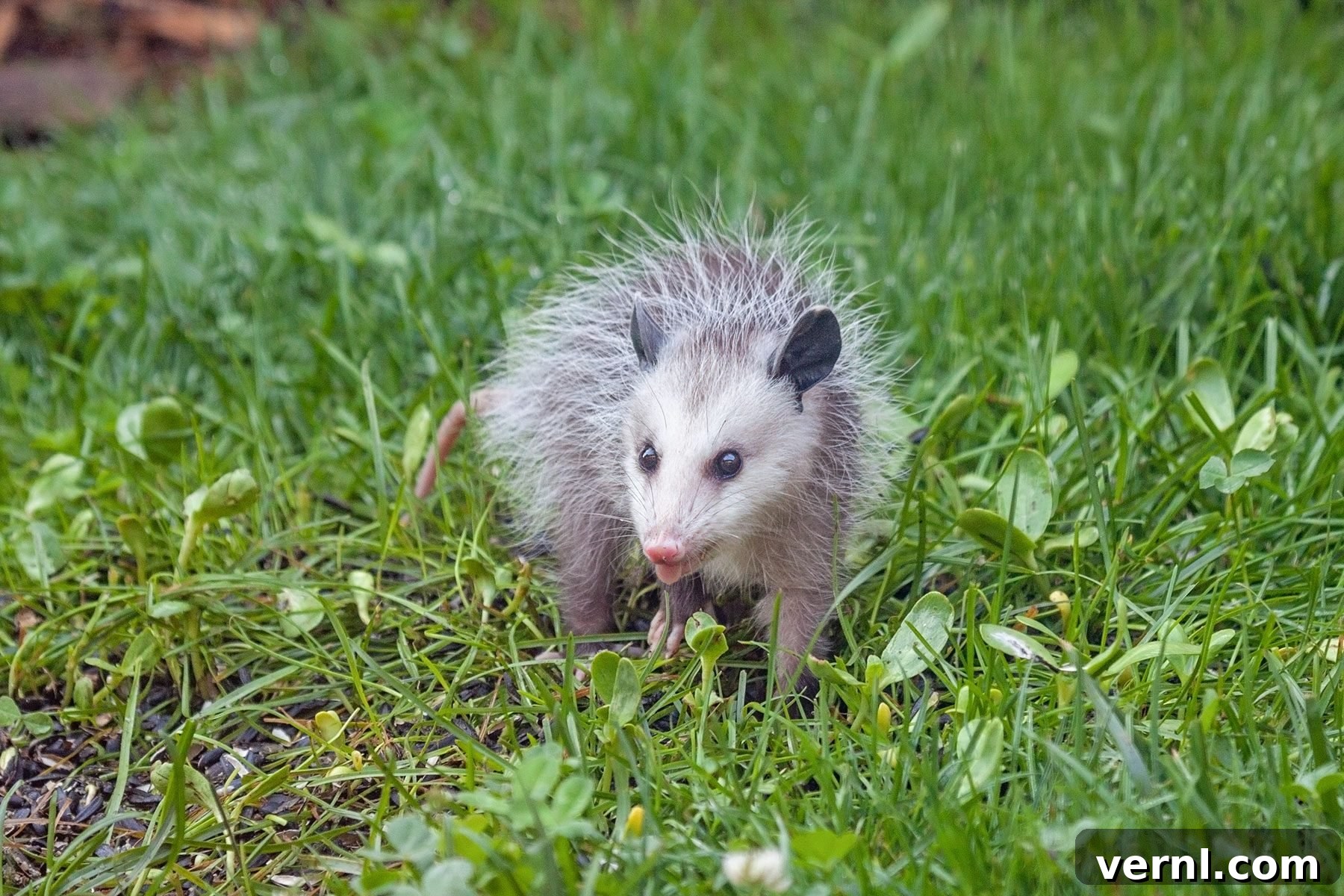
Growing up in a region untouched by the quiet nocturnal life of opossums, my first encounter with one in my thirties was a revelation. It wasn’t just a fleeting glimpse; this particular Virginia opossum decided to make his home right under my house. Initially, the strange scuffling sounds from beneath the floorboards at night were a bit unsettling, a symphony of mystery echoing through the quiet hours. Yet, over time, a unique understanding blossomed between us. We learned to coexist, and I quickly realized my peculiar-looking tenant was more than just a nocturnal presence; he was a valuable, albeit unassuming, helper in my garden ecosystem.
“Opossums are truly remarkable animals, often receiving an undeserved bad rap,” states David Mizejewski, a seasoned naturalist with the esteemed National Wildlife Federation. “Much of the negative perception they face is based purely on their appearance, rather than any real threat or nuisance. That’s why I’m always eager to champion opossums, hoping to shift public opinion and help people see them in a new light – perhaps even recognizing that ‘ugly is the new cute.'” This sentiment perfectly encapsulates the journey of discovery many undertake when they truly learn about these fascinating marsupials.
What is an Opossum? Understanding North America’s Unique Marsupial
The Virginia opossum (Didelphis virginiana) holds a special place in the wildlife of the Americas: it is the sole marsupial species found north of Mexico. This distinction alone makes them incredibly unique. “Their tiny offspring, born remarkably undeveloped, spend their initial weeks tucked safely within the mother’s pouch, much like a kangaroo joey,” explains Mizejewski. “As they grow, they transition to clinging to their mother’s back, a sight that is truly super cute if you’re fortunate enough to witness it in the wild.” This incredible reproductive strategy is a testament to their ancient lineage and adaptability.
Beyond their marsupial status, opossums possess a suite of distinctive biological features. They boast more teeth than any other North American mammal, a formidable array useful for their incredibly varied diet. Their back feet are equipped with an opposable digit, functioning much like a thumb, which aids in climbing and gripping. Furthermore, their tail is not just for balance; it’s a prehensile tail, capable of grasping branches and carrying small objects, though it’s important to note they cannot hang by their tails for extended periods as sometimes depicted in cartoons. Perhaps one of their most remarkable traits is their inherent resistance to many common wildlife diseases, including rabies and distemper, making them surprisingly robust members of the ecosystem.
Opossums are primarily nocturnal, meaning they are most active during the night, foraging for food and exploring their territory. They are largely solitary creatures, preferring to roam alone rather than in groups. Their average lifespan in the wild is relatively short, typically only 1 to 2 years, largely due to predation and harsh environmental conditions. However, their high reproductive rate helps ensure the continuation of their species. These adaptable animals have truly mastered the art of survival in a constantly changing world.
Where Do Opossums Live? Their Adaptable Habitats Across North America
Virginia opossums are highly adaptable creatures, thriving in a diverse range of environments across much of the United States. Their preferred habitats include lush woodland areas, damp marshes, expansive farmlands, bustling suburbs, and even the heart of sprawling cities. However, there are limits to their incredible adaptability. They typically avoid regions characterized by overly cold or excessively dry conditions, such as the majority of the Intermountain West. This geographical restriction is largely due to their physiology: their fur-less tails and ears are highly susceptible to frostbite, which can lead to severe injury and even be fatal in harsh, freezing climates.
“Unlike many other wildlife species that struggle to cope with human-induced environmental changes, opossums have not only learned to survive but have ingeniously leveraged these transformations,” Mizejewski points out. “They have been remarkably successful in taking advantage of habitat alterations, expanding their range significantly into areas that were once less hospitable. This resilience underscores their incredible capacity to adapt to evolving landscapes, making them one of nature’s true survivors in an increasingly human-dominated world.” Their opportunistic nature and varied diet allow them to find sustenance and shelter where other, more specialized animals might struggle, illustrating their remarkable evolutionary success story.
The Unsung Heroes: Understanding Opossum Benefits in Your Backyard and Beyond
Far from being mere nuisances, opossums play several vital roles that benefit both our immediate surroundings and the broader ecological landscape. Their contributions often go unnoticed, yet they are invaluable. In our yards and local ecosystems, opossums act as natural custodians:
- Exceptional Pest Control: They are incredibly effective natural pest controllers, diligently consuming a wide array of garden pests. Their diet includes myriad insects like beetles, grasshoppers, and cockroaches, as well as slugs and snails, which can decimate garden plants. They also prey on small rodents, such as mice and voles, helping to keep their populations in check without the need for harmful pesticides. This reduces the need for chemical interventions, promoting a healthier garden environment.
- Disease Inhibitors: One of their most significant, yet often overlooked, benefits is their role in inhibiting the spread of diseases. Opossums possess a remarkable immunity to many diseases that plague other neighborhood-dwelling species, such as raccoons and skunks. This immunity, coupled with their fastidious grooming habits, helps to reduce the presence of disease vectors in the environment.
As mid-level predators and scavengers, opossums also fulfill critical roles within the greater ecosystem:
- Population Regulation: They are crucial in regulating the populations of smaller animals, particularly common garden pests like mice and rats. By preying on these creatures, they help maintain a natural balance, preventing overpopulation that could lead to widespread environmental damage or disease transmission.
- Food Source for Larger Predators: Despite their unique defenses, opossums themselves become a food source for larger predators, such as great-horned owls, foxes, and coyotes. This makes them an integral part of the food web, supporting the health and diversity of predator populations.
- Nature’s Clean-up Crew: Opossums are efficient scavengers, playing a vital role in cleaning up animal carcasses and roadkill. By consuming decaying organic matter, they help prevent the spread of bacteria and disease, contributing significantly to the sanitation of natural and urban environments. This often-overlooked service helps keep our landscapes cleaner and healthier.
- Seed Dispersal: Through their omnivorous diet, which includes a variety of fruits and berries, opossums contribute to seed dispersal. After ingesting berries, they travel to new locations before defecating the seeds, effectively planting them in new areas. This process is crucial for the propagation of native plant species and the health of local flora.
Shattering Myths: Addressing Common Opossum Misconceptions
Unfortunately, many people harbor strong negative feelings towards opossums, often viewing them as dirty, disease-spreading pests. “None of those assumptions are actually true,” counters Mizejewski. “In reality, opossums are incredibly fastidious groomers, meticulously cleaning themselves much like a domestic cat would. Their scruffy appearance often belies their commitment to hygiene.” The misconception likely stems from their scavenging habits, but their role as nature’s clean-up crew is distinctly different from being inherently unsanitary themselves.
Another prevalent myth revolves around their perceived aggression towards pets and humans. It’s exceptionally rare for an opossum to intentionally harm a dog, cat, or child. Opossums typically do not attack animals larger than a rat. While it’s true they might defend themselves if cornered and feel their life is in imminent danger, their primary and most common line of defense is a fascinating biological response: going catatonic, a state famously known as “playing possum.”
“If an opossum perceives its life is in danger, it will quite literally keel over,” Mizejewski explains. “They collapse, often lie motionless, and even emit a really stinky, foul-smelling musk from their anal glands. This combination of appearing dead and smelling disgusting is designed to confuse and deter predators, making them seem like an unappetizing meal.” This involuntary physiological response is a brilliant survival mechanism, typically more effective than confrontation. If you encounter an opossum, the best course of action is to give it space and it will usually recover and move on once the perceived threat has passed. However, if an opossum manages to get into the enclosed space of your house, it’s always safer and more advisable to contact a professional wildlife removal expert rather than attempting to trap or handle it yourself, to ensure both your safety and the animal’s well-being.
Do Opossums Eat Ticks? Clarifying Their Role in Tick Control
The question of whether opossums eat ticks has garnered considerable public interest, often accompanied by the myth of them being “tick vacuums.” The truth is nuanced: yes, opossums do eat ticks, but perhaps not in the colossal numbers that have sometimes been widely circulated. As omnivorous opportunists, their diet is incredibly diverse, encompassing a broad range of invertebrates. This includes various insects, from beetles to crickets, as well as slugs and snails. Ticks, being small invertebrates that they encounter during foraging and grooming, naturally become part of this varied menu.
Their diet also includes small rodents, frogs, birds, fallen fruit and berries, discarded garbage, bird seed that has spilled, pet food left outdoors, and unfortunate roadkill. “The opossum’s diet is highly flexible and tends to shift with the changing seasons,” notes Meg Pearson, Training Manager at Critter Control. “For instance, they might consume a greater proportion of insects during the warm summer months when these are abundant, whereas in winter, when other food sources are scarce, they may rely more heavily on small mammals.” While they certainly contribute to tick control through both direct consumption and their diligent grooming habits (which remove ticks from their fur), it’s important to view them as one component of a broader ecosystem approach to tick management, rather than a singular solution.
Possums vs. Opossums: Understanding the Marsupial Distinction
The terms “possum” and “opossum” are frequently used interchangeably in casual conversation, leading to understandable confusion. However, despite their phonetic similarity, they refer to distinctly different groups of marsupials found on separate continents. Opossums, specifically the Virginia opossum, are native to the Americas. They are characterized by their long, pointed snouts, hairless tails, and often grayish-white fur.
In contrast, possums are arboreal marsupials indigenous to Australia and New Zealand. These animals typically have thicker fur, bushy tails, and generally rounder faces, appearing somewhat similar to squirrels or small monkeys. Both opossums and possums belong to the marsupial infraclass, a group of mammals whose young are typically born in an embryonic state and complete their development in a maternal pouch. The evolutionary history suggests that marsupials first evolved in North America. Over millions of years, continental drift played a pivotal role in separating and isolating these populations, leading to the distinct evolutionary paths and geographical distribution we observe today for opossums in the Americas and possums in Oceania.
How to Attract Opossums to Your Yard: Creating a Welcoming Habitat
If you’re looking to encourage these beneficial marsupials to visit your property, the good news is that many of the same practices you use to attract desirable wildlife like birds and pollinators will also appeal to opossums. A focus on creating a natural, diverse habitat is key. Opossums are particularly drawn to yards that offer a variety of food sources, especially fruit and berry-producing trees and shrubs. Consider planting native species like blueberries, chokeberries, and wild strawberries, which provide nutritious sustenance for opossums and a host of other wildlife, including birds and bees. Such plantings not only attract opossums but also enhance the overall biodiversity of your garden.
Providing a reliable water source is another effective way to attract opossums. A simple birdbath placed on the ground, kept clean and filled with fresh water, can be a magnet for these nocturnal visitors, as well as many other creatures. If your goal is to encourage opossums to take up more permanent residence, focus on offering ample shelter options. Building a brush pile using fallen branches and leaves can create an ideal denning spot. Alternatively, planting a dense plot of evergreens with a rich understory of shrubs, ferns, and wildflowers provides excellent cover and safe havens. Opossums are particularly fond of denning in natural tree cavities and abandoned animal burrows, seeking out dark, secluded spaces for rest and raising their young.
“Therefore, if you are fortunate enough to have large, mature trees on your property, make a concerted effort to protect and preserve them, especially those that exhibit hollows and cavities,” advises Mizejewski. “These natural features are incredibly important wildlife habitats, not just for opossums, but for a diverse range of birds, squirrels, bats, and many other animals that rely on such shelters for nesting, resting, and raising their families. Creating such a wildlife-friendly environment contributes significantly to local ecological health.”
Opossums Drawbacks: Managing Potential Nuisances
While generally beneficial, opossums can occasionally become a nuisance, leading to minor property damage or inconvenient encounters. “Opossums are inherently opportunistic creatures, and they are quick to take advantage of any area they perceive as a suitable, readily available shelter,” explains Pearson. “This often leads them to take up residence in unoccupied spaces such as attics, garages, sheds, or beneath porches and decks.” Beyond seeking shelter, their foraging habits can also cause issues. They are known to steal eggs from chicken coops, rummage through garbage cans creating considerable mess, and readily consume pet food left outdoors.
The good news is that most potential problems with opossums are easily preventable and solvable through simple adjustments, as Mizejewski highlights. The key is to eliminate readily available food sources and secure potential entry points. Do not feed pets outside, or if you must, ensure food bowls are promptly brought in after feeding times, as outdoor pet food is a major attractant for opossums, rodents, and other wildlife. To prevent raids on your trash, use trash cans with tight-fitting lids, ideally secured with a bungee cord or a heavy object. Regularly inspect your home and outbuildings for potential entry points. Adding sturdy wire screening to block off access under porches, sheds, and sealing any openings to attics or crawl spaces can effectively deter opossums from taking up residence. Staying on top of routine house maintenance is paramount in preventing wildlife intrusions.
However, a critical caveat exists for horse owners. If you have horses, it is strongly advised not to actively encourage opossums into your yard. Opossums can carry a pathogen called Sarcocystis neurona in their droppings. In very rare cases, if ingested by horses, this parasite can lead to Equine Protozoal Myeloencephalitis (EPM), a serious neurological disease. While rare, the potential risk makes it prudent for horse owners to deter opossums from areas where horses graze or feed. Overall, by understanding their habits and taking proactive preventative measures, peaceful coexistence with these unique marsupials is entirely achievable.